
Why does Taiwan make the world's most advanced chips?
In 1985, Taiwan handed a sidelined American chip executive a blank check. Nearly every cutting-edge processor on Earth now comes from the company he built.
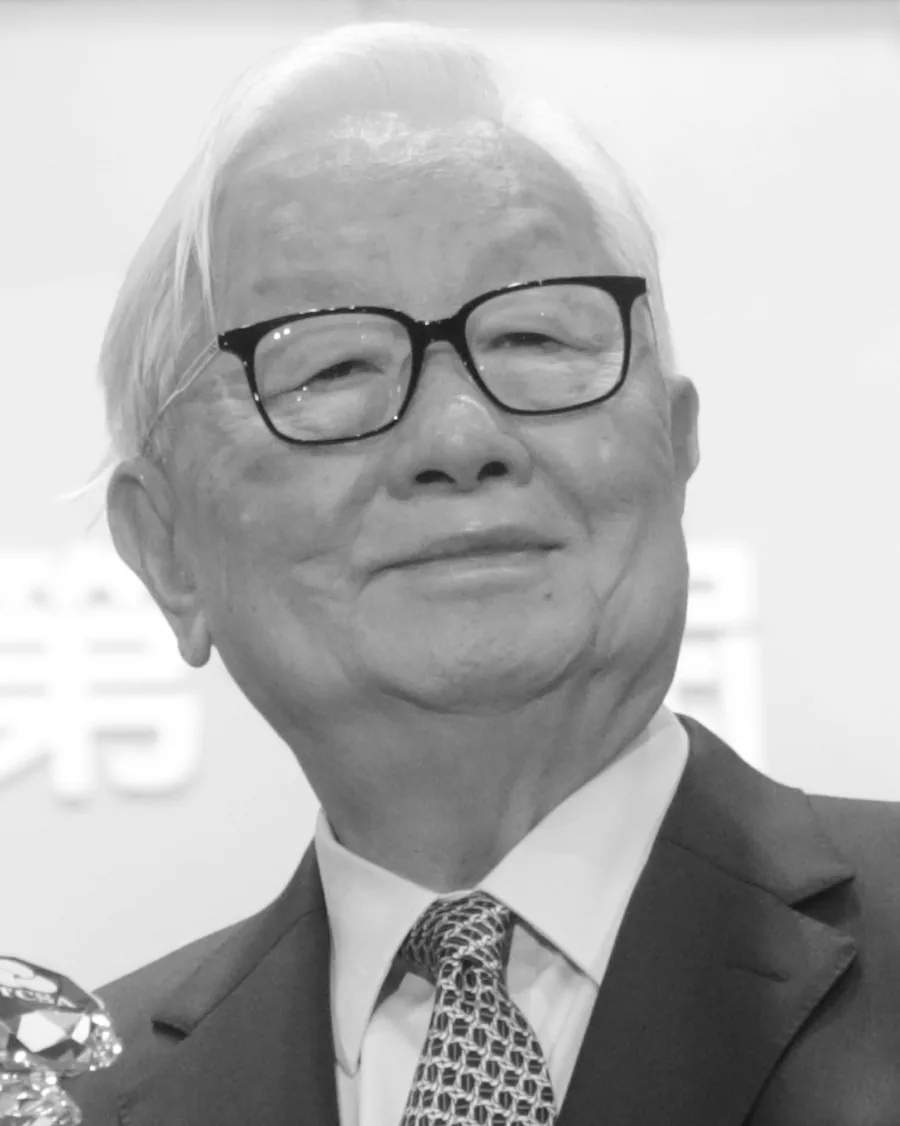
When Morris Chang landed in Taiwan in the summer of 1985, he was 54 years old and his American career had gone as far as it was going to go. He had spent 25 years at Texas Instruments and risen to run its entire semiconductor business, but the top job kept going to other men. "I felt that essentially I had been put out in the pasture," he said later. Taiwan had recruited him to run its industrial research institute, which could have been a dignified sunset posting. Instead, within weeks, K.T. Li, the minister known as the father of Taiwan's economic miracle, called him in with a different assignment. The government wanted a semiconductor industry. Chang would build the company, and he should come back within the week and "tell me and tell the Premier how much money you need."
Four decades later, roughly 90 percent of the world's most advanced processors are made by the company Chang founded. The chip you are reading this on almost certainly came from TSMC, built on an island of 23 million people that China claims as a province, about 100 miles off its coast.
The idea everyone turned down
The plan Chang wrote that week was built on a single promise: his company would only manufacture chips. It would never design them, never sell products of its own, never compete with its customers.
He was frank that the idea grew out of weakness. Taiwan in 1985 had no famous chip designers, no brands, no sales channels in California. "The only possible strength that Taiwan had, and even that was a potential one, was semiconductor manufacturing," he recalled. He called the plan "the least evil choice."
The industry thought it was somewhere between naive and absurd. Real chipmakers designed and built their own products; a factory for hire had no obvious customers at all. Chang asked Intel, Texas Instruments, and Motorola to invest, and all of them said no. The only significant outside investor was Philips, and Taiwan's government put up 48 percent. When one local businessman refused to invest after three meetings, the premier called him personally: the government had been good to him for twenty years, and it was time to return the favor. TSMC opened in 1987.
It took about fifteen years for the joke to turn inside out. Chip factories were getting exponentially more expensive, and a company that owned no factory could put all of its money into design. A whole industry of "fabless" chip companies grew up around TSMC's promise never to compete with its customers. In 1997 the founder of a struggling 60-person startup wrote Chang a letter asking for capacity, and Chang phoned him back himself. That startup was Nvidia. It is now the most valuable chip company in the world, and it has never owned a fab. AMD's Jerry Sanders famously declared that "real men have fabs"; AMD sold its fabs in 2009. Intel, which passed on investing, spent the 2020s trying and failing to catch up with the manufacturer it once dismissed.
What making a chip actually involves
The difficulty is the whole story, so it is worth seeing what this work actually is. A chip starts as a wafer of silicon, refined to near-perfect purity and polished to a mirror. The circuits are printed onto it with light. Inside a machine the size of a bus, a laser strikes 50,000 droplets of molten tin every second, flashing them into a plasma forty times hotter than the surface of the sun. The plasma glows with an ultraviolet light so extreme that air absorbs it and no lens can focus it, so it is steered by mirrors instead. Those mirrors are the flattest objects humans have ever made: scaled up to the size of Germany, their largest bump would be less than a millimeter tall. The light prints a pattern onto a light-sensitive coating, acids and plasmas etch away what was exposed, a new layer goes down, and the cycle repeats hundreds of times over about three months. The result: billions of transistors on one chip, so small that more than a thousand of them fit across the width of a human hair.
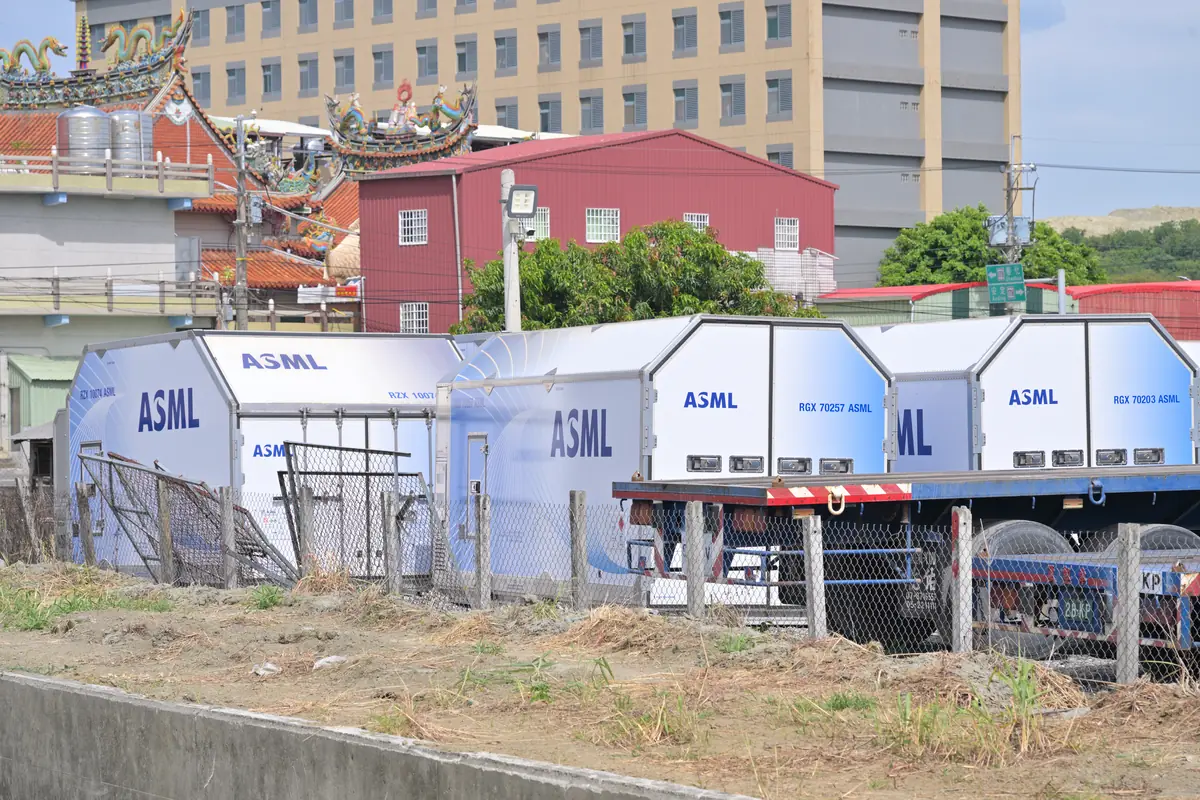
Only one company on Earth builds that extreme ultraviolet lithography machine, ASML of the Netherlands. Each one costs over $200 million and ships in 40 freight containers aboard three Boeing 747s. A fab full of them costs more than $20 billion. And money turns out to be the easy part. What can't be bought is yield, the share of chips on each wafer that actually work, and yield lives in decades of process craft that is written down nowhere and walks out of the building every evening in engineers' heads. That, more than any machine, is why Taiwan can't simply be copied.
The silicon shield
In 2000, a former semiconductor executive named Craig Addison gave this situation a name. Taiwan's fabs amount to a "silicon shield," he argued: the world depends on the island's chips, so the world cannot afford to let anything happen to the island. The phrase stuck. By 2021, President Tsai Ing-wen was using it in Foreign Affairs.
The shield is real, but it is often read backwards. China does not want Taiwan because of its chips. Beijing has claimed the island since 1949, when the losing side of the Chinese civil war retreated there, decades before anyone etched a transistor. What the chips changed is the price of acting on the claim. Bloomberg Economics puts the cost of a war over Taiwan at around $10 trillion, a tenth of global GDP, and a bill like that lands on Beijing as heavily as on anyone. The chips are less a reason to take the island than one of the strongest reasons to wait.
An invasion wouldn't even capture the prize. "Nobody can control TSMC by force," chairman Mark Liu said on CNN in 2022. A fab is not a warehouse of secrets to be seized. It is a living system that runs on daily deliveries of chemicals, parts, and software from Europe, Japan, and the US, and cut off from them it is an expensive shell. Bloomberg has reported that ASML can remotely disable its machines in Taiwan, a kill switch it has quietly assured the Dutch government exists. Two American academics went further and proposed that Taiwan promise to blow up its own fabs rather than let them fall intact. Taiwan's defense minister has publicly rejected the idea, and no wonder: it undercuts the shield's own logic. A hostage only protects you while it is alive.
The scramble to not need Taiwan
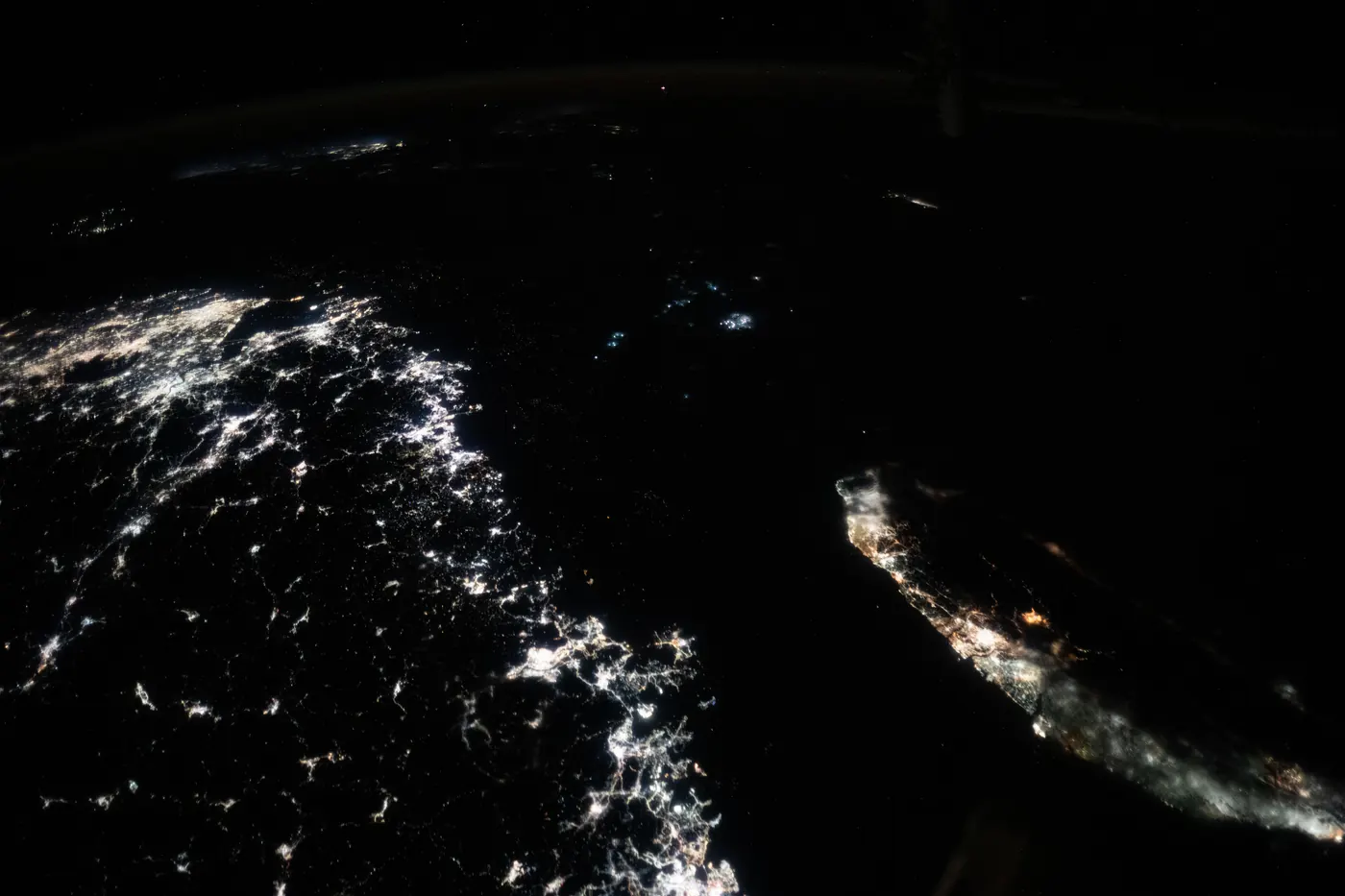
Nobody inside this arrangement trusts it, and everyone is spending their way out. Washington banned exports of advanced chips and chipmaking tools to China in 2022, and is paying TSMC to build in Arizona, where the company's committed investment reached $265 billion this week, the largest foreign investment in American history. China is pouring comparable sums into homegrown substitutes; its champion SMIC has managed 7-nanometer chips without ASML's best machines, at painful cost. Chang, now in his nineties, watched it all with a cold eye. "Globalization is almost dead," he said at the Arizona opening. "Free trade is almost dead."
History has a pattern for this. When something the great powers cannot live without concentrates in one small place, that place's fate stops being entirely its own. It was true of the spice islands, true of the Persian Gulf, and it is true of a strip of Taiwanese coastline today. For now, the world's digital life still funnels through the island Morris Chang landed on in 1985. Both superpowers are working, at staggering expense, toward the day it no longer does. What the silicon shield protects after that day is the question Taipei prefers not to ask out loud.
Test what you learned
6 questions on this article. About two minutes, no signup.