
Disputed territory · Caucasus
Abkhazia
Frozen: no peace deal since the 1992-93 warUpdated October 12, 2026
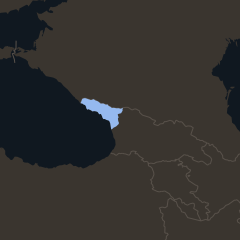
Abkhazia is a region on the Black Sea coast in Georgia's northwest. It broke away from Georgia in a war in 1992-93, and most of its ethnic Georgian population fled or was driven out. Abkhazia has its own government but depends on Russia, which keeps troops there and funds part of its budget. Russia and three other UN members recognize Abkhazia as independent. Georgia calls it territory occupied by Russia, and most countries treat it as part of Georgia.
- Self-governed since
- 1993
- after a war with Georgia
- Area
- 8,640 km²
- about 12% of Georgia
- People
- About 244,000
- local estimate, 2025 (525,000 in 1989)
- Recognized by
- 4 UN members
- Russia, Nicaragua, Venezuela, Syria
- Held by
- Local government
- Claimed by
 Georgia
Abkhazia in 30 seconds
- Abkhazia broke away from Georgia in a war in 1992-93. About 250,000 people, mostly ethnic Georgians, were displaced, and the population is less than half what it was in 1989.
- Russia recognized Abkhazia in 2008, after its war with Georgia over South Ossetia, another breakaway region. Russia keeps a military base there and pays part of Abkhazia's budget.
- Only Russia, Nicaragua, Venezuela and Syria recognize Abkhazia. Nauru, a Pacific island state, withdrew its recognition in July 2026.
- Many Abkhaz oppose selling land to Russian buyers. In 2024 protesters stormed parliament over a deal with Russian investors and forced the president to resign.
Who controls Abkhazia?
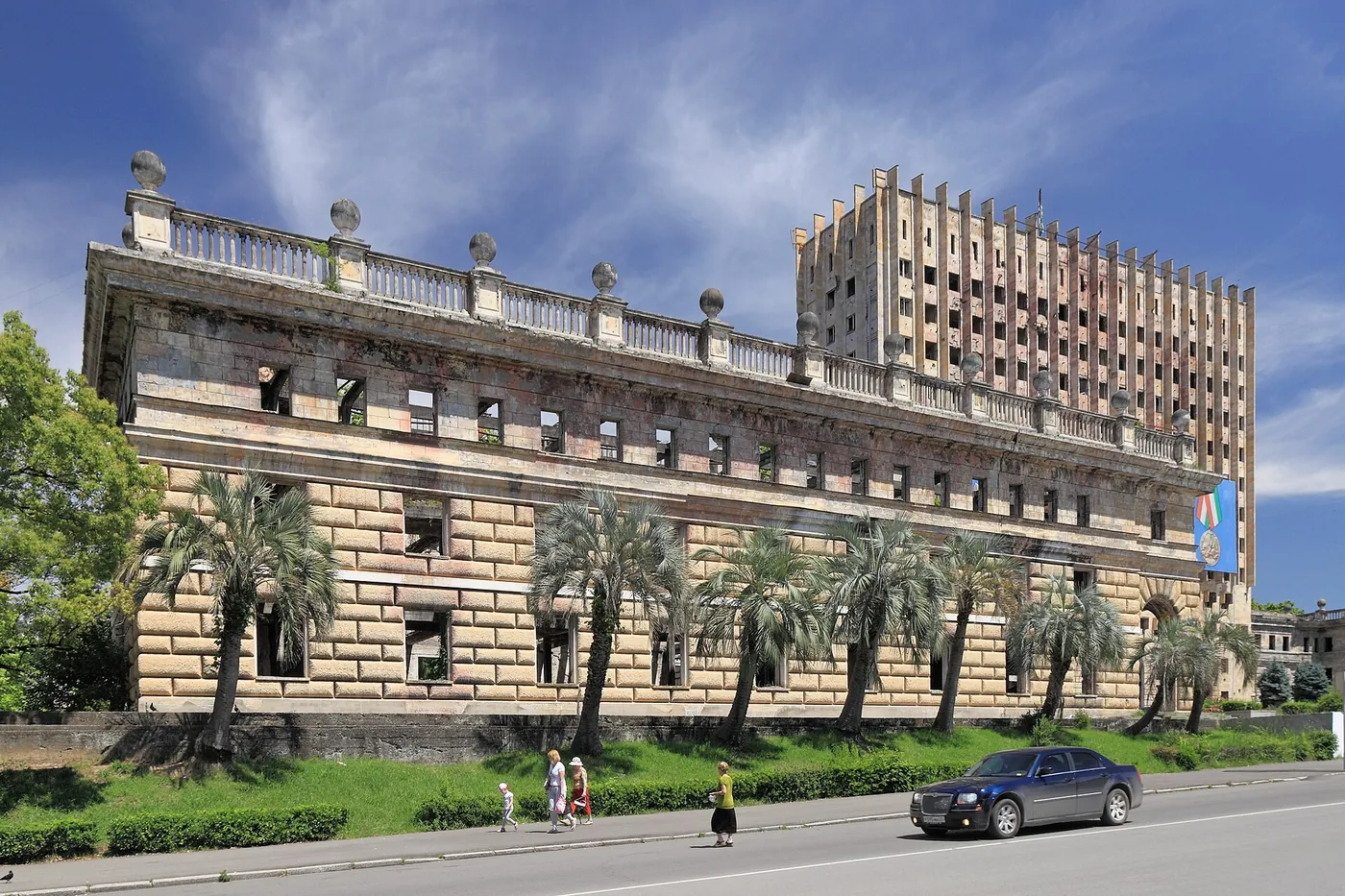
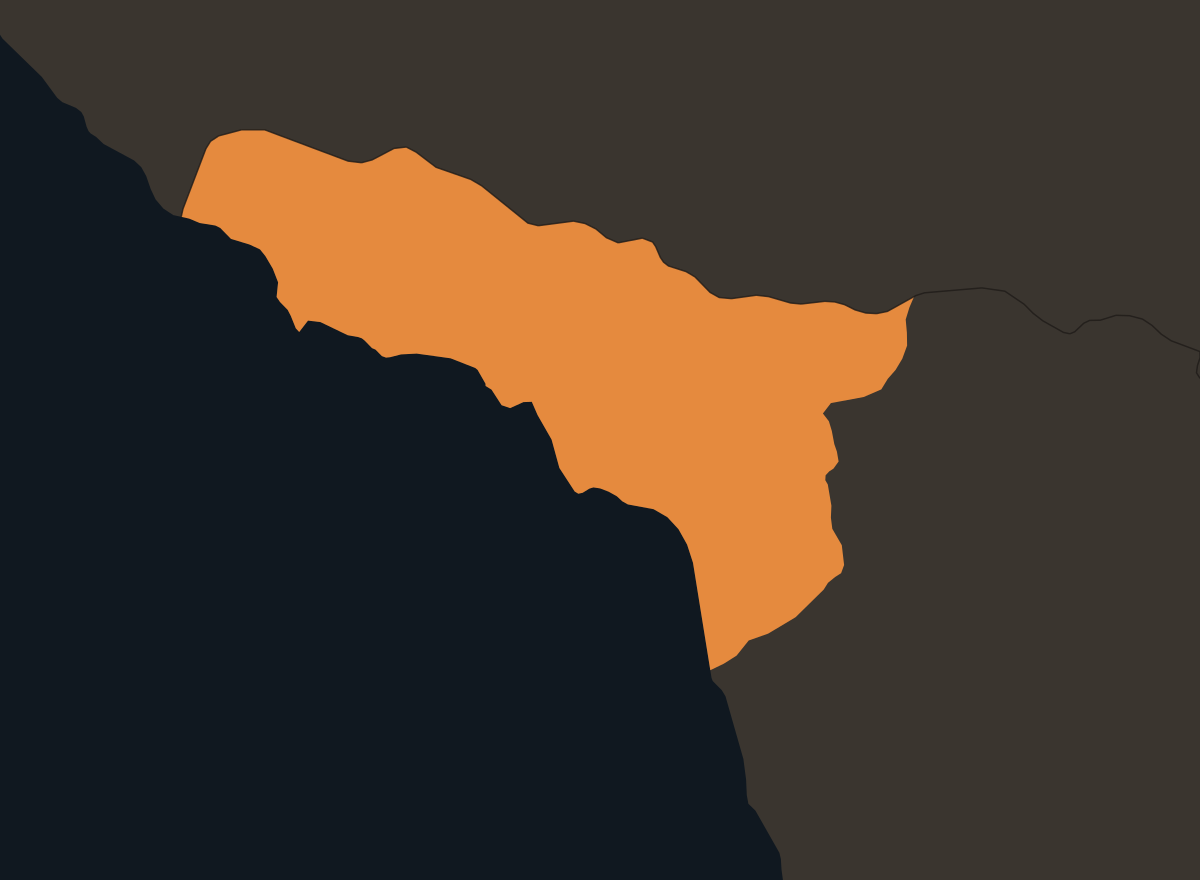
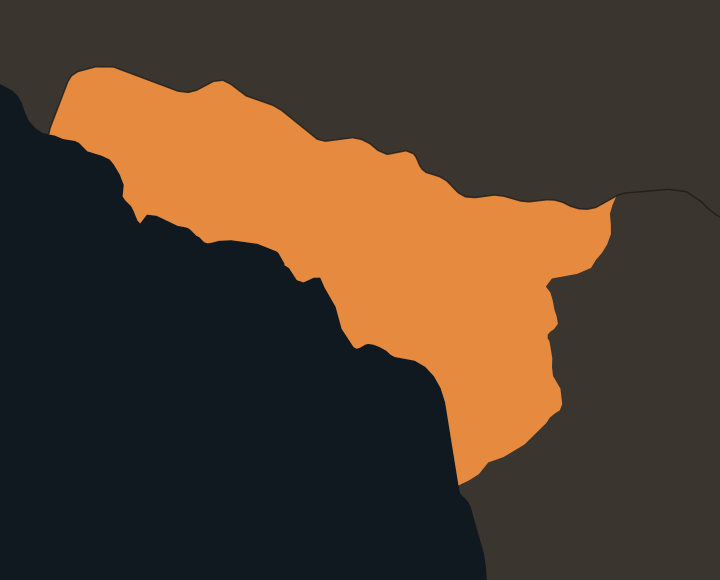
Abkhazia's own government, based in Sukhumi, runs the region. The Inguri River marks the line with the rest of Georgia. Russia keeps several thousand troops there, mainly at its base near Gudauta. Russian coast guard ships have used the port of Ochamchire since 2009. In 2023 Abkhazia's leader said Russia would build a naval base at Ochamchire, but Newsweek reported in September 2026 that satellite images showed the work had seemingly stalled. Badra Gunba has been Abkhazia's president since April 2025.
In 1989 Abkhazia had 525,061 people. Georgians made up 46% and Abkhaz 18%. An Abkhaz census in 2011 counted 240,705 people: about half Abkhaz, 18% Georgians, 17% Armenians and 9% Russians. Georgia disputes those figures. Most of the remaining Georgians live in the Gali district, next to the Inguri.
 ABKHAZIA
GEORGIA
RUSSIA
Black Sea
Sukhumi
Gagra
Gudauta
Ochamchire
Gali
Zugdidi
Kutaisi
Sochi
ABKHAZIA
GEORGIA
RUSSIA
Black Sea
Sukhumi
Gagra
Gudauta
Ochamchire
Gali
Zugdidi
Kutaisi
Sochi
 ABKHAZIA
GEORGIA
RUSSIA
Black Sea
Sukhumi
Gagra
Ochamchire
Gali
Zugdidi
ABKHAZIA
GEORGIA
RUSSIA
Black Sea
Sukhumi
Gagra
Ochamchire
Gali
Zugdidi
How did Abkhazia break away from Georgia?
Abkhazia was an autonomous republic inside Soviet Georgia. In July 1992 Abkhazia's parliament brought back a 1925 constitution, which in effect declared sovereignty. Georgian troops entered Abkhazia on August 14, 1992.
Abkhaz forces were helped by volunteers from Russia's North Caucasus and by elements of the Russian military, as Human Rights Watch documented. Abkhaz forces took Sukhumi on September 27, 1993. Several thousand people were killed on each side. About 250,000 people, mostly ethnic Georgians, were displaced. Summits of the Organization for Security and Co-operation in Europe (OSCE) in 1994, 1996 and 1999 condemned the "ethnic cleansing" of Georgians.
After a ceasefire signed in Moscow on May 14, 1994, a peacekeeping force, almost entirely Russian, deployed along the Inguri. A UN observer mission, present since 1993, ended on June 15, 2009, when Russia vetoed its extension. Russia recognized Abkhazia on August 26, 2008, after its war with Georgia over South Ossetia. Georgia's 2008 law on occupied territories calls Abkhazia territory "occupied through Russian military aggression."
How Abkhazia split from Georgia
- 1992Georgian troops enter Abkhazia
- 1993Abkhaz forces take Sukhumi, and Georgians flee
- 1994A ceasefire, and Russian peacekeepers on the Inguri
- 2008Russia recognizes Abkhazia after its war with Georgia
- 2009A Russian veto ends the UN observer mission
- 2024Protesters force the president out
- 2025Badra Gunba is elected president
- 2026Nauru withdraws its recognition
Why does Abkhazia depend on Russia?
Russian aid makes up about 29% of the revenue Abkhazia planned for 2026, down from about 44% in 2021. Abkhazia had a record 1.88 million visitors in 2025, most of them from Russia. On May 1, 2025, a UVT Aero flight from Moscow landed at Sukhumi, the first civilian flight from Moscow in more than three decades. Georgia and the EU condemned it. Electricity comes mostly from the Inguri hydroelectric plant, which Abkhazia shares with Georgia, topped up with Russian imports.
Many Abkhaz fear that Russians will buy up their land. On October 30, 2024, Abkhazia's government signed an agreement giving Russian investors tax breaks. Critics feared it would let Russians buy property. On November 15, 2024, protesters stormed parliament. President Aslan Bzhania resigned four days later, and parliament rejected the deal. Russia had already stopped helping to pay public-sector wages in September 2024, and that winter brought rolling blackouts. Russia resumed funding in February 2025, and Badra Gunba won the presidential runoff on March 1 with 54.7% of the vote.
Russian money
29%
Of Abkhazia's planned revenue for 2026
Russian aid of 5.5 billion rubles makes up about 29% of the 19 billion rubles of revenue Abkhazia planned for 2026. In 2021 Russia's share was about 44%.
What happened to Abkhazia's Georgians?
Most of the Georgians who fled in 1992-93, and their descendants, have never been able to return. The exception is the Gali district, next to the Inguri, where more than 30,000 people lived in 2011. About 98% of them were ethnic Georgians. In 2014 the Abkhaz authorities canceled more than 30,000 Abkhaz passports held by Gali residents because they also had Georgian citizenship. Since about 2017 Abkhazia has issued five-year residence permits instead. These do not allow their holders to vote or buy property.
In 2015, eleven schools in the lower Gali district switched their first four grades from Georgian to Russian, then added one grade a year. Georgia's State Security Service says the Abkhaz side made 40 "illegal detentions" along the Inguri line in 2025. In June 2026 the UN General Assembly again backed the right of displaced people to return, by 84 votes to 13.
Georgians and Abkhaz in Abkhazia
Is anything changing in Abkhazia?
Abkhazia is moving closer to Russia, but its recognition is shrinking. Nauru, a Pacific island state, withdrew its recognition in July 2026 and established relations with Georgia in September. Georgia asked Venezuela to withdraw its recognition after Nicolás Maduro was removed from power in January 2026, and the EU says it will urge Syria to do the same. Neither has done so. Abkhazia's president Badra Gunba says full recognition is "inevitable, no matter who resists it." Russia and Abkhazia signed a customs agreement on September 25, 2026. Abkhaz and Russian forces began large exercises on October 12.
Georgia's prime minister, Irakli Kobakhidze, told the UN General Assembly on September 24, 2026 that "twenty percent of our country remains under the occupation of the Russian Federation," a figure that covers Abkhazia and South Ossetia together. Kobakhidze appealed to "our Abkhaz and Ossetian brothers and sisters." Talks in Geneva on the consequences of the 2008 war, co-chaired by the UN, the EU and the OSCE, have met since 2008. The next round is due in November 2026.
Abkhazia in 2026
- Mar 2026Abkhaz forces report about 30 drones, sender unnamed
- Jul 2026Nauru withdraws its recognition
- Sep 2026A customs agreement with Russia
- Oct 2026Exercises with Russian forces
What is at stake in Abkhazia?
The coast
Abkhazia has more than 200 km of Black Sea coast next to Russia's resort city of Sochi. Russian coast guard ships use the port of Ochamchire, and Abkhazia's leader said in 2023 that Russia would build a naval base there.
Power
The Inguri hydroelectric plant straddles the line between Georgia and Abkhazia. Its dam stands on the Georgian side and its power station on the Abkhaz side. It supplies most of Abkhazia's electricity, and both sides depend on it.
The displaced
About 250,000 people, mostly ethnic Georgians, were displaced in 1992-93. Most of them and their descendants live elsewhere in Georgia and have not been able to return.
Questions about Abkhazia
Is Abkhazia part of Georgia or Russia?
Most countries and the UN treat Abkhazia as part of Georgia. Abkhazia's government says it is an independent state. Russia, Nicaragua, Venezuela and Syria recognize it as independent. Russia keeps troops in Abkhazia and funds part of its budget. In 2021 the European Court of Human Rights ruled that Russia had effective control over Abkhazia from the August 2008 ceasefire onward.
Which countries recognize Abkhazia?
Four UN members recognize Abkhazia: Russia (since 2008), Nicaragua (2008), Venezuela (2009) and Syria (2018). Nauru recognized Abkhazia in 2009 and withdrew its recognition in July 2026. Vanuatu and Tuvalu also recognized Abkhazia and later withdrew. Abkhazia is also recognized by South Ossetia and Transnistria, which are themselves unrecognized.
Can you visit Abkhazia?
Most visitors come from Russia, crossing the Psou River border or, since May 2025, flying from Moscow to Sukhumi. Georgia's law allows foreigners to enter only from the Georgian side, across the Inguri bridge, and treats entry from Russia as illegal. About 200,000 passengers had used Sukhumi airport by late September 2026.
What is the New Athos Cave?
The New Athos Cave is a large cave system near the town of New Athos, on the coast between Sukhumi and Gudauta. In 1961 Givi Smyr, a 16-year-old local, lowered himself on a rope into a 30-meter shaft that locals called the Bottomless Pit. He found a huge cave system. The cave opened to the public in 1975. Visitors ride an underground electric train through a 1.3 km tunnel to reach it.