
Disputed territory · South America
Essequibo
Tense: a world court ruling is dueUpdated October 12, 2026
Essequibo is the land west of the Essequibo River, about 159,500 km², nearly three-quarters of Guyana. Guyana governs it. Venezuela claims it. An international tribunal gave the area to British Guiana in 1899. Venezuela accepted that award for decades, then called it void in 1962. The International Court of Justice heard the case in May 2026. Venezuela says it will not accept the ruling. Oil found off the coast since 2015 has sharpened the dispute.
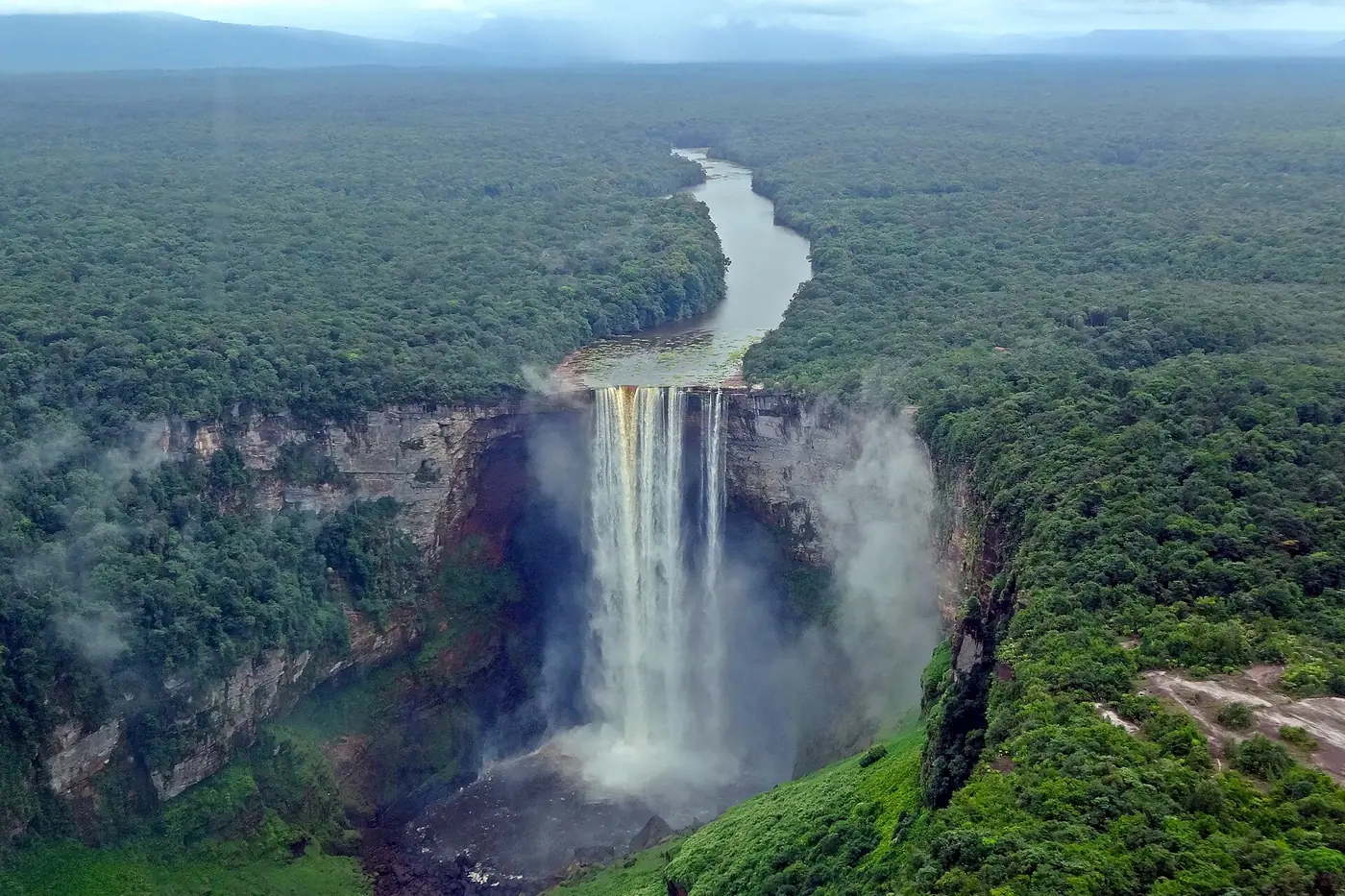
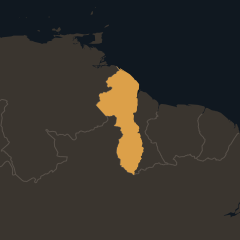
- Area
- 159,500 km²
- nearly three-quarters of Guyana
- People
- About 170,000
- 2022 census, about a fifth of Guyana
- Claim revived
- 1962
- when Venezuela called the 1899 award void
- Guyana's oil
- 891,000 b/d
- average, January to August 2026
 Guyana
 Venezuela
Essequibo in 30 seconds
- Guyana governs Essequibo, the land west of the Essequibo River. About 170,000 people live there, a fifth of Guyana's population, many of them Indigenous.
- An 1899 tribunal fixed the border, and Venezuela accepted it for decades. In 1962 Venezuela declared the award void, calling it a political deal.
- Guyana asked the International Court of Justice to confirm the 1899 border. Hearings ended in May 2026. Venezuela says it will not recognize the ruling.
- ExxonMobil found oil off Guyana's coast in 2015. Guyana pumped about 891,000 barrels a day in January to August 2026. Venezuela's sea claim overlaps much of the offshore oil area.
Who controls Essequibo?
Guyana does, and has since it became independent in 1966. Before that Britain ruled it as part of British Guiana. Essequibo covers about 159,500 km², nearly three-quarters of Guyana's land. About 170,000 people live there according to Guyana's 2022 census, roughly a fifth of the country. Towns include Anna Regina on the rice-growing coast, Bartica, Lethem on the Brazilian border and Mabaruma. Indigenous peoples such as the Lokono (Arawak), Warao, Akawaio, Patamona, Makushi and Wapishana live there. Several of these groups also live in Venezuela.
Venezuela has never governed the area, apart from the Guyanese half of tiny Ankoko Island in the Cuyuni River, which Venezuelan troops have held since 1966. In 2024 Venezuela passed a law making it a Venezuelan state called Guayana Esequiba. In 2025 Venezuela elected a "governor" for it, with all the votes cast inside Venezuela. Guyana's president, Irfaan Ali, says Guyana's control is not up for negotiation.
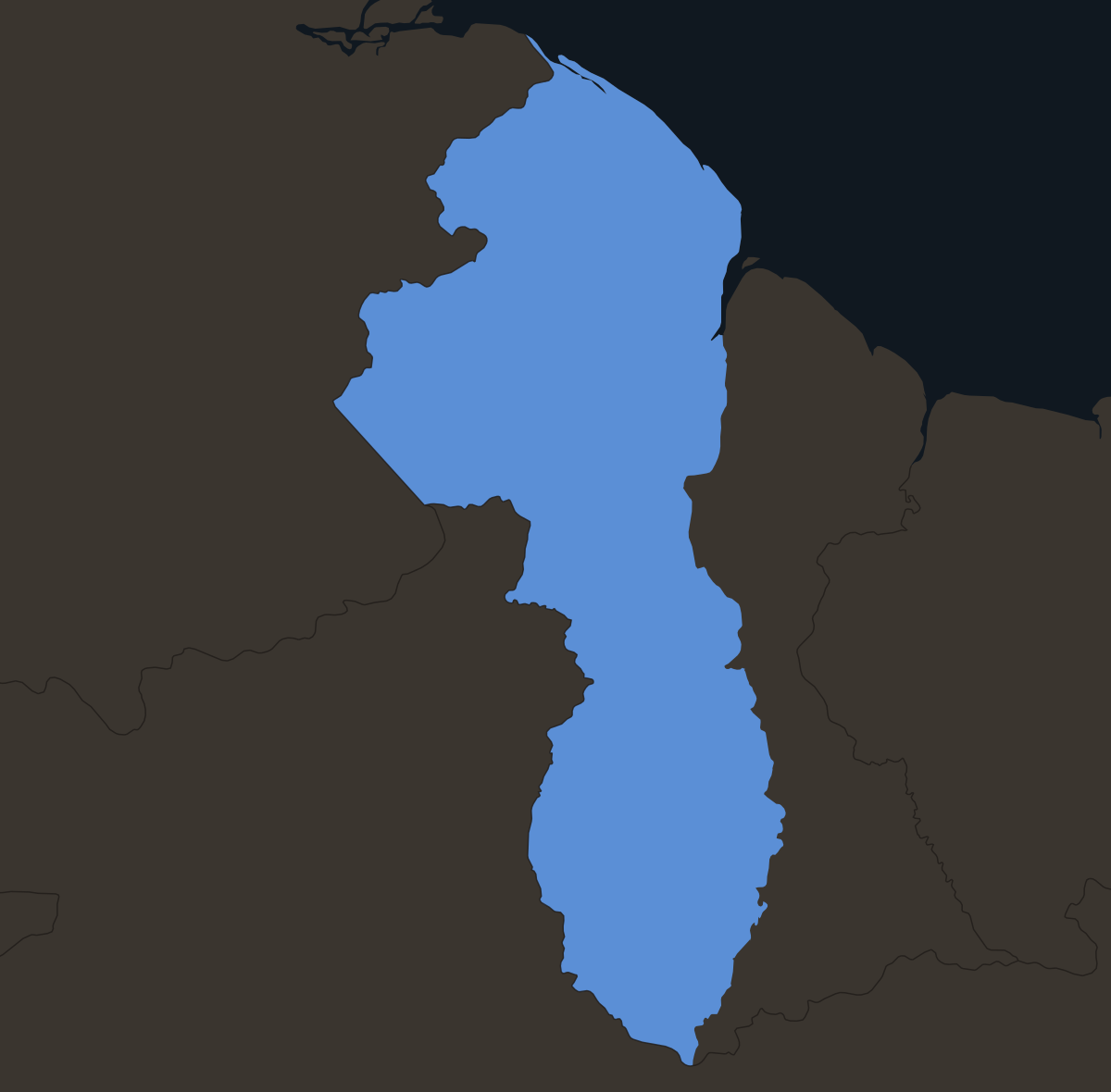 ESSEQUIBO
VENEZUELA
GUYANA
BRAZIL
Atlantic Ocean
Essequibo
ESSEQUIBO
VENEZUELA
GUYANA
BRAZIL
Atlantic Ocean
EssequiboRiver Georgetown Bartica Anna Regina Mabaruma Lethem Kaieteur Falls Ciudad Guayana Boa Vista
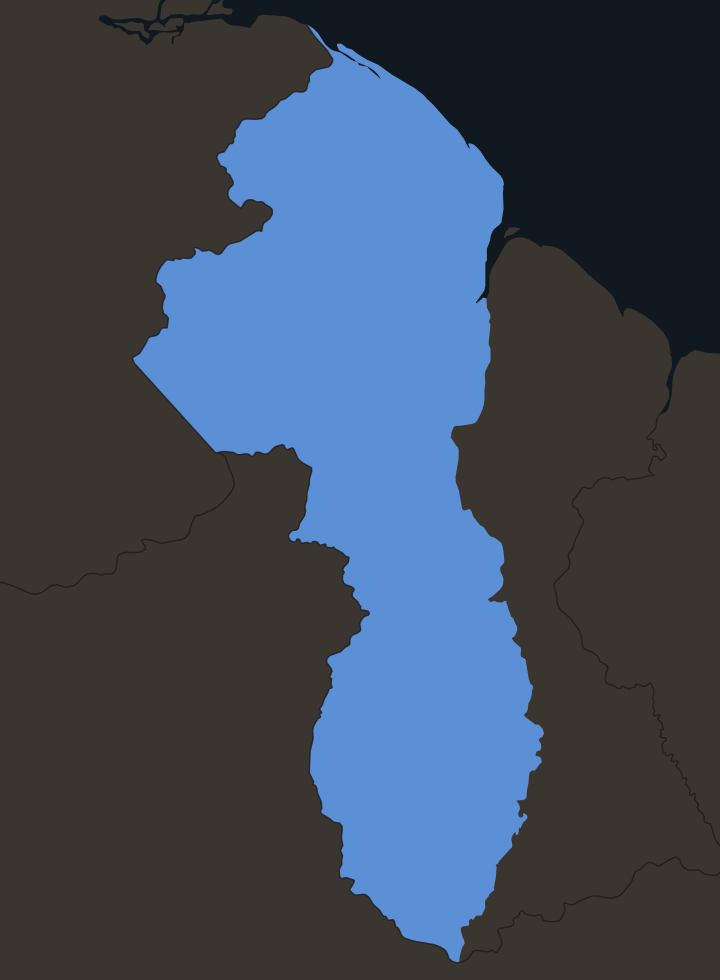 ESSEQUIBO
VENEZUELA
GUYANA
BRAZIL
Atlantic Ocean
Georgetown
Bartica
Anna Regina
Lethem
Kaieteur Falls
ESSEQUIBO
VENEZUELA
GUYANA
BRAZIL
Atlantic Ocean
Georgetown
Bartica
Anna Regina
Lethem
Kaieteur Falls
Why does Venezuela claim Essequibo?
Venezuela says Spain's colony reached the Essequibo River, and Venezuela inherited that line at independence. Britain took the Dutch colonies along the coast in 1814, including the colony of Essequibo on the river of that name, and later claimed land further west. In 1895 the United States pressed Britain to accept arbitration. The tribunal's award of October 3, 1899 gave most of the disputed land to British Guiana. Venezuela accepted the award and helped mark the border on the ground until 1905.
In 1944 Severo Mallet-Prevost, a US lawyer on Venezuela's team, wrote a memo to be released after his death. Otto Schoenrich published it in the American Journal of International Law in July 1949. The memo claimed the award was a political deal between Russia and Britain. On November 12, 1962, Venezuela told the UN the award was null and void.
Guyana says the award is a "full, perfect and final settlement" that Venezuela accepted for more than 60 years, and that the arbitrators' own papers do not back the memo. The Geneva Agreement of February 17, 1966, signed months before Guyana's independence, set up a commission to settle the dispute. The commission failed in 1970.
How the dispute grew
- 1814Britain takes the Dutch colonies on the coast
- 1899A tribunal in Paris gives most of the land to Britain
- 1949A lawyer's memo, published after his death, calls the award a deal
- 1962Venezuela declares the award null and void
- 1966The Geneva Agreement, then Guyana's independence
- 2015ExxonMobil finds oil off Guyana's coast
- 2018The UN chief picks the world court to settle it
- 2023Venezuela holds a referendum on making Essequibo a Venezuelan state
- 2026Hearings at the world court end in May
What did the 1899 award decide?
Five judges met in Paris. Britain refused to accept a Venezuelan judge, so two US justices, Chief Justice Melville Fuller and Justice David Brewer, sat for Venezuela's side. Britain named Lord Russell and Sir Richard Henn Collins. The president was the Russian jurist Friedrich Martens. The award of October 3, 1899 gave Britain most of the land it claimed west of the Essequibo River but gave Venezuela the mouth of the Orinoco River.
The Mallet-Prevost memo claimed Martens pressed the two US justices to accept a compromise line, warning that otherwise Britain would get even more. The memo said this was part of a political deal between Russia and Britain. Venezuela says this proves the award was a political deal, not a legal ruling. Guyana says the memo is hearsay written 45 years after the fact, and that Venezuela took part in marking the border until 1905.
The five judges of 1899
 Melville FullerUS Chief Justice, sat for Venezuela's side
- David BrewerUS Supreme Court justice, sat for Venezuela's side
 Lord RussellLord Chief Justice of England, named by Britain
- Richard Henn CollinsBritish judge, named by Britain
 Friedrich MartensRussian jurist, the tribunal's president
What will the world court decide?
On January 30, 2018, UN Secretary-General António Guterres chose the International Court of Justice as the way to settle the dispute. Guyana filed its case on March 29, 2018 and asks the court to confirm that the 1899 award is valid and binding and fixes the land border. Venezuela argues the award is null and that the 1966 Geneva Agreement requires a negotiated deal. The court ruled it had jurisdiction in December 2020 and rejected Venezuela's objection in April 2023. Venezuela took part in the case, filing written pleadings and arguing at the hearings.
Hearings ran from May 4 to 11, 2026. Delcy Rodríguez, Venezuela's acting president since US forces captured Nicolás Maduro in January 2026, closed Venezuela's arguments in person and said there is "no legal way of recognizing a decision resulting from this process." The ruling covers only the land border. The court has not set a date. Guyana's government expects it between November 2026 and January 2027. ICJ rulings are binding, but the court has no means to enforce them.
The case at the world court
- 2018Guyana files its case
- 2020The court says it can hear the case
- 2023The court orders Venezuela not to change the situation on the ground
- 2025The court orders Venezuela not to hold elections for Essequibo
- 2026Hearings end in May. The ruling is awaited
Could Venezuela try to take Essequibo?
On December 3, 2023, Venezuela held a referendum. The electoral council said about 95% voted yes to creating a Venezuelan state of Guayana Esequiba. President Nicolás Maduro unveiled a "new map" with the area inside Venezuela. Brazil sent armored vehicles to its border state of Roraima. On December 14, 2023, Maduro and Ali met at Argyle in St. Vincent and agreed not to threaten or use force.
On February 17, 2025, gunmen on the Venezuelan bank of the Cuyuni River wounded six Guyanese soldiers. On March 1, 2025, a Venezuelan navy patrol ship approached an ExxonMobil production ship off Guyana's coast. Two more soldiers were shot on the Cuyuni in May 2026. Guyana blames gangs operating from Venezuela. Venezuela denies responsibility.
On January 3, 2026, US forces captured Maduro in Caracas. Delcy Rodríguez, who now runs Venezuela, keeps the claim. At the UN on September 23, 2026, she restated Venezuela's "historic rights" and asked Guyana to return to talks. Analysts say the US role in Venezuela makes an attack unlikely.
May 25, 2025
4,720
Votes for Venezuela's "governor" of Essequibo
On May 1, 2025, the world court ordered Venezuela not to hold the election (12 votes to 3). Venezuela held it anyway on May 25.
Nobody voted in Essequibo itself. The voters lived in a small district of about 21,400 people inside Venezuela's Bolívar state. Neil Villamizar won with about 4,720 votes on a partial count.
What is at stake in Essequibo?
Oil
ExxonMobil (45%), Chevron (30%) and China's CNOOC (25%) pump oil in the Stabroek block off Guyana's coast. Guyana averaged about 891,000 barrels a day from January to August 2026. Venezuela's sea claim overlaps much of the block. The court will rule only on the land border.
People
About 170,000 people live in Essequibo, a fifth of Guyana's population. Indigenous leaders in Guyana have rejected Venezuela's claim, saying their peoples have held the land for generations. A Lokono chief told Al Jazeera in 2024: "As an Indigenous person, Essequibo is ours."
Neighbors
Brazil reinforced its border in 2023. In March 2025 US Secretary of State Marco Rubio warned in Georgetown that a Venezuelan attack "would not end well." Analysts told CNBC in January 2026 that the US intervention in Venezuela puts the claim "on ice."
Questions about Essequibo
Is Essequibo part of Venezuela or Guyana?
Guyana governs Essequibo, and most of the world treats it as part of Guyana under the 1899 award. Venezuela says the award is void and calls the area Guayana Esequiba. For decades Venezuelan maps showed it striped as a "zone under claim." In December 2023 Maduro ordered new maps showing it as part of Venezuela, with the stripes and the label dropped. In 2024 Venezuela passed a law making it a Venezuelan state.
Will Venezuela accept the world court's ruling?
Venezuela says no. Delcy Rodríguez told the court in May 2026 that Venezuela has "no legal way of recognizing a decision resulting from this process," whatever it is. On October 3, 2026, the award's anniversary, Venezuela's foreign minister called the award void "from its origins" and offered direct talks. Guyana says the ruling will be final and binding. The court has no way to enforce its rulings itself.
How much oil does Guyana have?
ExxonMobil announced the first find, at Liza, in May 2015. Guyana pumped about 616,000 barrels a day in 2024 and about 891,000 in January to August 2026, from four production ships. A fifth arrived in August 2026 and is due to start producing late in 2026. Guyana's economy grew 43.8% in 2024 and about 19% in 2025. The IMF expects 22.3% growth in 2026.
What did Guyana's president wear to meet Maduro?
When Irfaan Ali met Maduro at Argyle on December 14, 2023, he wore a thick leather wristband in the shape of Guyana's map, Essequibo included. He pointed to it and told reporters: "All of this belongs to Guyana." Venezuela's acting president, Delcy Rodríguez, has worn a brooch of Venezuela's map with Essequibo included, on Caribbean visits and at the UN in September 2026. Guyana protested.