
Disputed territory · Eastern Mediterranean
Northern Cyprus
Frozen: divided since 1974Updated October 12, 2026
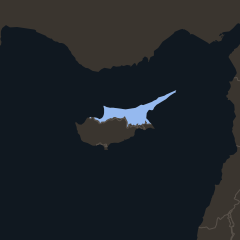
Cyprus has been divided since 1974, when Turkey invaded after a coup backed by Greece's military government. Turkish Cypriots run the north, about 36% of the island, as the Turkish Republic of Northern Cyprus. Only Turkey recognizes it. Turkey keeps an estimated 35,000 to 40,000 troops there. The Republic of Cyprus, an EU member, claims the north as its own. A UN buffer zone runs between the two sides. UN-led talks have never produced a deal.
- Divided since
- 1974
- Turkey invaded after a coup backed by Greece
- The north
- 3,355 km²
- about 36% of the island
- UN buffer zone
- 180 km
- under 20 m wide in parts of Nicosia
- Crossings in 2025
- 7.79 million
- a record, by the EU's count
- Held by
- Turkish Cypriots
- Claimed by
 Cyprus
Northern Cyprus in 30 seconds
- In July 1974 a coup tried to unite Cyprus with Greece. Turkey invaded, took about 36% of the island and has kept troops there since.
- Turkish Cypriots declared their own state in the north in 1983, but only Turkey recognizes it. The UN Security Council called the declaration legally invalid.
- In 2004 Turkish Cypriots voted for a UN reunification plan, but Greek Cypriots voted against it. Cyprus joined the EU a week later, with EU law suspended in the north.
- People have been able to cross the UN buffer zone since 2003. The two leaders meet under UN auspices, but no formal negotiations have taken place since 2017.
Who controls Northern Cyprus?
Turkish Cypriots govern the north as the Turkish Republic of Northern Cyprus, with Turkey's backing and troops. They declared it a state on November 15, 1983. Three days later UN Security Council Resolution 541 called the declaration "legally invalid". Only Turkey recognizes it. Turkey publishes no troop figure. Estimates run from 35,000 to 40,000. The north uses the Turkish lira.
The north's last census, in 2011, counted 286,257 people. Its statistics office projected about 489,000 at the end of 2024. Independent estimates run much higher. Many residents are settlers from Turkey and their descendants. The Republic of Cyprus, the internationally recognized government, claims the whole island apart from the British bases, but controls only the south. Britain keeps two military bases on the island, Akrotiri and Dhekelia, about 254 km² in all.
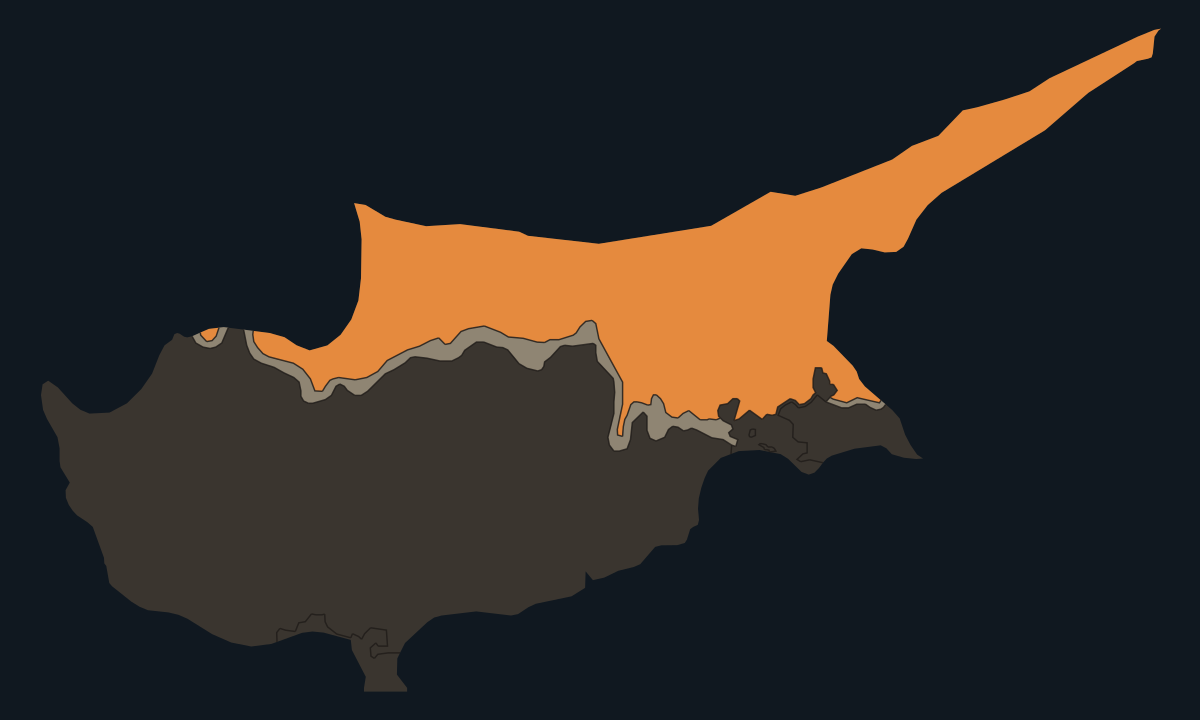 NORTHERN
CYPRUS REPUBLIC OF CYPRUS Mediterranean Sea Karpas
Peninsula UN buffer zone Nicosia Kyrenia Famagusta Morphou Limassol Larnaca Paphos Akrotiri
(UK base)
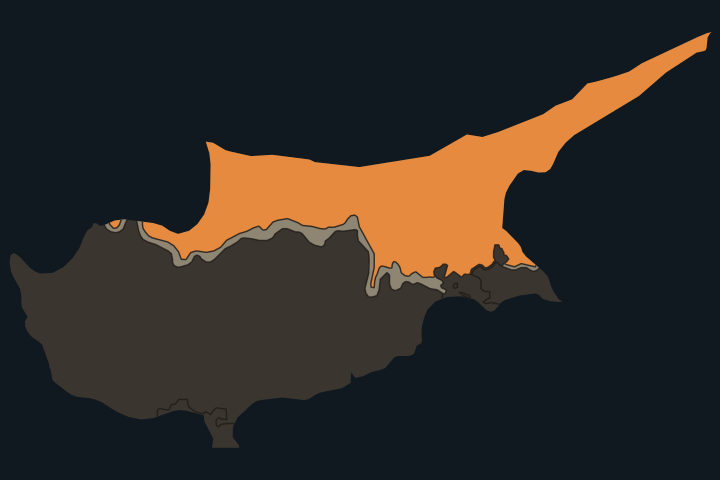 REPUBLIC OF CYPRUS
UN buffer zone
Nicosia
Limassol
Larnaca
REPUBLIC OF CYPRUS
UN buffer zone
Nicosia
Limassol
Larnaca
Why is Cyprus divided?
Cyprus became independent from Britain in 1960. Its constitution shared power between Greek Cypriots (about 77% of the population) and Turkish Cypriots (about 18%). Britain, Greece and Turkey were guarantors. Power-sharing broke down in December 1963 in fighting known as "Bloody Christmas". Turkish Cypriots withdrew into enclaves. UN peacekeepers arrived in March 1964.
On July 15, 1974, the Cypriot National Guard, led by officers from Greece's military government, overthrew President Makarios to unite Cyprus with Greece. On July 20 Turkey invaded, citing its rights as a guarantor. Turkey calls it a peace operation. A second offensive on August 14-16 took about 36% of the island.
About 160,000 to 200,000 Greek Cypriots fled or were forced from the north. About 45,000 to 65,000 Turkish Cypriots fled or were moved to the north. A committee run jointly by both communities lists 2,002 people missing from 1963-64 and 1974. It has identified 1,076 of them.
How Cyprus split
- 1960Independence from Britain, power shared between communities
- 1963Power-sharing collapses in fighting in Nicosia
- 1964UN peacekeepers arrive. They are still there.
- 1974A coup backed by Greece, then Turkey invades
- 1983Turkish Cypriots declare a state. Only Turkey recognizes it.
- 2003The first crossing points open
- 2004Greek Cypriots reject a UN plan. Cyprus joins the EU.
- 2017UN talks at Crans-Montana collapse
What is the Green Line?
The UN buffer zone, known as the Green Line, runs about 180 km across Cyprus. It covers about 346 km². It is less than 20 m wide in parts of Nicosia and about 7 km wide near Athienou. Nicosia is often called the last divided capital in Europe. The UN force, UNFICYP, had 759 troops and 62 police in June 2026. Its mandate runs to January 31, 2027.
The first crossing points opened in April 2003. The crossing on Ledra Street, Nicosia's main shopping street, opened on April 3, 2008. People crossed 7.79 million times in 2025, a record. There has been no fighting across the line since 1974, but tensions rose in 2026. In April 2026 Turkish forces massed armored vehicles near the village of Pyla. Turkish Cypriot police began patrols inside the buffer zone.
December 30, 1963
Green
How the Green Line got its name
After the fighting of December 1963, a British officer, Major-General Peter Young, drew a ceasefire line across a map of Nicosia with a green chinagraph pencil. The name stuck.
More than 60 years later that line is still patrolled by UN soldiers. Houses along it in old Nicosia stand empty.
Why has Cyprus never reunited?
The UN has led talks on reuniting Cyprus as a federation of two zones since the 1970s. In 2004 UN Secretary-General Kofi Annan put a plan to a vote on both sides. On April 24, 2004, 65% of Turkish Cypriots voted yes. 76% of Greek Cypriots voted no. A week later, on May 1, Cyprus joined the EU as a whole island, with EU law suspended in the north.
Talks at Crans-Montana in Switzerland collapsed on July 7, 2017. The main dispute was Turkish troops and Turkey's guarantor role. From 2020 to 2025 the Turkish Cypriot leader, Ersin Tatar, called for two states instead of a federation.
On October 19, 2025, Tufan Erhürman beat Tatar with 62.8% of the vote. Erhürman backs a federation. He and President Nikos Christodoulides of Cyprus had met 11 times by September 2026, and in May 2026 they agreed small confidence-building steps. No new crossing points have opened. In late September, at the UN in New York, Erhürman turned down a three-way meeting with the UN, saying Christodoulides had no new proposal. No date has been set for a wider UN meeting, and the UN envoy says the window for a deal is "gradually closing". The two leaders are due to meet again on October 13. Turkey's President Erdoğan called for recognition of the north at the UN on September 22, 2026.
The 2004 Annan Plan vote
What happened to Varosha?
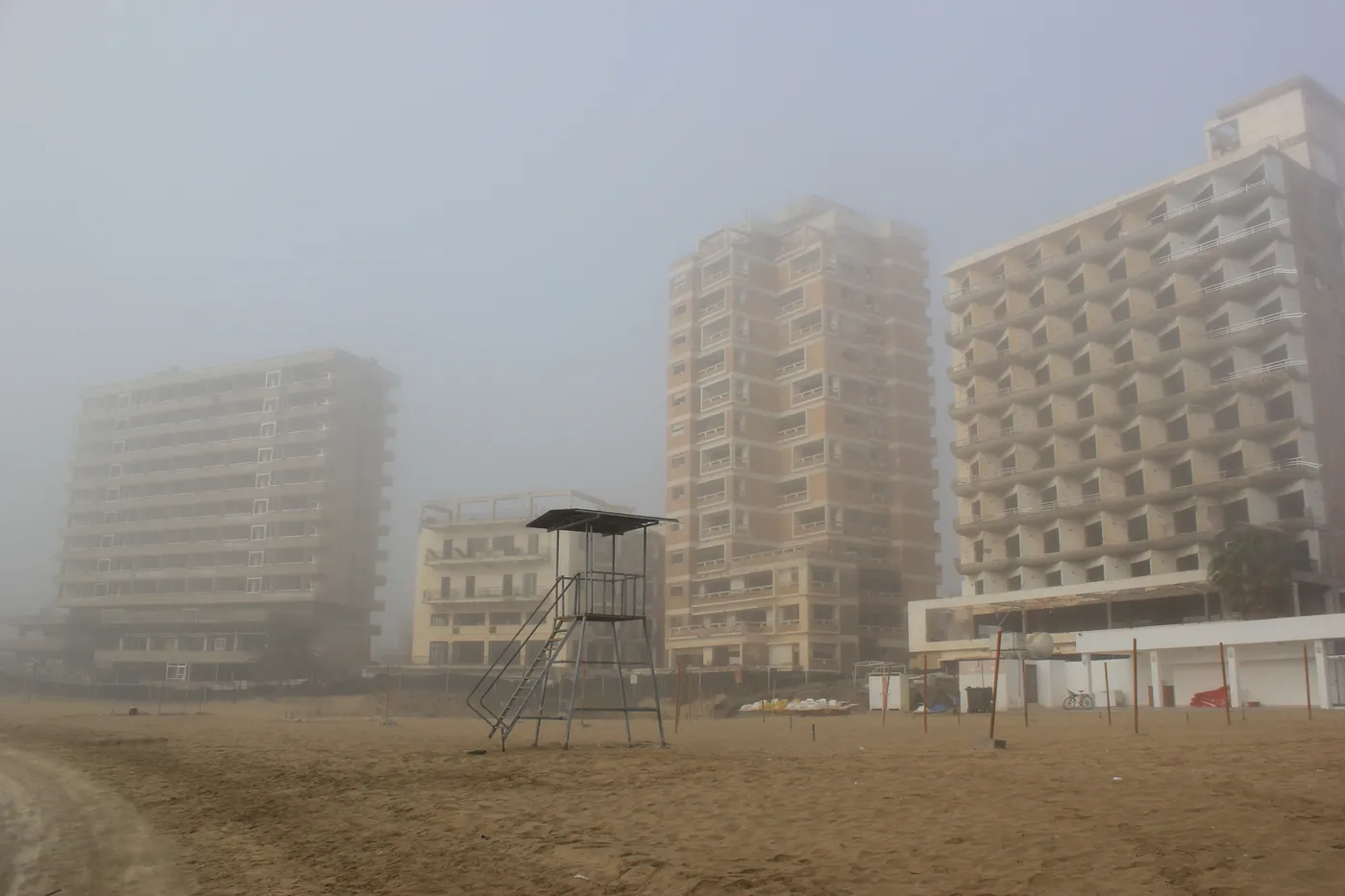
Varosha was the beach resort district of Famagusta and the island's busiest tourist area before 1974. Its Greek Cypriot residents fled in August 1974. The Turkish army fenced it off. UN Security Council Resolution 550 of 1984 called any attempt to settle Varosha by people other than its inhabitants inadmissible. The resolution asked for Varosha to be handed to the UN.
On October 8, 2020, Turkish Cypriot authorities began opening part of Varosha to visitors, against UN resolutions. In 2021 they lifted military status on 3.5% of it. The UN holds Turkey responsible for the situation in Varosha. In October 2026 media reported that President Christodoulides had proposed placing Varosha under UN administration in exchange for opening Famagusta's port under EU supervision. The government has not confirmed the proposal. Erhürman denied reports that he accepted it and then dropped it on Turkey's orders.
The leaders
- Nikos ChristodoulidesPresident of the Republic of Cyprus since 2023
- Tufan ErhürmanTurkish Cypriot leader since October 2025, backs a federation
 Recep Tayyip ErdoğanTurkey's president, wants the world to recognize the north
What is at stake in Cyprus?
Homes and the missing
Displaced Greek Cypriots still claim homes in the north. A compensation commission in the north had concluded 3,592 of 8,755 claims by August 2026 and awarded £662.9 million, not all of it paid yet. 926 of the 2,002 missing people have not yet been identified, and the remains of about 280 have never been found.
Gas
Gas has been found off Cyprus since 2011. On July 28, 2026, Eni and TotalEnergies made the final decision to develop the Cronos field, the first Cypriot gas field to get the go-ahead. Gas is due to be piped to Egypt from 2028. Turkey disputes parts of Cyprus's offshore zone.
Armies
Greece sent warships and jets to the south from March 3, 2026, during the US and Israeli war with Iran. Turkey sent six F-16 fighter jets to the north on March 9. In June 2026 France and Cyprus signed a defense agreement that Turkey condemned.
Questions about Northern Cyprus
Is Northern Cyprus a country?
Turkish Cypriot authorities and Turkey say it is. The Turkish Republic of Northern Cyprus has its own president, parliament and police. Only Turkey recognizes it. The UN Security Council called its 1983 declaration legally invalid. The rest of the world treats the north as part of the Republic of Cyprus under Turkish Cypriot and Turkish control. The north's next parliamentary election is scheduled for December 6, 2026.
Can you cross between north and south Cyprus?
Yes, since April 2003. Cypriots and visitors cross at checkpoints along the buffer zone, including on foot at Ledra Street in central Nicosia. There were 7.79 million crossings in 2025. Turkish Cypriots of Cypriot parentage can get Republic of Cyprus citizenship and passports, which makes them EU citizens. Talks on opening more crossing points have stalled.
Is Northern Cyprus in the EU?
Legally, the whole island joined the EU on May 1, 2004. But EU law is suspended in the north until the island reunites, under a protocol to Cyprus's accession treaty. The EU gives Turkish Cypriots aid (€33.7 million in its latest report). The EU says it wants a reunited Cyprus. The north uses the Turkish lira instead of the euro.
Why does the Cyprus flag show a map?
A Turkish Cypriot artist, İsmet Güney, designed the flag in 1960 after a contest whose rules banned blue and red (the colors of the Greek and Turkish flags) and any cross or crescent. The map is copper-colored. The Latin word for copper, cuprum, comes from the name Cyprus. Güney later said the fee was never paid. Kosovo's flag is the only other national flag with a map of the country.