
Disputed territory · Caucasus
South Ossetia
Frozen: a Russian base, and a leader from RussiaUpdated October 12, 2026
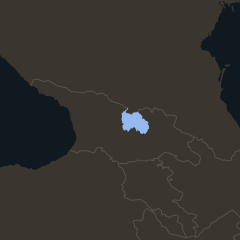
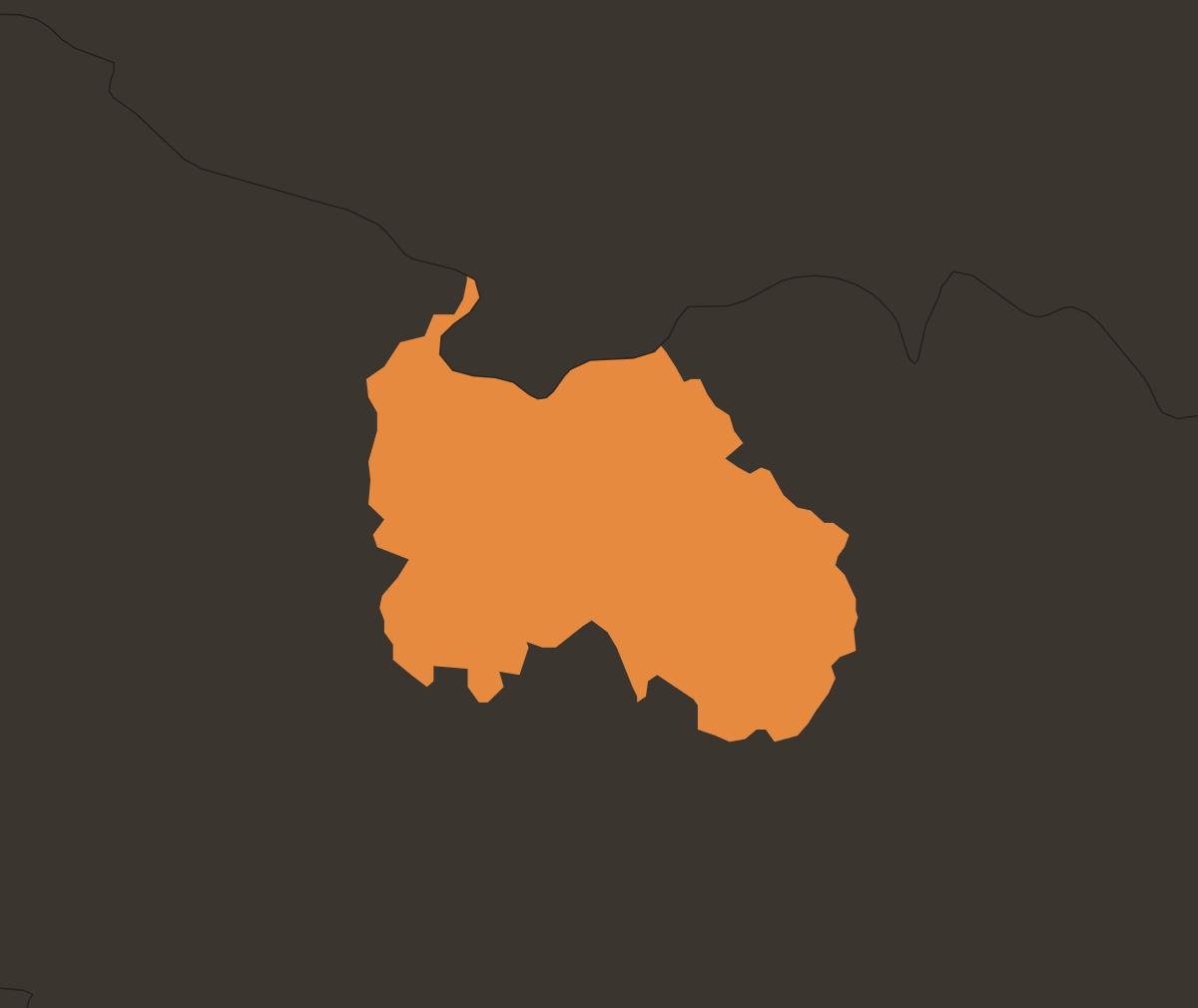
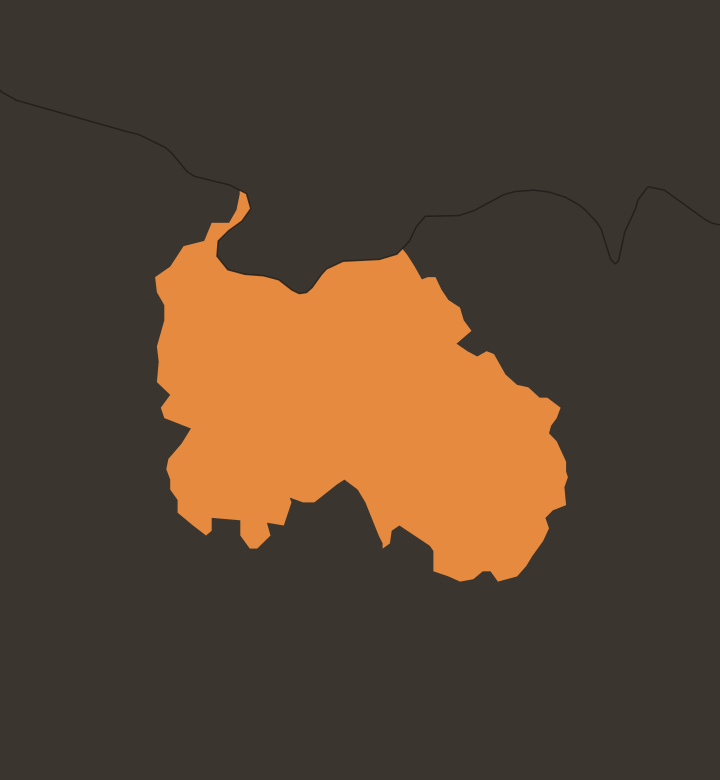
South Ossetia is a mountainous region in northern Georgia, on the border with Russia. It broke away from Georgia in fighting in 1991-92. Russia recognized South Ossetia after a five-day war with Georgia in August 2008 and keeps a military base there. Georgia calls it the Tskhinvali region and considers it occupied by Russia. In 2026 it signed a treaty binding it closer to Russia, and Marat Kambolov, a former Russian deputy minister with no earlier ties to the region, became its leader.
- Self-governed since
- 1992
- after fighting in 1991-92
- Area
- About 3,900 km²
- about 6% of Georgia
- People
- About 53,500
- local census, 2015 (98,500 in 1989)
- Russian troops
- 3,500-4,500
- estimate, plus border guards
- Held by
- Local government
- Claimed by
 Georgia
South Ossetia in 30 seconds
- South Ossetia broke away from Georgia in fighting in 1991-92. A joint peacekeeping force of Russian, Georgian and North Ossetian troops kept a ceasefire, broken by clashes in 2004, until 2008.
- In August 2008 Georgia shelled Tskhinvali and Russia's army pushed deep into Georgia. An EU inquiry found that Georgia's shelling began the war after years of provocations, and that much of Russia's response went far beyond self-defense.
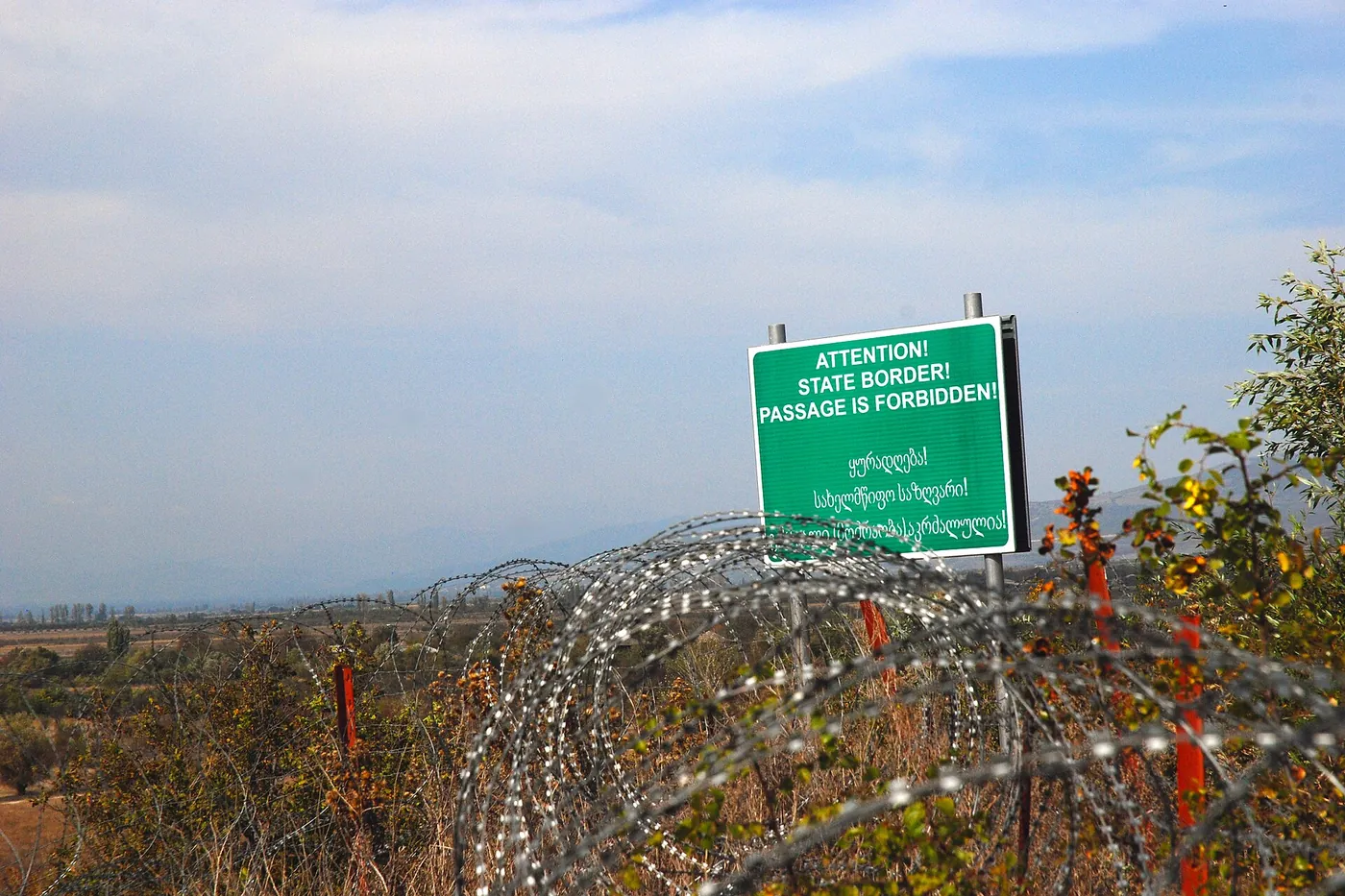
- Russia recognized South Ossetia and keeps a military base there. Russian border guards fence the line between South Ossetia and the rest of Georgia and detain Georgians who cross it.
- In 2026 South Ossetia signed a treaty on closer ties with Russia. Marat Kambolov, a former Russian deputy minister, has led it since June.
Who controls South Ossetia?
South Ossetia's own government, in Tskhinvali, runs the region with the backing of Russian troops. Russia keeps an estimated 3,500 to 4,500 soldiers at its military base in Tskhinvali and Java, plus border guards from its FSB security service. In January 2021 the European Court of Human Rights ruled that Russia had effective control over South Ossetia after the 2008 ceasefire. Tskhinvali is about 90 km from Tbilisi, Georgia's capital. The region's only road to Russia runs through the 3.7 km Roki Tunnel.
In 1989 South Ossetia had about 98,500 people, of whom about two-thirds were Ossetians and 29% were Georgians. A local census in 2015 counted about 53,500. Russia paid 81.8% of South Ossetia's budget in 2021, and the Russian ruble is its currency.
 SOUTH
SOUTHOSSETIA GEORGIA RUSSIA Tskhinvali Java Akhalgori Gori Tbilisi Vladikavkaz
 SOUTH
SOUTHOSSETIA GEORGIA RUSSIA Tskhinvali Java Akhalgori Gori Tbilisi
What happened in the 2008 war?
In December 1990 Georgia abolished South Ossetia's status as an autonomous region within Soviet Georgia. Fighting in 1991-92 killed about 1,000 people by common estimates. A ceasefire agreed in Sochi on June 24, 1992 set up a peacekeeping force of Russian, Georgian and North Ossetian troops under Russian command.
On the night of August 7-8, 2008, after months of rising tension and clashes, Georgian artillery shelled Tskhinvali and Georgian troops moved in. Russian forces pushed them out and advanced deep into Georgia, reaching Gori, Zugdidi, Senaki and the port of Poti. French President Nicolas Sarkozy, acting for the EU, brokered a ceasefire on August 12. About 850 people died. After the ceasefire, Russian and South Ossetian forces took the Akhalgori district, a mainly Georgian part of South Ossetia that Georgia had run until then.
An inquiry for the EU, led by the Swiss diplomat Heidi Tagliavini, reported on September 30, 2009. It found that the shelling of Tskhinvali began the war and was not justified under international law. It called the shelling "only the culminating point of a long period of increasing tensions, provocations and incidents." It found that Russia was entitled to defend its peacekeepers, but that "much of the Russian military action went far beyond the reasonable limits of defence."
How South Ossetia split from Georgia
- 1990Georgia abolishes South Ossetia's autonomy
- 1992A ceasefire and a joint peacekeeping force
- 2008Georgia shells Tskhinvali, and Russia's army pushes into Georgia
- 2009An EU inquiry reports on who started the war
- 2015Russian troops move the line near Georgia's main highway
- 2022A vote on joining Russia is called off
- 2026A treaty with Russia, and a new leader from Russia
What is borderization?
Georgians use the word borderization for the fences and signs that Russian border guards have put up along the line around South Ossetia since 2009, often moving them deeper into land Georgia controls. Barbed wire spread from 2013. In July 2015 Russian troops moved the line near the village of Khurvaleti to about 400 m from Georgia's main east-west highway, leaving 1.6 km of the Baku-Supsa oil pipeline behind it.
People who cross the line, often farmers going to their fields, are detained. Georgia's State Security Service counted 34 detentions on the South Ossetian line in 2025. In February 2018 a Georgian man, Archil Tatunashvili, died in the custody of South Ossetia's security service. Since October 2008 about 200 unarmed EU monitors have watched the line from the Georgian side. South Ossetia does not let them in. Their mandate runs to December 14, 2026.
Detentions
34
People detained at the line in 2025
Georgia's State Security Service counted 34 detentions near the South Ossetian line in 2025, and 40 near Abkhazia. In 2026 two civilians were held at Dvani in January. Two people detained on September 3 were released on October 9.
Will South Ossetia join Russia?
South Ossetia's leaders want to join Russia's North Ossetia, across the mountains. In May 2022 Alan Gagloev beat the leader, Anatoly Bibilov, in a runoff. Five days later Bibilov, on his way out, set a referendum on joining Russia for July 17. Gagloev suspended it.
On May 9, 2026, Putin and Gagloev signed a treaty on "deepening allied interaction." It covers foreign and defense policy and economic rules, plans to link energy and transport networks, and lets Russian citizens serve as officials in South Ossetia. Gagloev called it "the beginning of the reunification of the Ossetian people." In June 2026 Moscow sent Marat Kambolov, a former Russian deputy minister of education and science from North Ossetia with no earlier ties to South Ossetia, to be prime minister. Gagloev resigned on June 23 to become an adviser to Putin, and Kambolov became acting leader. He won an early election on September 18 with about 85% of the vote and took office on September 30.
Georgia's government and opposition call this annexation in practice. Georgia's foreign ministry said the vote "cannot alter the international legal status of the region as an integral part of Georgia." The EU called the vote null and void.
South Ossetia in 2026
- May 2026A treaty on closer ties with Russia
- Jun 2026Alan Gagloev resigns, and Marat Kambolov takes over
- Sep 2026Kambolov wins an early election
Can Georgians still live in South Ossetia?
Some do, especially in the Akhalgori district in the east. In 2002 Akhalgori had about 7,700 people, about 6,500 of them Georgians. Russian and South Ossetian forces took the district after the August 2008 ceasefire. About 1,000 Georgians are thought to remain.
In 2019 South Ossetia closed the crossing to Akhalgori for three months in a dispute over a Georgian police post. A patient died after a delayed transfer to a Georgian hospital. The crossing later opened only for pensioners and patients, and from 2022 for 10 days a month. In August 2026 South Ossetia proposed opening it from Thursday to Sunday each week. More than 100,000 people of all ethnic groups fled the 2008 war, and about 35,000 had not returned a year later.
South Ossetia's population
What is at stake in South Ossetia?
Georgia's main road
Georgia's main east-west highway passes about 400 m from the line near Khurvaleti. A stretch of the Baku-Supsa oil pipeline lies behind the fence. At Odzisi the line is about 50 km from Tbilisi.
Russian troops
Russia keeps an estimated 3,500 to 4,500 troops in South Ossetia, with its main base in Tskhinvali, about 90 km from Georgia's capital. The Roki Tunnel through the Caucasus is the region's only road link to Russia.
Divided villages
Fences cut farmers off from their fields and families from their graves. Georgians who cross the line are detained. People in Akhalgori can cross only on certain days of the month.
Questions about South Ossetia
Is South Ossetia part of Georgia or Russia?
South Ossetia is internationally recognized as part of Georgia, and most countries treat it that way. Georgia calls it the Tskhinvali region. Russia, Nicaragua, Venezuela and Syria recognize South Ossetia as independent. Russia keeps troops there, pays most of its budget, and in 2026 signed a treaty that Georgia calls annexation in practice.
What is the difference between South Ossetia and North Ossetia?
North Ossetia-Alania is a republic of Russia, on the northern side of the Caucasus mountains, with Vladikavkaz as its capital. South Ossetia lies on the southern side, in Georgia. The Roki Tunnel links them. South Ossetia's leaders want the two to unite inside Russia.
Who started the 2008 war?
Both sides blame each other. The EU's inquiry, led by Heidi Tagliavini, found that Georgia began the war when it shelled Tskhinvali on the night of August 7-8, 2008. The inquiry found that the attack was not justified under international law. It also found that a long period of tensions, provocations and incidents came before it, and that much of Russia's military response went far beyond reasonable self-defense.
Who are the Ossetians?
The Ossetians speak an Eastern Iranian language. They descend from the Alans, a people related to the ancient Scythians and Sarmatians. In the Ossetian Nart sagas, a dying hero, Batradz, orders his sword thrown into the sea. Some scholars compare the story to King Arthur's Excalibur, but the link is disputed.