
Disputed territory · Eastern Europe
Transnistria
Frozen: a ceasefire line since 1992Updated October 12, 2026
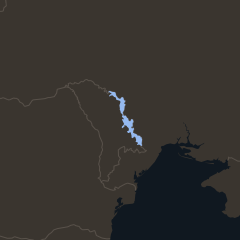
Transnistria is a strip of land along the Dniester River, between the rest of Moldova and Ukraine. It declared itself a separate republic in 1990 and fought a short war with Moldova in 1992. It has its own government, army and currency. Russia keeps about 1,200 troops there, by its own count. No UN member recognizes Transnistria as independent, not even Russia. Moldova wants to reunite the country peacefully and wants the Russian troops to leave.
- Self-governed since
- 1992
- declared in 1990, then a war with Moldova
- Area
- 4,163 km²
- a strip along the Dniester
- People
- About 370,000
- Moldova's register, June 2026
- Russian troops
- About 1,200
- Russia's count, June 2025
- Held by
- Local government
- Claimed by
 Moldova
Transnistria in 30 seconds
- Transnistria broke away from Moldova as the Soviet Union collapsed. A war in 1992 killed an estimated 700 to 1,000 people and ended in a ceasefire that still holds.
- Russia keeps about 1,200 troops in Transnistria, by its own count. They guard a depot at Cobasna thought to hold about 20,000 tonnes of Soviet-era ammunition.
- No UN member recognizes Transnistria. For years it ran on almost free Russian gas, until Gazprom stopped deliveries on January 1, 2025.
- Moldova is negotiating to join the EU and wants to reunite with Transnistria peacefully. Transnistria elects a new leader on December 13, 2026.
Who controls Transnistria?
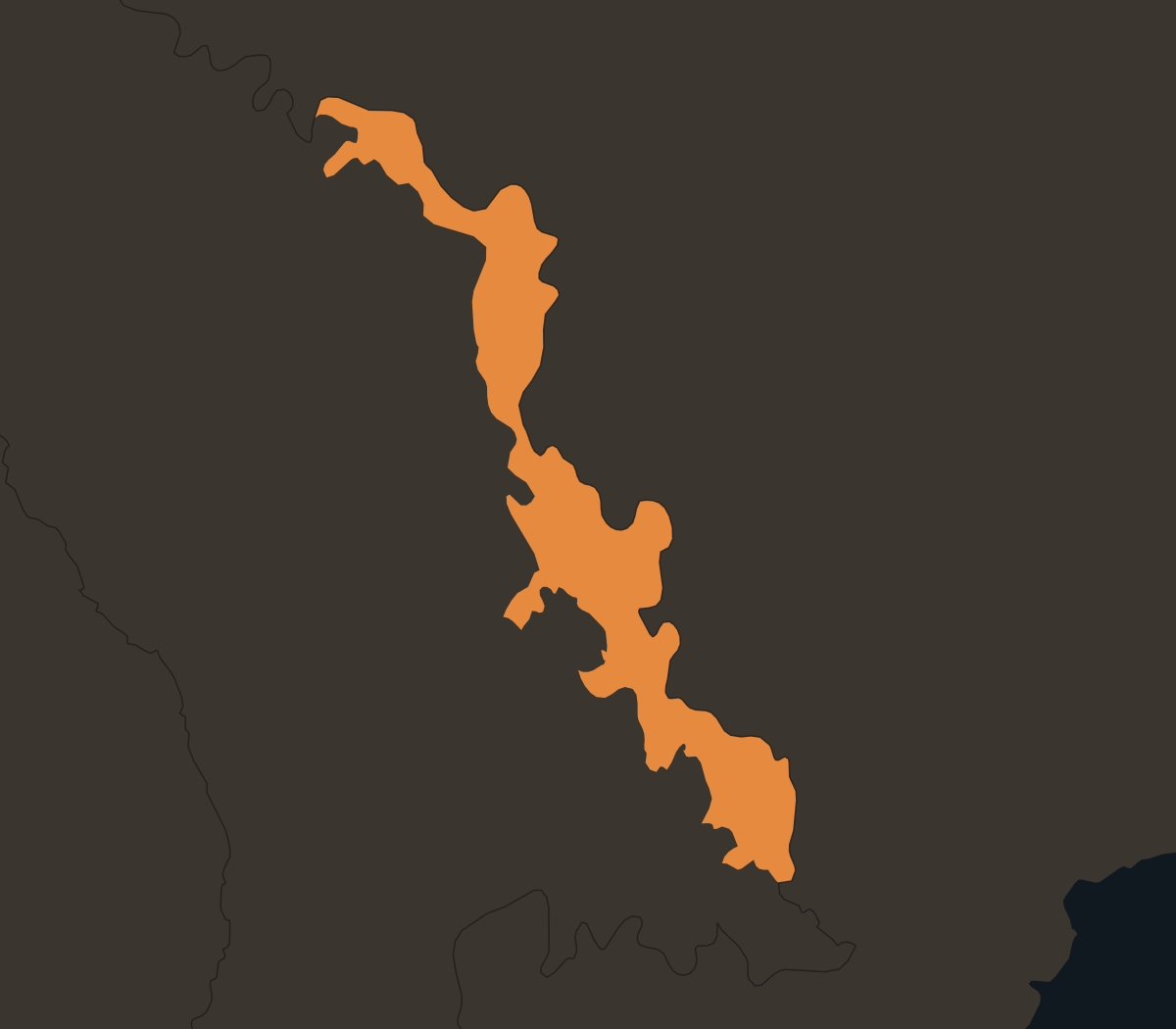
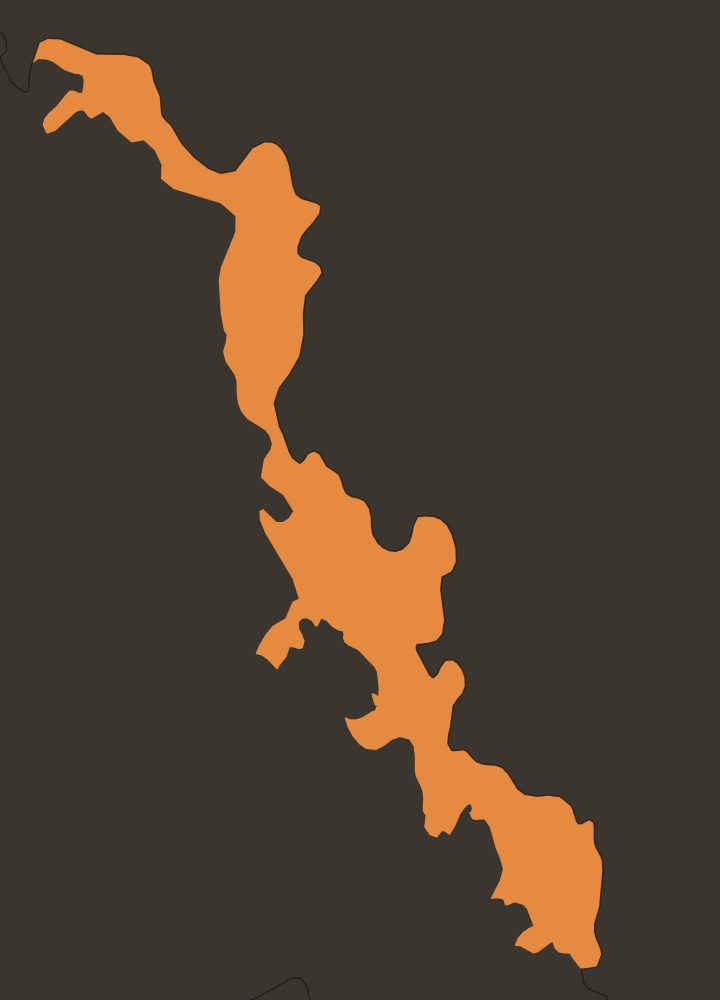
The authorities in Tiraspol control a strip of about 4,163 km², mostly on the east bank of the Dniester River, plus the city of Bender and a few villages on the west bank. A few villages on the east bank stay under Moldova's control. A ceasefire signed in 1992 set up a security zone patrolled by a joint force of Russian, Moldovan and Transnistrian peacekeepers.
Russia says it keeps about 1,200 troops in Transnistria: a force called the Operational Group of Russian Forces and a peacekeeping battalion. Moldova's foreign minister said in July 2026 that only 200 to 300 of them are actual Russian soldiers and that the rest are local recruits. Transnistria's leader since 2016, Vadim Krasnoselsky, cannot run for a third term. Vitaly Neagu, Transnistria's deputy prime minister and a former interior minister, plans to run in the election on December 13, 2026 and is widely expected to win.
 TRANSNISTRIA
MOLDOVA
UKRAINE
ROMANIA
Chișinău
Tiraspol
Bender
Rîbnița
Dubăsari
Odesa
Black Sea
TRANSNISTRIA
MOLDOVA
UKRAINE
ROMANIA
Chișinău
Tiraspol
Bender
Rîbnița
Dubăsari
Odesa
Black Sea
 TRANSNISTRIA
MOLDOVA
UKRAINE
Chișinău
Tiraspol
Bender
Rîbnița
TRANSNISTRIA
MOLDOVA
UKRAINE
Chișinău
Tiraspol
Bender
Rîbnița
How did Transnistria break away from Moldova?
In 1989 Soviet Moldova made Moldovan, written in the Latin alphabet, its sole state language. Leaders in the east, where many people spoke Russian or Ukrainian, opposed the change. On September 2, 1990, a congress of local deputies in Tiraspol proclaimed the Pridnestrovian Moldavian Soviet Socialist Republic. Pridnestrovie is the Russian name for Transnistria.
Fighting between Moldovan and Transnistrian forces from March to July 1992 killed an estimated 700 to 1,000 people. Russia's 14th Army, based in the region, backed Transnistria. General Alexander Lebed took command of the 14th Army on June 23, 1992. On July 21, 1992, Presidents Boris Yeltsin of Russia and Mircea Snegur of Moldova signed a ceasefire in Moscow. Transnistria later put up a monument to Lebed in Bender.
At a summit of the Organization for Security and Co-operation in Europe (OSCE) in Istanbul in 1999, Russia promised to withdraw its forces by the end of 2002. It has not. In 2003 Moldova's president, Vladimir Voronin, rejected at the last minute a Russian plan for a federal Moldova that would have kept Russian troops in the country. In a 2006 referendum held by Transnistria's authorities, 96.6% voted for independence and union with Russia. Russia never formally recognized the result.
How Transnistria split from Moldova
- 1990Local leaders proclaim a Soviet republic in Tiraspol
- 1992War with Moldova, then a ceasefire signed in Moscow
- 1999Russia promises to withdraw its troops by 2002
- 2003Moldova rejects a Russian plan for a federation
- 2006A local referendum backs union with Russia
- 2022Moldova becomes a candidate to join the EU
- 2025Russian gas deliveries stop on January 1
- 2026Russia eases citizenship for Transnistrians
How does Transnistria pay its way?
For years Transnistria received Russian gas while paying almost nothing for it. The bill, estimated at $8 billion to $11 billion, stayed on the books of Moldovagaz, Moldova's gas company. Cheap gas ran the region's factories and the Cuciurgan power plant, which supplied much of Moldova's electricity. A company called Sheriff, founded in 1993 by Viktor Gushan and Ilya Kazmaly, usually described as former Soviet security officers, runs supermarkets, petrol stations, television and radio, a mobile network and the football club FC Sheriff Tiraspol. Most of the region's exports go to the EU under Moldova's trade deal.
On January 1, 2025, Gazprom stopped sending gas to Moldova over a separate debt, which Gazprom puts at $709 million and Moldova at $8.6 million. Ukraine's deal to carry Russian gas ended the same day. Transnistria lost heating and hot water, and most of its industry shut down. Gas began flowing again in February 2025, bought by a Swiss-based trader and paid for, Tiraspol says, with a Russian loan. Deliveries kept breaking down. In the first half of 2025 the region's economy shrank by 23.2%.
FC Sheriff Tiraspol
2-1
The win at Real Madrid in 2021
On September 28, 2021, FC Sheriff Tiraspol, owned by the region's biggest company, beat Real Madrid 2-1 at the Bernabéu in the Champions League. Sébastien Thill scored the winning goal in the 89th minute. Sheriff was the first club from Moldova to reach the Champions League group stage.
Why are Russian troops in Transnistria?
Russia's troops in Transnistria are the heirs of the Soviet 14th Army. Russia says they keep the peace and guard the Cobasna depot near the Ukrainian border, which is thought to hold about 20,000 tonnes of Soviet-era ammunition. No international inspector has checked the depot in years. Moldova wants the troops to leave and the peacekeepers to be replaced by an OSCE civilian mission. In April 2026 Moldova barred six commanders of the Russian force, including its commander, Dmitry Zelenkov.
Transnistria has no border with Russia. Ukraine lies between them. In April 2026 a Ukrainian official said Russia's plans include a push from Transnistria to set up a buffer zone in Ukraine's Vinnytsia region, but added there was "no need to panic" because Russia lacks the forces. On October 9, 2026, the US military attaché in Moldova said Transnistria is "not a military problem" but must be resolved for Moldova to join the EU.
The Cobasna depot
20,000 t
Of Soviet-era ammunition, by estimate
The depot at Cobasna is one of the largest stores of ammunition in Eastern Europe. Estimates run from 20,000 to 22,000 tonnes. Russian troops guard it, and no international inspector has checked it in years.
Will Moldova and Transnistria reunite?
Moldova wants peaceful reintegration. Moldova became a candidate to join the EU in June 2022 and opened membership talks in June 2024. In September 2025 President Maia Sandu's party won a majority in parliament. Talks between Moldova and Transnistria now take place only between the two sides' negotiators, who met three times in 2026, most recently on September 24, without a breakthrough. The wider format that included Russia, Ukraine, the OSCE, the EU and the United States last met in October 2019.
Russia is tying residents closer to itself. In May 2026 President Putin made it easier for Transnistrians to get Russian citizenship. Sandu said Russia "probably" needs "more people to send to the war in Ukraine." More than 60,000 people had applied by August, Krasnoselsky said. In September 2026 Russia opened polling stations in Transnistria for its parliamentary election despite Moldova's protest. Krasnoselsky said he was ready to hold a new referendum if "all international participants" accept the result.
Citizenship of Transnistria's residents
What is at stake in Transnistria?
Ammunition
The Cobasna depot near the Ukrainian border is thought to hold about 20,000 tonnes of Soviet-era ammunition. Russian troops guard it. No international inspector has checked it in years.
Energy
Transnistria's power plant at Cuciurgan once supplied much of Moldova's electricity. Since Russian gas stopped on January 1, 2025, the region has faced repeated supply breakdowns. Moldova's parliament declared a 60-day energy and water emergency from September 26, 2026. Moldova's energy regulator wants 136 million m³ of gas stored for the region by November 1.
Moldova's EU bid
Moldova hopes to join the EU. The US military attaché in Moldova said in October 2026 that the Transnistria question must be resolved first. Moldova wants a peaceful settlement with the Russian troops withdrawn. Russia says its troops keep the peace.
Questions about Transnistria
Is Transnistria part of Moldova?
Under international law, yes. No UN member, not even Russia, recognizes Transnistria as independent. Only Abkhazia and South Ossetia, two breakaway regions of Georgia, do. In practice Transnistria has run itself since 1992, with its own government, army, police, currency and border posts.
Why does Transnistria look so Soviet?
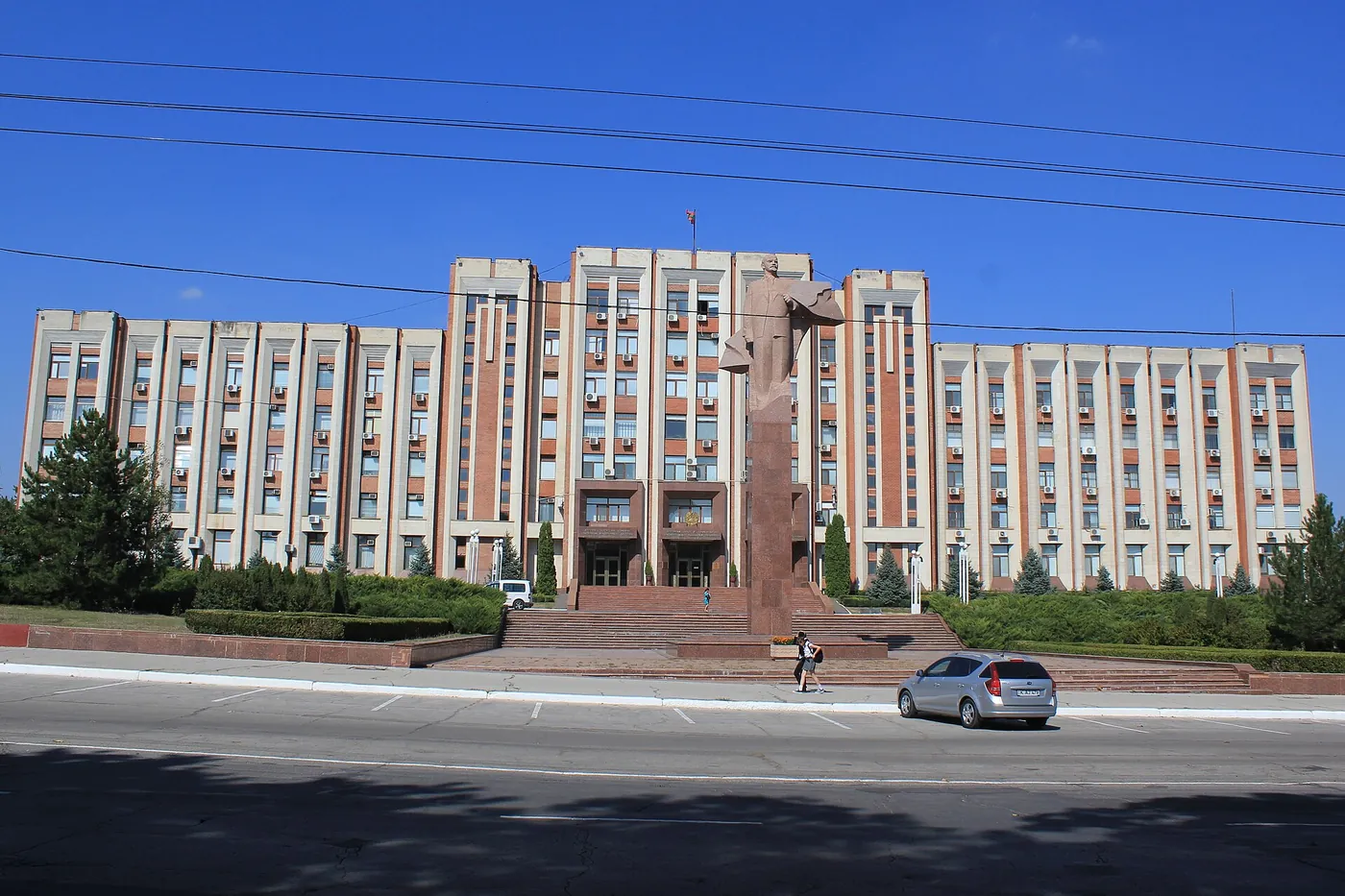
Transnistria's official flag still carries the hammer and sickle, and a granite statue of Lenin from 1987 stands in front of its parliament in Tiraspol. It has its own currency, the Transnistrian ruble. In 2014 its central bank issued plastic coins, each a different shape and color. The bank claimed a world first.
Can Russia send more troops to Transnistria?
Not easily. Transnistria has no border with Russia. Ukraine lies on one side and the rest of Moldova on the other. Ukraine closed its crossings into Transnistria days after Russia invaded in February 2022 and has reopened only one, in October 2023. Russia cannot send troops or supplies without crossing Ukraine or Moldova.
Who runs Transnistria?
Vadim Krasnoselsky, a former interior minister, has led Transnistria since December 2016 and was re-elected in 2021. Transnistria's constitution bars a third consecutive term. The election to replace him is on December 13, 2026. Vitaly Neagu, Transnistria's deputy prime minister, has said he will run.