
Disputed territory · Middle East
West Bank
Fighting: Israeli raids, militant and settler attacksUpdated October 12, 2026
The West Bank is the land west of the Jordan River that Jordan held from 1949 and Israel captured in 1967. Israel holds it under military rule. The Palestinians want the West Bank, with East Jerusalem as their capital, for a state that would include Gaza. The UN and the International Court of Justice call it occupied. Israel's government rejects that word. It cites the Jewish people's historic ties to the land, says no recognized state held it in 1967 and says it needs control there for its security. Israel officially calls it Judea and Samaria.
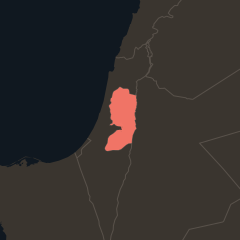
- Held by Israel since
- 1967
- captured from Jordan in the Six-Day War
- Area
- 5,655 km²
- land with East Jerusalem (5,860 km² with Dead Sea waters)
- Palestinians
- 3.4 million
- end of 2025, with East Jerusalem (Palestinian statistics)
- Israeli settlers
- About 541,000
- outside East Jerusalem, 2026 (Israeli registry, via a settler group)
West Bank in 30 seconds
- Israel captured the West Bank from Jordan in 1967 and has held it under military rule since. It annexed East Jerusalem, a step most countries do not recognize, but not the rest.
- Under the Oslo accords of the 1990s, the Palestinian Authority, the Palestinians' self-government, runs the main cities. Israel keeps full control of about 60% of the land.
- About 541,000 Israeli settlers live in the West Bank outside East Jerusalem. Most countries consider the settlements illegal under international law. Israel disputes this.
- From October 2023 to October 2025 the UN counted 999 Palestinians and 41 Israelis killed in the West Bank. Israel approved at least 35 new settlements in 2026.
Who controls the West Bank?
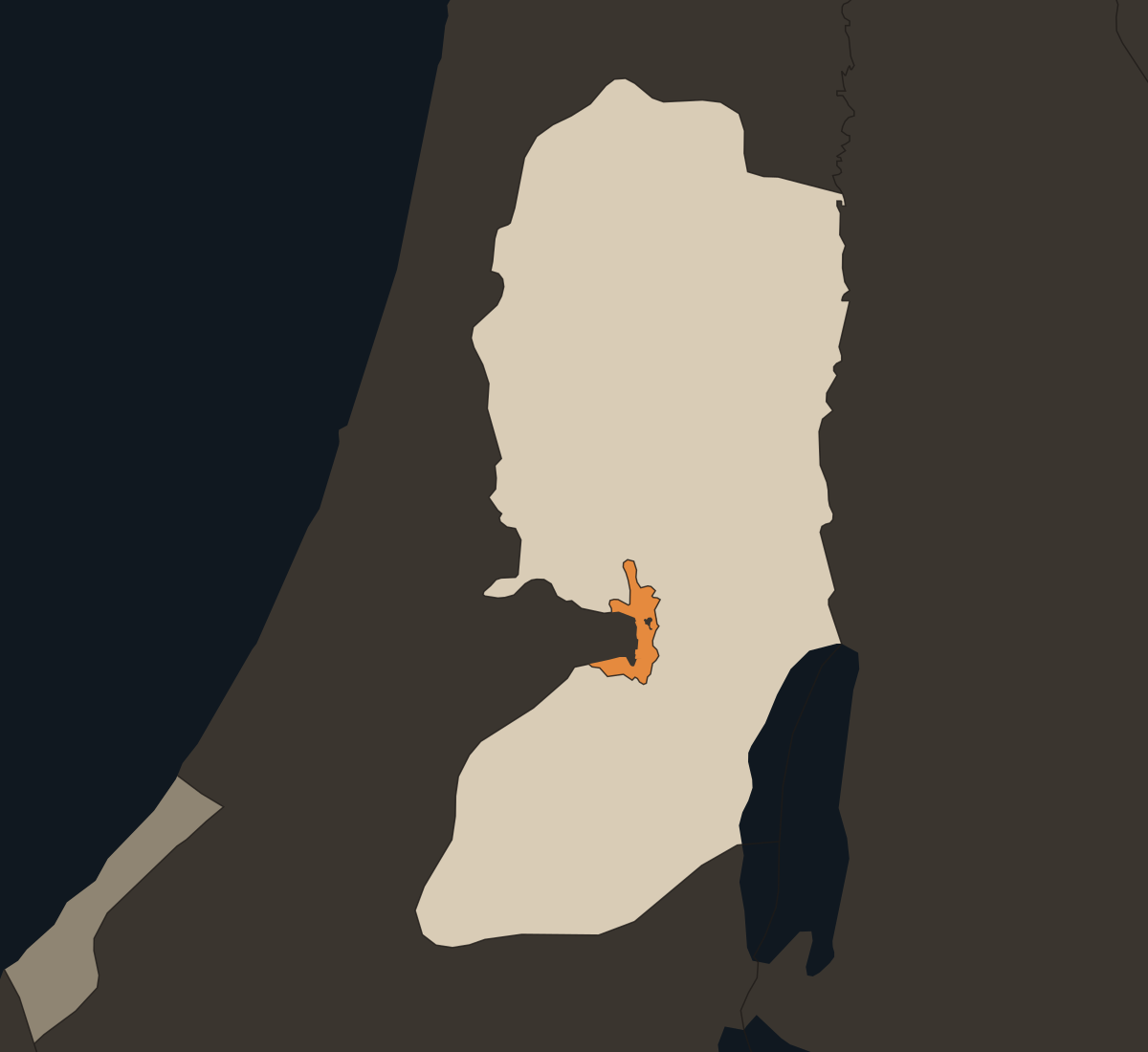
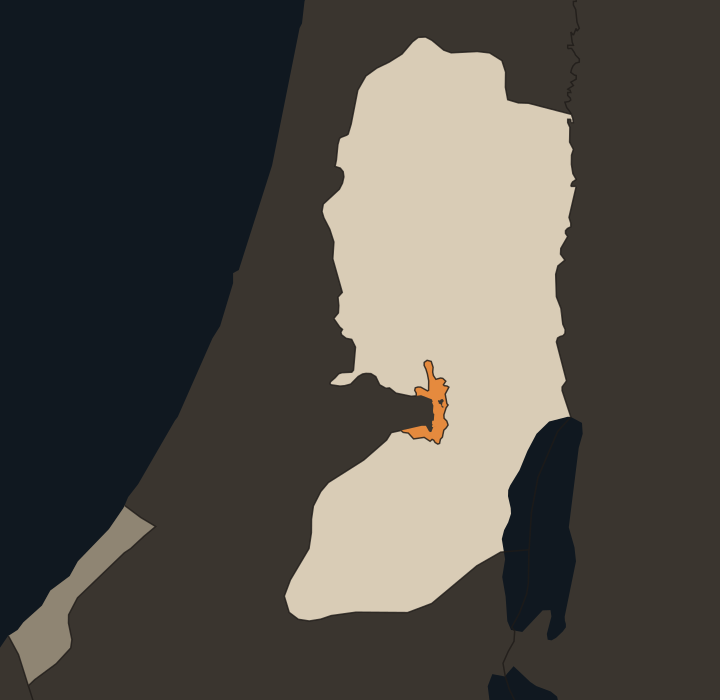
Israel has controlled the West Bank since 1967, and under the Oslo accords the Palestinian Authority governs parts of it. The Oslo II accord, signed on September 28, 1995 during a five-year interim period that began in 1994, divided the West Bank into three areas. After handovers that ended in 2000, Area A (about 18% of the land, including the main Palestinian cities) is under Palestinian civil and security control. In Area B (about 22%) the Palestinians run civil affairs and Israel keeps security control. Area C (about 60%) is under full Israeli control and includes almost all the settlements. Talks on a final deal were due to end by May 1999 but never did, so the split remains. Israeli troops also carry out raids and arrests in Areas A and B, which Israel says are needed to stop attacks. East Jerusalem, which Israel annexed in a step most countries do not recognize, is outside the three areas.
The Palestinian Authority was set up in 1994. Mahmoud Abbas was elected its president in January 2005, and there has been no presidential election since. On October 10, 2026 Abbas canceled legislative elections due on November 28 and set presidential and legislative elections for September 11, 2027. He cited Israeli measures in the West Bank, Israel's incomplete withdrawal from Gaza and limits on election staff and observers. His opponents say the delay extends his rule.
The Oslo areas
 Area C
22%Area B
18%
Area C
22%Area B
18% Area A
 WEST
WESTBANK GAZA
STRIP ISRAEL JORDAN Mediterranean
Sea Dead
Sea Jerusalem Ramallah Nablus Jenin Hebron Bethlehem Jericho Tel Aviv Amman Gaza City
 WEST
WESTBANK GAZA
STRIP ISRAEL JORDAN Mediterranean
Sea Dead
Sea Jerusalem Ramallah Nablus Jenin Hebron
How did Israel take the West Bank?
Arab armies invaded the day after Israel declared independence in May 1948. Israelis call the war that followed the War of Independence. About 750,000 Palestinians fled or were driven from their homes, by the count of UNRWA, the UN agency for Palestinian refugees. Palestinians call it the Nakba, "the catastrophe". Many settled in West Bank refugee camps such as Jenin. Jordan held the West Bank after the war and annexed it in 1950, a step most countries did not recognize.
The Six-Day War began on June 5, 1967, when Israel struck Egypt, saying an Arab attack was imminent. Jordan joined the fighting the same day, and Israel captured the West Bank, including East Jerusalem. UN Security Council Resolution 242 called for "withdrawal of Israel armed forces from territories occupied in the recent conflict" and for every state's right to "secure and recognized boundaries". Israel stresses that the English text says "territories", not "the territories". Arab states point to the equally official French text, which says "des territoires occupés" ("the occupied territories"), and read it as all of them. Jordan gave up its claim to the West Bank in 1988.
How the West Bank changed hands
- 1949Jordan holds the West Bank after the war over Israel's founding
- 1967Israel captures it, with East Jerusalem, in the Six-Day War
- 1980Israel's Jerusalem Law. The UN Security Council calls it void
- 1988Jordan gives up its claim
- 1995The Oslo II accord creates Areas A, B and C
- 2000Peace talks at Camp David fail, and the second intifada begins
- 2002Amid suicide bombings, Israel starts building a barrier
- 2024In a non-binding opinion, the UN's top court calls Israel's presence unlawful
Why do the settlements matter?
Israel has built settlements in the West Bank since 1967. Israel's government and settlers call them communities or towns. Peace Now, an Israeli group that opposes them, counted 146 official settlements outside East Jerusalem in August 2026, plus hundreds of outposts built without government approval. About 541,000 settlers lived outside East Jerusalem on January 1, 2026, by Israeli population registry figures compiled by a pro-settlement group. At the end of 2023 about 234,000 Israelis lived in parts of East Jerusalem built after 1967, by Israeli official figures. Israel calls these neighborhoods, and most countries consider them settlements.
The UN Security Council (Resolution 2334 of 2016), the International Committee of the Red Cross and most governments say the settlements break the Fourth Geneva Convention, which bars an occupying power from moving its own civilians into occupied land. Israel disputes this. It says the land had no recognized sovereign in 1967 and that Jews have a historic right to live there. Palestinians say the settlements and the land around them cut the West Bank into pieces and make a Palestinian state impossible. In August 2025 Finance Minister Bezalel Smotrich said a plan for 3,401 homes near Jerusalem, called E1, would "bury the idea of a Palestinian state."
Settlements
35+
Settlements Israel approved in 2026
Israel's security cabinet approved 34 new settlements in March 2026, a decision reported in April and declassified in July. On July 15 Israel approved Sa-Nur East, the 104th settlement approved since Netanyahu's current government took office in December 2022, by Peace Now's count. Peace Now says 38 of the 104 are entirely new. The rest legalize outposts or upgrade neighborhoods. Most are not yet built.
What is happening in the West Bank now?
Violence has risen since Hamas, the Islamist group that ruled Gaza, attacked Israel on October 7, 2023. From then to October 6, 2025, the UN humanitarian office (OCHA) counted 999 Palestinians killed in the West Bank, 967 of them by Israeli forces and 20 by settlers. Israel says its raids target militants and people planning attacks. Over the same period OCHA counted 41 Israelis killed by Palestinians there, 22 of them members of the security forces. By July 13, 2026 the Palestinian toll had reached 1,111. On September 20, 2026 a settler was shot dead near Halamish.
Armed groups, including Hamas and Islamic Jihad, were active in the northern refugee camps. The Palestinian Authority itself fought them in Jenin in December 2024. In January 2025 Israel launched Operation Iron Wall, which it said targeted them, in the camps of Jenin, Tulkarm and Nur Shams. About 40,000 people were displaced at the peak, and more than 33,000 were still displaced in August 2026, by UN figures. Defense Minister Israel Katz said troops would stay in Jenin camp "permanently". On August 28, 2026 an Israeli air strike in Jenin killed three Palestinians. Israel said it targeted a Hamas operative. Islamic Jihad said he was a senior member of its armed wing.
OCHA counted more than 1,800 settler attacks causing casualties or damage in 2025, the most since its records began in 2006. An Israeli security official, using a different method, counted about 870. In July 2026 Netanyahu called coverage of settler violence "bloated" and said it involved "a handful of kids". Some 600 former Israeli security officials asked President Trump to act.
Since October 2023
- Oct 2023Hamas attacks Israel, and the Gaza war begins
- Jan 2025Israel's army moves into three refugee camps
- Oct 2025A West Bank sovereignty bill passes a preliminary vote
- Jan 2026The UN reports a record year of settler attacks
- Feb 2026Israel opens West Bank land sales to Israelis
- Aug 2026An Israeli air strike in Jenin kills three
- Sep 2026A settler is shot dead near Halamish
- Oct 2026Abbas postpones Palestinian elections to 2027
Will Israel annex the West Bank?
Israel has not formally annexed the West Bank outside East Jerusalem. On October 22, 2025 a bill to apply Israeli sovereignty there passed a preliminary vote in the Knesset, Israel's parliament, by 25 votes to 24, while Netanyahu's Likud party, except one member, boycotted the vote. The bill has not advanced since. President Trump said annexation "won't happen because I gave my word to the Arab countries." In February 2026 Israel's security cabinet ordered the repeal of a Jordanian-era ban on selling West Bank land to Israelis and moved building powers in Hebron from the Palestinian Authority to Israel. Ministers said they were repealing "discriminatory Jordanian legislation". UN bodies and Peace Now called the measures annexation in practice. A White House official said Trump "does not support Israel annexing the West Bank."
Israel holds an election on October 27, 2026. Smotrich, whose party wants full sovereignty, urged Israel on September 27 to "go to war" in the West Bank and dismantle the Palestinian Authority. Israel has withheld the tax revenue it collects for the Palestinian Authority for 17 months, by the Authority's count. Israel also deducts sums it says match the Authority's payments to Palestinian prisoners and to families of Palestinians killed by Israel, including attackers. Israel says the payments reward terrorism. The Authority says that since 2025 they have been welfare based on need, and Israel says they continue. The Authority now pays its employees only part of their salaries.
What some of Israel's parties say about the West Bank
- Religious Zionism-Zehut (Smotrich)Supports "full Israeli sovereignty over Judea and Samaria"
- Otzma Yehudit (Ben-Gvir)Full sovereignty, new settlements and "voluntary migration" of Palestinians
- Yisrael Beytenu (Liberman)Israeli sovereignty over Area C
- Beyachad (Bennett)No Palestinian state. Area C to become part of Israel
- Yashar (Eisenkot)"A Palestinian state is not on the agenda"
- The DemocratsSeparation from the Palestinians, remove outposts
- Ra'amTwo states
What is at stake in the West Bank?
People
About 3.4 million Palestinians live in the West Bank, including East Jerusalem, and about 541,000 Israeli settlers live there outside East Jerusalem. Settlers live under Israeli civil law. Palestinians outside East Jerusalem fall under Israeli military law and, in Areas A and B, Palestinian Authority rule.
Water
The Mountain Aquifer under the West Bank supplies Israelis and Palestinians. The Oslo II accord allotted the Palestinians 118 million m³ a year, about 20% of the estimated recharge, plus more to be developed later. B'Tselem, an Israeli rights group, says the accord allots about 80% of the aquifer's water to Israel and the settlements. Israel says it supplies the Palestinians more than the accord requires.
A Palestinian state
By most counts, about 157 of the 193 UN members recognize the State of Palestine. Abbas told the UN in September 2026 that Palestinians want "an unarmed state living in security and peace alongside the State of Israel." Netanyahu says a Palestinian state would endanger Israel and that Jews "are not occupiers in their own land."
Questions about the West Bank
Is the West Bank part of Israel?
No. Israel has not annexed the West Bank, and Palestinians there are not Israeli citizens. The exception is East Jerusalem, which Israel annexed in a step most countries do not recognize. Most Palestinians there hold Israeli residency rather than citizenship. Israel's government rejects the word "occupied", arguing that no recognized state held the land in 1967 and citing Jewish historic ties to it. The UN and most countries call it occupied Palestinian territory. In a 2024 advisory opinion, which is not binding, the International Court of Justice said Israel's continued presence there is unlawful. Israel rejected the opinion.
What is the difference between the West Bank and Gaza?
Israel captured both in 1967, the West Bank from Jordan and Gaza from Egypt. Israel withdrew its settlers and troops from Gaza in 2005 but kept control of its airspace, coast and most of its borders. Hamas, which won the 2006 Palestinian legislative election, took control of Gaza from Abbas's Fatah party in 2007. Israeli troops returned in the war that began in 2023 and still hold part of the Strip. Under a US plan endorsed by the UN Security Council in November 2025, an international Board of Peace chaired by President Trump is meant to run Gaza as a transitional administration. The Palestinian Authority has no formal role there yet.
What is the West Bank barrier?
Israel began building the barrier in 2002, during a Palestinian uprising that included suicide bombings inside Israel, saying it would keep attackers out. Israel calls it a security fence and credits it with a sharp fall in attacks. Palestinians call it the separation or apartheid wall and say its route takes their land. About 64% of its planned 712 km is built, by UN figures. About 85% of the route runs inside the West Bank rather than along the Green Line, the 1949 armistice line that served as the border until 1967. In 2004 the International Court of Justice said this route was contrary to international law. Israel rejected the opinion.
Why is Hebron divided?
Hebron holds the Cave of the Patriarchs, which Jews and Muslims revere as the burial place of Abraham. Muslims call it the Ibrahimi Mosque. Jews lived in Hebron for centuries until riots in 1929 killed 67 of them, and settlers returned after 1967. On February 25, 1994 Baruch Goldstein, an Israeli settler, killed 29 Muslim worshippers there at dawn prayers. Israel then split the site into a synagogue and a mosque. A 1997 agreement left about a fifth of Hebron, known as H2, under Israeli control. Several hundred settlers and tens of thousands of Palestinians live there.