
How Japan's 1989 bubble led to three lost decades
Japan's stock market peaked in December 1989 and took 34 years to recover. The crash turned the world's second-largest economy into a warning.
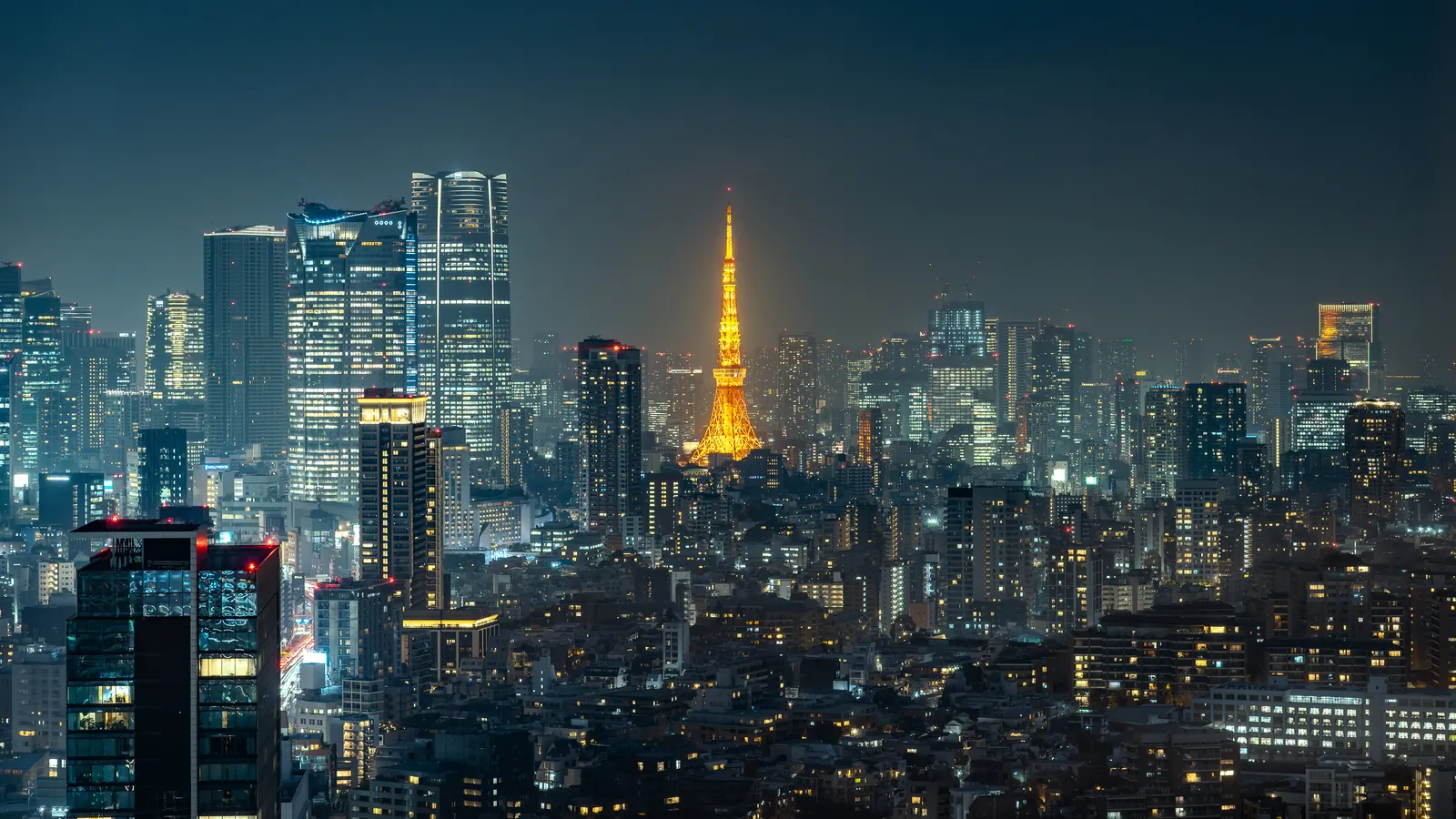
On February 22, 2024, Japan's main stock index, the Nikkei 225, closed at 39,098. Technically it was a record. But the previous record had been set on December 29, 1989, more than 34 years earlier. A Japanese investor who bought the index at its 1989 peak and simply held would have waited a full generation just to break even. What happened in those 34 years is the story of the largest asset bubble in modern history, and the decades of stagnation that followed.
The fastest economy in the world
Japan's postwar growth was the fastest any major economy had ever achieved. From the rubble of 1945, the economy grew at roughly 10 percent a year through the 1960s, doubling in size every seven years. By 1968 Japan had overtaken West Germany to become the world's second-largest economy. Toyota, Sony, Honda, and Panasonic became household names on every continent. American executives flew to Tokyo to study how Japanese factories operated.
Growth slowed after the 1973 oil crisis, but even at 4 to 5 percent a year through the late 1970s and 1980s, Japan was still outgrowing the United States and Europe. By the mid-1980s, many American economists and business leaders believed Japan would eventually overtake the United States as the world's largest economy. A 1979 book called Japan as Number One by Harvard sociologist Ezra Vogel became a bestseller in both countries.
How the bubble inflated
The trigger was a currency deal. In September 1985, the finance ministers of the United States, France, West Germany, Japan, and Britain met at the Plaza Hotel in New York and agreed to push down the dollar, which had risen about 50 percent against the yen over the previous five years. The agreement, known as the Plaza Accord, worked faster than anyone expected. Within two years the yen roughly doubled in value against the dollar, from about 240 yen per dollar to below 150.
The strong yen was painful for Japanese exporters, whose products suddenly cost nearly twice as much abroad. To cushion the blow, the Bank of Japan cut its discount rate from 5 percent to 2.5 percent by early 1987. With interest rates low and exports struggling, Japanese corporations and investors poured cheap credit into domestic assets, above all real estate and stocks.
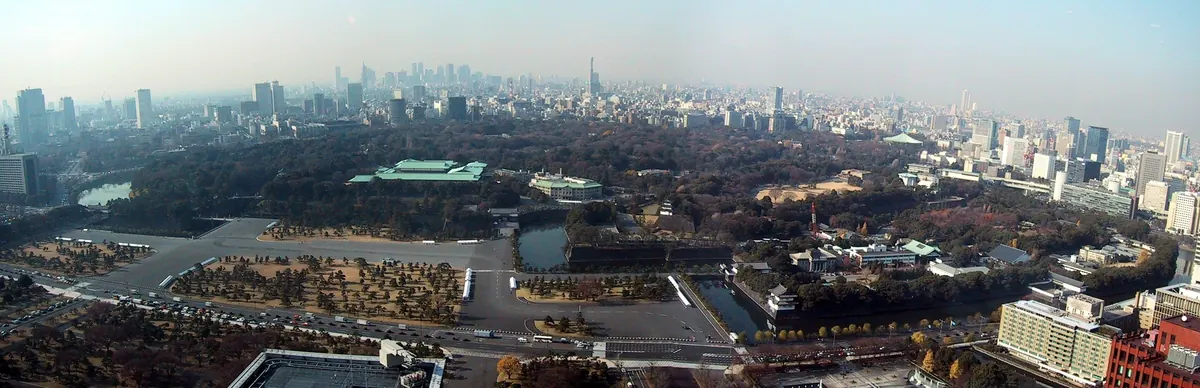
Commercial land prices in Tokyo nearly quintupled during the second half of the 1980s. A single square meter in the Ginza shopping district sold for about $230,000. The land beneath the Imperial Palace grounds in central Tokyo, roughly 3.4 square kilometers, was estimated to be worth more than all the real estate in California. Golf club memberships in Tokyo traded for over a million dollars.
The stock market was just as extreme. The Nikkei 225 climbed from about 13,000 at the start of 1986 to 38,957 on December 29, 1989, tripling in four years. At the peak, the index traded at roughly 60 times earnings. Japan's stock market accounted for about 42 percent of global market capitalization. Thirteen of the world's twenty most valuable companies were Japanese.
The man who popped it
On December 17, 1989, twelve days before the Nikkei peaked, Yasushi Mieno became governor of the Bank of Japan. Mieno was a career central banker who had spent five years as deputy governor watching the speculation grow. He believed that if asset prices kept climbing, the eventual crash would be far worse. On December 25, four days before the all-time high, he warned publicly that speculation had become dangerous. Financial markets ignored him.
Starting in late December, Mieno began raising interest rates. Over the next ten months he took the discount rate from 3.75 percent to 6 percent. The Nikkei fell nearly 40 percent in 1990 alone, erasing roughly $2 trillion in market value. By August 1992 it had lost more than 60 percent from its peak. Property prices followed, more slowly but just as far. By 2001, commercial land prices in Japan's major cities had fallen more than 70 percent.
Mieno probably diagnosed the problem correctly. But the cleanup that followed was handled so badly that it turned a sharp correction into a generational slump.
Why it lasted three decades
The crash itself was not unusual. Bubbles burst. What made Japan's case different was how long the damage lasted.
The core problem was the banking system. Japanese banks had lent enormous sums against real estate as collateral. When property values fell, those loans went bad. But the banks did not write down the losses. Instead, they kept the bad loans on their books and extended new credit to failing borrowers so that neither the borrower nor the bank had to formally recognize the default. Economists called these "zombie banks" lending to "zombie companies." Capital that could have funded productive new businesses went to keeping insolvent ones running.
The government compounded the problem by acting too slowly. Fiscal stimulus came in bursts, large enough to add to the national debt but never sustained enough to restart growth. The Bank of Japan eventually cut interest rates to zero in 1999, but by then the economy had spent nearly a decade sliding into deflation: falling prices made consumers and businesses delay spending, which reduced demand, which pushed prices down further.
Demographics made the trap harder to escape. Japan's working-age population peaked in 1995 and began shrinking. The fertility rate fell to about 1.4 children per woman, well below the 2.1 needed to hold the population steady. Japan went from having one of the youngest workforces among wealthy nations to the oldest. Fewer workers meant less demand, less tax revenue, and a growing bill for pensions and healthcare.
The result was three decades of near-zero growth. From 1991 to 2020, Japan's GDP grew at an average of roughly 1 percent a year. Wages stayed flat for a generation. The national debt, swollen by repeated rounds of stimulus spending, grew to more than 250 percent of GDP, the highest ratio of any major economy.
What Japan's lost decades mean now
Japan's stock market has recovered. Corporate governance reforms, a weaker yen, and strong earnings have drawn foreign investors back to Tokyo. Inflation has returned after decades of near-absence, and in 2024 the Bank of Japan raised interest rates above zero for the first time in seventeen years.
But the deeper lesson is playing out elsewhere. China's economy today shows several of the same warning signs Japan had in 1989: a massive property bubble that has begun deflating, banks loaded with loans backed by falling real estate, a population that has started shrinking, and a government reluctant to let large companies fail. When Evergrande, once China's second-largest property developer, defaulted on roughly $300 billion in debt in 2021, the comparison became unavoidable.
China has advantages Japan did not, including a much larger domestic market and a government with more direct control over the financial system. But the pattern is the same: years of cheap credit flowing into real estate until prices lose all connection to what the properties are actually worth. Japan spent 34 years learning what that costs. Whether China can avoid the same outcome is the most important economic question in Asia.
Test what you learned
5 questions on this article. About two minutes, no signup.