
What does Palantir actually do?
Palantir is worth $400 billion, and most people cannot say what it sells. What Palantir's software does, from Ukraine's artillery to ICE and the NHS.
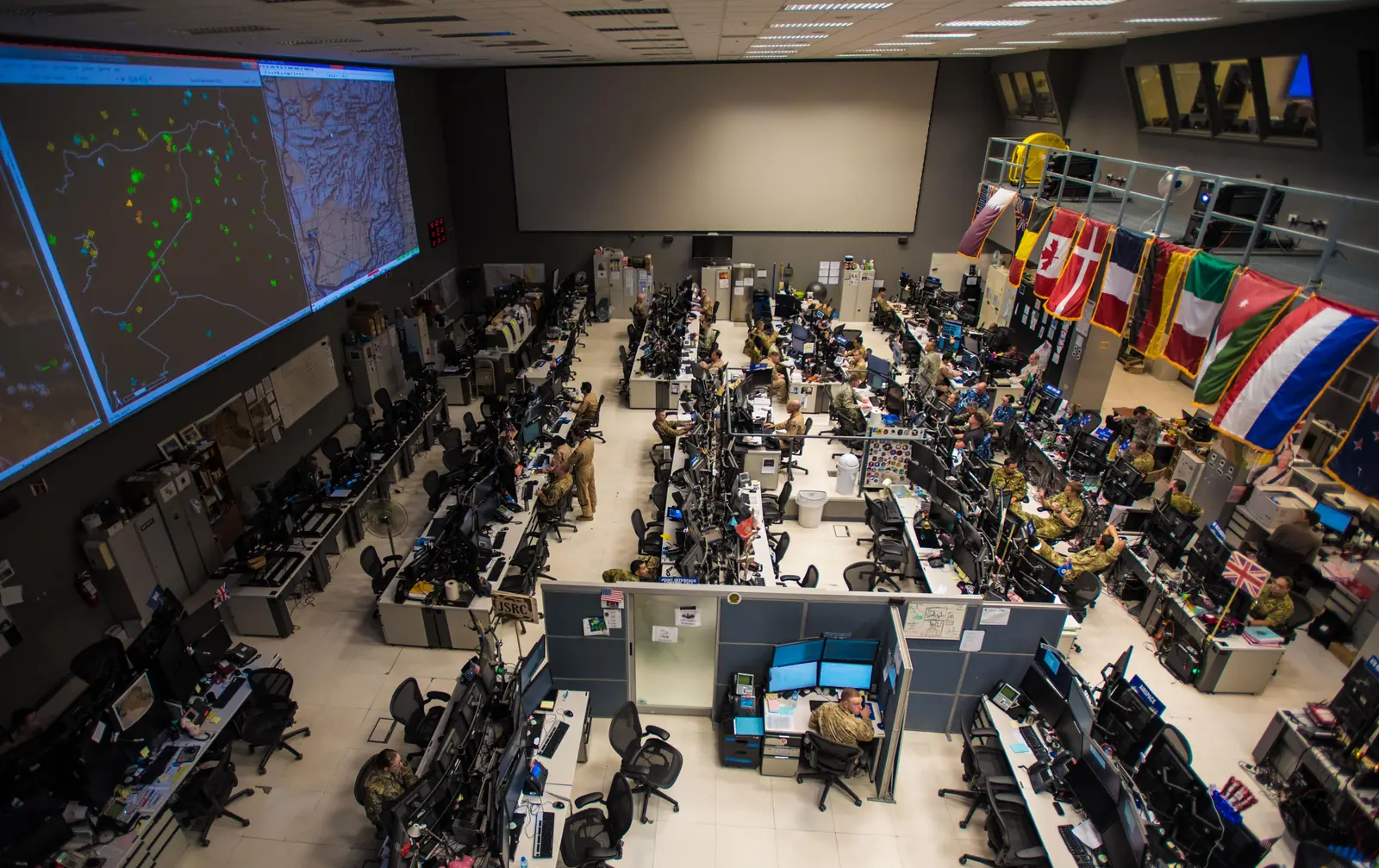
Palantir is one of the twenty most valuable companies in the world. The stock market prices it near $400 billion, ahead of Coca-Cola, Disney, and every traditional defense contractor on earth, and it got there with roughly four thousand employees, no factories, and no product you can buy in a store. Ask what the company actually does, and even people who own the stock tend to reach for fog: something with data, something with the military, something with surveillance.
The real answer is more specific. Palantir sells software that takes the separate databases an organization already owns and makes them work like one database. It does not collect data, and it does not sell data; it sells the connections. That one product is why the same company sits inside Ukraine's artillery targeting, America's deportation system, England's hospitals, and Ferrari's Formula 1 garage, and it is where every argument about Palantir begins.
The problem Palantir was built to solve
After September 11, every inquiry into the attacks landed on the same finding: the information had been there all along, in pieces, and nobody put the pieces together. One agency held a hijacker's visa record. Another held a watchlist with his name on it. A third held a wire transfer. Each record had been collected legally, and each sat in a system that could not talk to the others: different software, different formats, and often a legal wall in between. An analyst could find the connection only if she already knew what she was looking for.
Peter Thiel founded Palantir in May 2003 to sell the missing connection. He had just sold PayPal, where his fraud teams had watched criminal rings slip between databases that could not compare notes, and he guessed that intelligence agencies had the same problem at a larger scale. The first institutional money, about $2 million, came from In-Q-Tel, the venture capital fund of the CIA.
Thiel named the company after the palantíri, the seeing-stones of Tolkien's Middle-earth that let their holder watch events far away. Critics never tire of pointing out what happens to those stones in the books: one falls into the enemy's hands, and everyone who looks into a stone afterward is being watched while believing he is the watcher.
What Palantir's software actually does
The core of the product is something Palantir calls the ontology, which is simpler than the name suggests. It is a map that connects a customer's messy databases to the real-world things those databases describe. Objects are the things: a person, a truck, a shipment, a hospital bed. Links are how the things relate: this person leases that truck, that truck crossed this border post on Tuesday. Once a dozen incompatible systems are mapped onto the same objects, an analyst can ask one question and have it walk across all twelve as if they were a single database. Nothing is copied and nothing is merged; every record stays where it was, under its original owner and its original rules.
That is the whole trick. For most of Palantir's history there was no artificial intelligence in it at all, and the honest description of the product is plumbing. Gotham is the version sold to soldiers and spies, Foundry is the version sold to companies and hospitals, and AIP, the AI layer added in 2023, lets a chatbot answer questions through that same map. The AI is only as good as the plumbing underneath, which is why Palantir spent twenty years on the boring part first.
What Palantir does in Ukraine
On June 1, 2022, three months after Russia invaded Ukraine, Palantir's chief executive Alex Karp crossed the Polish border on foot and became the first head of a major Western company to visit Volodymyr Zelensky in wartime Kyiv.
Karp is an unlikely salesman for targeting software. He holds a law degree from Stanford and a doctorate in social theory from Frankfurt, written in German. He has no training in computer science or business, is severely dyslexic, practices tai chi, and calls himself a progressive. He also signs his name to the bluntest sales pitch in American software. In the letter that opened Palantir's 2020 stock market filing, he wrote:
Our software is used to target terrorists and to keep soldiers safe. ... We have chosen sides, and we know that our partners value our commitment. We stand by them when it is convenient, and when it is not.

Ukraine is the plainest demonstration of what the software does. Satellite images, drone video, radio intercepts, and reports typed in by soldiers arrive in different formats from different owners, and Palantir's ontology fuses them into one live map: this vehicle, that trench, this artillery battery, ranked by what is worth striking next. Karp has said in public that Palantir is "responsible for most of the targeting in Ukraine."
Who uses Palantir
The Pentagon is the anchor customer. In 2018, about 3,100 Google employees signed a letter protesting Project Maven, a program that uses computer vision to pick objects out of drone footage, and Google walked away from the contract. Palantir took the work over in 2019, and the decision has compounded ever since. NATO bought the Maven system for its own commanders in 2025, in about six months, one of the fastest purchases in the alliance's history. That July, the US Army folded 75 separate Palantir contracts into a single agreement worth up to $10 billion over ten years.
The most controversial customer is Immigration and Customs Enforcement, which has run Palantir case-management software for more than a decade. In April 2025, ICE ordered a $30 million platform called ImmigrationOS, built to select enforcement targets and track removals in close to real time, and by March 2026 it was a central tool of the agency's deportation operations.
Then there is everyone else. Palantir built England's national COVID data store in 2020 and charged one pound for it; in 2023 it won the £330 million contract to run the National Health Service's permanent data platform. Airbus builds jets on Foundry, the civilian version of the platform, BP runs oil fields on it, and Ferrari's Formula 1 team analyzes race data on it. The commercial side is now the fastest-growing part of the business: US commercial revenue grew 149 percent in the most recent quarter, and Palantir expects about $8 billion in revenue in 2026, up 80 percent in a year.

Why Palantir is controversial
The worry about Palantir is not really about data the company holds, because it holds none. The records ICE searches are ICE's own records. The worry is about what joining databases does to rules that were written for separate ones.
Every democracy granted permission to collect data one database at a time. Health records came under health rules, tax records under tax rules, immigration records under immigration rules, because when those rules were written, joining them was not technically possible. Nobody ever voted on the union of all of them. A legal review that asks whether each individual database is lawful gets the answer yes every time, and never reaches the question that matters.
In March 2025 the argument stopped being hypothetical. President Trump signed an executive order directing federal agencies to eliminate their "information silos," and The New York Times reported that Palantir was expected to do the joining, with IRS tax records and Social Security files in scope. Palantir called the report untrue, and a group of senators wrote to Karp asking what exactly he was building. Whatever the answer, the episode showed what the critics had been warning about: once the plumbing exists, joining tax records to immigration files takes a signature rather than a decade of engineering.
Palantir's defense has stayed the same for twenty years: it sells software, it sets no policy, and its access controls and audit logs record who looked at what. The company argues this makes government misuse easier to catch, not harder.
A company that chose a side
Palantir is unusual among big technology companies in one more way: it picked a team and says so. It does not sell to China or Russia, and Karp has spent years scolding Silicon Valley companies that refuse to work with the Pentagon while doing business in China. The war in Ukraine turned that stance into a business model: it showed Western militaries that targeting software matters as much as the weapons it directs, and they have been buying accordingly, from NATO headquarters down to German police forces.
The buying comes with an uncomfortable dependence. When British hospital records, German police files, and allied targeting all run on software written by one American company, European politicians start using the phrase "digital sovereignty," which mostly means the discomfort of running national infrastructure on software your own government does not control.
That discomfort points at the thing worth remembering about Palantir. An ontology outlives the argument about it. Contracts run ten years; administrations run four. The joins being built right now, between health records and enforcement systems, between visa files and license plates, will still exist under governments nobody has voted for yet. The question about Palantir was never whether you trust the company, or even whether you trust the officials using it today. It is whether you trust every future owner of the switchboard. Systems like this are never dismantled, only inherited.
Test what you learned
6 questions on this article. About two minutes, no signup.