
CIA
The Central Intelligence Agency is America's civilian foreign-intelligence service, created in 1947 to gather intelligence and carry out covert action.
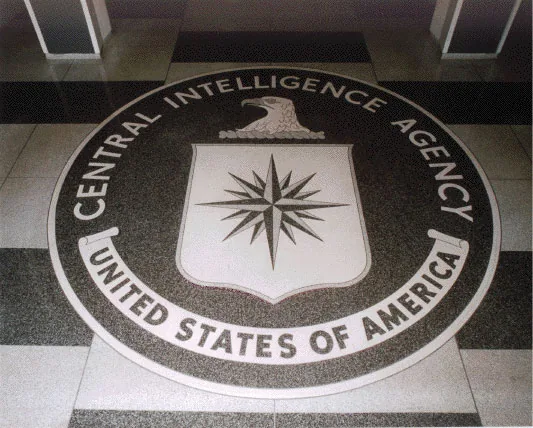
The Central Intelligence Agency, or CIA, is the civilian foreign-intelligence service of the United States. President Harry Truman created it in 1947, at the start of the Cold War, to collect and analyze intelligence from around the world. The CIA does two kinds of work. Its analysts study foreign governments, militaries, and economies to predict what they will do next. Its operations officers run espionage and covert action abroad. The CIA has no police or arrest powers inside the United States, where the FBI handles domestic security. Headquartered in Langley, Virginia, the CIA remains the only part of the US government with standing authority to conduct covert operations in foreign countries.
How the CIA grew out of World War II
Before the CIA, the United States had no permanent civilian foreign-intelligence agency. During World War II, President Franklin Roosevelt created the Office of Strategic Services, or OSS, to gather intelligence and carry out sabotage behind enemy lines. He put William "Wild Bill" Donovan, a World War I veteran and Wall Street lawyer, in charge. The OSS ran spy networks across Europe and Asia, but Truman disbanded it in 1945 after the war ended.
The need for foreign intelligence did not go away. The Soviet Union was expanding across Eastern Europe, and American officials wanted a permanent organization to track Soviet plans. On July 26, 1947, Truman signed the National Security Act, which created the CIA along with the Department of Defense and the National Security Council. The CIA began operations on September 18, 1947. Many of its first officers were OSS veterans who brought Donovan's approach to espionage and unconventional warfare with them. A year later, the National Security Council authorized the CIA to conduct covert operations abroad, and the CIA started using that authority almost immediately.
CIA covert operations during the Cold War
During the Cold War, the CIA overthrew governments, armed insurgencies, and ran secret programs across several continents. In 1953, the CIA and Britain's MI6 organized a coup in Iran, code-named Operation Ajax, that overthrew the country's elected prime minister, Mohammad Mosaddegh. The CIA restored the Shah to full power. It was the first time the CIA overthrew a foreign government. In 1954, the CIA removed Guatemala's elected president, Jacobo Arbenz, in a coup called Operation PBSuccess.
In 1961, the CIA organized the Bay of Pigs invasion to overthrow Fidel Castro in Cuba, but the operation failed. During this period the CIA also ran MKUltra, a secret program that tested mind-control drugs on unwitting subjects, including American citizens.
In the early 1970s, the CIA helped create the conditions for the 1973 military coup in Chile that brought General Augusto Pinochet to power. In the 1980s, the CIA spent billions of dollars arming the Afghan mujahideen fighting the Soviet invasion of Afghanistan, supplying weapons that included Stinger missiles. Much of what is known about these operations became public only years later, through declassified documents and congressional investigations.
The CIA after September 11
The attacks of September 11, 2001, reshaped the CIA. The CIA expanded into armed drone strikes, killing suspected terrorists in countries where the United States was not officially at war. The CIA also ran a secret program of "enhanced interrogation" at overseas prisons, including waterboarding. A Senate committee later condemned the program as torture.
The CIA's most consequential recent failure was its 2002-2003 judgment that Iraq was hiding weapons of mass destruction. That judgment helped justify the 2003 invasion of Iraq and turned out to be wrong. The intelligence failure, along with the September 11 attacks themselves, led Congress to create the position of Director of National Intelligence in 2004. The Director of National Intelligence oversees all eighteen US intelligence agencies. Before 2004, the CIA director had held that coordinating role. The CIA director now reports to the Director of National Intelligence, but the CIA remains the lead agency for human espionage and covert action abroad.
What does the CIA do?
The CIA gathers and analyzes foreign intelligence, and it carries out covert operations when the president authorizes them. On the analysis side, thousands of CIA analysts at the Langley headquarters study intercepted communications, satellite imagery, reports from spies abroad, and open sources like foreign newspapers. They produce assessments for the president and other senior officials and contribute to the President's Daily Brief, a classified summary of global threats and developments delivered each morning.
On the operations side, CIA officers recruit and run spies in foreign countries and conduct covert action. The 1947 law that created the CIA drew a clear line: the FBI handles security inside the United States, and the CIA is limited to foreign intelligence. The CIA has no subpoena, arrest, or law enforcement powers on American soil. It is the only US government agency with standing authority to conduct covert operations overseas, and it remains the main way the United States collects human intelligence from foreign countries.