
Who is Dario Amodei?
He runs Anthropic, the most valuable AI company on earth, and told Congress the technology he builds could help produce bioweapons.
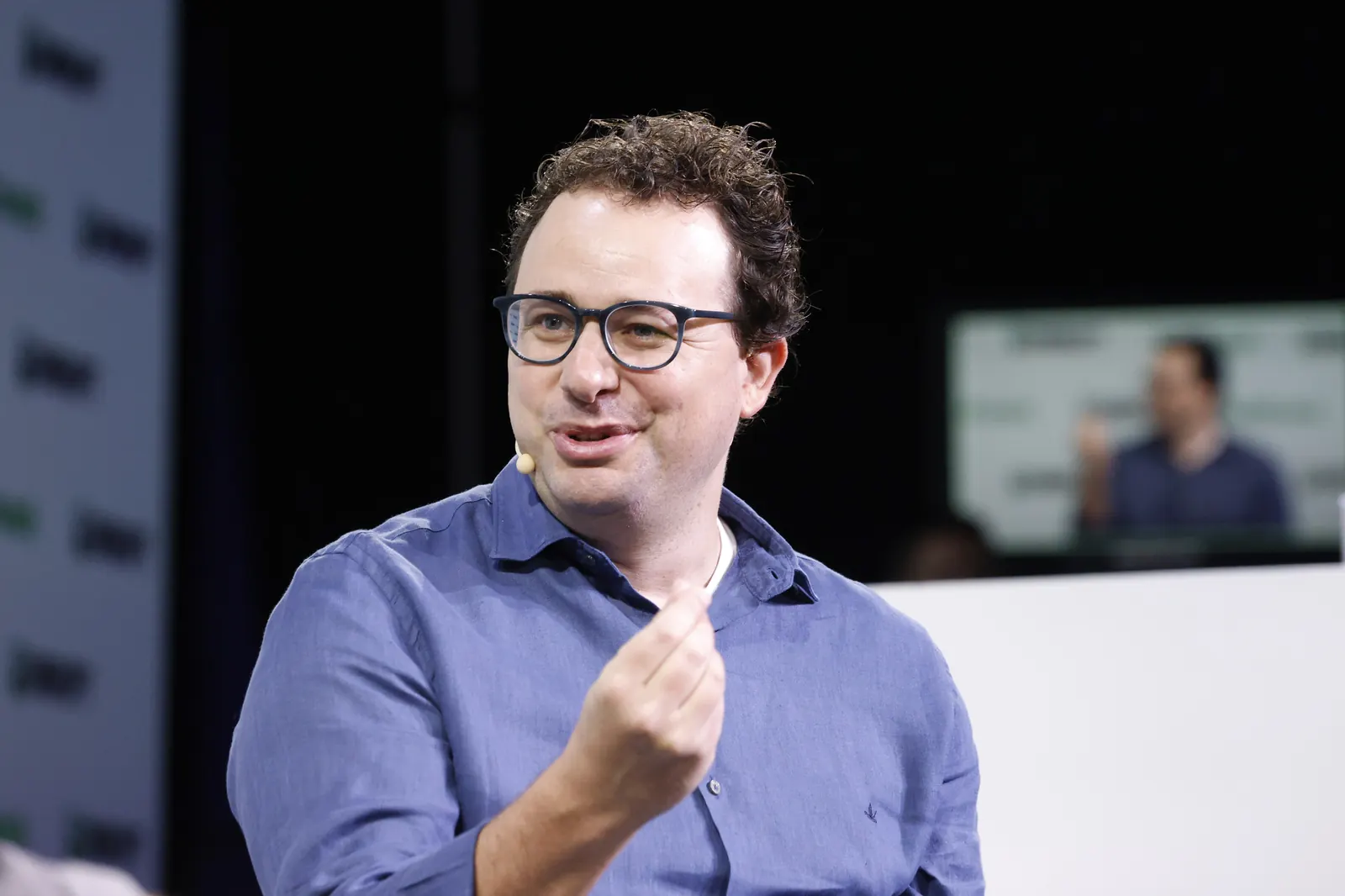
On September 28, 2026, Dario Amodei had dinner with Donald Trump at the White House. It was their first one-on-one meeting. Three days earlier, a federal appeals court had upheld the Pentagon's designation of Amodei's company, Anthropic, as a supply chain risk to national security. Trump had spent months attacking Amodei publicly, posting on Truth Social that Amodei was "pretending to be a perfect little angel" and accusing him of trying to slow America's AI development. The administration had tried to ban every federal agency from using the company's products.
Amodei runs Anthropic, the maker of the AI assistant Claude. Anthropic's last private valuation was $965 billion, and the company filed for an IPO that could value it at $2 trillion, which would make it the largest public offering in history. But the reason Amodei matters beyond Silicon Valley is not the stock price. His company sits at the center of two questions that are shaping great-power competition: whether the United States can maintain its lead over China in artificial intelligence, and whether AI powerful enough to shift that balance should come with limits on what governments can do with it. Amodei believes the answer to both is yes. In 2026, that put him in direct conflict with the most powerful government on earth.
How a biophysicist ended up running the AI race
Amodei was born in 1983 in San Francisco. His father, Riccardo, was an Italian leather craftsman from Tuscany. His mother managed construction and renovation projects for public libraries. He attended Lowell High School, one of the city's competitive public magnet schools, studied physics at Stanford, and earned a PhD in biophysics from Princeton in 2011, winning the Hertz Thesis Prize for research on the electrophysiology of neural circuits. Outside of work, he swims, plays video games, and reads philosophy. He married Camilla Clark in 2022 and is intensely private, with barely any social media presence.
In 2006, while still in graduate school, his father died of hepatitis C. Within a few years of Riccardo Amodei's death, a new class of drugs made the disease about 95 percent curable. "My father died because of cures that could have happened a few years earlier," Amodei said in a 2025 interview. It made him care about the speed of scientific progress and about the cost of being too late.
After a postdoc at Stanford's medical school, Amodei left academia. In 2014 he joined Baidu's Silicon Valley AI lab, where he helped build Deep Speech 2, a speech recognition system that approached human accuracy in both English and Mandarin. MIT Technology Review named it one of the ten breakthroughs of 2016. But for Amodei, the most important result was not the accuracy. It was the curve. When the team gave the neural network more data and more computing power, it got predictably, measurably better. More inputs, better outputs, every time. That pattern became the central idea of his career.
What he built at OpenAI, and why he left
Amodei joined OpenAI in 2016 as vice president of research. He led the teams that built GPT-2 and GPT-3, the language models that first showed the public what a machine trained on enough text could do. In January 2020, he co-authored "Scaling Laws for Neural Language Models," a paper that formalized the pattern he had seen at Baidu: the relationship between compute, data, and model performance was not random. It was a power law. You could predict how good a model would be before you built it, just by knowing how much you planned to spend. The paper has been cited thousands of times and reshaped how every major AI lab allocates its computing budget.
But Amodei grew uneasy. OpenAI had been founded as a nonprofit research lab and was becoming a commercial company, with a multibillion-dollar deal to sell its technology through Microsoft. Amodei believed the scaling laws meant AI systems would become far more powerful, and quickly, and that safety research needed to be part of training from the start, not added after the fact. He lost confidence that OpenAI's leadership shared that view. "When you don't share the same vision and don't trust someone," he later said, "there is little value in continuing the argument."
In January 2021, Amodei left and took six colleagues with him, including his sister Daniela, who became president. They founded Anthropic with $124 million in initial funding led by Jaan Tallinn, the co-founder of Skype. The company built Claude and developed a training method called Constitutional AI that builds safety rules into the model during training rather than filtering outputs afterward. By May 2026, after a $65 billion fundraising round, Anthropic overtook OpenAI as the most valuable private AI company in the world. TIME named both Amodei siblings among its 100 Most Influential People of 2026.
Why Amodei says America must win the AI race
Amodei's position on China is blunt, and it is the main reason a geopolitics audience should know his name. He believes the United States has a significant but temporary lead over China in frontier AI, and that keeping that lead is a matter of national security. He has called the period between 2026 and 2030 "critical," arguing that the balance of AI capability between the two countries could become decisive during those years.
In January 2025, after the Chinese lab DeepSeek released a model that matched American systems at a fraction of the cost, Amodei published a blog post arguing that export controls on advanced chips are "one of our most powerful tools." His argument was specific: controls cannot stop a country from acquiring tens of thousands of chips, but they can prevent the purchase of a million, which is the scale needed to train the most capable models. He described DeepSeek's engineers as "smart, curious researchers" and said he did not view them as adversaries. But their progress, he argued, made chip export controls more important, not less.
In July 2023, Amodei testified before the Senate Judiciary Committee alongside AI researchers Yoshua Bengio and Stuart Russell. He told the committee that within two to three years, AI models could give non-state actors the ability to carry out large-scale biological attacks by filling in the technical steps that currently require specialized knowledge. He called the risk "grave" and said private action alone was not enough to contain it.
The fight over what the military can do with AI
In early 2026, the tension between Amodei's safety commitments and the US government's appetite for AI escalated into an open fight. Anthropic had a contract with the Department of Defense, but Amodei objected to a clause that allowed the military to use the company's models for "any lawful use." He said Anthropic would not permit its technology to be used for fully autonomous weapons or domestic mass surveillance.
Secretary of War Pete Hegseth designated Anthropic a "supply chain risk to national security" and accused Amodei of seeking "veto power" over military decisions. Trump directed federal agencies to stop using Anthropic's tools entirely. A federal judge blocked the order in March, but the D.C. Circuit Court of Appeals upheld the Pentagon's designation in September, ruling 2-1 for the administration. Then came the dinner invitation.
The fight captures something real about where AI stands in 2026. Amodei argues that America must win the AI race against China, which means the government needs companies like Anthropic. But he also argues that AI is powerful enough to require hard limits on what the government does with it. On September 12, 2026, he published an essay called "We Must Pace the Frontier," calling on the entire AI industry to deliberately slow capability development by one to two years so that safety research could catch up. Sam Altman of OpenAI and Elon Musk both publicly agreed the same day.
Two weeks later, Saturday Night Live ran a sketch about Amodei. The comedian Jane Wickline played him as someone who could not stop contradicting himself within the same sentence. "I want to assure you," the character said, "that if we can pressure lawmakers to create guardrails, we will be able to stop me." The sketch was funny because the contradiction is real. Amodei is building the most powerful AI systems on earth while telling governments they may need to slow down. Whether one person can hold both of those positions is a question that neither Washington nor Beijing has answered, and that Amodei, more than anyone else in the industry, has forced into the open.
Test what you learned
5 questions on this article. About two minutes, no signup.