
Who owns Antarctica?
Seven countries claim parts of it. Two more have reserved the right. The mining ban holding the whole arrangement together opens for review in 2048.
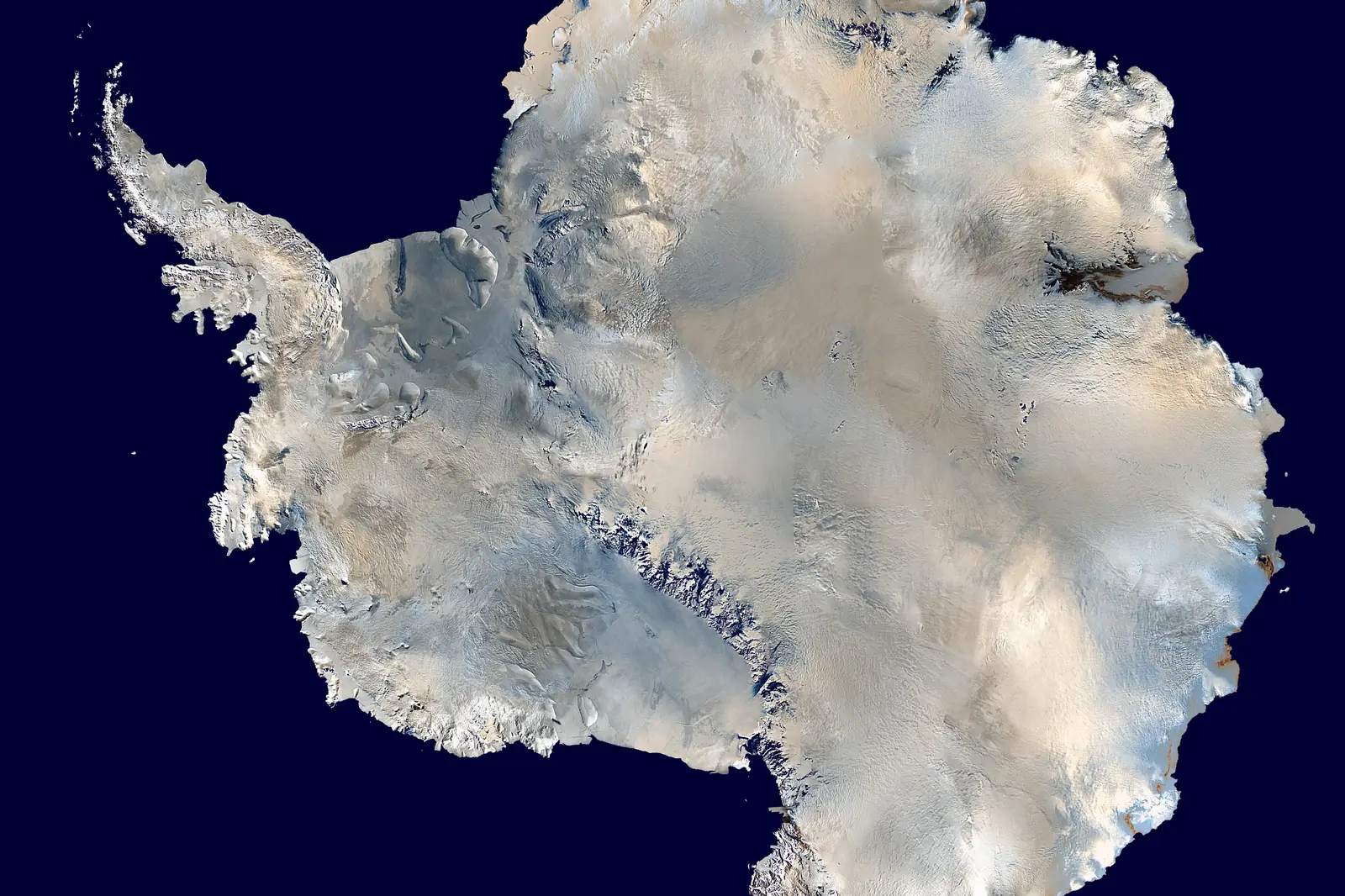
In February 2024, China opened its fifth research station in Antarctica. The station, Qinling, sits on Inexpressible Island in the Ross Sea, has room for 80 researchers in summer, and includes a satellite ground station that analysts say is positioned to collect signals over Australia and New Zealand. China has never claimed any part of Antarctica, but with five research stations it has a larger physical presence there than most of the countries that have. The continent has no government and no permanent residents. A single treaty, signed in 1959, is the reason it has stayed that way.
How seven countries claimed a continent nobody lives on
Between 1908 and the 1940s, seven countries carved Antarctica into sectors like slices of a pie. Britain claimed the peninsula first. France, Australia, and Norway followed. Australia took the largest share: 42 percent of the entire continent. Argentina and Chile both claimed sectors of the Antarctic Peninsula in the 1940s, overlapping with Britain and with each other.
The overlaps were the dangerous part. All three countries built stations within sight of each other. In 1952, Argentine soldiers fired warning shots at a British survey team trying to rebuild a base at Hope Bay. Nobody was killed, but it remains the closest Antarctica has come to armed conflict. The same rivalry between Argentina and Britain exploded into the Falklands War thirty years later, over islands just north of the peninsula.
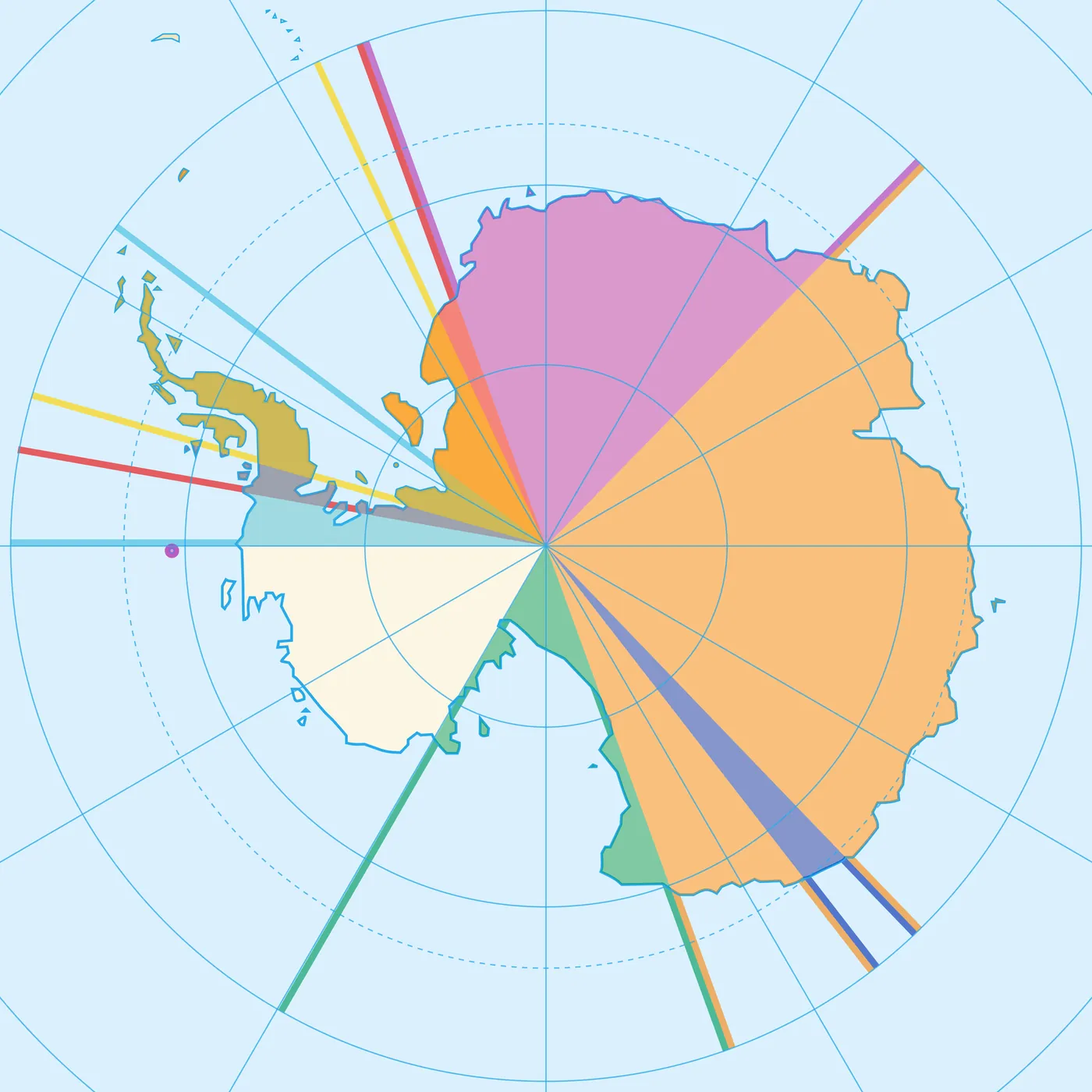
One large wedge of the continent, Marie Byrd Land, has never been claimed by anyone. It is roughly the size of Iran. The United States ran a research station there for fifteen years and never filed a claim. Nobody has, because doing so would break the system that keeps the rest of Antarctica stable.
The treaty that froze the claims without settling them
By the late 1950s, the competing claims risked real conflict. The United States and the Soviet Union were both building stations across the continent, and both had reserved the right to make territorial claims without actually making them.
In December 1959, twelve countries signed the Antarctic Treaty in Washington. Its central achievement was Article IV. The article did not resolve the territorial claims. It did not require anyone to give them up. It froze them. No activity conducted while the treaty is in force can strengthen an existing claim or create a new one. Claimant countries could read the article as preserving their rights. Non-claimant countries could read it as recognizing nobody's. Both readings were intentional.
The treaty banned military activity and nuclear testing and opened the entire continent to scientific inspection. Today 58 countries are parties. The treaty has no expiration date. The Soviet Union, one of the original signatories, collapsed in 1991. The treaty did not.
What lies under the ice and why nobody can touch it
Antarctica holds roughly 60 percent of the world's freshwater, locked in an ice sheet up to 4.8 kilometers thick. The United States Geological Survey has estimated about 19 billion barrels of recoverable oil and 106 trillion cubic feet of natural gas beneath the continent. Coal, iron ore, copper, gold, and platinum are all known to exist.
None of it is being extracted. The Protocol on Environmental Protection, signed in Madrid in 1991, bans all mineral activity other than scientific research. But starting in 2048, any country with voting rights can request a review conference. Lifting the ban would require three-quarters of the original members to agree. Supporters call that threshold nearly impossible to clear.
Nearly impossible is not the same as impossible, and 2048 is twenty-two years away.
The countries building while the treaty holds
Russia has spent over a decade mapping Antarctica's hydrocarbons, running seismic surveys inside the sectors claimed by Norway and the United Kingdom. Its stated goal through 2030 is to ensure what it calls "Russia's full participation in any future Antarctic mineral development." The research vessel conducting the surveys was sanctioned by the United States in February 2024. The surveys continued.
China's expansion has been faster and more visible. Beyond its five existing stations, China proposed a sixth in early 2025, at Cox Point in Marie Byrd Land, the unclaimed sector where no country has maintained a permanent presence. The proposed station is designed for 25 people. Under the Antarctic Treaty, member states cannot veto another country's research station. If the sixth is built, China will operate more permanent facilities in Antarctica than the United States, which has three.
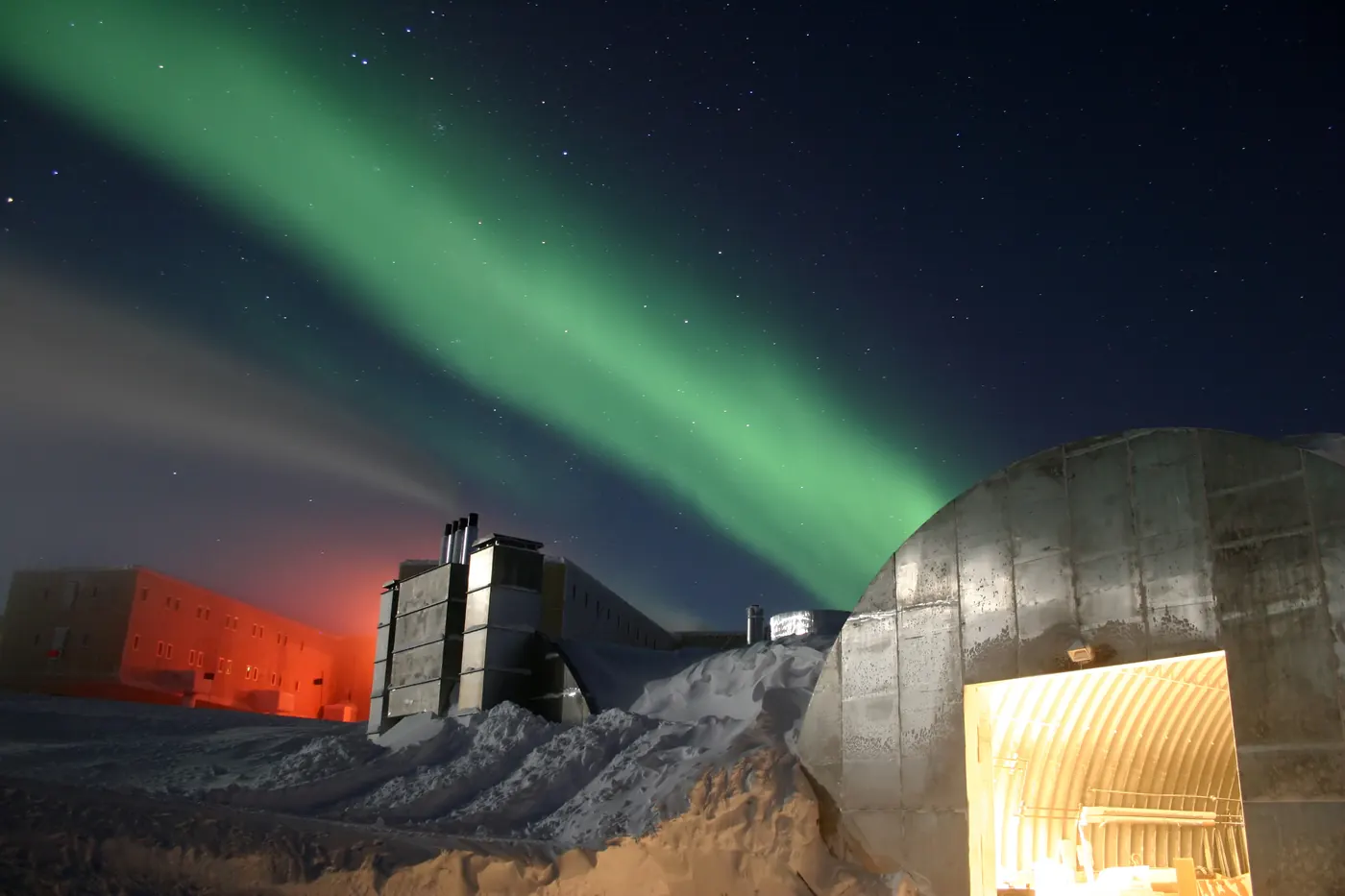
Neither China nor Russia has made a territorial claim. Neither has given up the right to. Both are building the infrastructure that would support a claim if the treaty ever weakened, while staying carefully within its rules.
Why it still holds, and what could break it
The Antarctic Treaty has no enforcement mechanism beyond peer pressure. It works because every country with the power to break it has concluded that cooperation serves its interests better than competition. The United States gets to operate bases without making a claim. Russia and China get access to a continent they arrived at late. The seven claimant countries preserve claims they could never enforce against a superpower.
That calculation has held through the Cold War and through the rise of China as an Antarctic power. But the treaty was written for twelve countries in 1959, and the balance of power has changed. The countries surveying its oil and building stations in unclaimed territory are not violating the treaty. They are preparing for the possibility that it stops working.
Whoever sits at the 2048 review table with the most stations, the most data, and the most personnel on the ground will have the strongest hand. The race for that position is already underway.
Test what you learned
5 questions on this article. About two minutes, no signup.