
Gang of Four
The Gang of Four were four Chinese Communist Party officials who drove the Cultural Revolution and were arrested weeks after Mao Zedong died in 1976.
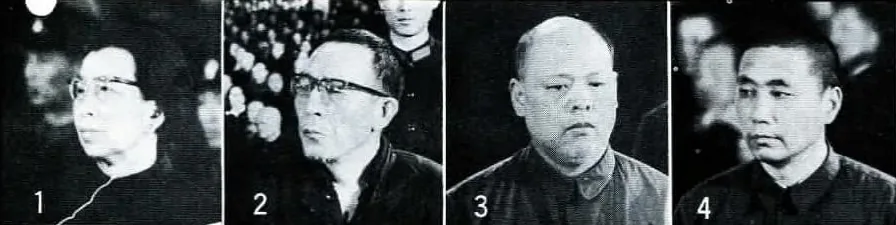
The Gang of Four were four senior Chinese Communist Party officials who drove the most radical phase of China's Cultural Revolution from 1966 to 1976. The four were Jiang Qing, Mao Zedong's wife; Zhang Chunqiao, the group's political theorist; Yao Wenyuan, a literary critic turned propagandist; and Wang Hongwen, a factory worker who rose to become vice chairman of the Communist Party. For a decade they controlled China's propaganda, arts, and ideology. Their main tool was accusation: labeling someone a "capitalist roader" or class enemy could end a career, bring a beating by Red Guards, or lead to prison or death. Mao himself coined their name, warning Jiang Qing in 1974 not to form a "gang of four." Twenty-seven days after Mao died on September 9, 1976, all four were under arrest.
How the Gang of Four rose during the Cultural Revolution
The four came from different backgrounds, but all had ties to Shanghai, and all were committed to permanent revolution.
Jiang Qing had been a film actress in 1930s Shanghai, where she used the stage name Lan Ping and played roles in left-wing productions. She married Mao in 1938 and spent the next two decades mostly out of public life. When the Cultural Revolution began in 1966, she took control of the arts. She approved a handful of "model operas" and condemned most of China's cultural heritage as feudal. Performers, writers, and scholars who fell outside her narrow list faced persecution.
Yao Wenyuan was the group's propagandist. In November 1965, Mao backed the publication of Yao's essay attacking a historical play called Hai Rui Dismissed from Office, written by the historian Wu Han. Yao argued the play was a coded attack on Mao. The essay set off a political chain reaction that helped launch the Cultural Revolution.
Zhang Chunqiao was cold and methodical. He wrote the ideological justifications for the purges and became the most powerful political figure in Shanghai.
Wang Hongwen was the youngest, born in 1935 to a poor peasant family in Jilin Province. He fought in the Korean War as a teenager, then took a job at a cotton mill in Shanghai. During the Cultural Revolution he became a rebel leader at the factory and rose with remarkable speed, going from the factory floor to vice chairman of the Communist Party within a few years. His youth, good looks, and working-class origins made him a figurehead of the revolution.
The four purged officials at every level and destroyed reputations. They continued the campaigns even as the country grew exhausted by the violence. Mao relied on them and shielded them, though he never fully trusted them. He needed them to pressure his rivals inside the party, but he saw their ambition. In 1974 and again in 1975, he warned Jiang Qing directly not to form a faction.
Why were the Gang of Four arrested?
Mao Zedong died on September 9, 1976. His death removed the only person who could protect the four. They expected to inherit power, but three men moved first: Hua Guofeng, Mao's chosen successor as party chairman; Ye Jianying, a senior military leader; and Wang Dongxing, the head of Mao's personal security.
On the night of October 6, 1976, Wang Hongwen, Yao Wenyuan, and Zhang Chunqiao were each called separately to a meeting at Huairen Hall in the Zhongnanhai leadership compound in Beijing, and each was seized as he arrived. Jiang Qing was taken at her residence. The entire operation was carried out without a shot. The party kept the arrests secret at first, then announced them as a national triumph.
The arrests ended the Cultural Revolution. They also cleared the way for Deng Xiaoping, who had been purged twice during the Cultural Revolution, to return to power and launch the economic reforms that transformed China.
What happened to the Gang of Four?
The trial took place in Beijing between November 1980 and January 1981. The Communist Party wanted the decade's violence blamed on a small group of people, and the trial was built to deliver that verdict.
Of the four defendants, only Jiang Qing argued in her own defense. She interrupted the proceedings, shouted at the judges, and insisted she had only carried out Mao's orders. Her most quoted line was blunt: "I was Chairman Mao's dog. I bit whomever he asked me to bite." The statement pointed at Mao, the one person the party could not put on trial.
Jiang Qing and Zhang Chunqiao received death sentences with two-year reprieves, later commuted to life in prison. Wang Hongwen was sentenced to life in prison. Yao Wenyuan received twenty years. Wang Hongwen died of liver disease in 1992. Jiang Qing killed herself in 1991. Zhang Chunqiao's sentence was eventually reduced, and he died in 2005. Yao Wenyuan served his full twenty years, was released in 1996, and died in 2005.
Convicting the four served a purpose that went beyond justice. The party needed to acknowledge the Cultural Revolution as a disaster but could not blame Mao without undermining its own foundations. Mao had founded the People's Republic, and his portrait still hung over Tiananmen Square. Months after the trial, the party issued its official verdict on Mao: he was seventy percent right and thirty percent wrong. The Gang of Four were made to carry most of that thirty percent. The verdict allowed the party to condemn the Cultural Revolution without condemning Mao. China's government still holds that position.