
Deng Xiaoping
Deng Xiaoping was the Chinese leader who opened China's economy to the world after Mao, while keeping the Communist Party in absolute control.
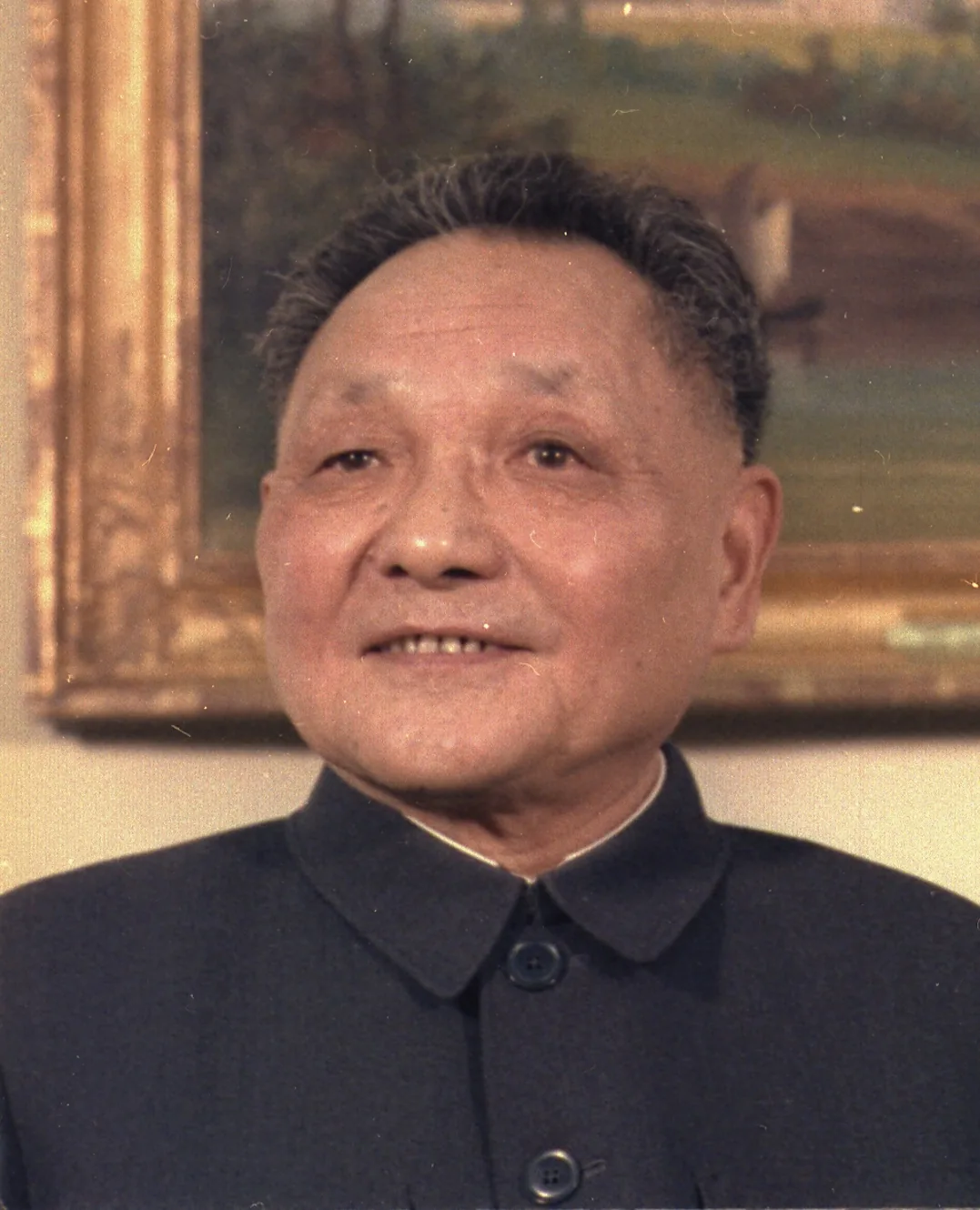
Deng Xiaoping (1904–1997) was the leader who opened China to the world economy after decades of isolation under Mao Zedong. He ran the country from 1978 until the early 1990s without ever holding China's top formal title. His highest position was chairman of the Central Military Commission. Deng launched economic reforms that allowed private business, invited foreign investment, and created special economic zones open to foreign investment. Those reforms helped lift about 800 million Chinese people out of extreme poverty, according to the World Bank. He also ordered the military crackdown at Tiananmen Square in 1989. The combination of economic freedom and political repression that Deng put in place still defines how China is governed.
How Deng Xiaoping rose to power
Deng was born in 1904 in Guang'an, a rural county in Sichuan Province. At 16, he sailed to France on a work-study program, one of about eighty Chinese students on the ship. He spent five years there, mostly working in factories, including at a Renault plant, and attended French schools only briefly. He picked up a lifelong love of croissants and soccer. He once pawned his overcoat to buy a ticket to a match. He also became a communist, joining the Chinese Communist Party in 1924 after working under another young expatriate in France, Zhou Enlai, who would later serve as China's premier for 26 years.
After returning to China, Deng spent two decades as a military and political organizer. He was a veteran of the Long March, the grueling retreat that saved the Communist army from destruction in 1934–1935. After the Communists won the civil war in 1949, Deng rose to become one of the most powerful officials in the new government.
Then Mao Zedong turned on him. During the Cultural Revolution, which Mao launched in 1966, Deng was denounced as "the number two capitalist roader" and stripped of every post. He was sent to work in a tractor factory in Jiangxi Province. His eldest son, Deng Pufang, fell or was thrown from a building while held by Red Guards and was left paralyzed from the waist down. Deng was brought back in the early 1970s after Zhou Enlai advocated for him, then purged a second time in 1976 after street protests mourning Zhou Enlai's death were blamed on him.
Mao died in September 1976. Within two years, Deng had outmaneuvered Mao's chosen successor, Hua Guofeng, and taken control of the party at the Third Plenum in December 1978. He stood about five feet tall and was 74 years old.
How Deng Xiaoping reformed China's economy
Deng started with farming. Under Mao, farmers had worked on collective farms and turned their harvest over to the state. Deng allowed them to keep and sell what they grew beyond their quota. Grain output rose sharply within a few years.
Then he opened China to foreign money. In 1980, Deng designated four special economic zones along the southern coast where foreign firms could set up operations under market rules. The most famous was Shenzhen, a border area of fishing villages next to Hong Kong. Within 45 years, Shenzhen grew into a city of over 18 million people and one of the wealthiest in China.
Deng sent tens of thousands of Chinese students to study at foreign universities, invited foreign manufacturers into the country, and allowed private businesses to expand. He called his approach "socialism with Chinese characteristics." He often borrowed a Sichuan proverb to explain his thinking: whether a cat is yellow or black does not matter, so long as it catches mice.
The results took decades to fully arrive, but they were enormous. In 1978, China's economy was about the size of Spain's. By 2010, China had passed Japan to become the second-largest economy in the world. Between 1981 and 2020, about 800 million Chinese people moved above the World Bank's extreme poverty line, the largest reduction in poverty ever recorded.
Deng Xiaoping and the Tiananmen Square massacre
Deng's willingness to reform the economy did not extend to politics. He insisted throughout his rule that the Communist Party must keep absolute control.
In 1989, large crowds of students and workers occupied Tiananmen Square in Beijing for weeks, demanding democratic change and government accountability. At their peak the protests drew about a million people. Deng approved the order to deploy the military. Overnight on June 3–4, 1989, soldiers and armored vehicles moved through the square and the surrounding streets. The Chinese government has never released a full accounting of the dead. Independent estimates range from several hundred to several thousand.
After the crackdown, Deng continued to push the economy forward. In early 1992, at 87, he toured Shenzhen and other southern boomtowns to restart reform after hardliners in the party tried to slow it down. The trip worked. Economic growth accelerated sharply that year.
Deng died on February 19, 1997. China afterward grew into the rival of the United States that Deng had wanted it to become, governed on the terms he set: the party delivers prosperity, and citizens do not challenge who rules.