
Green Revolution
The Green Revolution was a mid-century research effort that developed high-yield wheat and rice, roughly doubling harvests across the developing world.
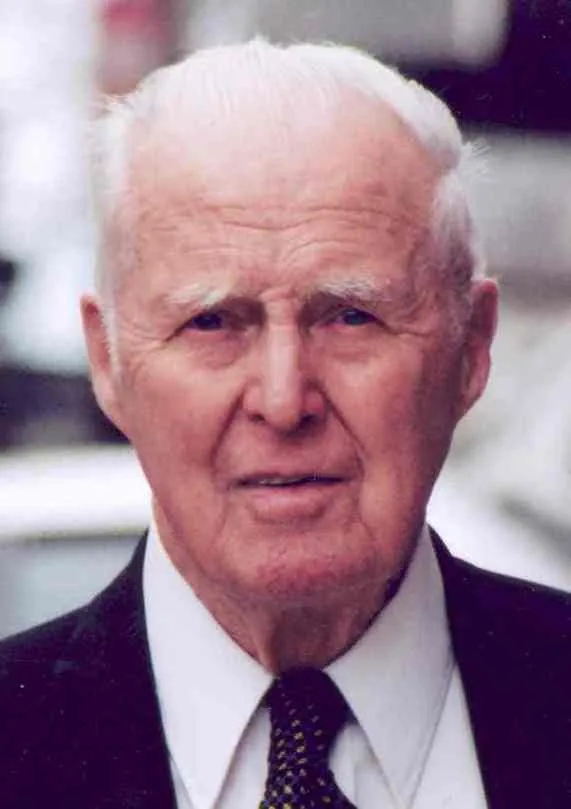
The Green Revolution was a wave of agricultural research from the 1940s through the 1970s that developed high-yield varieties of wheat and rice for the developing world. At its center was Norman Borlaug, an American plant scientist from Iowa. Borlaug spent decades in Mexico breeding a new kind of wheat: short, stiff-stemmed plants that could absorb large amounts of fertilizer without falling over. When these seeds reached India and Pakistan in the mid-1960s, wheat harvests nearly doubled within five years. Scientists in the Philippines developed IR8, a high-yield rice variety that had the same effect on Asia's staple grain. Borlaug received the Nobel Peace Prize in 1970. He is often described as the person who saved more lives than anyone in history.
How Borlaug bred a new kind of wheat in Mexico
Norman Borlaug was born in 1914 and grew up on a small farm near Cresco, Iowa, in a Norwegian-American community. His great-grandparents had emigrated from Norway, where they had lived through famine. When he applied to the University of Minnesota in 1933, he failed the entrance exam and was admitted through the school's General College instead. He studied forestry and competed as a 145-pound wrestler, reaching the Big Ten semifinals and later earning a place in the National Wrestling Hall of Fame. He switched to plant pathology for his graduate work.
In 1944, at the age of 30, the Rockefeller Foundation sent Borlaug to Mexico to help improve the country's wheat crop. Mexico imported much of its wheat at the time. The problem Borlaug set out to solve was straightforward: traditional wheat varieties, when given modern fertilizer, grew tall and top-heavy. The stalks collapsed under the weight of the grain, a problem farmers call lodging.
Borlaug spent over a decade crossing wheat varieties from around the world. His key breakthrough came in the mid-1950s, when he crossed in dwarfing genes from a Japanese variety called Norin 10. The result was a semi-dwarf plant that put its energy into producing grain rather than stalk. It was short and stiff-stemmed, and it could support a heavy head of wheat without toppling over. The new varieties also matured faster and resisted common wheat diseases. By 1956, Mexico was self-sufficient in wheat for the first time. By the early 1960s, Mexico was exporting it.
How the Green Revolution reached India and Pakistan
In the mid-1960s, India and Pakistan faced consecutive failed monsoons and the real threat of mass famine. Paul Ehrlich's 1968 book The Population Bomb predicted that hundreds of millions of people would starve in the 1970s, and many experts agreed. India's population was growing faster than its food supply.
Borlaug had been urging South Asian governments to adopt the new wheat for years, often facing resistance from officials and scientists who doubted that Mexican seeds would grow well in Indian conditions. When the monsoons failed and the crisis became urgent, the Indian government agreed to try. In 1966, India imported about 18,000 tons of Mexican dwarf wheat seed.
The results came fast. India's wheat production rose from about 12 million tons in 1965 to 20 million tons by 1970. Pakistan saw similar gains. By the 1969-1970 growing season, about 35 percent of India's wheat acreage was planted with the new Mexican varieties or varieties bred from them. The new seeds, combined with synthetic fertilizer, irrigation, and pesticides, replaced years of food shortages with surpluses within a few years.
Around the same time, the International Rice Research Institute, based in Los Baños in the Philippines, released IR8 in 1966. IR8 was a semi-dwarf rice variety bred by crossing a dwarf Taiwanese variety with a tall Indonesian one. It could yield close to ten tons per hectare, roughly ten times the average rice yield in the Philippines at the time. The press called it "miracle rice." Together, the new wheat and rice spread across Latin America, South Asia, and Southeast Asia through the late 1960s and 1970s.
What were the negative effects of the Green Revolution?
The high-yield varieties needed heavy inputs to perform: synthetic fertilizer, chemical pesticides, and reliable irrigation. Farmers who could afford those inputs, usually those with larger landholdings, gained the most. Many smallholder farmers who tried to keep up took on debt they could not repay. In some regions, the gap between wealthy and poor farmers widened rather than closed.
The environmental costs built up over decades. In India's Punjab, one of the country's main wheat-growing regions, farmers drilled about 1.4 million tube wells to irrigate their fields. The state government subsidized electricity for pumping, which encouraged heavy extraction. By the 2000s, the water table in parts of central Punjab was falling by 75 centimeters per year. Fertilizer runoff polluted rivers and groundwater. And by planting the same few elite crop varieties across vast areas, farmers replaced hundreds of traditional grain varieties with monocultures, leaving their harvests more vulnerable to disease.
The mass famine that experts predicted for the 1970s did not happen. Borlaug died in 2009 at the age of 95, and his obituaries estimated that his work had prevented a billion people from starving. The countries that adopted his seeds now face a different set of problems, from depleted aquifers to degraded soil, that grew directly from the methods that made those harvests possible.