
Rumi
Rumi was a 13th-century Persian poet and Sufi mystic whose verses made him the best-selling poet in the United States.
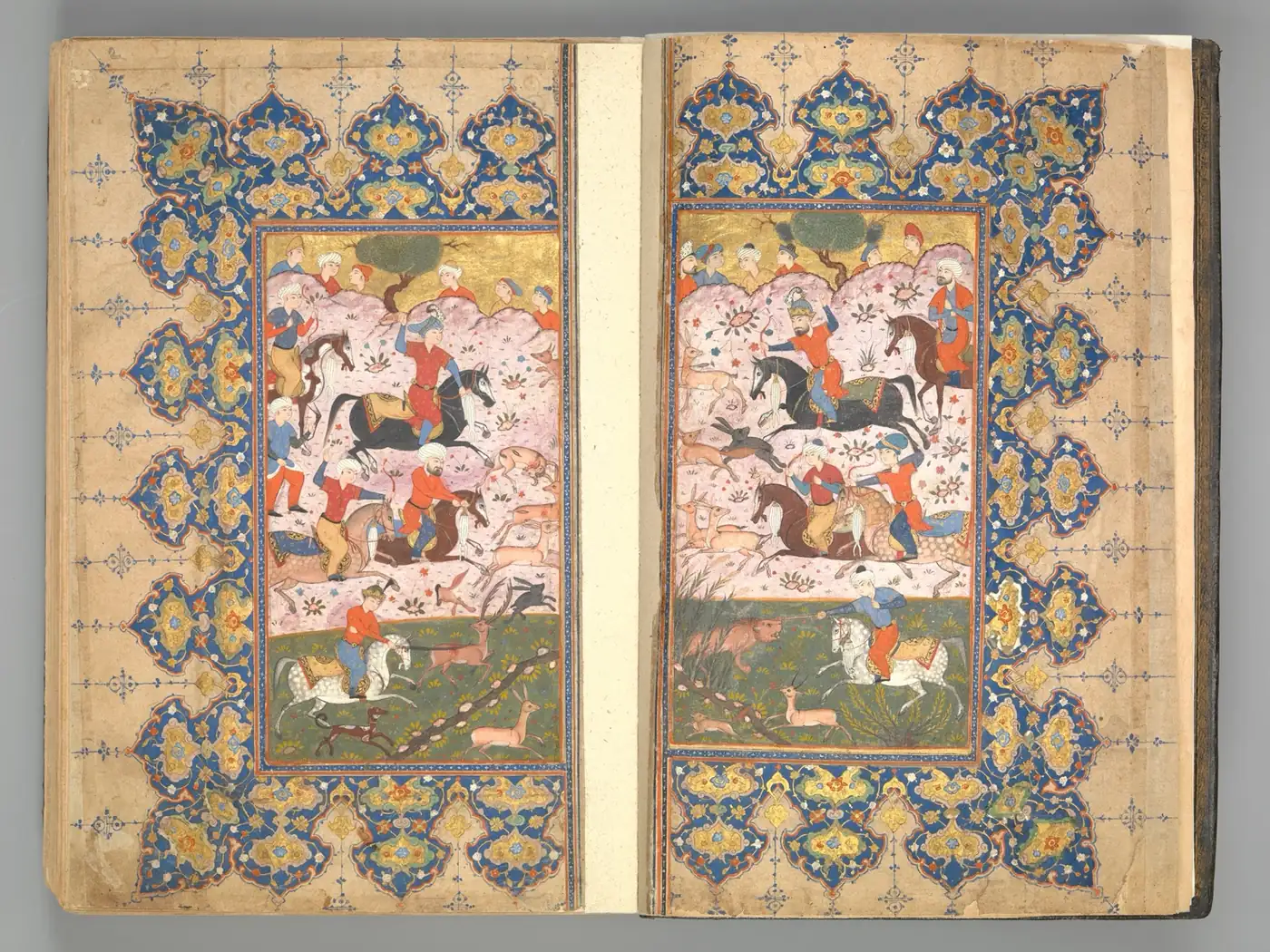
Jalal al-Din Muhammad Rumi was a 13th-century Persian poet and Muslim mystic. He was born in 1207 in what is now Afghanistan or Tajikistan, into a family of theologians. His family fled west ahead of the Mongols and eventually settled in Konya, a cultured city in the Seljuk Sultanate of Anatolia, in what is now Turkey. He is called "Rumi" because "Rum" was the Arabic and Persian name for Anatolia, the land of the former Roman Empire. Rumi wrote in Persian and produced tens of thousands of verses about divine love, loss, and the soul's longing for God. In 2014 the BBC reported that his poems had sold millions of copies in recent years, making a medieval Muslim scholar America's most popular poet by sales.
How Shams of Tabriz turned Rumi into a poet
By his late thirties, Rumi was a respected and conventional jurist and preacher. He ran a religious school in Konya, following in the path of his father, Baha al-Din Walad, who had been a theologian and mystic. His father had led the family out of Central Asia, and the Seljuk sultan in Konya gave them a welcome. Nothing about Rumi's settled life suggested he would become one of the great poets of any language.
That changed in 1244, when a wandering dervish named Shams of Tabriz arrived in Konya. Shams had spent years searching for someone he considered worthy of his teaching. He was fierce and confrontational, with no patience for book learning, and he pushed Rumi to experience God directly rather than through lectures and scholarship. The two men formed an intense friendship that consumed Rumi's time and attention. His students grew jealous. They saw a strange old wanderer pulling their teacher away from his duties. Shams left Konya once, was persuaded to return, and then vanished for good. He may have been murdered, though no one knows for certain.
Rumi's grief over Shams's disappearance poured out as poetry. He composed tens of thousands of verses, many gathered into a collection called the Divan-e Shams-e Tabrizi, the collected poems of Shams of Tabriz, named not after Rumi but after the man he had lost. Rumi wrote as someone searching for a beloved friend and, through that search, discovering the soul's longing for God.
Rumi's Masnavi
Rumi's other great work, and the one scholars consider his masterpiece, is the Masnavi. It contains roughly 25,000 rhyming couplets of stories, parables, and theological teaching. Rumi dictated it over many years to his student Husam al-Din Chalabi. Later admirers called it "the Quran in Persian."
The Masnavi opens with the image of a reed cut from a reed bed and hollowed into a flute. The reed cries because it has been separated from where it grew. For Rumi, this was the human condition: every person longs to return to the divine origin from which they were separated. The rest of the poem works out that idea through hundreds of stories drawn from the Quran, from Persian folk tales, and from everyday life. They all return to the same point: the pain of separation and the joy of reunion with God.
Who are the whirling dervishes?
Rumi died in Konya in 1273. Within a generation, his followers formed the Mevlevi order, known outside the Islamic world as the whirling dervishes. The order's central ceremony, called the sema, is a slow spinning dance in which the dancers extend their arms with one palm raised toward heaven and one lowered toward earth. The sema is a form of moving meditation, not performance. The dancers turn in the way planets orbit, letting go of the self so that God can fill it.
Rumi's tomb in Konya, topped with a distinctive turquoise-tiled tower, is one of Turkey's most visited sites. His death is commemorated every December 17 in a ceremony called Seb-i Arus, meaning "wedding night," because Rumi's followers saw death as the soul's reunion with God.
Rumi in the United States
Rumi's verses appear today on American wedding invitations, greeting cards, and Instagram posts. The version of Rumi most Americans know comes largely from Coleman Barks, an American poet whose English reworkings of Rumi became bestsellers in the 1990s. Barks did not read Persian. He worked from older scholarly translations and rewrote them as contemporary free verse. His versions are readable and often moving, but they leave out most references to the Quran, to daily prayer, and to Muhammad. The original Persian verses are dense with all three.
The result is that the Rumi who became an American bestseller is a smoothed-over sage of universal love, with Islam quietly removed. Scholars have described this as a "spiritual but not religious" makeover, one that says as much about modern Western spiritual appetites as it does about Rumi himself. The historical Rumi was a devout Muslim theologian and a member of the ulama, the class of Islamic scholars. For him, poetry was inseparable from prayer. Rumi is today one of the most widely read poets in history, and one of the few medieval writers whose work still reaches a mass audience.