
Songbun
Songbun is North Korea's hereditary classification system that sorts every citizen by political loyalty based on what their ancestors did up to 1953.
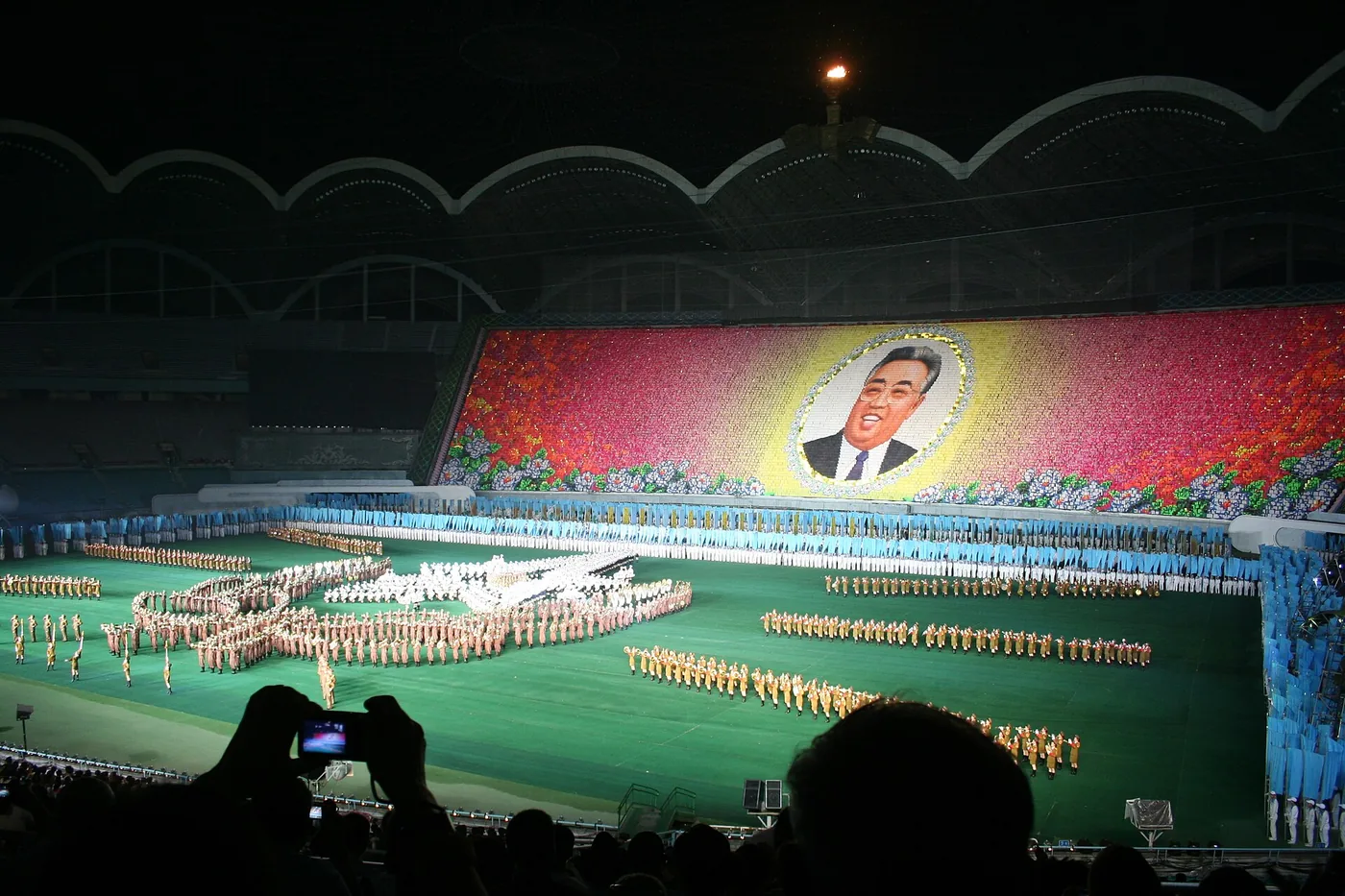
Songbun is North Korea's system for classifying every citizen by political loyalty. The word translates roughly as "ingredient" or "origin." The government assigns each person a rating based on what their ancestors did before and during the Korean War. That rating passes from father to child and can rarely be improved by effort or achievement.
Songbun determines where a person may live, what they may study, whether they can join the ruling Workers' Party, what work they are assigned, how much food they receive during shortages, and whom they can realistically marry. For most North Koreans, songbun matters more than anything else in shaping their life, and they have almost no control over it.
How Kim Il-sung created the songbun system
Kim Il-sung, North Korea's founding leader, had fought as a guerrilla against Japan's occupation of Korea before the Soviet Union installed him in power in 1945. Between 1957 and 1970, as he consolidated his control over the country after the Korean War, Kim ordered investigation teams to sort the entire adult population by political reliability. The teams moved through every village and workplace, tracing each family's record through the Japanese colonial period, the postwar land redistribution, and the Korean War.
The surveys sorted people into roughly 51 categories under three broad classes. The core class, about 28 percent of the population, included families of guerrilla fighters against Japan, poor farmers, factory workers, and soldiers who gave their lives for North Korea. About 45 percent fell into the wavering class: small merchants, people who had once lived in South Korea, and relatives of defectors. The hostile class, about 27 percent, covered former landowners, businesspeople, people with religious affiliations, those who had worked with the Japanese occupiers, and anyone whose family members had gone south.
A person with good songbun could live in Pyongyang, attend Kim Il-sung University, and hold a Workers' Party card. Those things came with better housing, access to imported goods, and the chance to travel within the country. A person with bad songbun was assigned to a rural cooperative, a mine, or a construction brigade, with no legal way to move. Hostile-class families were resettled in the remote northeastern provinces, far from the capital.
The system looked backward and could not be undone. If a grandfather ran a business in 1945, or an uncle fled to South Korea during the war, their descendants carried that classification for life, even those born decades later who never knew him. Under a policy attributed to Kim Il-sung himself, punishment extends for three generations: when a person is sent to a political prison camp, their parents, siblings, and children go with them. Every North Korean knows that a single act of dissent endangers not just them but their whole family.
How songbun shaped the North Korean famine
When North Korea's public food distribution system collapsed in the mid-1990s, songbun helped determine who survived. Even before the famine, classification decided how much food each family received. Core-class families in Pyongyang got larger rations than wavering-class families in smaller cities, who in turn received more than hostile-class families in the northeast. When the system failed entirely, the families ranked lowest had nothing to fall back on.
The regime had spent decades concentrating hostile-class families in the northeastern provinces, particularly North Hamgyeong. Those areas were cut off first when food ran short. In the worst-affected province, an estimated 12 percent of the population died. Core-class citizens in Pyongyang and other cities close to the center of power continued receiving rations long after the northeast had been abandoned. The famine killed hundreds of thousands of North Koreans, and it killed along class lines.
Does songbun still matter in North Korea?
The famine changed North Korea in a way the regime did not intend. When the government stopped feeding people, informal markets called jangmadang grew to replace the distribution system. Money could now get things that only a good classification had provided before. A well-placed payment could secure a residence transfer. A trader with hostile-class songbun could outearn a Workers' Party official. Surveys of North Korean defectors in the 2010s found that the markets had loosened the connection between a person's class rating and how well they lived day to day.
But the markets did not weaken songbun's control of political power. The regime still draws its party officials, security agents, and senior military officers overwhelmingly from core-class families. Millions of people in those families owe their positions to a family background that would count for nothing if the system changed, and they have every reason to keep it in place.
Under North Korea's current leader, Kim Jong-un, the government has also moved to bring the markets back under state control. During the country's COVID lockdown beginning in 2020, the regime tightened restrictions on private trading. Songbun still decides who holds power in North Korea and, for millions of people, what kind of life they are allowed to live.