
Sun Tzu
Sun Tzu is the Chinese general credited with writing The Art of War, a 2,500-year-old text on military strategy.
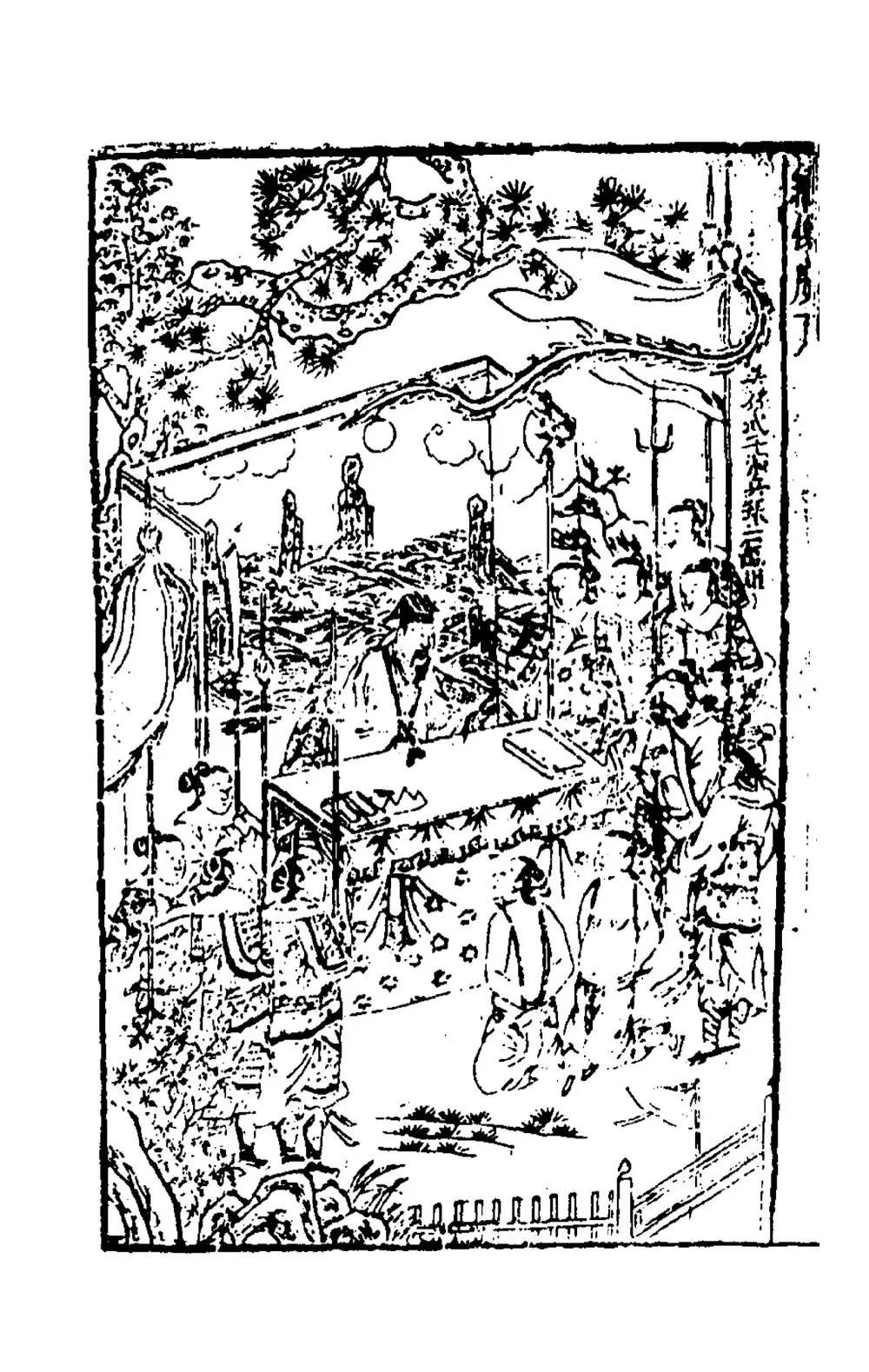
Sun Tzu is the name given to a Chinese military commander from around the fifth century BC who is credited with writing The Art of War. The book is about 2,500 years old, consists of thirteen short chapters, and is probably the most widely read work on military strategy ever written. Its central argument is that the best victory is the one won without fighting. The smartest commander breaks the enemy's plan before the armies ever meet. Almost nothing about Sun Tzu himself is certain. No historical source written during his lifetime mentions him. But The Art of War has been read and applied for about 2,500 years, by Chinese generals, Vietnamese insurgents, American Marines, and corporate executives.
How Sun Tzu proved himself to the King of Wu
The main early account of Sun Tzu's life comes from the historian Sima Qian, who wrote about 400 years later in his Records of the Grand Historian. Sima Qian tells one story. King Helü of Wu had read Sun Tzu's writings and wanted to test whether he could drill anyone, so the king handed him 180 women from the palace.
Sun Tzu divided them into two companies and placed the king's two favorite concubines in charge as officers. He gave an order and beat a drum. The women laughed. Sun Tzu said that when orders are unclear, the fault belongs to the commander. He explained the orders again, slowly, and beat the drum a second time. The women laughed again. Sun Tzu said that when orders have been made clear and troops still disobey, the fault belongs to the officers. He ordered both concubines executed. King Helü objected, but Sun Tzu carried out the sentence. After that, the women drilled in perfect silence, and the king made Sun Tzu a general.
According to Sima Qian, Sun Tzu then helped King Helü defeat the much larger state of Chu at the Battle of Boju in 506 BC, though earlier historical texts do not mention Sun Tzu's role in the battle.
What The Art of War says
The book is short. Its thirteen chapters cover planning, waging war, strategy, terrain, the use of spies, and the use of fire. A few core ideas run through all of them.
The first is that the best strategy avoids battle entirely. The book ranks four approaches in order: attack the enemy's plan, break the enemy's alliances, fight the enemy's army, and, worst of all, besiege the enemy's cities, because sieges cost months and kill your own men.
The second is speed. A drawn-out war has never helped any state, the book warns. An army should feed itself from enemy supplies rather than hauling grain across its own country, because the cost of transport ruins the economy at home.
The third is information. The book's most famous line is that if you know the enemy and know yourself, you need not fear a hundred battles. The last chapter is entirely about spies, and Sun Tzu treats them as the most valuable and cheapest tool in war. An army costs a fortune to keep in the field, but a well-placed bribe costs almost nothing.
The book also gives tactical advice that still sounds practical. Attack where the enemy is weak and avoid where the enemy is strong. When you surround an enemy, leave a way out, because a person with nothing to lose fights harder.
Did Sun Tzu really exist?
There is no proof of Sun Tzu's existence beyond Sima Qian's biography, written about 400 years after the events it describes. Earlier texts from the Spring and Autumn period do not mention a general named Sun Wu. Some scholars have argued that Sun Wu never existed and that The Art of War was written by one or more unknown authors during the Warring States period, which followed the Spring and Autumn period. Others accept that a historical Sun Wu lived but believe the book was revised and expanded by his students or descendants over several generations.
A discovery in 1972 settled part of the debate. Workers digging on Yinqueshan hill in Shandong province opened a Han dynasty tomb and found nearly 5,000 bamboo slips. Among them were two distinct works: a copy of The Art of War and a second military treatise attributed to Sun Bin, a descendant of Sun Wu who lived more than a century later. Before this find, some scholars had argued that Sun Tzu and Sun Bin were the same person. The bamboo slips proved they were two different writers with two different books.
The discovery did not prove that a historical Sun Wu wrote every line of The Art of War. The text that survives today was most likely compiled and revised during the Warring States period, decades or centuries after the person whose name it carries. But it confirmed that the text existed by the second century BC and that the tradition linking it to a separate, earlier author was real.
How The Art of War reached the rest of the world
The book stayed in China and its neighbors for more than two thousand years. In 1772, a French Jesuit missionary named Jean-Joseph-Marie Amiot translated it into French while serving at the imperial court in Beijing. It was the first Western translation, but it attracted little lasting attention.
The Art of War became internationally known in the 1900s, largely through the military leaders who adopted it. Mao Zedong studied Sun Tzu closely and built his doctrine of guerrilla warfare partly on ideas from the book, though Mao broke with Sun Tzu on one central point by embracing the long wars that Sun Tzu warned against. General Vo Nguyen Giap of Vietnam, who defeated France at the Battle of Dien Bien Phu in 1954, also drew on Sun Tzu's ideas. When General Al Gray created the Marine Corps Commandant's Professional Reading List in 1989, The Art of War was the one book he required on it.
From the 1980s onward, The Art of War became a business bestseller. Executives and consultants applied its ideas about strategy, competition, and information to corporate life. That popularity is also when Sun Tzu became one of the most cited and least fully read authors in any language. The Art of War is still assigned at military academies around the world and still a business bestseller.