
Taiping Rebellion
The Taiping Rebellion was a civil war in China from 1850 to 1864 that killed at least 20 million people.
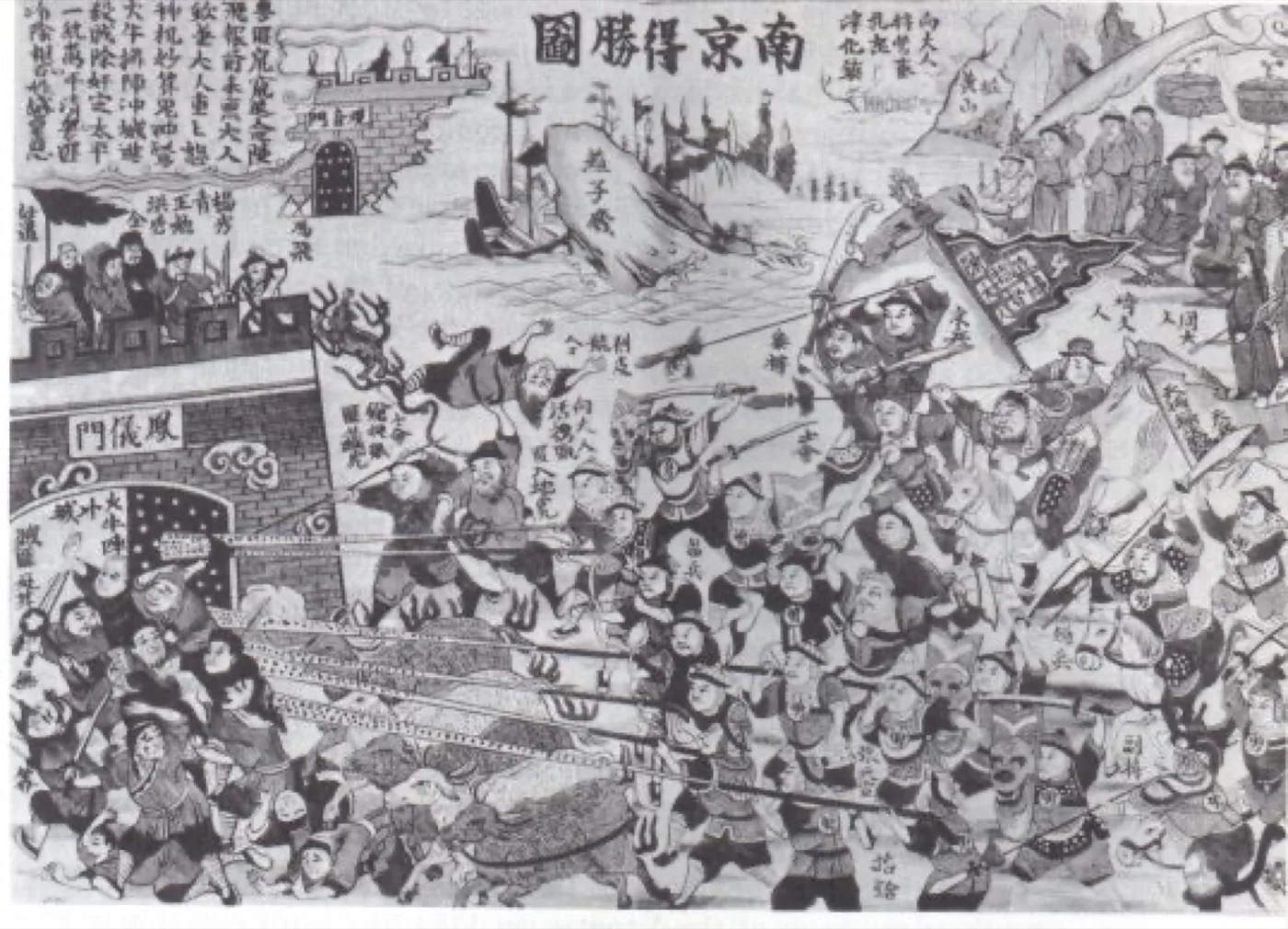
The Taiping Rebellion was a civil war in China from 1850 to 1864, fought between the Qing dynasty and a rebel state that called itself the Heavenly Kingdom of Great Peace. Its leader, Hong Xiuquan, was a village schoolteacher from Guangdong who became convinced he was Jesus Christ's younger brother, chosen to overthrow the ruling Manchu dynasty. The Taiping captured Nanjing in 1853 and controlled much of southern China for over ten years. An estimated 20 to 30 million people died in the fighting, famine, and disease that followed, making it the deadliest civil war in recorded history.
How Hong Xiuquan started the Taiping Rebellion
Hong Xiuquan was born in 1814 into a poor Hakka family in Guangdong province. The Hakka were an ethnic group that had migrated into southern China centuries earlier and often faced discrimination from the local population. Hong was a bright student, and his family pooled its money to send him to take the imperial civil-service examinations, the only reliable path to a government career. He failed the exam for the lowest degree four times.
In 1836, while in Guangzhou for one of his attempts, Hong received a set of Christian pamphlets called "Good Words to Admonish the Age," written by Liang Afa, a Chinese convert working with Western missionaries. He barely looked at them. The following year, after another failure, he collapsed and spent days in a feverish delirium. He had visions of an old man who gave him a sword and told him to destroy demons.
Six years later, after his fourth and final failure in 1843, Hong reread the pamphlets. He decided the old man in his visions had been God, that a younger man in the vision was Jesus Christ, and that he himself was God's second son, chosen to cleanse China of evil. He came to believe the Manchus who ruled the Qing dynasty were the demons he had been told to destroy.
Hong began preaching in the countryside. His God Worshipping Society spread quickly among poor Hakka communities in Guangxi province. Southern China was already unstable. The Qing had lost the First Opium War to Britain in 1842, and the cost of the defeat fell on ordinary people through higher taxes and a weakening economy. Hong's promise of a new kingdom found willing followers.
In January 1851, Hong's followers launched an armed uprising and declared him Heavenly King. The rebel army grew quickly as it marched north through central China. In March 1853, the Taiping captured Nanjing, a major imperial city, and renamed it Tianjing, the Heavenly Capital. The Taiping sent expeditions that came close to Beijing. For about ten years, the Taiping controlled large parts of the lower Yangtze, the richest region in China, and at their height they governed territory with tens of millions of people.
The Taiping government outlawed opium, foot-binding, and prostitution. It abolished private property, promised to redistribute land, and separated men and women into different camps. It kept its own calendar and ran communal treasuries. The movement was part peasant uprising, part religious cult, and part social revolution.
How the Qing defeated the Taiping
The Qing dynasty's own armies could not stop the Taiping. The banner armies, the hereditary Manchu forces that had conquered China two centuries earlier, were no match for the rebels. Beijing was forced to do something it had long avoided: hand real military authority to Han Chinese provincial leaders.
Zeng Guofan, a Confucian scholar from Hunan who held the jinshi, the highest degree in the civil-service examinations, built a new fighting force called the Xiang Army in 1853. The soldiers were recruited from local villages, trained by Zeng's own officers, and loyal to Zeng as much as to the emperor. Li Hongzhang built a similar force, the Huai Army, in the province of Anhui. Near Shanghai, a smaller force called the Ever Victorious Army fought the Taiping with Chinese soldiers and Western officers. Its first commander was Frederick Townsend Ward, an American adventurer from Salem, Massachusetts, who was killed in battle in 1862 at the age of thirty. The British officer Charles Gordon later took over and earned the nickname "Chinese Gordon."
By the early 1860s, these regional armies had turned the war. They besieged Nanjing for months, cutting off food to the city. Hong Xiuquan refused to flee. In June 1864, Hong died at the age of fifty, likely from illness brought on by surviving on foraged weeds as famine gripped the capital. Weeks later, Zeng Guofan's forces broke through the walls and took Nanjing. The killing that followed was enormous. The Heavenly Kingdom was over.
How many people died in the Taiping Rebellion?
The death toll is estimated at 20 to 30 million, with some scholars placing it much higher. Most people did not die in combat. Armies on both sides stripped the countryside for food, and the resulting famine and disease killed far more than the fighting itself. Whole regions were left nearly empty. No civil war before or since has killed as many people.
Why the Taiping Rebellion changed China
The Qing dynasty survived the rebellion but never fully recovered. To defeat the Taiping, Beijing had given provincial officials their own armies and their own tax bases. Those officials kept that power after the war, and Beijing never completely took it back. Military and political authority drifted permanently to the provinces and the generals who controlled them. The Qing lasted another forty-eight years after 1864, but its central government remained weak.
The rebellion also shaped the revolutionaries who came after. Sun Yat-sen, born in Guangdong in 1866, grew up hearing stories about the Taiping and later admired Hong Xiuquan as an early revolutionary against the Manchus. When Sun's revolution toppled the Qing dynasty in 1912, the dynasty's inability to regain control after the Taiping Rebellion was one of the reasons it fell. Mao Zedong and the Chinese Communists later praised the Taiping as early revolutionaries against a corrupt ruling class.
The Taiping Rebellion showed that the Qing could not defend itself with its own forces, and the regional armies that saved it answered to their generals first. The dynasty survived, but it governed a weaker and more divided China for the rest of its existence.