
Taiwan Relations Act
The Taiwan Relations Act is the 1979 US law that governs America's relationship with Taiwan, requiring arms sales but not promising military defense.
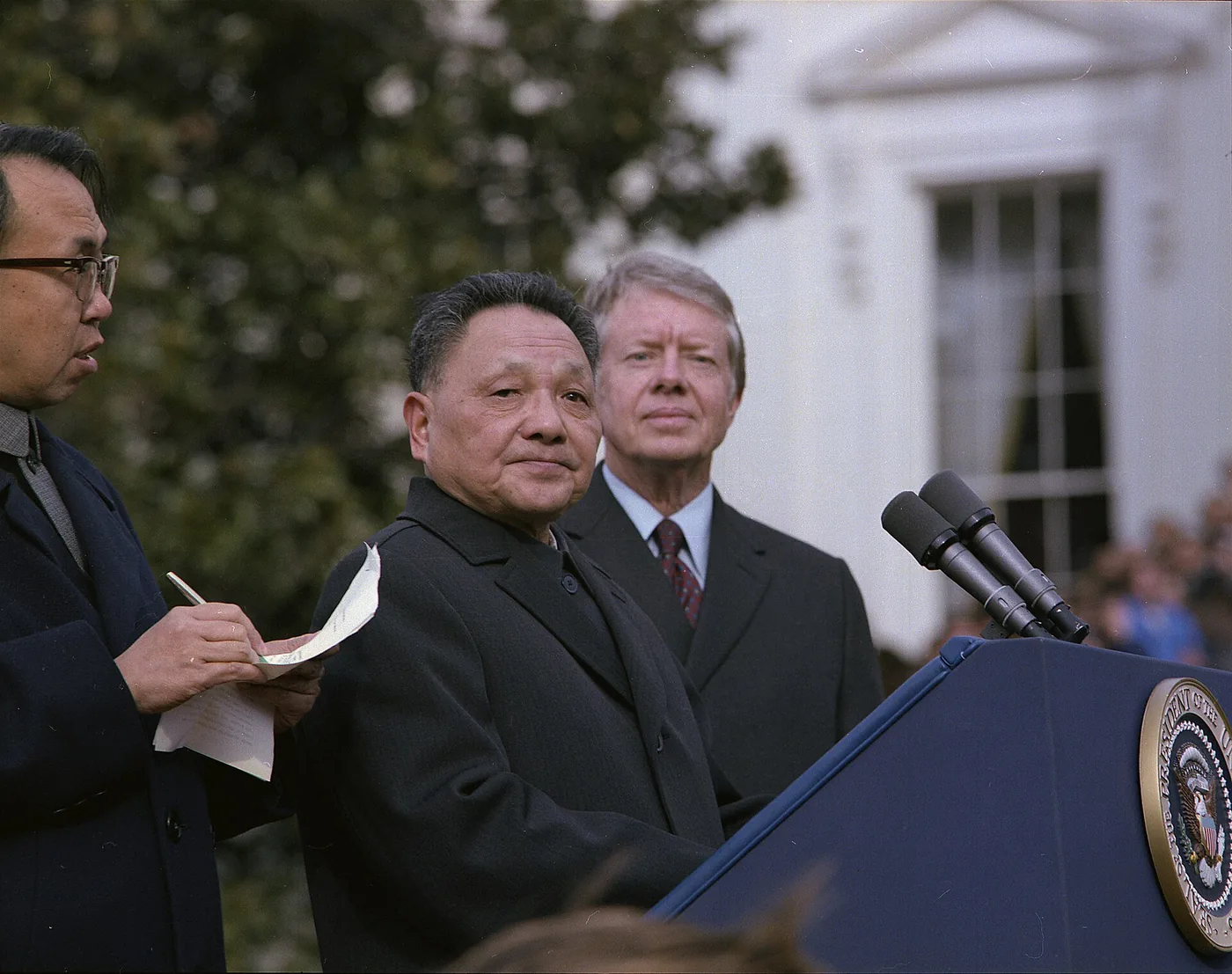
The Taiwan Relations Act is a 1979 United States law that governs America's relationship with Taiwan. Congress passed it after President Jimmy Carter recognized the People's Republic of China on January 1, 1979. That decision ended formal ties with Taiwan and terminated the defense treaty Washington had maintained with the island since 1954. The act treats Taiwan as a state for nearly every practical purpose, from courts to trade to weapons sales, without formally recognizing it as one. It requires the United States to sell Taiwan defensive weapons but does not promise that American forces will fight for Taiwan if China attacks. That gap was written into the law on purpose, and it is the legal basis of America's strategic ambiguity toward Taiwan.
How Congress wrote its own Taiwan policy
Jimmy Carter appeared on television on December 15, 1978, to announce that Washington would establish formal diplomatic relations with Beijing on January 1. The recognition switch had been negotiated in secret. Congress learned about the decision only hours before the public did, and members of both parties were furious. Senator Barry Goldwater sued the president, arguing that Carter could not terminate the defense treaty without the Senate's consent. The Supreme Court declined to rule on the merits of the case, but the anger in Congress was bipartisan and deep.
Over the next four months, Congress wrote its own Taiwan policy. The result was the Taiwan Relations Act, which Carter signed on April 10, 1979. Congress backdated the law to January 1 so there would be no gap in the legal relationship. The defense treaty was ending, but the act replaced most of its practical effects, and it did something the treaty had not: it put the rules in a statute that no president could undo alone. Changing the Taiwan Relations Act requires another act of Congress, and that structure has made it difficult for any single president to reshape Taiwan policy.
What the Taiwan Relations Act says
The act declares that the absence of diplomatic recognition does not affect how American law applies to Taiwan. Taiwanese citizens and businesses have full access to American courts. Taiwan's treaties and agreements with the United States stay in force. For legal purposes, Taiwan is treated as a foreign country in all but name.
Since the United States has no embassy in Taiwan, the act relies on the American Institute in Taiwan, known as AIT. On paper, AIT is a nonprofit corporation. Its staff include career US diplomats on assignment from the State Department, and it works as an embassy in every way that matters. Its main office is a large compound in Taipei's Neihu district, with a US Marine security detachment. Taiwan runs a mirror office in Washington called the Taipei Economic and Cultural Representative Office. These arrangements are a diplomatic convenience that lets both governments carry on a full relationship without either side having to acknowledge it formally.
The act's security provisions are carefully worded. Washington must sell Taiwan the weapons it needs to defend itself. The act also requires the United States to keep itself capable of opposing any use of force that threatens Taiwan. Any attempt to determine Taiwan's future by force or coercion, including boycotts and embargoes, is called a danger to Western Pacific stability and a matter of "grave concern." The president must inform Congress promptly if Taiwan's security comes under threat.
Does the United States have to defend Taiwan?
No. Nothing in the act guarantees that the United States will fight for Taiwan. The law calls a Chinese attack a matter of grave concern and requires Washington to stay capable of opposing one, but it does not commit American forces to Taiwan's defense. If Taiwan is threatened, the president must consult with Congress. The decision to intervene is left to the normal constitutional process, not triggered automatically by the act.
This gap was deliberate. Congress wanted to discourage China from attacking Taiwan without giving Taiwan an unconditional guarantee. The result is strategic ambiguity: the United States keeps China uncertain about whether it would go to war, and keeps Taiwan uncertain about whether it can count on American help.
What the act does guarantee is arms sales, and that guarantee has held. In a 1982 communiqué, the United States told China it planned to scale back weapons sales to Taiwan. But Congress had already written arms sales into law, so no president could stop them unilaterally. Sales have continued for decades, from F-16 fighter jets in 1992 to a roughly $11 billion package announced in December 2025, the largest arms package under the act. Beijing has protested the Taiwan Relations Act since 1979, but the law has outlasted every effort to weaken it.
The Taiwan Relations Act does not create an alliance, does not function as a treaty, and makes no promise of military defense. It is an American law, written by Congress and changeable by Congress. In the forty-seven years since it was signed, no Congress has changed its core provisions, and the act remains the foundation of the American relationship with Taiwan.