
Disputed territory · Strait of Hormuz
Abu Musa and the Tunbs
Fighting: US strikes on the islands in July 2026Updated October 12, 2026
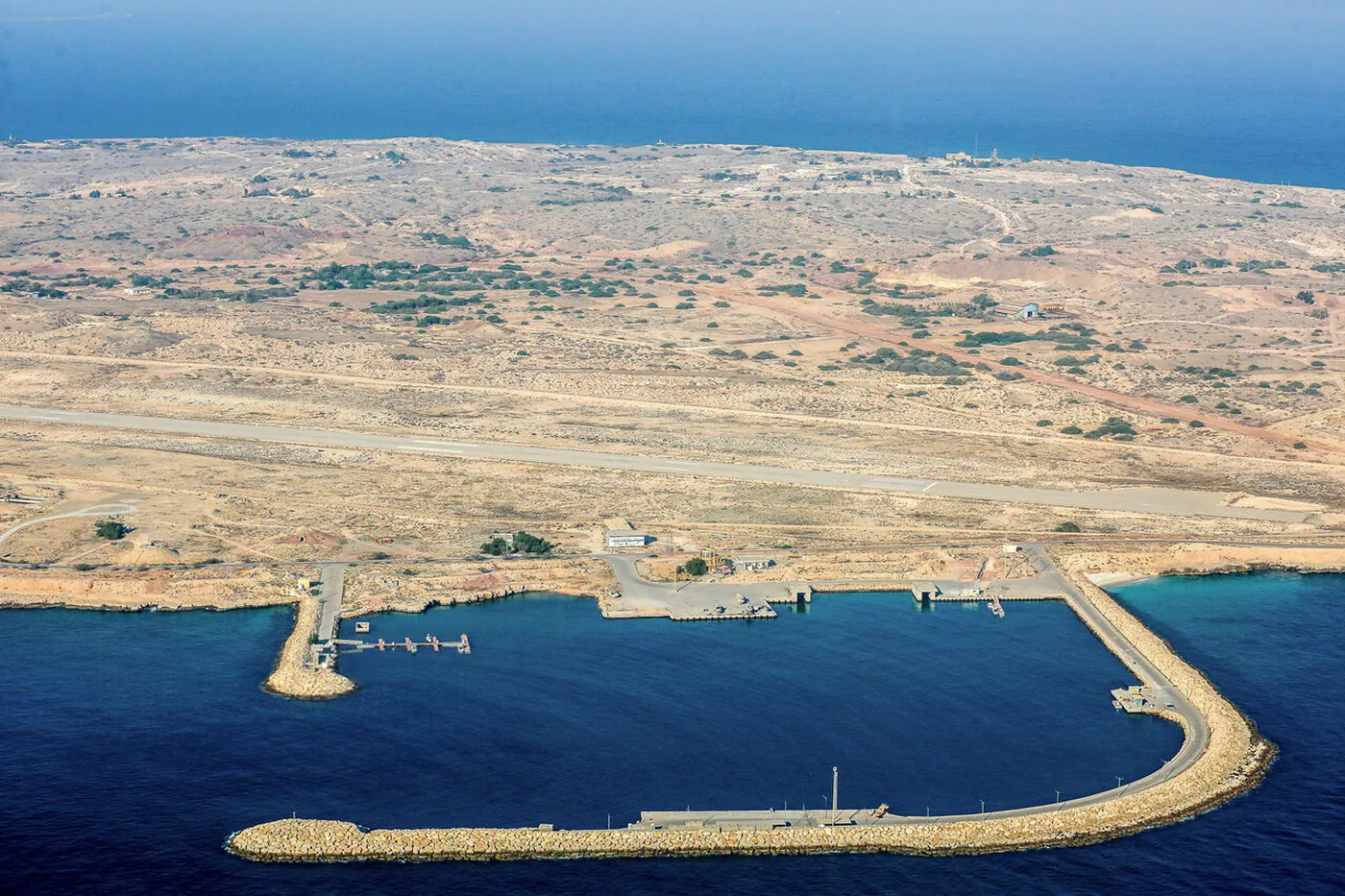
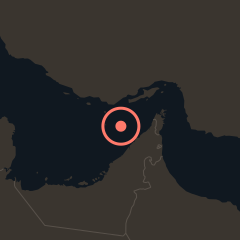
Abu Musa, Greater Tunb and Lesser Tunb are three small islands near the Strait of Hormuz that Iran holds and the United Arab Emirates claims. On November 30, 1971, Iranian forces landed on Abu Musa under a deal with the emirate of Sharjah, and took the two Tunbs by force. The UAE was founded two days later. The UAE calls them occupied Emirati islands. Iran says they are an inseparable part of Iran. In July 2026, during the war between Iran and the United States and Israel, US forces struck Iranian military sites on Abu Musa and Greater Tunb.
- Held by Iran since
- 1971
- November 30, two days before the UAE was founded
- Land area
- About 25 km²
- Abu Musa 12.8, Greater Tunb 10.3, Lesser Tunb 1 to 2
- Abu Musa town
- 4,213 people
- Iran's 2016 census
- Last struck
- July 2026
- US strikes on Abu Musa and Greater Tunb
Abu Musa and the Tunbs in 30 seconds
- Iran holds three islands near the Strait of Hormuz: Abu Musa, Greater Tunb and Lesser Tunb. The United Arab Emirates claims all three.
- On November 30, 1971, Iranian forces landed on Abu Musa under a deal with Sharjah and took the Tunbs by force. The UAE was founded two days later.
- The UAE calls for direct talks or a case at the International Court of Justice. Iran says the islands are Iranian and not open to negotiation.
- In the 2026 war between Iran and the United States and Israel, US forces struck Iranian bases on Abu Musa and Greater Tunb in July. Iran says US strikes also hit both islands in March.
Who controls Abu Musa and the Tunbs?
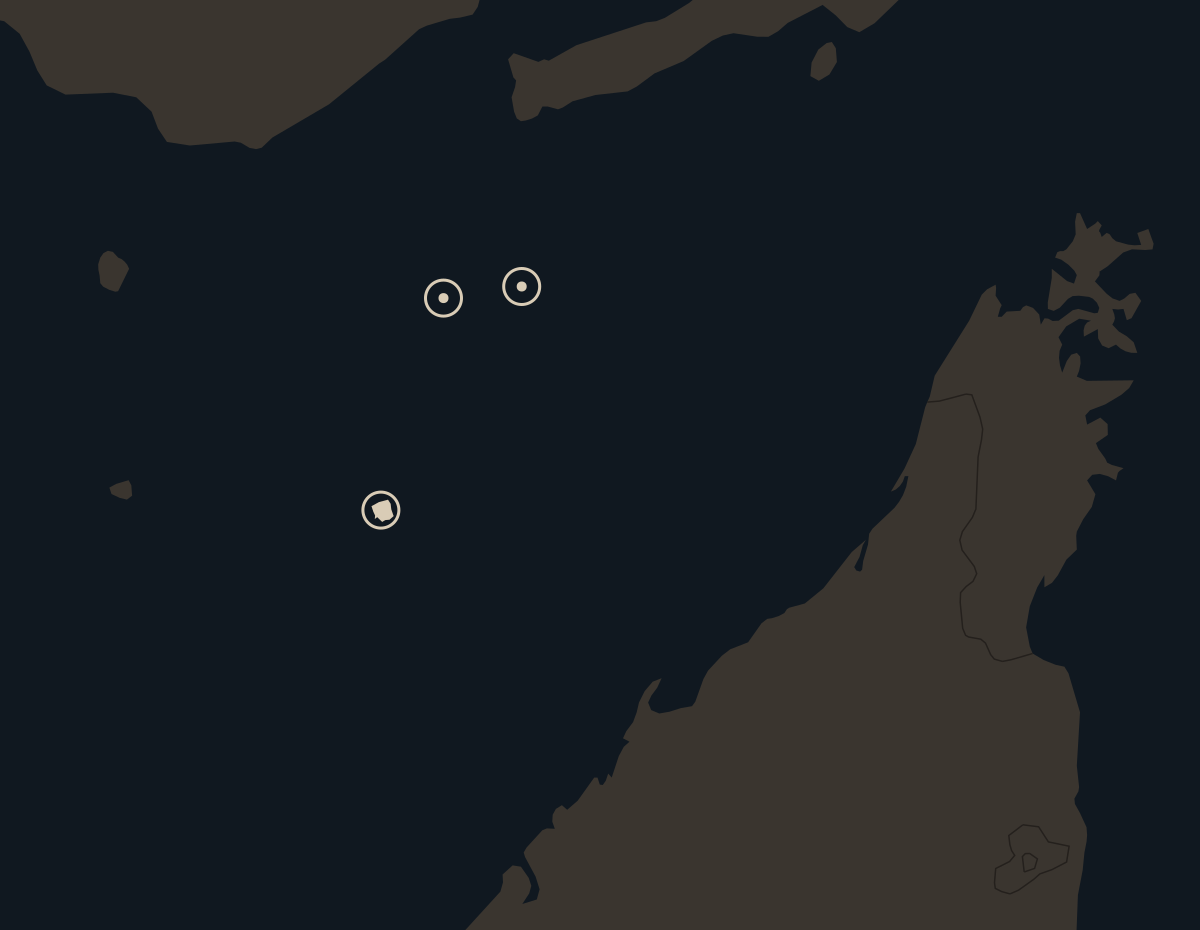
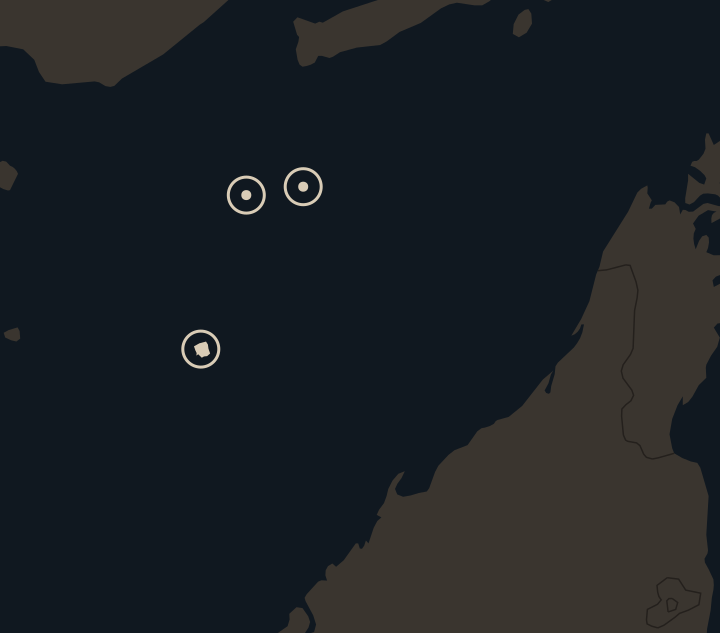
Iran controls all three islands and keeps garrisons on Abu Musa and Greater Tunb. Abu Musa, the largest at about 12.8 km², lies about 60 km off the UAE coast. Its town had 4,213 people in Iran's 2016 census, and the island has a harbor and a runway. Greater Tunb, about 10.3 km², lies about 42 km south of the Iranian port of Bandar Lengeh and about 74 km north of the coast of Ras al-Khaimah, one of the seven emirates. Greater Tunb has a garrison and an airstrip. Lesser Tunb, about 11 km to the west, has no civilian population.
Under the 1971 deal, Sharjah ran part of Abu Musa. In April 1992 Iran expelled foreign workers from Sharjah's part of the island. On August 24, 1992, Iran turned away a boat carrying more than 100 teachers and their families, demanding Iranian visas. The UAE says Iran broke the 1971 deal.
The three islands, by land area
 Abu Musa
Greater Tunb
Lesser Tunb
IRAN
UNITED ARAB
Abu Musa
Greater Tunb
Lesser Tunb
IRAN
UNITED ARABEMIRATES OMAN Persian Gulf Strait of
Hormuz Bandar Lengeh Sharjah Dubai Ras al-Khaimah Khasab
 Abu Musa
Greater Tunb
Lesser Tunb
IRAN
UNITED ARAB
Abu Musa
Greater Tunb
Lesser Tunb
IRAN
UNITED ARABEMIRATES Persian Gulf Bandar Lengeh Sharjah Ras al-Khaimah
Why do Iran and the UAE both claim the islands?
Each side says the islands were its own before Britain left the Persian Gulf in 1971. The UAE says the Qasimi sheikhs, the family that ruled Sharjah and Ras al-Khaimah, held the islands from the 18th century and flew their flags there, and it points to British records. Britain, which protected the sheikhdoms of the Arabian coast, treated Abu Musa as Sharjah's and the Tunbs as belonging to the Qasimi sheikhs, and later to Ras al-Khaimah. A British cabinet report of 1928 judged that the sheikhs had the better legal title. Iran says the Qasimi sheikhs of Lingeh, a branch of the same family on the Persian coast, who governed the islands until 1887, were Persian officials. Iran raised its claim at the League of Nations in the 1920s, and it cites a British War Office map, presented to the Shah in 1888, that showed the Tunbs in Persia's color.
In November 1971 Sharjah accepted a memorandum with Iran. Iranian troops would hold an agreed zone of Abu Musa, and Sharjah would run the rest. The two would split the oil revenue, and neither gave up its claim. On November 30 Iranian forces landed on Abu Musa and took the Tunbs by force. On Greater Tunb a six-man Ras al-Khaimah police post resisted, and four policemen and three Iranian soldiers were killed, by Iranian figures reported at the time. The UAE was founded on December 2, and Ras al-Khaimah joined it on February 10, 1972.
How the islands changed hands
- 1888Britain gives the Shah a map showing the Tunbs in Persia's color
- 1904Persian officials replace Sharjah's flag on Abu Musa, then withdraw, reserving Persia's claim
- 1928A British report backs the sheikhs' title to the islands
- Nov 1971Sharjah and Iran agree to share Abu Musa
- Nov 30, 1971Iran lands on Abu Musa and takes the Tunbs by force
- Dec 2, 1971The UAE is founded. Ras al-Khaimah joins in February 1972
- 1992Iran demands Iranian visas to enter Sharjah's part of Abu Musa
- 2026US strikes hit Iranian bases on Abu Musa and Greater Tunb
What happened to the islands in the 2026 war?
Abu Musa and Greater Tunb were struck several times after the war between Iran and the United States and Israel began on February 28, 2026. In March, US strikes hit both islands, according to Iran and to Israel's Alma research center, which analyzed satellite images. Iran's foreign minister, Abbas Araghchi, said the strikes came from launchers "stationed in Ras Al Khaimah and near Dubai." Anwar Gargash, diplomatic adviser to the UAE's president, said the UAE "did not allow strikes from its territory." Iran's military warned that any further attack on the islands from UAE territory would bring heavy strikes on Ras al-Khaimah. In late March, Axios reported that the Pentagon had drawn up options to seize the islands, and Iran's parliament speaker, Mohammad Bagher Ghalibaf, warned of a plan "to occupy one of Iran's islands." None was carried out.
On May 29 the Wall Street Journal, citing unnamed sources, reported that the UAE had secretly struck Iranian targets, including on Abu Musa. The UAE did not confirm the report. A US-Iran truce agreed in June collapsed on July 8. US Central Command then struck Abu Musa on July 13 and missile launch sites on Greater Tunb on July 15-16. It said the Greater Tunb raid "further degraded Iran's ability to attack commercial shipping." No strike on the islands has been confirmed since July.
The islands in the 2026 war
- Feb 28The war begins with US and Israeli strikes on Iran
- Mar 14Iran says US missiles hit Abu Musa
- Mar 15Iran says strikes came from launchers in the UAE. The UAE denies it
- Mar 21Iran threatens Ras al-Khaimah if any further attack comes from UAE soil
- May 29A US newspaper reports Emirati strikes on Abu Musa. The UAE does not confirm
- Jul 8A June truce between the US and Iran collapses
- Jul 13US Central Command strikes Abu Musa
- Jul 15US forces strike missile launch sites on Greater Tunb
What does each side want?
The UAE wants direct talks or a case at the International Court of Justice. Iran says the islands are an inseparable part of its territory, so their sovereignty is not open to negotiation or arbitration. The Gulf Cooperation Council, the group of six Arab Gulf monarchies that includes the UAE, backs the UAE's claim in its summit statements every year. Iran objects when other powers endorse the UAE's approach. It summoned China's ambassador after a China-GCC statement backed bilateral negotiations in December 2022, and Russia's after a Russia-GCC statement backed talks or the court in July 2023.
On April 11, 2012 Iran's president, Mahmoud Ahmadinejad, visited Abu Musa, and the UAE recalled its ambassador. At the UN General Assembly in September 2026 a UAE minister, Khalifa Shaheen Al Marar, called for a peaceful settlement of what he called Iran's "occupation" of the islands. Iran's deputy foreign minister, Kazem Gharibabadi, replied that repeating the claim "does not alter the reality."
Each side in its own words
 IranThe islands are "inseparable parts of Iran's territory", and border matters "are absolute red lines" (Kazem Gharibabadi, deputy foreign minister, September 2026)
 United Arab Emirates"As Iran continues its occupation of the three Emirati islands... which we reject, the United Arab Emirates has consistently called for a peaceful settlement" (Khalifa Shaheen Al Marar, minister of state, September 2026)
What is at stake in Abu Musa and the Tunbs?
Shipping
The islands sit near the western entrance to the Strait of Hormuz, the route for tankers leaving the Persian Gulf. In 2026 the US and Iran treated them as military positions: the US struck missile sites there, and Iran threatened Ras al-Khaimah over attacks on them.
Oil and gas
The Mubarak oil field off Abu Musa began producing in 1974 and peaked at about 60,000 barrels a day. Under the 1971 deal, Iran and Sharjah were to split the revenue half and half. By 2010, the field's operator said it was at the end of its economic life.
National pride
The UAE marks November 30 as Commemoration Day, for its citizens who died serving the country, starting with a policeman killed on Greater Tunb in 1971. Iran's leaders treat the islands as a red line. Iran's president visited Abu Musa in 2012, and in 2026 its deputy foreign minister called border matters "absolute red lines."
Questions about Abu Musa and the Tunbs
Are the islands Iranian or Emirati?
Iran holds and governs all three islands, and the UAE claims all three. No court has ruled. The UAE has offered to take the case to the International Court of Justice, but that court can hear it only if both sides agree, and Iran has refused. The Gulf Cooperation Council and the Arab League, both of which include the UAE, back its claim.
Is it the Persian Gulf or the Arabian Gulf?
Both names are used. Iran calls it the Persian Gulf. Arab states, including the UAE, call it the Arabian Gulf. The UN Secretariat uses Persian Gulf, and so does this page. In May 2025, President Trump was reported to be planning to call it the Arabian Gulf during his Gulf trip, but no formal US renaming followed.
Who was Salem Suhail bin Khamis?
Salem Suhail bin Khamis was a 20-year-old Ras al-Khaimah policeman on Greater Tunb when Iranian forces landed on November 30, 1971. He had joined the police at 18. By Emirati accounts, he refused to lower the Ras al-Khaimah flag and was shot. He is buried on Greater Tunb, and the UAE remembers him as its first martyr. Iranian figures reported at the time said three Iranian soldiers and four policemen were killed on the island.
What do the islands' names mean?
Abu Musa has the same name in Persian and Arabic. Iran calls the Tunbs Tonb-e Bozorg and Tonb-e Kuchak. The UAE calls them Tunb al-Kubra and Tunb al-Sughra. Both pairs mean Greater Tunb and Lesser Tunb. "Tonb" probably comes from a southern Persian word for a hill, according to Encyclopaedia Iranica, which also notes a possible Arabic origin.