
Country profile · Arabian Peninsula
 United Arab Emirates
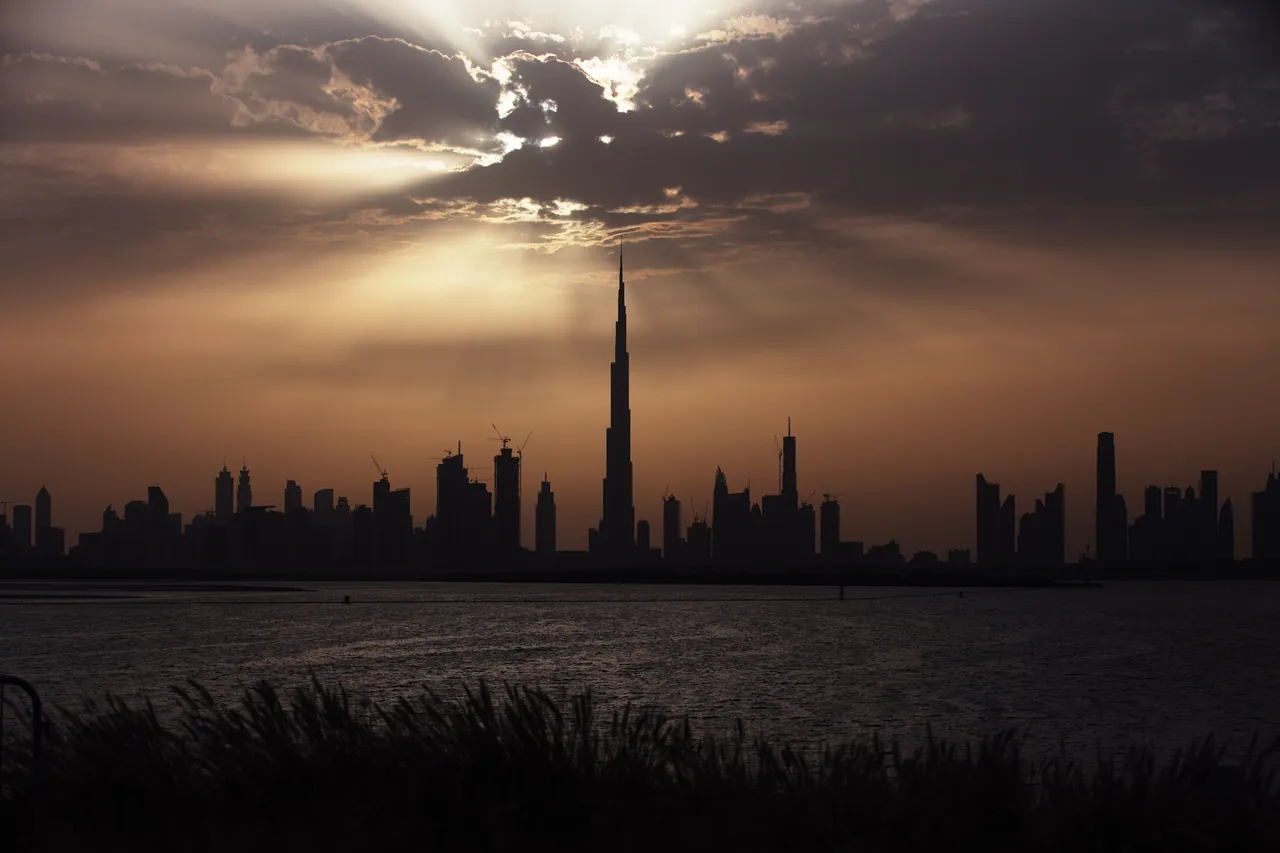
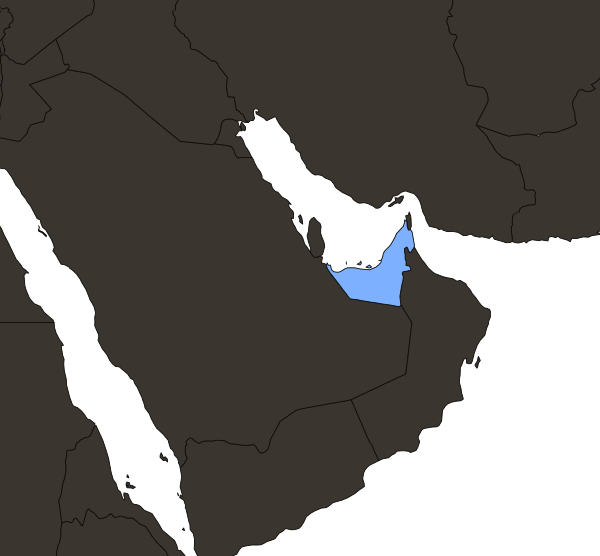
The United Arab Emirates is a federation of seven emirates with 11.3 million people, most of them foreigners. President Mohamed bin Zayed leads it. It was the eighth-largest oil producer in 2025 and left OPEC on May 1, 2026. In the 2026 war, Iran fired more missiles and drones at the UAE than at any other country, The Wall Street Journal found.
Where the United Arab Emirates ranks
All rankings →Who runs the UAE?
President Mohamed bin Zayed, known as MBZ, runs the UAE. He is also the Ruler of Abu Dhabi, the largest emirate. The seven emirate rulers elected him president on May 14, 2022, after his half-brother, President Khalifa, died, but MBZ had run the country day to day since Khalifa's stroke in 2014. He was born in 1961, the third son of the UAE's founder, Sheikh Zayed. He learned to fly helicopters at Britain's Sandhurst military academy, and UAE media still show him at the controls. He is a lifelong falconer. Political parties are banned. The only national vote is for half of an advisory council, cast by electors the rulers choose. Most residents are foreigners whose right to stay depends on their jobs. The UAE has not published a count of its citizens since 2010, when there were 947,997.
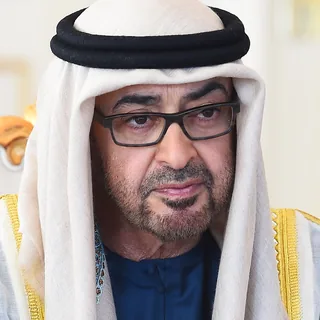
Photo (2024): Press Service of the President of Azerbaijan, Wikimedia Commons, CC BY 4.0
Who are the UAE's allies and rivals?
The United States is the UAE's main security partner. US forces use Al Dhafra Air Base, and in 2024 the US named the UAE a Major Defense Partner. The UAE was the first Gulf state to recognize Israel, in the 2020 Abraham Accords, and Israel sent Iron Dome air defense batteries during the 2026 war. Iran is the main rival. It has held three islands the UAE claims since 1971. After the US and Israel struck Iran on February 28, 2026, Iran fired missiles and drones at the UAE, and 13 people were killed by April 8. Relations with Saudi Arabia soured over Yemen, where Emirati forces had to leave in January 2026. A 2026 UN report found substantial evidence that a UAE-based company recruited Colombian mercenaries for Sudan's RSF paramilitary. The UAE denies arming the RSF.
Allies and partners


Rivals
 IranHolds three islands the UAE claims; struck it in 2026
 SudanArmy-led government cut ties, May 2025
 AlgeriaCut diplomatic ties September 10, 2026
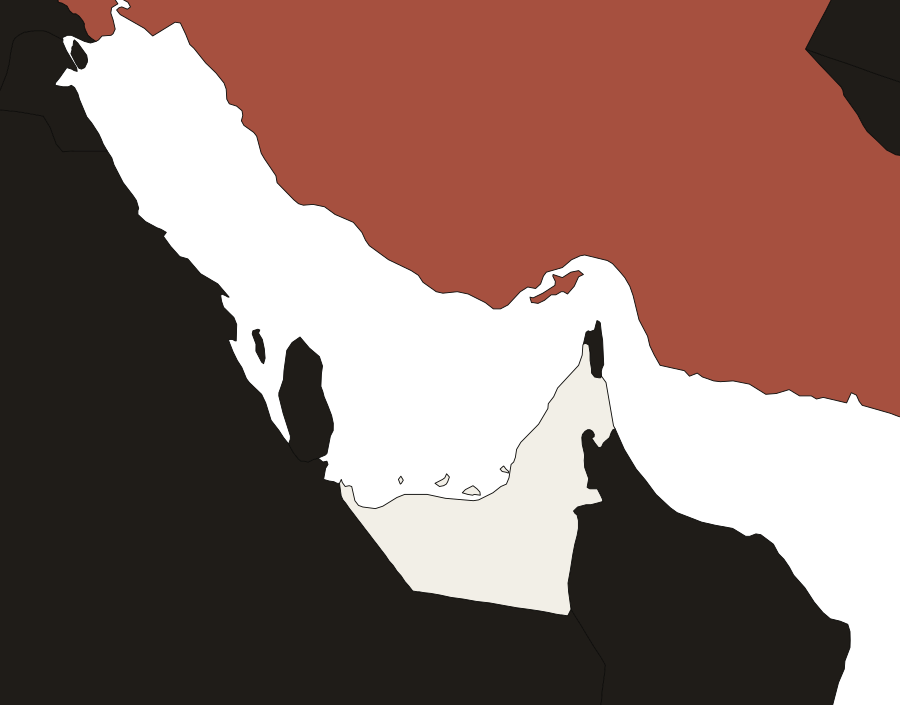
- Abu Musa and the Tunbs Held by Iran since November 1971, two days before the UAE was founded. Claimed by the UAE.
- Al Dhafra Air Base Hosts US forces. First target of Iranian missiles on February 28, 2026.
- Fujairah Oil port outside Hormuz, reached by a pipeline carrying up to 1.8 million barrels a day. Hit by Iran on May 4, 2026.
- Strait of Hormuz Largely closed since the war began in February 2026. ADNOC tankers were attacked here in August 2026.
- United Arab Emirates
- Rival
Who does the UAE trade with?
China is the UAE's largest non-oil trading partner, and nearly all of its oil goes to Asia. Non-oil trade passed $1 trillion for the first time in 2025, reaching AED 3.8 trillion, up 27%. Gold was the biggest single item. Counting oil, India, Japan and China bought the most UAE goods in 2024. The UAE exported about 3.2 million barrels a day of crude in 2025, 99% to Asia, led by Japan and China. The war cut shipping through the Strait of Hormuz. Jebel Ali, the country's largest port, handled 90.1% fewer containers in the second quarter of 2026 than a year earlier. Dubai International Airport had 31.3% fewer passengers in the first half. The central bank cut its 2026 growth forecast to 1.7%, from 5.6%.
Sells to
Share of the United Arab Emirates' exports
 India18.0%
 Japan11.9%
 China11.7%
- Hong Kong6.4%
 South Korea5.8%
Buys from
Share of the United Arab Emirates' imports
- China21.0%
- India12.0%
 United States7.2%
 Saudi Arabia6.1%
- Hong Kong4.7%
Goods trade including oil, 2024. BACI data from CEPII, which rebuilds each country's trade from its partners' reports, via the OEC. The UAE publishes partner figures only for its non-oil trade.
How strong is the UAE's military?
The UAE has about 63,000 active troops (IISS). US officers have called it "Little Sparta". Emirati jets flew over Libya in 2011. In Yemen, a Houthi missile killed 45 Emirati soldiers at Safer on September 4, 2015, the country's deadliest day. The UAE publishes no defense budget. SIPRI's last estimate is from 2014: $22.8 billion, then 5.6% of GDP. Emirati men do 11 months of national service. The UAE was THAAD's first export customer, and the system made its first combat interception on January 17, 2022, during a Houthi attack on Abu Dhabi that killed three people. It ordered 80 French Rafale F4 fighters in December 2021 for about €16 billion. Its state arms company EDGE ranked 37th in SIPRI's top 100, with $4.7 billion in 2024 sales.
Why did the UAE leave OPEC?
The UAE left OPEC and the wider OPEC+ group on May 1, 2026, after 59 years. The government cited its "evolving energy profile, including accelerated investment in domestic energy production". In practice, OPEC+ held the UAE to about 3.4 million barrels a day, around 30% below the 4.85 million that ADNOC, the state oil company, says it can produce. The UAE had fought OPEC+ over its quota before, blocking a deal in July 2021. It is the biggest loss of capacity in OPEC's history: without the UAE, OPEC's share of world crude output in 2025 would have been 31%, not 35%. The war limits what the UAE can sell. Its output fell from 4.0 million barrels a day at the start of 2026 to 2.4 million in March to May, then reached a record 4.1 million in June.
The largest oil producers, 2025 (barrels a day)
Full ranking →- United States13,586,000
 Russia9,885,000
- Saudi Arabia9,556,000
 Canada4,964,000
 Iraq4,388,000
- China4,325,000
- Iran4,051,000
- United Arab Emirates3,771,000
 Brazil3,769,000
 Kuwait2,584,000
US Energy Information Administration, International Energy Statistics