
Disputed territory · East Africa
Abyei
Fighting: community clashes at Amiet in 2026Updated October 12, 2026
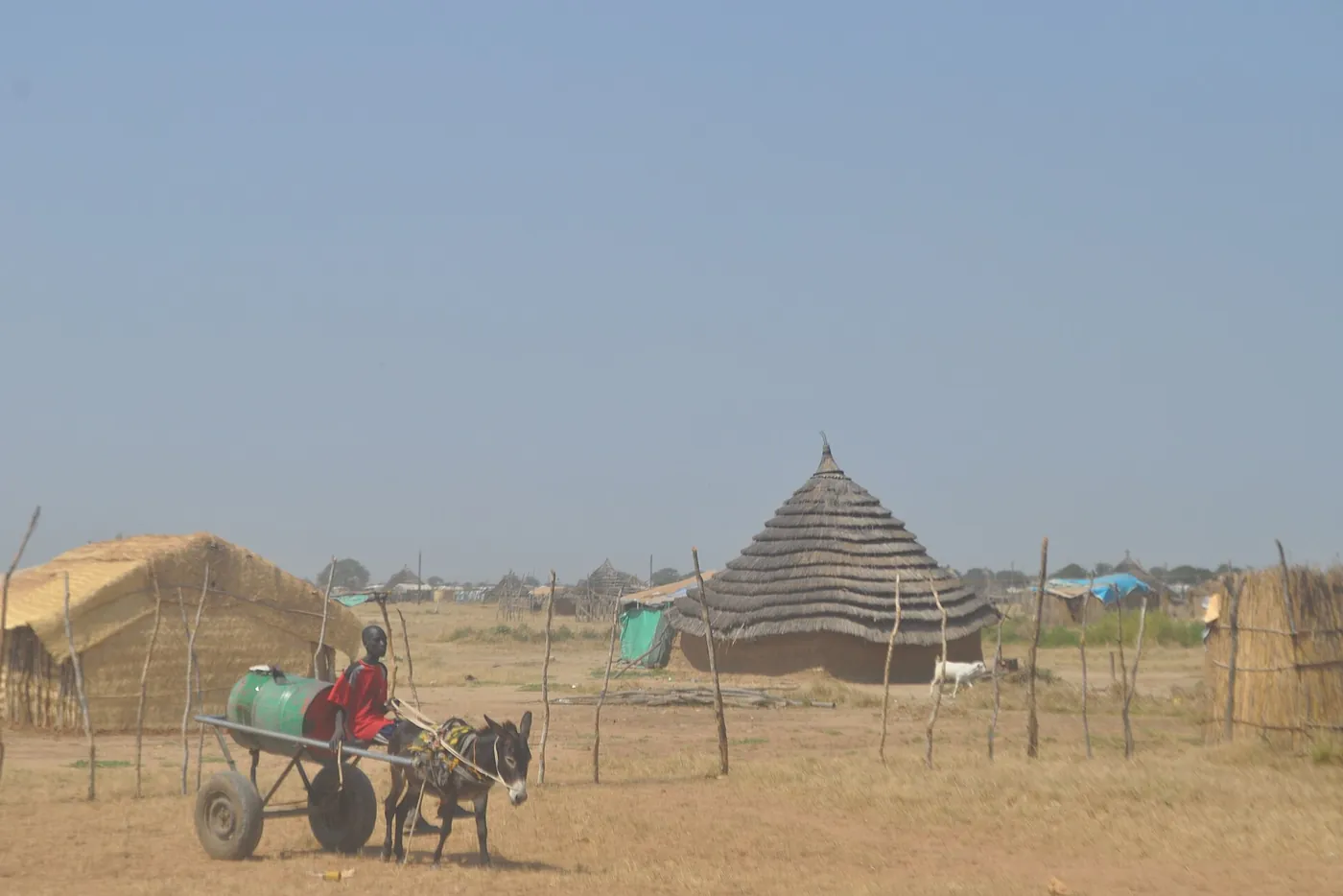
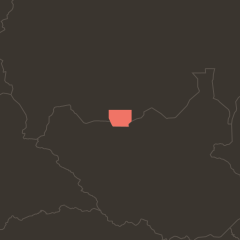
Abyei is an area of about 10,460 km² on the border between Sudan and South Sudan, and both countries claim it. A 2005 peace deal promised its residents a vote on joining the south or staying with the north. The vote never took place, because the two sides disagree on who may vote. A UN force has guarded Abyei since 2011. South Sudan runs the center and south, and Sudan's Rapid Support Forces, a paramilitary at war with Sudan's army, operate in the north. Clashes between local communities at the Amiet market killed about 40 people in September 2026.
- Area
- 10,460 km²
- as drawn by a 2009 arbitration ruling
- People
- About 145,000
- UN estimate for 2025
- UN force since
- 2011
- UNISFA, mandate to November 15, 2026
- Killed at Amiet
- About 40
- September 15, 2026, by UN counts
Abyei in 30 seconds
- Abyei lies on the border between Sudan and South Sudan. The Ngok Dinka, a people linked to South Sudan, live there all year. Misseriya cattle herders from Sudan pass through each dry season.
- A 2005 peace deal promised Abyei's residents a vote on joining the south or staying with the north. It never took place, because the two sides disagree on who may vote.
- A UN force has guarded Abyei since 2011. South Sudan runs the center and south. Sudan's Rapid Support Forces, at war with Sudan's army, operate in the north.
- On September 15, 2026, clashes between Ngok Dinka and Misseriya at the Amiet market killed about 40 people, by UN counts.
Who controls Abyei?
No single government controls Abyei, and a UN force patrols it. South Sudan has long appointed the administration that runs the center and south, and about 350 South Sudanese soldiers and police are there, by UN count. A rival Misseriya administration has been based at Diffra, in the north, since 2020. Sudan's Rapid Support Forces (RSF), a paramilitary at war with Sudan's army since April 2023, operate around Diffra and Goli in the north. UN reports do not place Sudan's army inside Abyei.
The UN Interim Security Force for Abyei (UNISFA) includes troops from India, Ghana, Pakistan, Bangladesh and Vietnam. Its last published ceiling is 3,250 troops and 640 police, and it has cut staff during the UN's budget crisis. The UN Security Council renews its mandate every year. The current mandate ends on November 15, 2026.
Who is in Abyei
- UN force (UNISFA)Since 2011, with troops from India, Ghana, Pakistan, Bangladesh, Vietnam and others
 South SudanAppoints the administration of the center and south
- Misseriya administrationBased at Diffra, in the north, since 2020
- Rapid Support ForcesSudanese paramilitary at war with Sudan's army, active in the north
 ABYEI
SUDAN
SOUTH SUDAN
Abyei town
Amiet market
Diffra
Agok
Turalei
Heglig
Bentiu
ABYEI
SUDAN
SOUTH SUDAN
Abyei town
Amiet market
Diffra
Agok
Turalei
Heglig
Bentiu
 ABYEI
SUDAN
SOUTH SUDAN
Abyei town
Amiet market
Diffra
Agok
Turalei
Heglig
ABYEI
SUDAN
SOUTH SUDAN
Abyei town
Amiet market
Diffra
Agok
Turalei
Heglig
Why do Sudan and South Sudan both claim Abyei?
Abyei is the home of the Ngok Dinka, a Dinka people linked to South Sudan, and the dry-season pasture of the Misseriya, Arab cattle herders linked to Sudan. In 1905 Britain, which then ruled Sudan with Egypt, placed the nine Ngok Dinka chiefdoms, until then part of a southern province, under Kordofan, in the north. The 2005 peace deal that ended Sudan's long north-south war promised Abyei's residents a referendum on joining the south or staying with the north. The vote was to be held alongside the south's independence referendum in January 2011.
The two sides never agreed on who counts as a resident. The central question is whether the Misseriya may vote. The referendum never took place. In 2009 the Permanent Court of Arbitration in The Hague redrew Abyei's borders and left the Heglig oil field outside them. Both parties to the arbitration, Sudan's government and the southern leadership (the SPLM), accepted the ruling. On May 21, 2011, Sudan's army took Abyei town, and about 100,000 people fled south, by UN count. South Sudan became independent on July 9, 2011.
How Abyei became disputed
- 1905Britain puts the Ngok Dinka chiefdoms under Kordofan, in the north
- 2005A peace deal promises Abyei a vote on its future
- 2009A court in The Hague redraws Abyei's borders
- 2011Sudan's army takes Abyei town, a UN force arrives and South Sudan becomes independent
- 2013The Ngok Dinka hold their own vote. No government has formally recognized it
- 2022Ngok Dinka and Twic Dinka from Warrap state fight over the Aneet market
- 2023Sudan's civil war begins
- 2026About 40 people are killed at the Amiet market
What happened at the Amiet market?
The Amiet market, about 15 km north of Abyei town, is a trading place shared by Ngok Dinka and Misseriya. In September 2026 it saw the worst violence in Abyei this year. A Ngok Dinka man was killed on September 14 and a Misseriya man on September 15. Fighting between the two communities then broke out at the market. The toll rose to about 40 dead and more than 100 injured, by UN counts. The UN force blamed no one and called for an investigation.
The market reopened after the two communities signed an agreement on September 28 at the Pakistani UN battalion's base in Todach. Under the agreement the two sides' armed forces are barred from the market, and military vehicles and weapons have been banned there since October 10. Violence is common in Abyei. From October 2025 to March 2026 the UN recorded 196 security incidents, with 58 deaths, most of them in the north.
Amiet market
About 40
People killed in the clashes of September 15, 2026
The UN first counted 26 dead and 82 injured the day after the fighting. The Ngok Dinka paramount chief, Bulabek Deng Kuol, confirmed 13 Ngok Dinka dead. Misseriya leaders could not be reached for a count. Indian peacekeepers reinforced the area, and the market reopened two weeks later.
How does Sudan's war affect Abyei?
Sudan's civil war, fought since April 2023 between Sudan's army and the RSF, has spilled into Abyei. The war has stopped Misseriya herders from going back north, and about 11,000 have settled in Abyei for now, by UN count. More than 46,000 refugees, returnees and displaced people have arrived. About 20,000 people are displaced inside Abyei.
On December 8, 2025, the RSF seized the Heglig oil field, just outside Abyei. Heglig sits on the pipeline that carries South Sudan's oil to Port Sudan. South Sudan's army took over security there under a reported deal with both Sudanese sides. On December 13, 2025, a drone attack on the UN force's logistics base at Kadugli, in Sudan, killed six Bangladeshi peacekeepers. The UN force then closed its border-monitoring sites. In March 2026 an attack on Abiemnhom, just outside Abyei in South Sudan, killed 178 people, by local officials' count.
Sudan's war in Abyei
Will Abyei ever get its vote?
There is no sign of an agreed vote. Sudan wants a joint administration, joint police and joint legislative council set up first. Sudan also wants the Misseriya to vote in any referendum. South Sudan treats Abyei's residents as its citizens. In October 2013 the Ngok Dinka held their own vote, and 99.9% of about 65,000 voters chose South Sudan. No government has formally recognized the result, and the African Union did not recognize it. In December 2024 the Abyei administration appointed by South Sudan endorsed it and sent it to South Sudan's cabinet.
South Sudan plans to include Abyei in its elections on December 22, 2026. Sudan rejected the plan on July 13. The two governments' joint bodies for Abyei have not met. On July 8 the African Union's Peace and Security Council met on Abyei for the first time since 2022. At the UN, the United States wants the next renewal of the UN force tied to progress on conditions it has set. The African members of the Council, China and Russia oppose that.
Each side in its own words
 SudanWants "the joint police, the joint administration, and the joint legislative council" set up first (UN Security Council, May 2026)
- South Sudan"The final question of Abyei cannot remain unresolved indefinitely" (UN Security Council, May 2026)
- Ngok Dinka"An integral part of the people of South Sudan" (Rose Monjtoog Dau, civil society leader, July 2026)
- MisseriyaAbyei "is a Sudanese territory" (Mohamed Abdullah Waddabuk, Misseriya leader, 2014)
What is at stake in Abyei?
Two peoples
Abyei is the homeland of the Ngok Dinka, whose nine chiefdoms live there all year. The Misseriya depend on its water and grazing in the dry season, when they drive their cattle south. The yearly migration begins in late November.
Oil
Diffra, the only oil field inside Abyei's 2009 borders, has produced small amounts, about 4,000 barrels a day at its last cited figure. Its current output is unknown. The larger Heglig field, just outside Abyei, lies on South Sudan's export pipeline.
Peace between the Sudans
Abyei is one of the main pieces of unfinished business from the 2005 peace deal and South Sudan's independence in 2011. The UN Security Council must vote by November 15, 2026, on renewing the UN force.
Questions about Abyei
Is Abyei part of Sudan or South Sudan?
Both countries claim it, and its final status is undecided. The 2005 peace deal gave Abyei a special status until a referendum decides. That referendum has never been held. The UN Security Council and Sudan call it the Abyei Area. South Sudan's local administration calls itself the Abyei Special Administrative Area. A UN force patrols it.
Who are the Ngok Dinka and the Misseriya?
The Ngok Dinka are a Dinka people whose nine chiefdoms live in Abyei all year. They see themselves as South Sudanese. The Misseriya are Arab cattle herders from Sudan's Kordofan region. Each dry season they bring their herds south through Abyei for water and grazing. The two communities trade at the Amiet market.
What is UNISFA?
UNISFA is the UN Interim Security Force for Abyei. The UN Security Council created it on June 27, 2011, a month after Sudan's army took Abyei town. At first its troops were all Ethiopian. Ethiopian troops began to leave in February 2022. UNISFA's headquarters is in Abyei town. Since January 2026 its acting head has been Ganesh Kumar Shrestha of Nepal.
Who is Francis Deng?
Francis Deng, born near Abyei in 1938, is a Ngok Dinka scholar and diplomat. His father, the paramount chief Deng Majok, reportedly had some 200 wives. Francis Deng served as Sudan's minister of state for foreign affairs, as the UN's special adviser on the prevention of genocide (2007-12) and as South Sudan's first ambassador to the UN (2012-16). A study of his life quotes the saying "Abyei is to the Sudan as the Sudan is to Africa," meaning a bridge between the African and Arab worlds.