
Disputed territory · North Africa
Ceuta and Melilla
Tense since the July 2026 mass crossingUpdated October 12, 2026
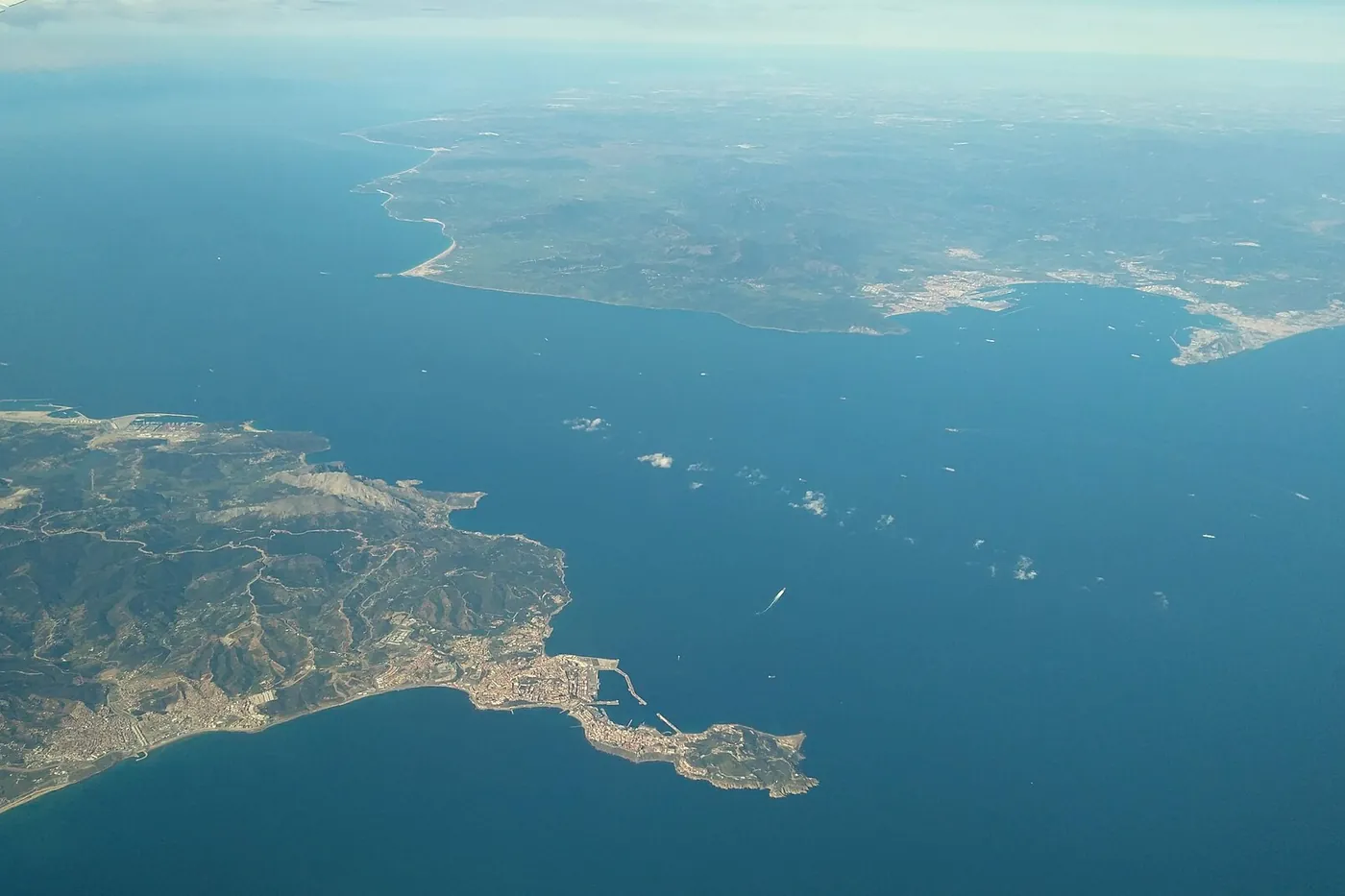
Ceuta and Melilla are two Spanish cities on the north coast of Africa, each with a land border with Morocco, and Morocco claims both. Spain took Melilla in 1497. Portugal took Ceuta in 1415, and it passed to Spain in the 17th century. Morocco, independent since 1956, calls them occupied Moroccan cities. Spain says they were Spanish before the modern Moroccan state existed and that their people are Spanish citizens. On July 30-31, 2026 about 72,000 people crossed into Ceuta irregularly, by Spain's Interior Ministry count. More than 80 died.
- Spanish since
- 1497
- Melilla. Ceuta since the 17th century
- People
- About 171,000
- Ceuta 84,435, Melilla 86,616 (INE, July 1, 2026)
- Area
- About 34 km²
- Ceuta 19.9, Melilla 14.2 (IGN)
- Crossed into Ceuta
- About 72,000
- July 30-31, 2026 (Spain's Interior Ministry)
Ceuta and Melilla in 30 seconds
- Ceuta and Melilla are Spanish cities on the north coast of Africa, bordering Morocco, with about 171,000 people. Spain also holds three smaller outposts on or just off Morocco's coast.
- Portugal took Ceuta in 1415, and it passed to Spain in the 17th century. Spain took Melilla in 1497.
- Morocco has claimed both cities since its independence in 1956 and calls them occupied. Spain says they were Spanish centuries before the modern Moroccan state existed.
- On July 30-31, 2026 about 72,000 people crossed into Ceuta irregularly, and more than 80 died. A Spanish judge is investigating whether Moroccan agents guided them. Morocco denies encouraging the crossings.
Who controls Ceuta and Melilla?
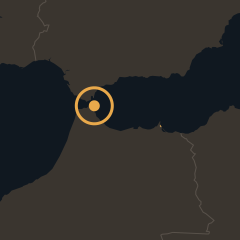
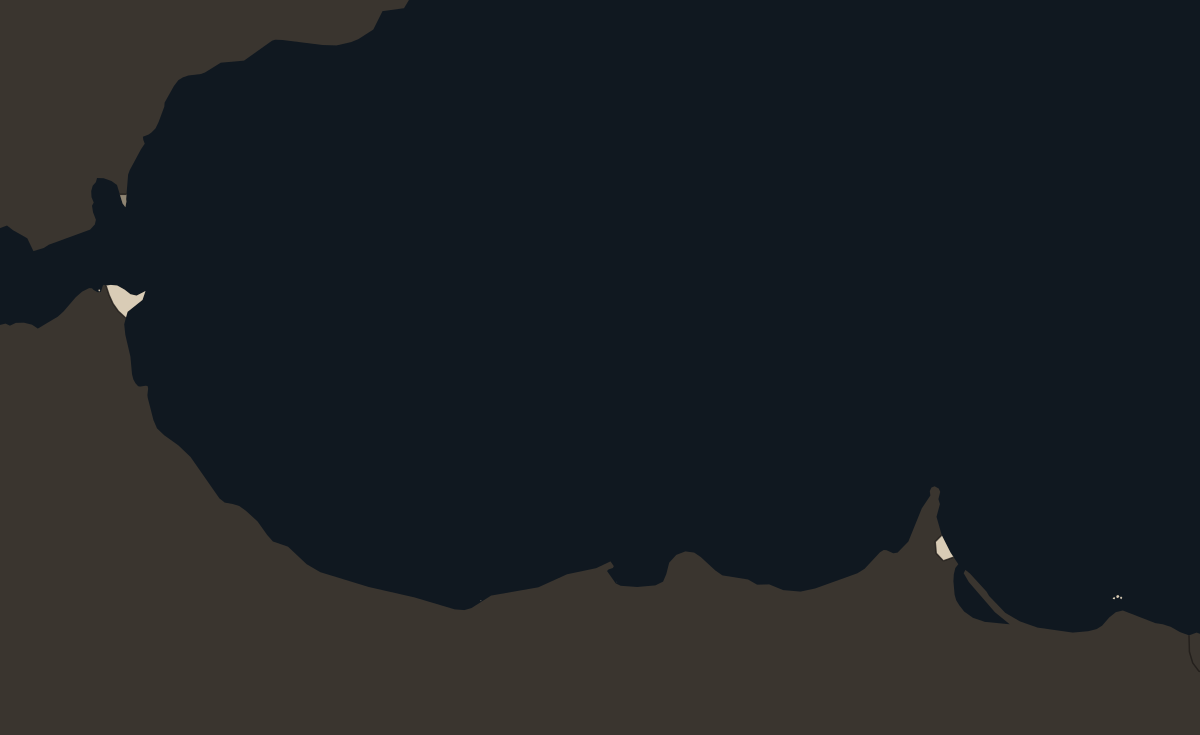
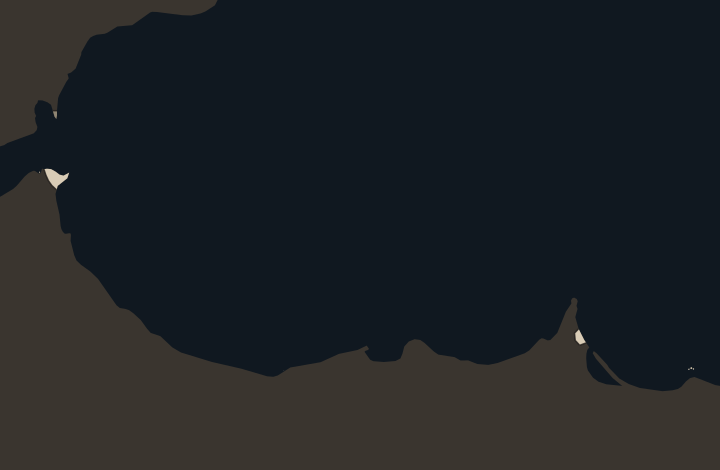
Spain governs Ceuta and Melilla as its only two "autonomous cities," self-governing like Spain's regions but with fewer powers, a status they have had since 1995. Ceuta covers about 19.9 km² and faces Gibraltar across the strait. Melilla covers about 14.2 km² and lies about 225 km to the east. On July 1, 2026, before the crossings described below, Ceuta had 84,435 residents and Melilla had 86,616. Spain collects no official figures on religion, but the Muslim community group UCIDE estimated that about 42% of Ceuta's people were Muslim at the end of 2022.
Both cities are part of the European Union but outside its customs union, and Spain checks travelers going from them to mainland Spain. Spain also keeps small army garrisons on three outposts on or just off Morocco's coast: the Peñón de Vélez de la Gomera, the Peñón de Alhucemas and the Chafarinas Islands. Under a 2002 deal, no one occupies the islet of Perejil.
Spanish-held places in North Africa, and Perejil
 CeutaCity of 84,435 people
- MelillaCity of 86,616 people
- Peñón de Vélez de la GomeraAbout 25 soldiers
- Peñón de Alhucemas38 soldiers
- Chafarinas IslandsAn army garrison and visiting scientists
- PerejilClaimed by both. Empty under a 2002 deal
 Ceuta
Melilla
Perejil
Peñón de Vélez
Peñón de Alhucemas
Chafarinas Islands
SPAIN
MOROCCO
Mediterranean Sea
Gibraltar
Tetouan
Nador
Ceuta
Melilla
Perejil
Peñón de Vélez
Peñón de Alhucemas
Chafarinas Islands
SPAIN
MOROCCO
Mediterranean Sea
Gibraltar
Tetouan
Nador
 Ceuta
Melilla
Vélez
Chafarinas
SPAIN
MOROCCO
Mediterranean Sea
Gibraltar
Tetouan
Ceuta
Melilla
Vélez
Chafarinas
SPAIN
MOROCCO
Mediterranean Sea
Gibraltar
Tetouan
Why does Morocco claim Ceuta and Melilla?
Morocco says Ceuta and Melilla are Moroccan land still held by a colonial power. Spain says the cities were Spanish long before modern Morocco existed. Portugal took Ceuta on August 21, 1415. Ceuta came under the Spanish king when Spain and Portugal shared a monarch (1580-1640). When Portugal broke away in 1640, Ceuta chose to stay with Spain, and Portugal recognized Spanish rule in 1668. Ceuta's flag is still the black and white of Lisbon. Spain took Melilla on September 17, 1497.
Morocco became independent from France and Spain in 1956 and has claimed the cities since. Morocco calls them Sebta and Melilia, and the "occupied cities." In January 1975 Morocco asked the UN's decolonization committee to put them on its agenda, but the request faded as the crisis over Western Sahara, then a Spanish colony to Morocco's south that Morocco also claimed, took over. Neither city is on the UN's list of territories to be decolonized. Spain says the cities' residents are Spanish citizens represented in Spain's parliament.
How the cities became Spanish
- 1415Portugal takes Ceuta
- 1497Spain takes Melilla
- 1668Portugal recognizes Spanish rule over Ceuta
- 1956Morocco becomes independent and claims the cities
- 1975Morocco asks the UN to put the cities on its decolonization agenda
- 1995Ceuta and Melilla become autonomous cities of Spain
- 2002Spain removes Moroccan forces from the islet of Perejil
- 2026About 72,000 people cross into Ceuta in two days
What happened in Ceuta in July 2026?
On July 30-31, 2026 about 72,000 people entered Ceuta irregularly, by Spain's Interior Ministry count. Most walked over the El Tarajal breakwater or swam. Most were young Moroccan men. Calls to cross had spread online after Spain's Supreme Court ruled on July 8 that people intercepted while swimming cannot be turned back on the spot. By August 9, 83 bodies had been recovered on the Spanish side. The group Caminando Fronteras counts 141 dead on both sides. About 70,000 people went back to Morocco within days, in what Spain called voluntary returns.
Prime Minister Pedro Sánchez called the entry "a violation of Spain's territorial integrity." Since September, Judge María Tardón of Spain's National Court has been investigating whether people linked to the Moroccan state planned the crossings. Her order describes Moroccan agents guiding groups toward the border. Morocco denies encouraging the crossings and blames social media and the court ruling. Sánchez told parliament in September that there was "no solid evidence" against Morocco.
Ceuta, July 30-31, 2026
72,000
People who crossed into Ceuta in two days
Ceuta has about 84,000 residents. Spain's Interior Ministry first estimated 50,000 crossings. Ceuta's president said 60,000. On August 25 Spain's government declared a "situation of interest for national security" in Ceuta and put a single minister in charge of the response.
How do Spain and Morocco get along?
Spain and Morocco are close partners, and the cities test the relationship. In May 2021 Moroccan border guards stopped blocking crossings, and about 8,000 to 10,000 people entered Ceuta. That happened during a row over Spain admitting Brahim Ghali, the leader of the Polisario Front, for medical treatment. The Polisario Front wants independence for Western Sahara. In March 2022 Spain backed Morocco's plan for autonomy in Western Sahara, and the two governments signed a joint declaration in April 2022.
After the July 2026 crossings, Morocco promised "full cooperation" on returns in September. On October 9 King Mohammed VI said the migration partnership with Spain "has reached its limits" and "will never be subject to any pressure, threat, or blackmail." King Felipe VI of Spain is due to visit Ceuta on October 13 and Melilla on October 14, his first visits there as king. When his father, Juan Carlos, visited in 2007, Morocco recalled its ambassador for two months.
Each side in its own words
- Spain"There has never been, is not and will never be any conversation" about the cities (José Manuel Albares, foreign minister, August 2026)
 Morocco"We will defend our historical and geographical rights" (Abdellatif Ouahbi, justice minister, August 2026)
What is at stake in Ceuta and Melilla?
Migration
Ceuta and Melilla have almost all of the European Union's land border in Africa. The tiny Peñón de Vélez also touches Morocco. From 2020 Spain raised their fences to about 7.8 m, and to 10 m in places. On June 24, 2022 at least 23 people died, by Morocco's count, when about 2,000 tried to cross into Melilla. Amnesty International counted at least 37.
Trade
Morocco closed Melilla's customs post in 2018 and ended the trade of porters carrying goods across both borders in 2019-20. Commercial customs posts opened at both borders in early 2025, Ceuta's for the first time, but carried very little trade. Morocco closed them for the summer travel season from mid-July 2026.
Defense
NATO's treaty limits its mutual defense clause to members' territory in Europe and North America and islands in the North Atlantic, and Ceuta and Melilla are in Africa. In 2022 NATO's secretary general, Jens Stoltenberg, said defending the two cities would be a "political decision" for all the allies. Spain says NATO's 2022 strategy, which mentions "territorial integrity," covers them.
Questions about Ceuta and Melilla
Are Ceuta and Melilla part of the EU?
Yes. Ceuta and Melilla are part of Spain and of the European Union, but outside the EU's customs union and its VAT area. Both cities have their own local tax instead. When Spain joined the Schengen area, the group of European countries without passport checks between them, it kept checks on people traveling from the two cities to the rest of Spain.
Are Ceuta and Melilla like Gibraltar?
Morocco says yes, and that all three are colonial leftovers. In 1978 King Hassan II said that "if Spain recovers the Rock, we will recover Ceuta and Melilla." Spain says the cases differ. Gibraltar is on the UN's list of territories to be decolonized and the cities are not. Spain also says its title to the cities is older than the modern Moroccan state.
What happened on Perejil in 2002?
On July 11, 2002 about a dozen Moroccans landed on Perejil, an uninhabited islet near Ceuta that Morocco calls Leila. Morocco called them gendarmes. Wire reports called them soldiers. Spanish special forces removed them without bloodshed on July 17. A deal brokered by US Secretary of State Colin Powell left the islet empty, except, wire reports said, for its goats.
Did the Spanish Civil War begin in Melilla?
In part. The army uprising against Spain's Republic began in Melilla on July 17, 1936, a day early, because the plot had been discovered. Rebel officers arrested the loyal commander, General Romerales. Francisco Franco, who went on to lead the rebels, was in the Canary Islands that day.