
Disputed territory · Middle East
Golan Heights
Tense: Israeli troops inside Syria since 2024Updated October 12, 2026
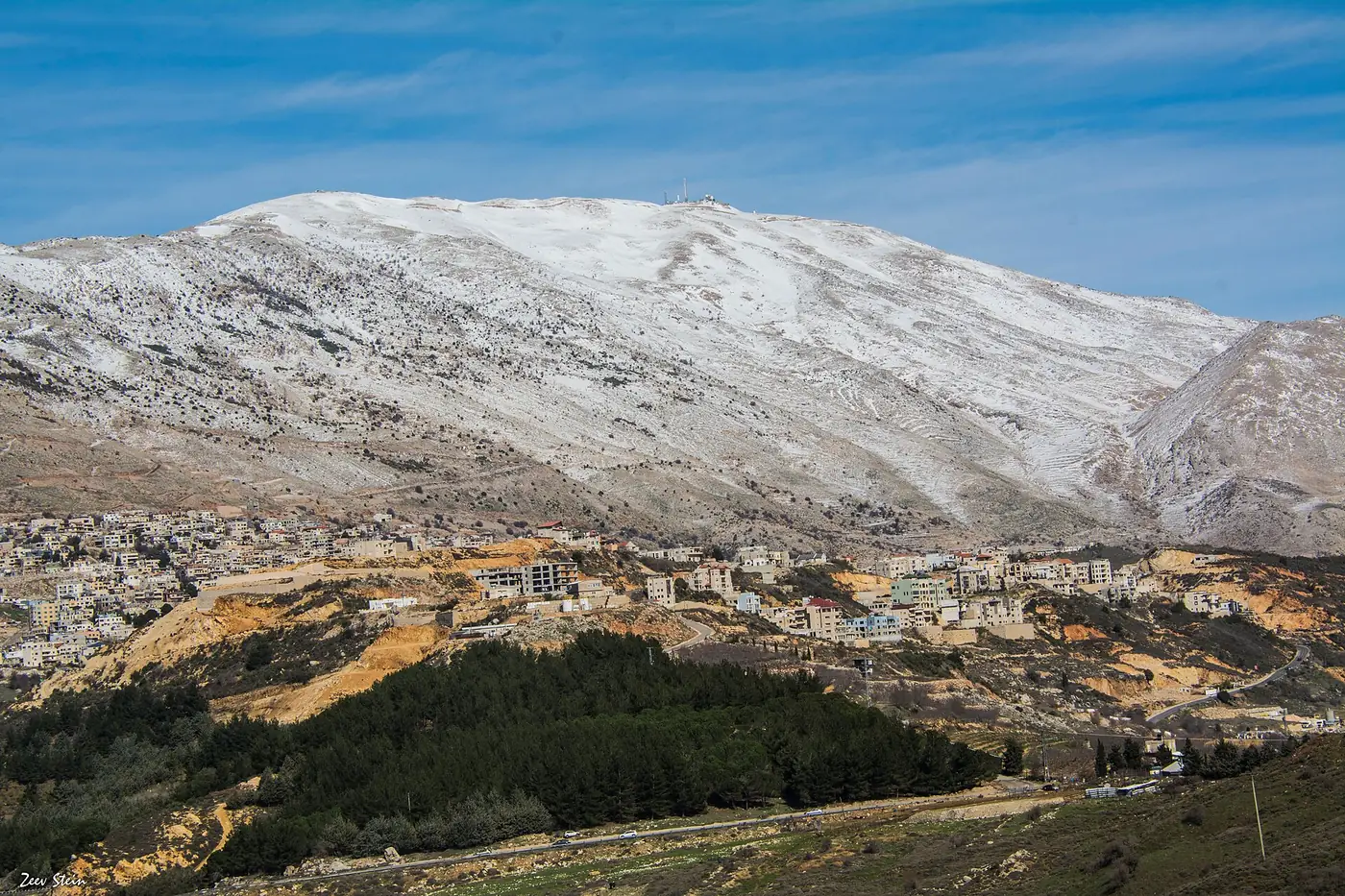
The Golan Heights is a rocky plateau between Israel and Syria, overlooking the Sea of Galilee. Israel captured about 1,200 km² of it from Syria in 1967 and applied Israeli law there in 1981. The UN Security Council called this null and void. Only the United States (in 2019) and Colombia (in 2026) recognize Israeli sovereignty. Syria says the Golan is Syrian land taken by force. Since Bashar al-Assad fell in December 2024, Israeli troops have also held posts on the Syrian side of the 1974 ceasefire line.
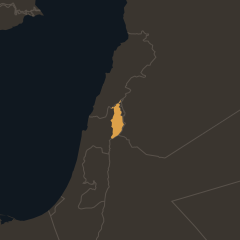
- Held by Israel since
- 1967
- captured on June 9-10, annexed in 1981
- Area
- 1,200 km²
- about two-thirds of the Golan
- People
- About 60,000
- Israeli settlers and Druze, about half each
- Israeli posts in Syria
- 11
- beyond the 1974 line, August 2026 (UN)
 Israel
 Syria
SyriaGolan Heights in 30 seconds
- Israel captured the Golan from Syria in the 1967 war and applied Israeli law there in 1981. The UN and almost every country treat it as occupied Syrian territory.
- The heights overlook northern Israel. Their rain and streams feed the Jordan River and the Sea of Galilee. Mount Hermon gives a view deep into Syria and Lebanon.
- About 60,000 people live in the Israeli-held part: Israeli settlers, about 29,000 Druze and about 2,900 Alawites. Most Druze long kept their Syrian identity, but about 44% now hold Israeli citizenship.
- When Assad fell in December 2024, Israel moved troops into the UN buffer zone and onto Syria's side of Mount Hermon. US-brokered talks with Syria's new government stalled in August 2026.
Who controls the Golan Heights?
Israel controls about two-thirds of the Golan Heights, about 1,200 km² of a plateau of about 1,800 km². Syria holds most of the rest, to the east. Between them runs a UN buffer zone set up in 1974 and patrolled by a UN force, UNDOF. On December 8, 2024, the day Assad fell, Israel moved troops into the buffer zone and took the Syrian side of Mount Hermon, saying the 1974 agreement had collapsed. By August 2026 the UN counted 11 Israeli positions on the Syrian side. Israel's defense minister, Israel Katz, said in August 2026 that there is "no end date."
About 60,000 people live in the Israeli-held Golan. Roughly 28,000 to 31,000 are Israeli settlers in about 33 settlements and the town of Katzrin. About 29,000 are Druze in four villages. About 2,900 are Alawites in the village of Ghajar.
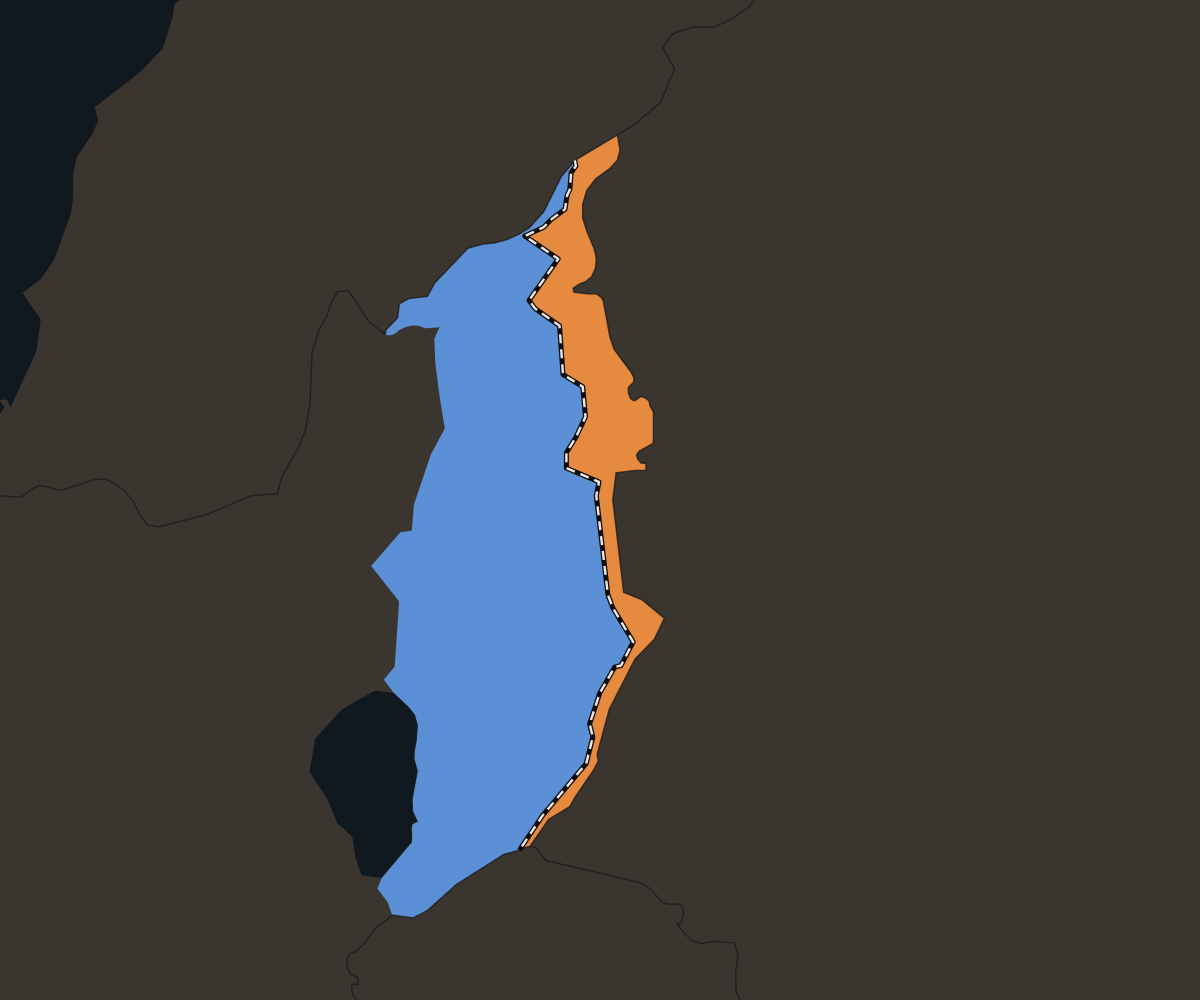 GOLAN
GOLANHEIGHTS SYRIA ISRAEL LEBANON JORDAN Sea of
Galilee Katzrin Majdal Shams Quneitra Mount Hermon Shebaa Farms Damascus Tiberias Kiryat Shmona 1974 buffer zone
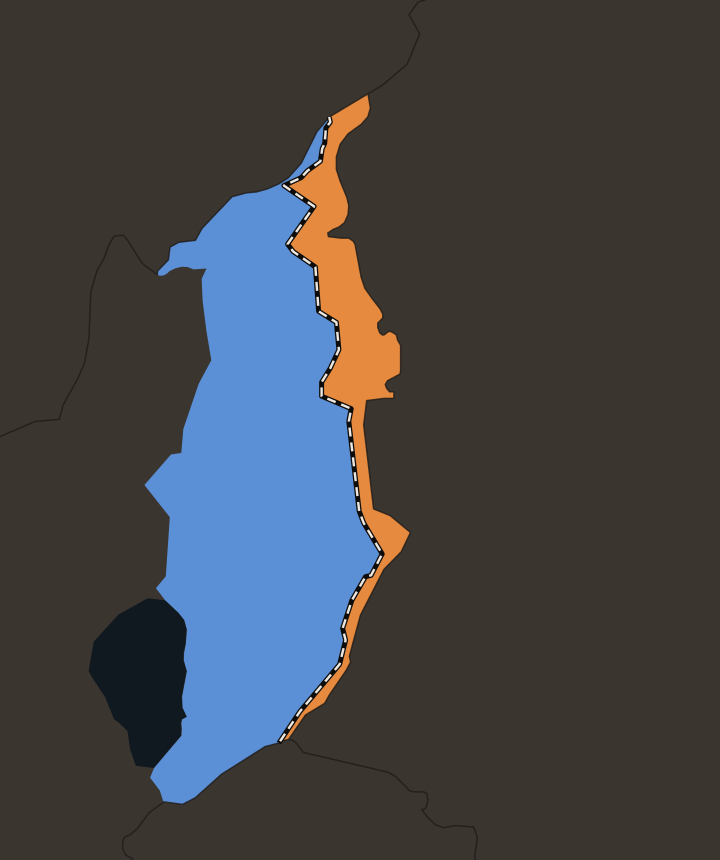 GOLAN
GOLANHEIGHTS SYRIA ISRAEL LEBANON Sea of
Galilee Katzrin Majdal Shams Quneitra Mount Hermon Damascus 1974 buffer zone
How did Israel take the Golan Heights?
Before 1967 Syria held the heights. Israel says Syrian guns on the heights shelled Israeli farms below. Syria says Israel provoked clashes in demilitarized zones along the border. Moshe Dayan, Israel's defense minister in 1967, said in a 1976 interview published in 1997 that Israel had provoked most of them. On June 9-10, 1967, the last days of the Six-Day War, Israel captured the Golan. Somewhere between about 90,000 and 130,000 Syrians, depending on the source, fled or were expelled.
In October 1973 Syria briefly retook much of the Golan before Israel pushed it back. The Disengagement Agreement of May 31, 1974 created the UN buffer zone. Israel withdrew from the town of Quneitra. Syria has kept Quneitra in ruins as a memorial. Syria says Israel deliberately destroyed it before leaving. Israel disputes that the destruction was deliberate.
On December 14, 1981, Israel's parliament applied Israeli law to the Golan. UN Security Council Resolution 497 called this "null and void and without international legal effect."
How the Golan changed hands
- 1967Israel captures the Golan in the Six-Day War
- 1973Syria attacks and briefly retakes much of it
- 1974A UN buffer zone separates the two armies
- 1981Israel applies its law. The UN calls it void
- 2000Peace talks fail over a strip of the Sea of Galilee's shore
- 2019The United States recognizes Israeli sovereignty
- 2024Assad falls, and Israeli troops enter the buffer zone
- 2026Colombia recognizes Israel's claim. Talks with Syria stall
Why does the Golan matter to Israel and Syria?
Israel says the heights give an army a view deep into northern Israel and the ability to fire on it. Mount Hermon, the highest ground, carries Israeli early-warning posts. Israel Katz called its peak "the eyes of the state of Israel." Rain and streams from the Golan drain into the upper Jordan River and the Sea of Galilee, once Israel's main natural water source. Since Israel built desalination plants, the lake supplies only about 10% of its water.
Syria says the Golan is Syrian land taken by force. The Syrians who fled in 1967 and their descendants have never been allowed to return. At the UN on September 23, 2026, Syria's president, Ahmed al-Sharaa, said "Golan will remain Syrian territory." At an Atlantic Council event in New York the day before, al-Sharaa recalled telling President Trump that he should give Israel New Jersey instead, since New Jersey, unlike the Golan, was his to give. The audience laughed.
Mount Hermon
2,814 m
The summit Israel took in 2024
Before December 2024 the highest point Israel held on Mount Hermon was about 2,236 m, next to the Mitzpe Shlagim post. On December 17, 2024, Benjamin Netanyahu stood on the Syrian summit. AP reported it was apparently the first time a sitting Israeli prime minister had gone beyond the Israeli-held Golan into Syria.
On September 9, 2026, Netanyahu visited again and claimed "absolute control" of an area reaching south to the Yarmouk River.
What has Israel done in Syria since Assad fell?
Israel's military says it carried out about 480 strikes in the 48 hours after December 8, 2024, on the old Syrian army's weapons. Its troops took the buffer zone and posts beyond it. In July 2025 fighting broke out in Sweida province between Druze militias and Bedouin fighters in the Druze-majority province. Government troops sent in on July 14 then clashed with the Druze militias. Israel struck government forces and, on July 16, 2025, hit the defense ministry in Damascus, saying it was protecting the Druze. A US-brokered ceasefire took hold on July 20.
In Paris on January 5-6, 2026, the United States, Israel and Syria set up a joint mechanism to avoid clashes, short of a security pact. Al-Sharaa said about 90% of a deal was agreed. Talks broke down after Israel struck the Abu al-Duhur air base on August 18, 2026. Israel said Syria had agreed to a Turkish deployment there. Syria and Turkey denied this.
In September 2026 the UN human rights office counted about 280 incidents by Israeli forces in southern Syria, including raids and detentions. That was the most in any month that year.
Since Assad fell
- Dec 2024Israeli troops enter the buffer zone and take Hermon
- Jul 2025Israel strikes Damascus during fighting in Sweida
- Jan 2026The US, Israel and Syria set up a joint channel in Paris
- Aug 2026An Israeli strike in Idlib halts the talks
- Sep 2026The UN counts the most Israeli incidents of any month that year
Who lives in the Golan Heights?
Five Druze villages stayed after 1967. One, Sahita, was later razed, which left four: Majdal Shams, Mas'ade, Buq'ata and Ein Qiniyye. For decades most Golan Druze kept their Syrian identity and refused Israeli citizenship. Families split by the 1967 line used megaphones to call to relatives across the valley from a slope near Majdal Shams known as the Shouting Hill, until mobile phones made it rare. Attitudes to Israeli citizenship have changed since Assad fell and since Israel struck Syrian government forces in Sweida in July 2025, saying it was protecting the Druze. By Haaretz's count in August 2026, about 44% of Golan Druze hold Israeli citizenship, up from about a fifth in 2023. On July 27, 2024 a rocket hit a football field in Majdal Shams and killed 12 children and teenagers. Israel and the United States blamed Hezbollah, which denied it.
Israeli settlers live in Katzrin and about 33 settlements. In April 2026 Israel approved a five-year plan of about 1 billion shekels to bring 3,000 new families and make Katzrin a city. The Golan is known in Israel for its wineries. The Hermon ski site closed for 16 months during the war with Hezbollah and reopened in early 2025 without skiing, because its lifts were damaged.
People of the Israeli-held Golan
- Israeli settlersAbout 28,000 to 31,000, in Katzrin and about 33 settlements
- DruzeAbout 29,000 in four villages, about 44% of them Israeli citizens
- AlawitesAbout 2,900, in the village of Ghajar
What is at stake in the Golan Heights?
Water
Rain and streams from the Golan feed the upper Jordan River and the Sea of Galilee. The lake was once Israel's main natural water source. Since Israel built desalination plants, it supplies only about 10% of Israel's water.
High ground
From the heights and Mount Hermon, an army can watch northern Israel and the plain that leads to Damascus. Israel says it will not leave Mount Hermon or its zone in Syria. The UN force, UNDOF, had about 1,200 personnel in August 2025, the latest UN figure, and a mandate running to December 31, 2026.
People
Syrians who fled in 1967 and their descendants cannot return. The Druze who stayed are split between loyalty to Syria and Israeli citizenship. More of them can now vote in Israel's election on October 27, 2026.
Questions about the Golan Heights
Is the Golan Heights part of Israel or Syria?
Israel governs about two-thirds of the Golan Heights and applies Israeli law there. Israel's leaders say it will stay Israeli forever. Syria says the Golan is Syrian land under occupation. The UN Security Council called Israel's 1981 annexation null and void. Almost every country, including all of Israel's European allies, treats the Golan as occupied Syrian territory. The United States and Colombia are the only countries that recognize Israeli sovereignty.
Why did the United States recognize Israel's claim?
On March 25, 2019, President Trump signed a proclamation recognizing Israeli sovereignty over the Golan, citing Israel's security needs. In June 2019 Israel named a new settlement Trump Heights. By late 2024 it had about 26 families living in mobile homes. On August 10, 2026, Colombia, under its new president Abelardo de la Espriella, became the second country to recognize Israeli sovereignty over the Golan.
Did Israel and Syria ever nearly make peace over the Golan?
Israel and Syria came close more than once but never reached a deal. In 1993 Prime Minister Yitzhak Rabin made a conditional offer of full withdrawal, conveyed through the United States to Hafez al-Assad, Syria's president until 2000 and Bashar al-Assad's father. In January 2000 Israel's prime minister, Ehud Barak, and Syria's foreign minister met at Shepherdstown in the United States. At a summit with President Bill Clinton in Geneva on March 26, 2000, Assad rejected a border running just east of the Sea of Galilee's shore. Syria wanted the line of June 4, 1967, which touched the water. Turkey mediated indirect talks in 2008. None led to a deal.
Who was Eli Cohen?
Eli Cohen was an Israeli spy who lived in Damascus under a false name in the 1960s. He was caught in January 1965 and hanged in Damascus on May 18, 1965. A popular, unconfirmed story says he had eucalyptus trees planted at Syrian posts on the Golan, which helped Israel find them in 1967. In May 2025 Israel recovered about 2,500 items from his Syrian file, including his handwritten will.