
Disputed territory · East China Sea
Senkaku Islands
Tense: Chinese coast guard ships almost every dayUpdated October 12, 2026
The Senkaku Islands are five uninhabited islands and three rocks in the East China Sea, about 5.5 km² in all. Japan controls them and says there is no dispute. China claims them as Diaoyu Dao and its affiliated islands, and Taiwan as Diaoyutai. Chinese coast guard ships sailed in the waters next to the islands on 357 days in 2025, shadowed by Japan's coast guard. The United States takes no side on who owns them but says its defense treaty with Japan covers them.
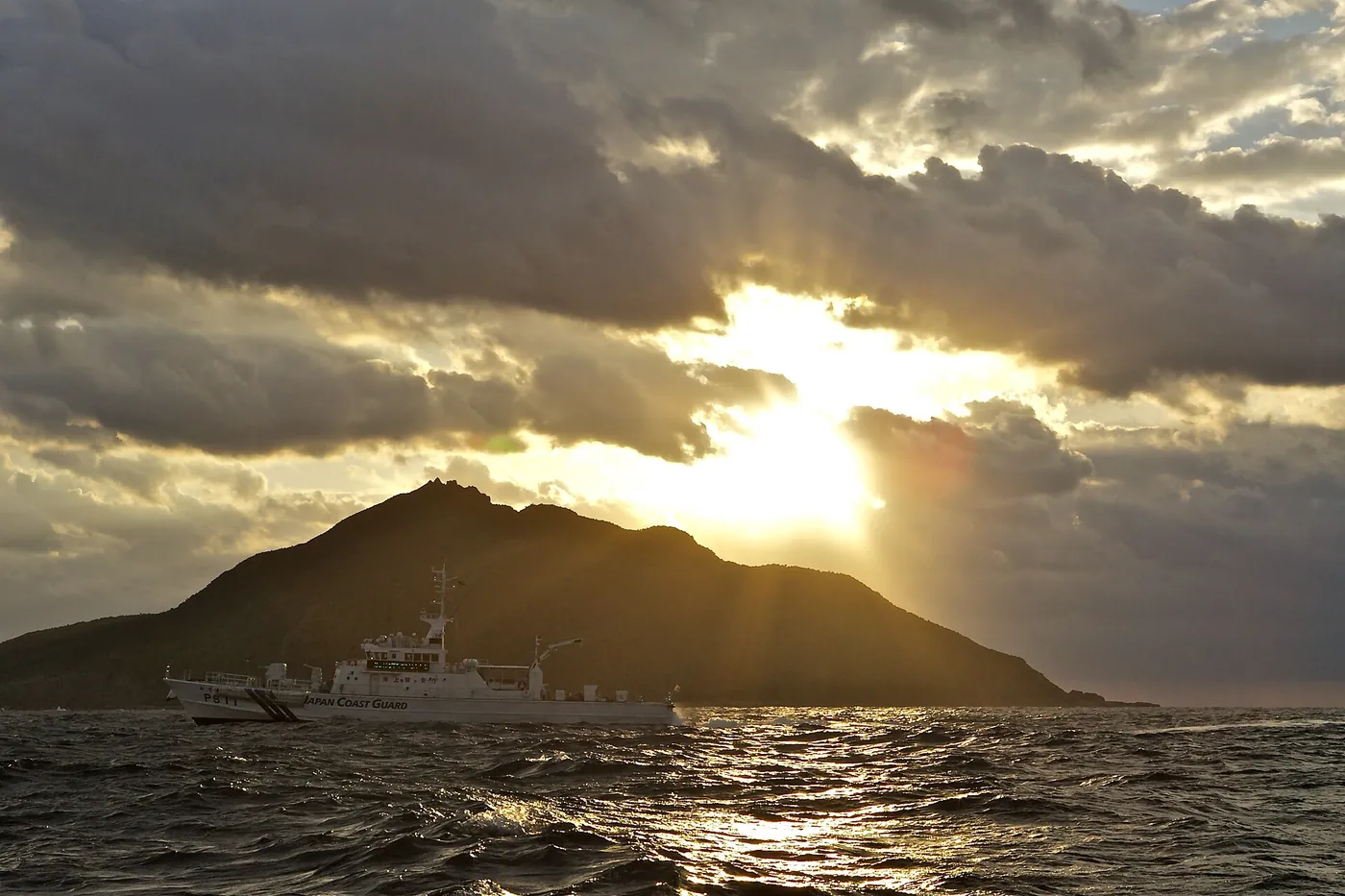
- Held by Japan since
- 1895
- under US rule from 1945 to 1972
- Area
- 5.5 km²
- five islands and three rocks
- Chinese ships nearby
- 357 days
- in 2025, a record (Japan Coast Guard)
- Distance
- 170 km
- from Taiwan, and from Ishigaki in Japan
Senkaku Islands in 30 seconds
- Japan incorporated the empty islands in 1895. China says Japan seized them during the war of 1894-95, along with Taiwan, and should have returned them in 1945.
- Nobody lives there. A Japanese fish-drying business once employed 248 people on the islands, but they have been empty since around 1940.
- China and Taiwan formally asserted their claims in 1971, after a survey reported in 1969 suggested oil under the seabed. China says the islands have been Chinese since at least the 15th century.
- Chinese coast guard ships now sail next to the islands almost every day and sometimes enter the territorial waters around the islands. The United States says its defense treaty with Japan covers the islands.
Who controls the Senkaku Islands?
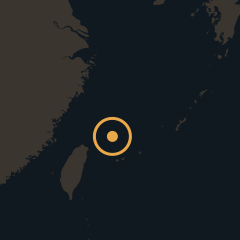
Japan does. The islands lie about 170 km north of Ishigaki, the Japanese city that administers them, about 170 km northeast of Taiwan and about 330 km from mainland China. Uotsuri, the largest island, covers about 3.81 km². Japan's government bought three of the islands from their private owners, the Kurihara family, on September 11, 2012 for 2.05 billion yen. Japan lets nobody land, not even Ishigaki's mayor.
Japanese nationalist activists put up a makeshift light on Uotsuri in 1978. A right-wing group later built a permanent lighthouse, which has been state property since 2005. Two of the islands, Kuba and Taisho, are still listed as US military bombing ranges but have not been used since 1978. Goats released on Uotsuri in 1978 by a private political group now number an estimated 300 or more. They have stripped much of the vegetation and threaten the Senkaku mole, which lives nowhere else.
The five islands (km²)
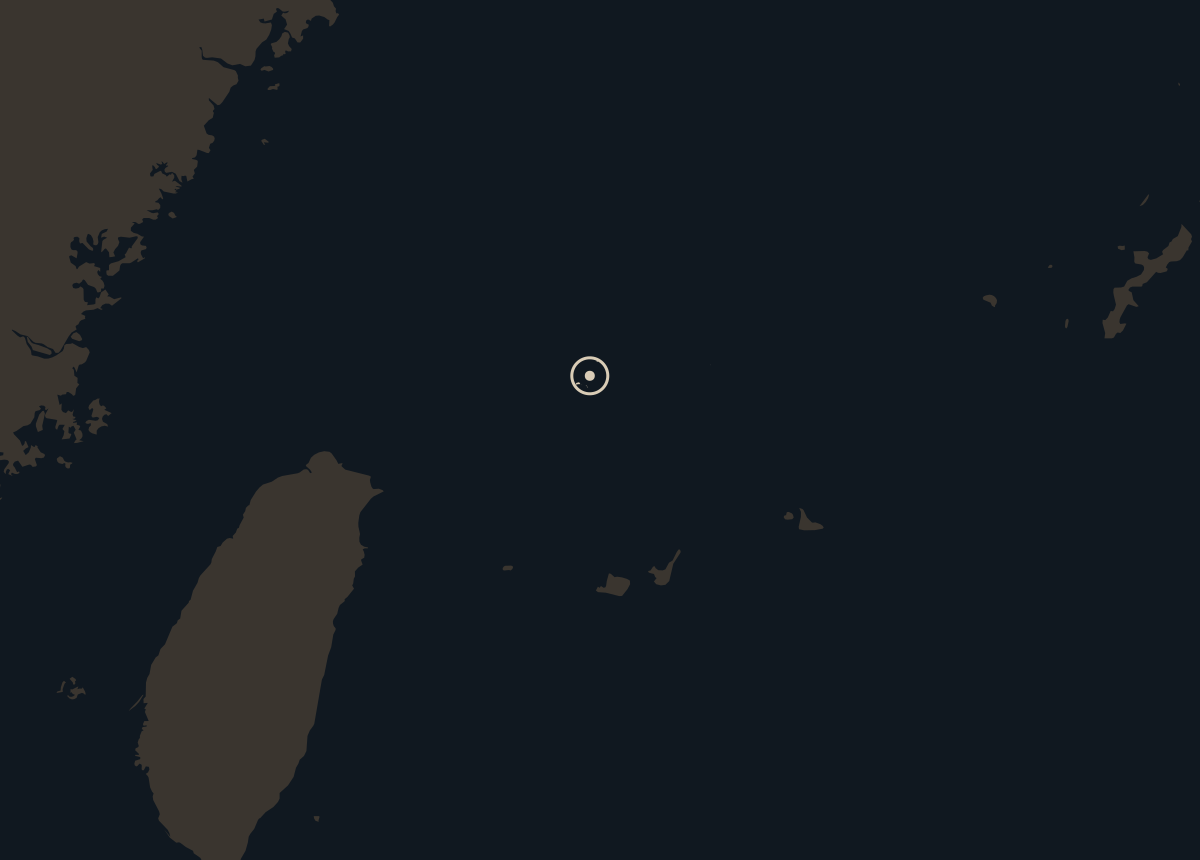 Senkaku Islands
(Diaoyu Islands) CHINA TAIWAN East China Sea Pacific Ocean Okinawa Ishigaki Naha Taipei Fuzhou
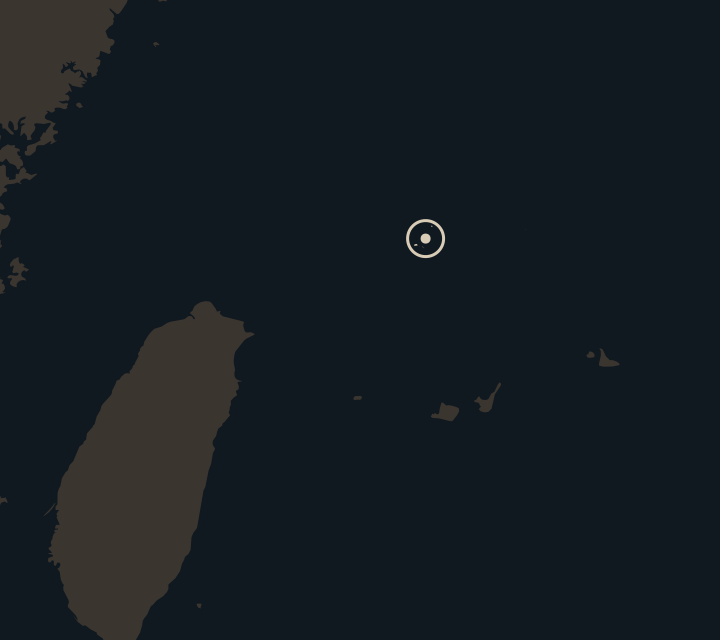 Senkaku Islands
(Diaoyu Islands) CHINA TAIWAN East China Sea Pacific Ocean Ishigaki Taipei
Why do Japan, China and Taiwan all claim the islands?
Japan says a cabinet decision of January 14, 1895 made the islands Japanese after surveys found them uninhabited and under no state's control. A Fukuoka businessman, Koga Tatsushiro, then collected albatross feathers and made dried bonito there. Around 1908, 248 people in 99 households worked on the islands. In 1920, China's consul in Nagasaki thanked islanders for rescuing 31 shipwrecked Fujian fishermen and placed the wreck at "Wayo Island, of the Senkaku Islands, Yaeyama District, Okinawa Prefecture, Empire of Japan," a letter Japan often cites.
China says Chinese records named the islands centuries earlier and that they are affiliated to the island of Taiwan, which China considers part of China. China says Japan took them during the war of 1894-95, when Japan also took Taiwan in the Treaty of Shimonoseki of April 17, 1895. China says Japan should have returned the islands along with Taiwan in 1945.
The United States ran the islands with Okinawa after the war and returned administration of them to Japan on May 15, 1972. A survey sponsored by a UN body, reported in 1969, said the seabed nearby might hold large oil reserves. Taiwan claimed the islands in 1971, and China did so on December 30, 1971. Taiwan makes a similar historical case but claims the islands for the Republic of China, its official name, and refuses to cooperate with China's government on the claim.
How the dispute began
- 1895Japan incorporates the islands during its war with China
- c. 1908248 people work on the islands at peak
- c. 1940The business closes and the islands empty
- 1969A survey says the seabed may hold oil
- 1971Taiwan and China claim the islands
- 1972The United States returns them to Japanese administration with Okinawa
What happens in the waters around the islands?
Chinese coast guard ships sail almost every day in the contiguous zone, a belt of sea between 12 and 24 nautical miles (22 to 44 km) from the islands, just outside their territorial waters. Japan's coast guard counted them there on 357 days in 2025, a record for the fourth year running. From January 1 to October 8, 2026, Chinese ships were in the contiguous zone on 277 of 281 days. One unbroken stretch lasted 335 days, from November 2024 to October 2025.
Chinese ships also enter the territorial waters around the islands. They did so on 30 days in 2025, often to follow Japanese fishing boats. The longest stay so far lasted 92 hours, in March 2025. On May 3, 2025 a Chinese coast guard helicopter flew over the islands for about 15 minutes, the first such flight by a Chinese coast guard helicopter. On October 10, 2026 four Chinese ships spent about an hour and 40 minutes inside the territorial waters off Uotsuri. China called it a "rights-protection patrol." Since late 2025, Japanese officials have quietly asked fishermen to stay away from the islands.
2025
357 days
Chinese coast guard ships next to the islands
Japan's coast guard counted Chinese ships in the contiguous zone 1,380 times in 2025, counting each ship once a day, and in territorial waters 89 times.
Hitoshi Nakama, a fisherman from Ishigaki, kept sailing to the islands anyway. In December 2025, Japan's finance minister met him and, by his account, warned that small incidents could lead to war. He took it as a request to stay away.
Why did the Senkaku dispute flare up?
Deng Xiaoping was China's vice premier in 1978 and soon became its leader. In October 1978 he said, by the usual translation, that "our generation is not wise enough" to settle the question and the next would be wiser. China says Japan agreed to shelve the dispute. Japan says no such agreement exists.
On September 7, 2010 a Chinese trawler collided with two Japan Coast Guard ships near the islands. Japan said the trawler rammed them and arrested its captain. Traders reported that China halted rare earth exports to Japan, which China denied. In 2012, Tokyo's governor, Shintaro Ishihara, raised money to buy the islands. To stop him, Japan's government bought three islands itself in September 2012, and large anti-Japan protests swept China. In November 2013, China declared an air defense identification zone over the East China Sea, including the islands. Inside it, China demands that foreign aircraft identify themselves.
On November 7, 2025, Prime Minister Sanae Takaichi told Japan's parliament that a Chinese attack on Taiwan could be a "survival-threatening situation". Under Japanese law, that would allow Japan's forces to fight alongside an ally. China answered with a travel warning, a halt to seafood imports and, in January 2026, a ban on exports to Japan of dual-use goods, items with both civilian and military uses. In November 2025, China's coast guard announced new patrols around the islands.
Flare-ups
- 1978Deng Xiaoping proposes leaving the question to a later generation
- 2010A Chinese trawler collides with Japanese coast guard ships
- 2012Japan buys three islands, and protests sweep China
- 2013China declares an air defense zone over the East China Sea
- 2025A Chinese helicopter flies over the islands. Takaichi speaks on Taiwan
- 2026China bans dual-use exports to Japan
Would the United States defend the Senkaku Islands?
Article 5 of the US-Japan security treaty commits the United States to act against an armed attack on territory Japan administers. In April 2014, Barack Obama became the first US president to say this covers the Senkaku Islands. President Trump and Japan's then prime minister, Shigeru Ishiba, reaffirmed it in a joint statement on February 7, 2025. The United States takes no position on who owns the islands.
The islands lie about 170 km from Taiwan, so a war over Taiwan would come close to them. China was angered by Takaichi's November 2025 remarks, which suggested Japan could use force if China attacked Taiwan, and stepped up patrols around the islands afterwards. Japan wants Takaichi to meet China's leader Xi Jinping at the APEC summit in Shenzhen on November 18-19, 2026. China has reportedly offered a meeting with Premier Li Qiang instead.
Who says what
 Japan"There exists no issue of territorial sovereignty to be resolved"
 ChinaDiaoyu Dao is China's "inherent territory", affiliated to Taiwan
 TaiwanCalls Diaoyutai its own territory, part of Yilan County
 United StatesNo position on ownership, but the defense treaty covers them
What is at stake in the Senkaku Islands?
Coast guards
Chinese and Japanese coast guard ships meet near the islands almost every day. A collision or an arrest could escalate quickly, as the trawler incident of 2010 showed. Japan has asked its own fishermen to keep away to avoid incidents.
Fish
The seas around the islands are fishing grounds for boats from Japan, China and Taiwan. A 2013 agreement lets Japanese and Taiwanese boats share a zone of about 74,000 km² nearby, without either side giving up its claim.
Oil and gas
A 1969 report said the shelf between Taiwan and Japan might be "one of the most prolific oil reservoirs in the world." Taiwan and China formally asserted their claims in 1971. Japan says that timing shows the claims are about oil. Owning the islands would also give the holder a sea zone around them.
Questions about the Senkaku Islands
Who owns the Senkaku Islands?
Japan controls them and says they are clearly Japanese, "in light of historical facts and based upon international law." China says the Diaoyu Islands are an inseparable part of Chinese territory. Taiwan says they belong to the Republic of China, Taiwan's official name. No court has ruled on the question. Japan says there is no dispute to take to one. The United States takes no position on ownership.
Does anyone live on the Senkaku Islands?
No. Around 1908, 248 people worked there for Koga Tatsushiro's businesses, making dried bonito and collecting albatross feathers. Koga received a medal from Japan's government in 1909 for developing the islands. His son closed the business around 1940, and the islands have been empty since. Today the only residents are goats, seabirds and the rare Senkaku mole.
Why does China call them Diaoyu?
Diaoyu means "fishing" in Chinese. China says the name appears in Chinese records from the 15th century. Taiwan uses Diaoyutai. Japan's name, Senkaku, came into use around 1900. China calls the largest island Diaoyu Dao. Japan calls it Uotsuri, which also means "fishing."
Can anyone land on the Senkaku Islands?
Japan's government allows no one to land, saying it wants to keep the situation stable. Activists from Japan, China, Hong Kong and Taiwan have landed or tried to over the years. Ishigaki city has surveyed the islands from boats and with drones, in January 2022, January 2023 and April 2024. Ishigaki's mayor, Yoshitaka Nakayama, said in 2024 that a landing survey is needed.