
Disputed territory · North Africa
Western Sahara
Fighting: low-level, along the bermUpdated October 12, 2026
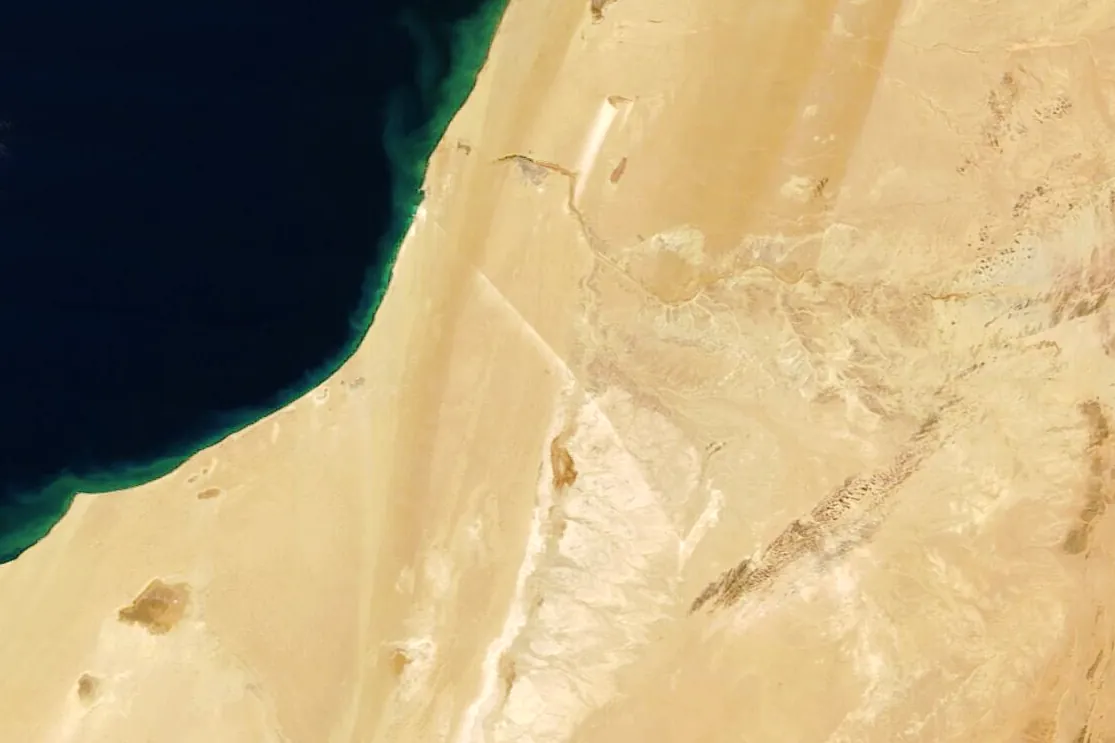
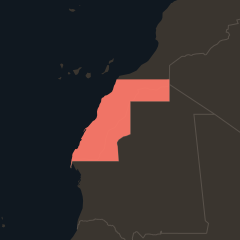
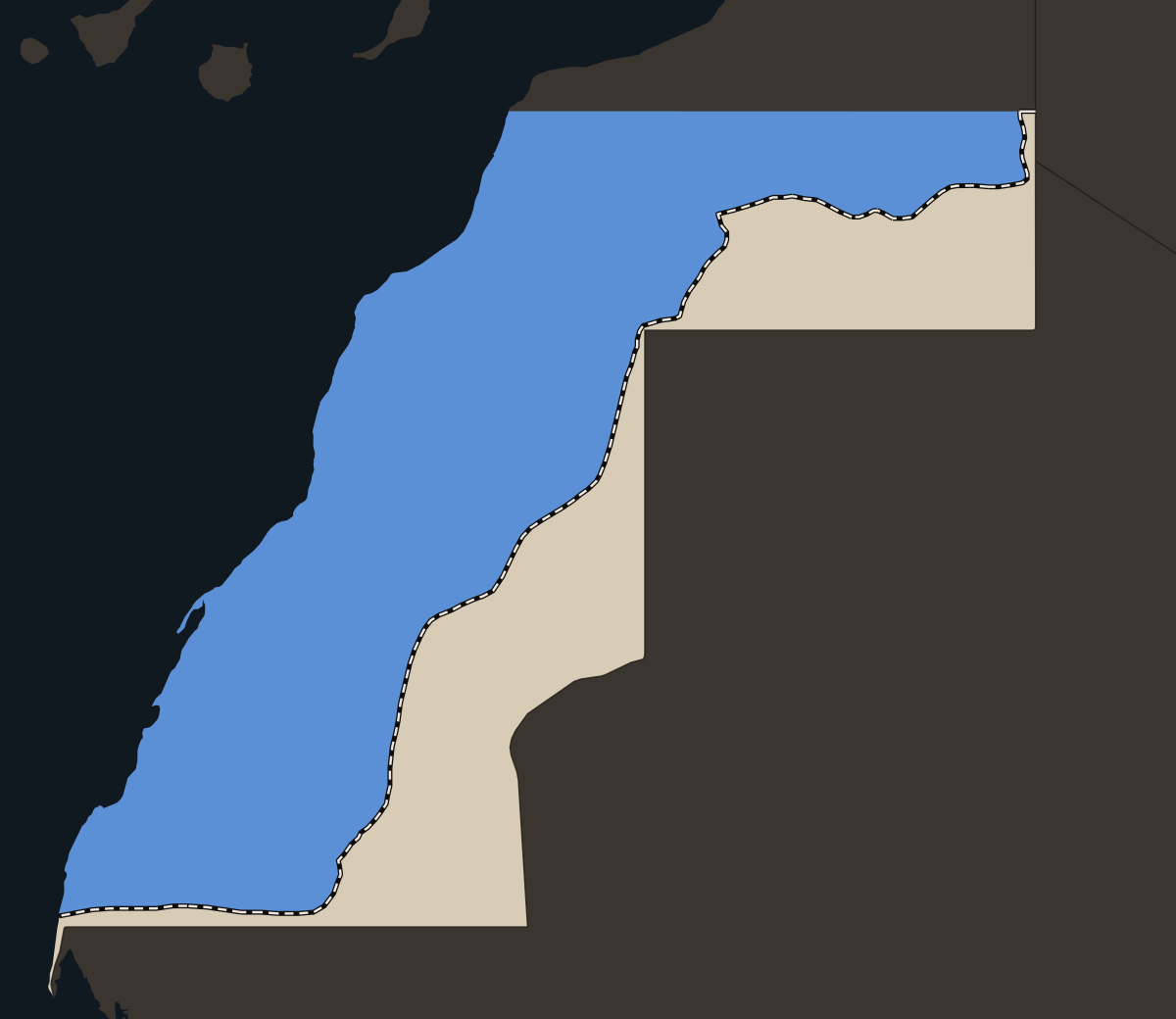
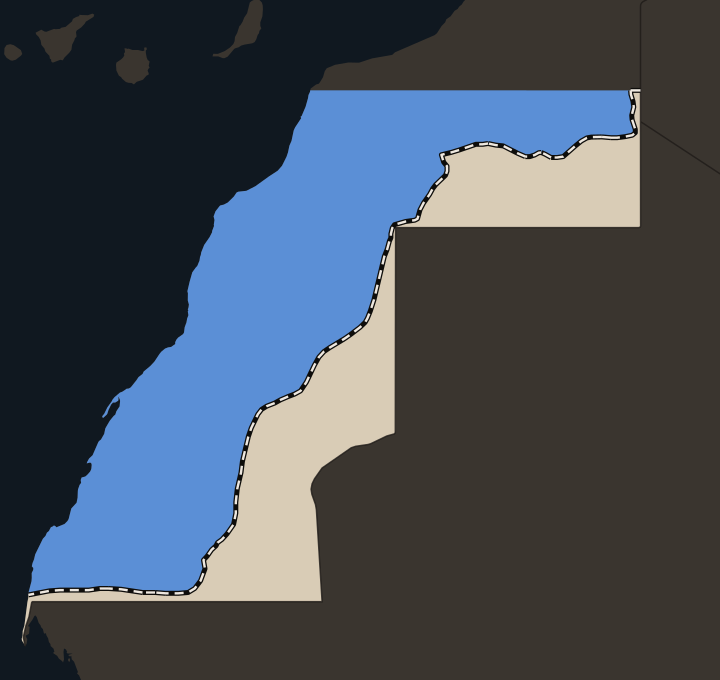
Western Sahara is a former Spanish colony on Africa's Atlantic coast, about 266,000 km² of desert with about 600,000 people. Morocco controls the land west of a 2,700 km sand wall called the berm, including all the main towns and almost all of the coast. The Polisario Front controls the thinly populated strip east of it and claims an independent state, the Sahrawi Arab Democratic Republic. The UN has never settled who owns the territory.
- Disputed since
- 1975
- when Spain agreed to leave
- Area
- 266,000 km²
- a little larger than the United Kingdom
- People
- About 600,000
- UN estimate, 2025
- The berm
- 2,700 km
- a sand wall Morocco built in the 1980s
 Morocco
 Sahrawi Republic
Western Sahara in 30 seconds
- Spain agreed in 1975 to leave Western Sahara and was gone by February 1976. Morocco and Mauritania divided the territory. The Polisario Front fought both. Mauritania gave up its share in 1979.
- Morocco walled off the populated west with a 2,700 km sand berm in the 1980s. A UN ceasefire held from 1991 to 2020.
- A referendum the UN promised in 1991 never happened. Morocco offers autonomy under Moroccan rule. The United States, France and Israel back Moroccan sovereignty.
- Since 2020, low-level fighting has continued along the berm. The UN estimates that about 173,600 Sahrawis live in refugee camps in Algeria.
Who controls Western Sahara?
Morocco controls the land west of the berm, including all the main towns, almost all of the Atlantic coast, the fishing grounds and the Bou Craa phosphate mine. Morocco calls this area its Southern Provinces and governs it as part of Morocco.
The Polisario Front controls the thinly populated strip east of the berm. The Polisario proclaimed the Sahrawi Arab Democratic Republic on February 27, 1976. The Sahrawi Republic is a full member of the African Union. 84 UN members have recognized it at some point. After many withdrawals, only about 30 to 35 still do. Recent withdrawals or suspensions include Ecuador (2024), Panama (2024), Ghana (2025), Bolivia, Mali, Honduras and Colombia (2026). Since 1963 the UN has listed Western Sahara as a Non-Self-Governing Territory, a territory it considers not yet decolonized.
 MOROCCO
ALGERIA
MAURITANIA
Atlantic Ocean
HELD BY
MOROCCO
ALGERIA
MAURITANIA
Atlantic Ocean
HELD BYMOROCCO HELD BY THE
POLISARIO Laayoune Smara Boujdour Dakhla Bou Craa mine Guerguerat Tifariti Tindouf camps The berm
 MOROCCO
MAURITANIA
Atlantic Ocean
HELD BY
MOROCCO
MAURITANIA
Atlantic Ocean
HELD BYMOROCCO HELD BY THE
POLISARIO Laayoune Smara Dakhla Tindouf camps The berm
Why does Morocco claim Western Sahara?
Morocco says Western Sahara belonged to the Moroccan kingdom before Spain colonized it. On October 16, 1975, the International Court of Justice found "legal ties of allegiance" between the Moroccan sultan and some tribes. The court also found "no tie of territorial sovereignty."
The same day, King Hassan II announced the Green March. On November 6, about 350,000 unarmed Moroccans (Morocco's figure) walked into Western Sahara carrying Qurans and Moroccan flags. The Madrid Accords of November 14, 1975, handed administration to Morocco and Mauritania. The two countries divided Western Sahara in April 1976.
The Polisario Front, founded on May 10, 1973, fought both Morocco and Mauritania. Mauritania made peace in August 1979. Morocco annexed Mauritania's share on August 14, 1979. The Polisario's founder, El-Ouali Mustapha Sayed, had studied political science at Mohammed V University in Rabat. He was killed in June 1976, aged about 27, leading a raid on Nouakchott.
How the dispute unfolded
- 1884Spain claims the coast as a protectorate
- 1973The Polisario Front is founded
- 1975Spain hands the territory to Morocco and Mauritania
- 1976The Polisario proclaims the Sahrawi Arab Democratic Republic
- 1979Mauritania quits. Morocco annexes its share.
- 1987Morocco completes the berm
- 1991UN ceasefire begins. A referendum is promised.
- 2007Morocco proposes autonomy under Moroccan sovereignty
- 2020The ceasefire collapses. The United States recognizes Moroccan sovereignty.
- 2025UN Security Council Resolution 2797 backs talks based on the autonomy plan
What is the berm?
The berm is a wall of sand and stone that Morocco built across Western Sahara in the 1980s. Moroccan military posts, radar and minefields run along it, and the land on both sides is still heavily contaminated with landmines and unexploded munitions.
The UN ceasefire of 1991 held until November 13, 2020, when Moroccan troops entered the Guerguerat buffer zone to end a three-week Sahrawi blockade of the road to Mauritania. The Polisario declared the ceasefire over. Since then, fighting has been low-intensity. The Polisario fires shells across the berm. Morocco uses drone strikes. On May 5, 2026, Polisario rockets hit near Smara. On June 7, a reported Moroccan drone strike near Mijek killed a Polisario commander, Lahbib Mohamed Abdelaziz, and two others.
The berm
2,700 km
Longer than the distance from Paris to Moscow
Morocco built the berm in six stages from 1980 to 1987. It divides Western Sahara from northeast to southwest. More than 1,465 km of the berm is contaminated with mines and unexploded munitions, according to the UN mission. No reliable count of the mines exists.
Who are the Sahrawis and the Polisario Front?
The Sahrawis are the Arabic-speaking people of Western Sahara. Many were once nomadic. Since 1975-76, many Sahrawis have lived in refugee camps near Tindouf in Algeria. The Polisario Front is based in the camps. The UN puts the camp population at about 173,600 (a 2018 estimate still used in UN planning). No registration of the refugees has ever been done. Algeria backs the Polisario and hosts the camps. Algeria cut diplomatic ties with Morocco in August 2021. The Algeria-Morocco land border has been closed since 1994.
Brahim Ghali has led the Polisario since July 2016. In April 2021, Ghali was treated for COVID in a hospital in Logroño, Spain. He was admitted under a false identity. In May 2021, during a row with Spain over Ghali's treatment, Moroccan border police stood aside. About 8,000 people crossed into Ceuta, a Spanish city on Morocco's north coast, in two days.
Aminatou Haidar
32 days
A hunger strike at an airport
In November 2009, the Sahrawi activist Aminatou Haidar wrote "Western Sahara" instead of "Morocco" as her address. She was refused entry at Laayoune. Morocco expelled her to Lanzarote. Haidar went on hunger strike at the airport for 32 days, until Morocco let her return. In 2019 she was one of four winners of the Right Livelihood Award, alongside Greta Thunberg.
Which countries back Morocco?
The United States recognized Moroccan sovereignty over all of Western Sahara on December 10, 2020, when Morocco agreed to normalize ties with Israel. Israel recognized Moroccan sovereignty on July 17, 2023. On July 30, 2024, France said "the present and future of Western Sahara fall within the framework of Moroccan sovereignty." Spain (2022) and the United Kingdom (June 1, 2025) back Morocco's 2007 autonomy plan but do not recognize sovereignty.
UN Security Council Resolution 2797 of October 31, 2025 called for talks "taking as basis" the autonomy plan while keeping a reference to self-determination. The vote was 11-0 with China, Russia and Pakistan abstaining. Algeria did not vote. Three rounds of talks co-chaired by the UN envoy and the United States in January-February 2026 produced no deal. In 2026, Colombia and Peru backed Moroccan sovereignty. The Security Council is due to decide by October 31, 2026 whether to renew MINURSO, the UN mission set up in 1991 to watch the ceasefire and run the referendum.
Who backs whom
 United StatesRecognized Moroccan sovereignty in December 2020
 IsraelRecognized Moroccan sovereignty in July 2023
 France"Within the framework of Moroccan sovereignty," July 2024
 SpainBacks Morocco's autonomy plan since 2022
 United KingdomBacks the autonomy plan since June 2025
 AlgeriaBacks the Polisario Front and hosts the refugee camps
What is at stake in Western Sahara?
Phosphates
The Bou Craa mine sends phosphate rock to the coast near Laayoune on a conveyor belt about 100 km long. The belt is one of the longest in the world. Phosphate is the raw material for fertilizer.
Fish
The Atlantic waters off Western Sahara are rich fishing grounds. In October 2024, the EU Court of Justice ruled that the EU's deals with Morocco could not cover Western Sahara without its people's consent. In October 2025 the EU and Morocco amended the trade deal so that goods from Western Sahara are labeled by region. No fishing protocol has been in force since July 2023.
An Atlantic port
Morocco is building a large port at Dakhla to link the Sahel to the Atlantic. The port was about 62% complete in June 2026. It is due to be finished at the end of 2028.
Questions about Western Sahara
Is Western Sahara a country?
Western Sahara is not a UN member state. The Polisario Front's Sahrawi Arab Democratic Republic is a full member of the African Union. 84 UN members have recognized it at some point. After many withdrawals, only about 30 to 35 still do. Morocco treats Western Sahara as part of Morocco. The UN lists Western Sahara as a Non-Self-Governing Territory whose status is undecided.
Is Western Sahara part of Morocco?
Morocco controls most of Western Sahara and governs it as part of Morocco. The United States, Israel and a growing number of other countries recognize Moroccan sovereignty. France says the territory's future lies "within the framework of Moroccan sovereignty." The UN does not recognize Morocco's sovereignty over Western Sahara. In 2025 the Security Council backed talks that take Morocco's autonomy plan as the basis, while keeping a reference to self-determination.
Why is Western Sahara called Africa's last colony?
Western Sahara is the only territory in Africa still on the UN's list of Non-Self-Governing Territories, and the largest on it. It has been on the list since 1963, when it was called Spanish Sahara. "Africa's last colony" is a phrase used by the Polisario Front and its supporters. It is not a UN term.
Why did the UN referendum never happen?
The two sides never agreed on who could vote. The UN began identifying voters in 1994. By January 2000, the UN found 86,386 eligible out of about 198,000 applicants, mostly people on Spain's 1974 census and their relatives. More than 130,000 appeals followed, mostly from applicants Morocco backed. UN envoy James Baker proposed two plans (2001 and 2003). Both failed. The Polisario and Algeria rejected the first. Morocco rejected the second. In April 2004, Morocco said it would accept only autonomy.