
How the European Union actually makes decisions
Three institutions, 27 governments, and a process that can retaliate on tariffs in a week or spend three years passing a single law.
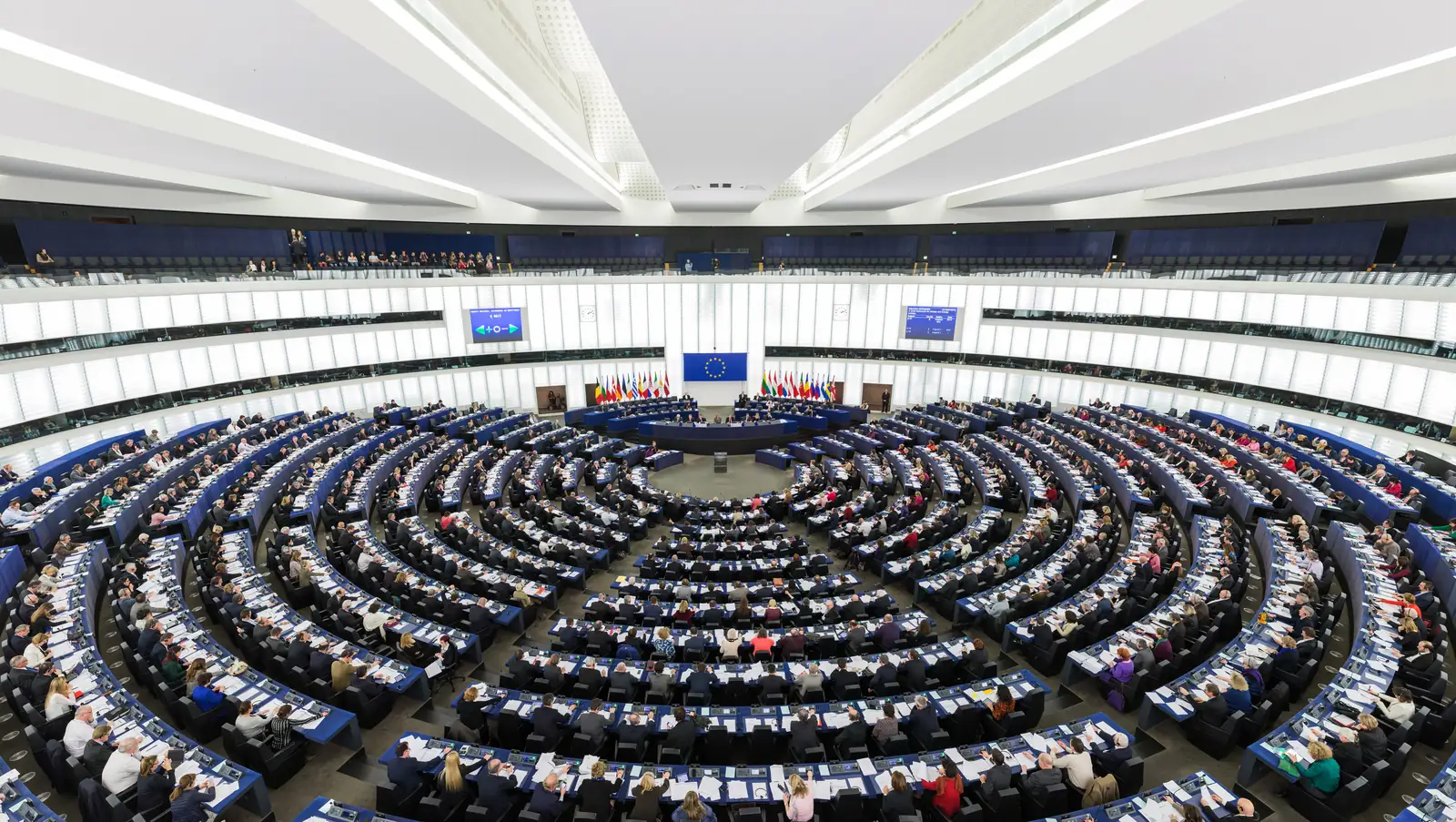
In April 2025, the United States imposed 25 percent tariffs on European steel and aluminum. The European Commission published its retaliatory list on a Monday. By Wednesday, 26 of the EU's 27 member governments had voted to approve it. Within days, the EU had countermeasures on €22 billion worth of American goods. The one holdout was Hungary.
Two years earlier, the EU had started work on the AI Act, the world's first comprehensive law regulating artificial intelligence. The European Commission proposed it in April 2021. The European Parliament and the Council of the EU spent two and a half years negotiating. Halfway through, ChatGPT launched and the negotiators had to rewrite whole sections to account for a technology the original draft had not anticipated. The final text was not formally adopted until May 2024.
One decision took days. The other took three years. Both went through the same institutions, and both are EU law. The difference is which part of the EU's machinery each one ran through.
Three institutions, three jobs
The EU's lawmaking system splits power among three institutions, and none of them can act alone.
The European Commission is the only body that can propose new laws. It has 27 commissioners, one per member country, but they are supposed to represent the EU as a whole rather than their home government. The Commission president, currently Ursula von der Leyen, sets the agenda: which problems get a legislative proposal, which ones get a speech and nothing else.
The European Parliament is the directly elected body. Its 720 members are chosen by voters across all 27 countries. It debates, amends, and votes on every proposal the Commission sends. Unlike most national parliaments, it cannot propose laws on its own; it can only react to what the Commission puts forward.
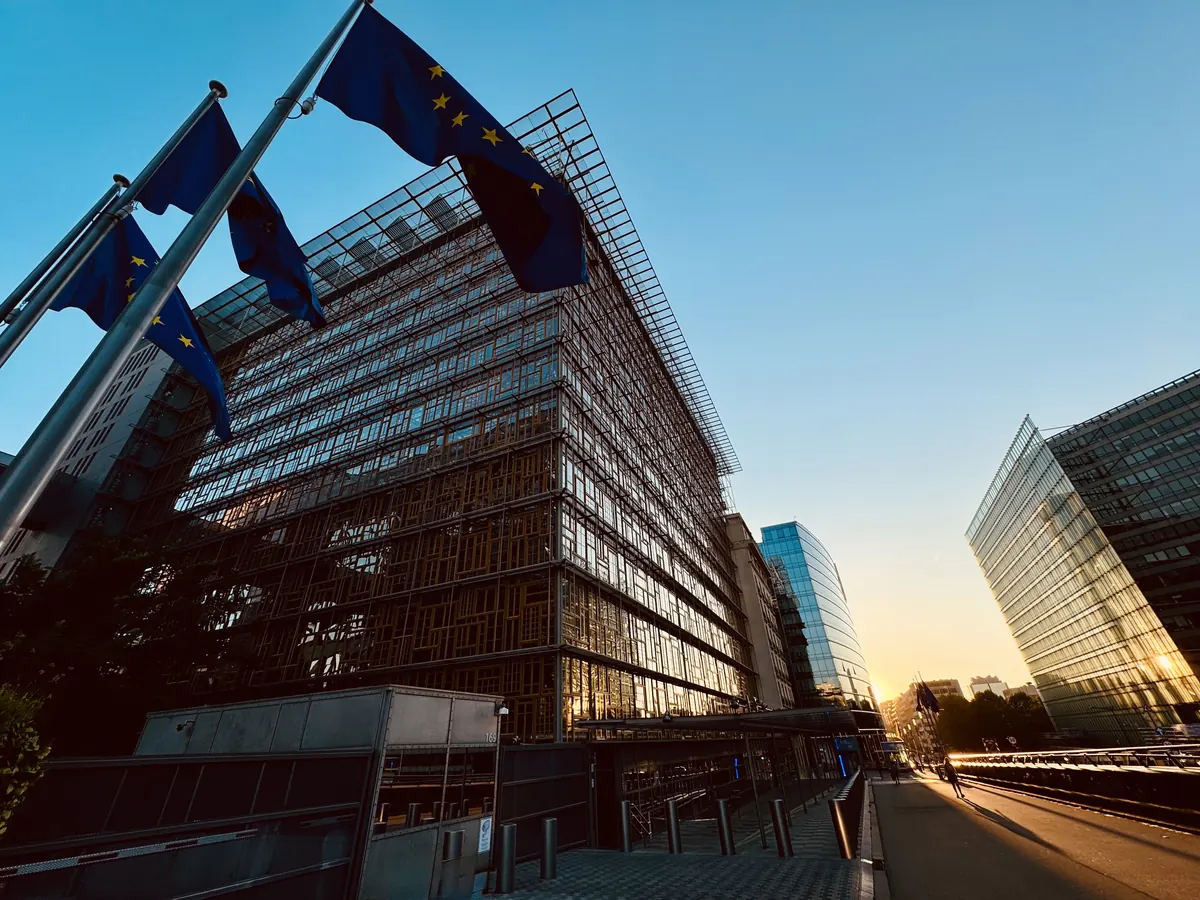
The Council of the European Union represents the member governments. When the EU debates a trade law, it is the trade ministers of all 27 countries who sit in the Council. When it debates defense, the defense ministers show up. The Council is the room where national interests collide, and it is the place where the EU's most important decisions get made or blocked.
There is a fourth body that matters but does not pass laws. The European Council is the summit of the 27 heads of state and government, the presidents and prime ministers. It meets roughly four times a year to set the EU's overall political direction: which crises to prioritize, whether to open accession talks with a candidate country, whether to impose sanctions. It does not vote on legislation. It sets the agenda that the Commission then turns into proposals.
The naming does not help. The Council of the European Union (the ministers) and the European Council (the leaders) are two different institutions that share a building in Brussels and a confusing name.
A law passes only when both the Parliament and the Council of the EU agree on the same text.
How a law moves through the system
The process is called the ordinary legislative procedure, and about 80 percent of all EU legislation follows it.
The Commission drafts a proposal and sends it to both the Parliament and the Council. Each institution reads the text, proposes amendments, and votes. If they agree on the same version, the law passes. If they disagree, they try again in a second reading, and if that fails, a conciliation committee of members from both institutions meets to negotiate a compromise. If that fails too, the proposal dies.
In practice, most laws never reach a second reading. More than 85 percent are settled during the first reading, through a process called trilogues: informal, closed-door negotiations between representatives of the Commission, the Parliament, and the Council. The three sides argue until they have a text all of them can accept, and then each institution formally votes on the agreed version. It is efficient. It is also almost entirely invisible to the public.
The AI Act went through this process. The Commission proposed it in April 2021. The Parliament's committees spent more than a year debating their position. The Council's working groups did the same. Then trilogues began and ran for months. When ChatGPT arrived in late 2022 and changed public expectations about what AI could do, the negotiators added an entire section on general-purpose AI models that had not existed in the original draft. A political agreement came in December 2023. Formal adoption followed in 2024. Start to finish: three years, for a law that the Commission, the Parliament, and the Council all broadly supported from the beginning.
Why one country can stop everything
The ordinary legislative procedure uses qualified majority voting in the Council. A law passes when at least 15 of 27 member states vote in favor and those states represent at least 65 percent of the EU's total population of 450 million. Germany alone accounts for about 19 percent of the EU's population, so its vote carries more weight than Malta's, but even Germany cannot block a law by itself.
That system covers most EU legislation. But for the decisions that governments consider most sensitive, the EU requires unanimity. Every single member state must agree. Foreign policy, defense, taxation, the admission of new members: these all require a unanimous vote in the Council. One country out of 27 can stop the rest.
Hungary under Viktor Orbán turned this into a strategy. Between 2016 and 2026, EU member states used their veto a total of 48 times. Hungary accounted for 21 of those 48. In March 2025, Orbán blocked European Council conclusions on Ukraine aid and peace negotiations. The other 26 leaders adopted the text without him, a workaround that sidestepped the veto but also showed its limits: the conclusions carried less weight than a unanimous statement would have. When Hungary blocked the start of Ukraine's EU accession talks, there was no workaround at all.
The tariff retaliation in April 2025 moved faster because trade policy runs through the Commission, which already holds the authority to propose countermeasures and only needs a qualified majority in the Council to approve them. Hungary voted no. The other 26 voted yes. The tariffs went ahead.
Orbán lost Hungary's April 2026 election to Péter Magyar, whose government has taken a more cooperative line in Brussels. But the structural problem remains: any future government of any member state can use the unanimity requirement the same way.
Why changing the rules requires the rules
The obvious solution would be to move more decisions from unanimity to qualified majority voting. Several governments and the European Parliament have pushed for exactly that, especially on foreign policy, where the EU's inability to act quickly has been visible for years. Italy's foreign minister Antonio Tajani said in early 2026 that the EU should use majority voting "as much as possible."
The obstacle is written into the EU's own treaties. Changing the voting rules in the Council requires a treaty amendment, and a treaty amendment requires every member state to agree. The decision to abolish the veto is itself subject to the veto.
This is not a design flaw. It is the reason the EU exists in its current form. No government would have signed up to a system where it could be outvoted on questions of war, taxes, or the admission of new members. The logic is the same one that gave the five permanent members of the UN Security Council their vetoes: the powerful only join institutions that cannot overrule them. The unanimity rule is what made 27 sovereign countries willing to pool some of their power. It is also the thing that makes the pooled power hardest to use.
The result is a system that produces two very different speeds of government. On trade, competition, and regulation, where the Commission holds real authority and the Council votes by majority, the EU can act as fast as any single government and sometimes faster. On foreign policy and defense, where every country holds a veto, the EU moves only as fast as its most reluctant member allows. That gap will define how useful the EU is in the years ahead, as the pressures that demand a fast answer, from American tariffs to the next security crisis on Europe's border, keep arriving on unanimity's side of the line.
Test what you learned
5 questions on this article. About two minutes, no signup.