
Why the UN Security Council still can't be reformed
Five countries that won a war in 1945 still hold vetoes over the rest of the world, and the UN Charter says they have to agree to give them up.
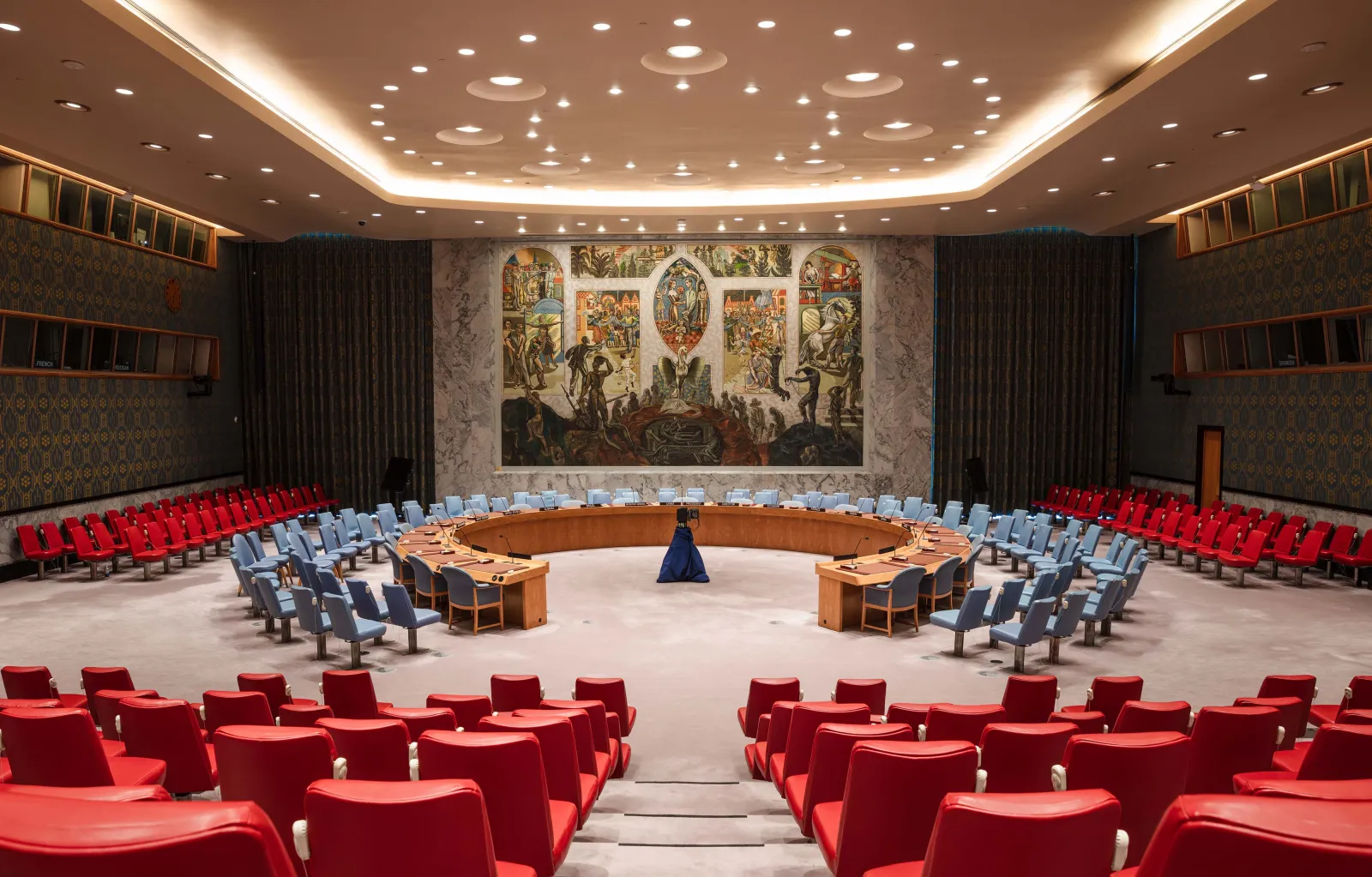
In February 2022, Russia invaded Ukraine. Three days later, the UN Security Council voted on a resolution condemning the invasion and demanding Russia withdraw. Russia vetoed it. The country accused of the aggression blocked the resolution about itself. That was not a loophole. It is how the Security Council was designed to work.
Since then, the pattern has repeated dozens of times. Russia has vetoed resolutions on Ukraine. The United States has vetoed resolutions on Israel and Gaza. China has joined Russia to block resolutions on Syria. Every time, the same demand follows: the Security Council is broken and needs to be reformed. That demand is more than eighty years old. It has never led anywhere, because the five countries with the power to block reform are the same five countries reform would come at the expense of.
How five countries got permanent vetoes
The Security Council was created in 1945, at the end of World War II, by the countries that won it. The United States, the Soviet Union, the United Kingdom, France, and China became the five permanent members, each with a veto: a single vote that kills any resolution on a substantive matter, no matter what the rest of the council thinks.
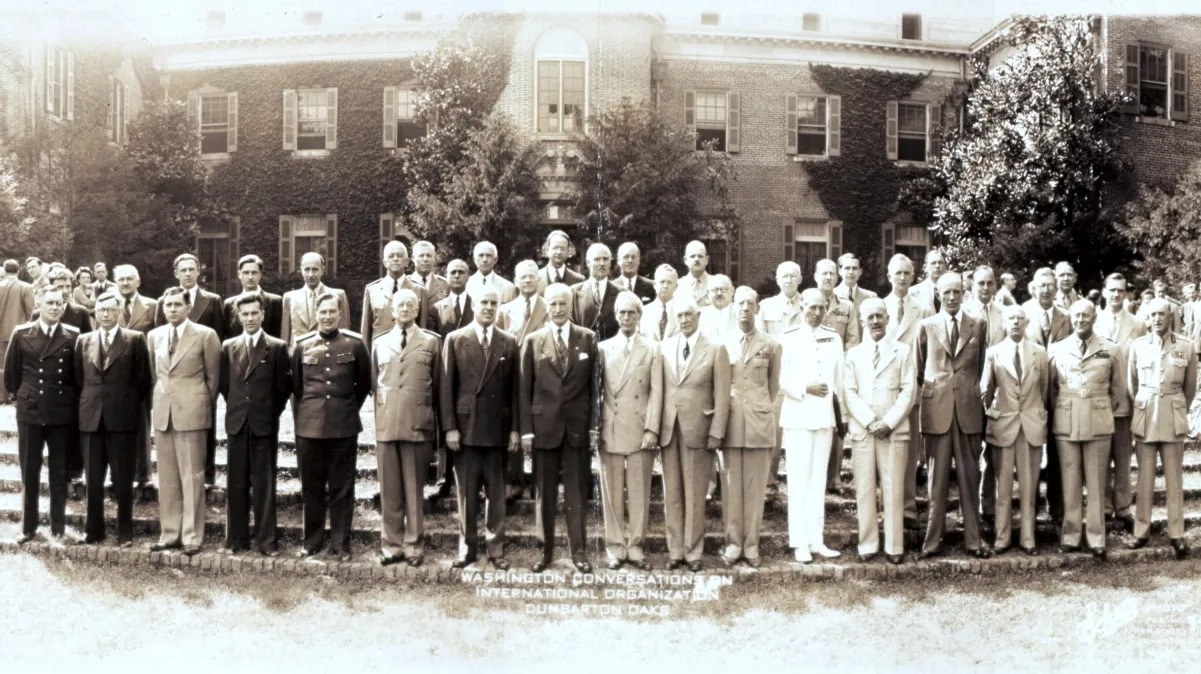
The veto was not an accident. It was the price of getting the great powers to join at all. Franklin Roosevelt's position at the 1944 Dumbarton Oaks negotiations was plain: the new organization would work only if the major powers could protect their interests inside it. Joseph Stalin's negotiators insisted on the broadest possible veto, and got it. Roosevelt died thirteen days before the founding conference opened in San Francisco in April 1945. Harry Truman, his successor, held the same line.
The smaller countries pushed back hard. Herbert Evatt, Australia's external affairs minister and a former High Court justice, led the opposition at San Francisco. Evatt was combative, and he fought the veto provision clause by clause for weeks. He lost. Without the veto, the United States Senate would not have ratified the charter, and without the United States there was no United Nations. The smaller countries accepted a body they could join but not control. The previous attempt at a world organization, the League of Nations, had shown what happened without that guarantee. The United States never joined. Japan and Germany walked out in the 1930s. The Soviet Union was expelled. By 1939 the League was an empty room, and the war it was built to prevent had started. The founders of the United Nations decided that keeping the great powers inside mattered more than keeping the rules fair, and the veto was the price.
The only reform that ever happened
The Security Council has been reformed exactly once. In 1965, the number of non-permanent, elected seats went from six to ten, and the majority needed to pass a resolution went from seven votes to nine. That was it.
Even that modest change required amending the UN Charter. Under Article 108, any amendment needs ratification by two-thirds of all UN member states, including all five permanent members. The permanent five agreed, but only because they gave up nothing: no new vetoes were created and no permanent seats were added.
Since 1965, UN membership has nearly doubled, from 117 countries to 193. The Security Council has not changed at all. Its composition has shifted informally: in 1971, the People's Republic of China replaced Taiwan in the seat originally held by the Republic of China, and in 1991 Russia inherited the Soviet Union's seat without a vote. But the structure, five permanent members with vetoes over everyone else, has not moved. Two of those five, Britain and France, are mid-sized European powers. India, the world's largest democracy, has no permanent seat. Neither does any country from Africa, a continent of 54 UN member states and 1.4 billion people. Neither does Latin America. Germany and Japan, the third and fourth largest economies in the world, sit outside.
Why every reform proposal fails before it starts
The most common reform idea is to add new permanent members. India, Japan, Germany, and Brazil formed a group called the G4 in 2005 to push for exactly that. The African Union wants at least two permanent African seats with full veto power. These proposals sound reasonable until you look at who opposes them.
Every candidate for a permanent seat has a regional rival determined to block it. Pakistan opposes India. The two countries have fought three wars and still dispute Kashmir. China and South Korea oppose Japan, over unresolved grievances from World War II. Italy opposes Germany and leads a group of countries called Uniting for Consensus that wants more elected seats instead of new permanent ones. Argentina and Mexico oppose Brazil. Each rivalry is specific, and none is going away.
The result is deadlock among the reformers before any proposal reaches the five countries that actually decide. And it is the permanent five who decide, because Article 108 gives each of them a veto over any charter amendment. The United States, Britain, and France have expressed cautious support for a bigger council, but all three oppose giving new members the veto. Russia and China have been less supportive, and China has specifically opposed a permanent seat for Japan. So even in the best case, what the reformers could get is a permanent seat without a veto, which the African Union has already said it would reject. A permanent seat without a veto is not the same thing as the seat the current five hold.
Some proposals try to sidestep the problem entirely. In 2015, France and Mexico proposed a voluntary code of conduct: permanent members would agree not to use the veto in cases of mass atrocity. More than 100 countries endorsed it. Russia, China, and the United States did not. A voluntary pledge that the three most frequent veto users refuse to sign is not a reform. The Uniting for Peace resolution, passed by the General Assembly in 1950 during the Korean War, allows the Assembly to recommend collective action when the Security Council is blocked. The Assembly has invoked it on Ukraine and on Gaza. But its resolutions are recommendations, not orders. They carry political weight but no legal authority to deploy forces or impose sanctions.
The pact that changed nothing
In September 2024, world leaders at the UN Summit of the Future signed a Pact for the Future that called Security Council reform an "urgent priority." The pact committed member states to "meaningful reform" through "intensified intergovernmental negotiations." Two years later, those negotiations have produced no amendment, no new seats, and no change to the veto.
The pattern is older than the pact. In 1993, the General Assembly created an Open-Ended Working Group to study Security Council reform. That group met for more than fifteen years and produced nothing binding. It was replaced in 2009 by a round of intergovernmental negotiations that continues today, still without a draft resolution. In 2024, Japan's delegation told the General Assembly that the process had been going on for more than thirty years without producing an agreement. The observation was accurate. It also did not change anything.
The Security Council was designed so that no great power could be overruled by the body it sits on. That design works exactly as intended. The cost is that the same structure makes the council impossible to change from the inside, and there is no mechanism to change it from the outside.
Test what you learned
5 quick questions on this article. No signup, just you against the text.