
Alliance · Political and economic union
 European Union
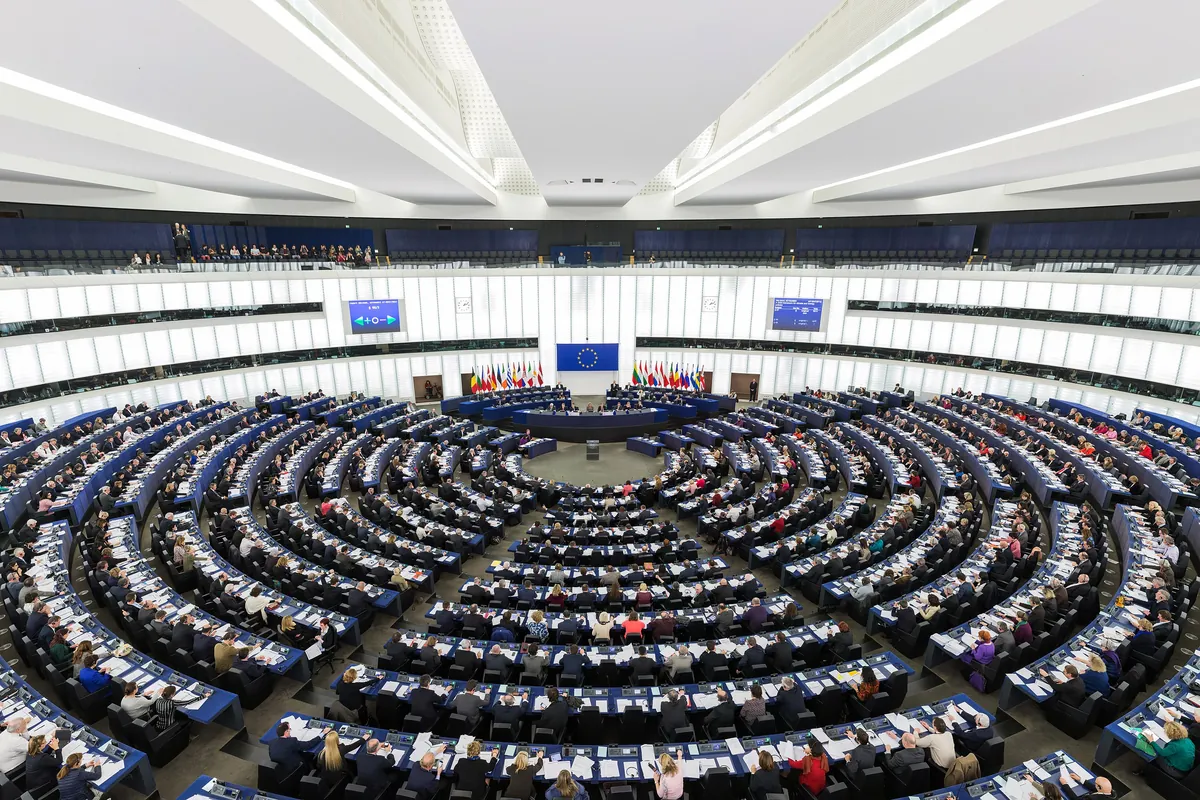
The European Union is a union of 27 European countries with shared laws, a single market and its own parliament. Goods, services, money and people move freely between the members, and 21 use the euro. Nine countries are official candidates to join, including Ukraine and Turkey. The United Kingdom left in 2020, the only member state that ever has.
- Members
- 27
- Croatia joined last, in 2013
- Candidates
- 9
- Kosovo has applied too
- Use the euro
- 21
- Bulgaria joined in January 2026
- People
- 450 million
- 5.5% of the world
- Economy
- $21.2tn
- 18% of the world's, 2025
Which countries are in the EU?
Twenty-seven countries. Six founded the European Economic Community, which came into being on January 1, 1958. The EU itself dates from the Maastricht Treaty, in force since November 1, 1993. The biggest expansion came in 2004, when 10 countries joined, 8 of them formerly communist. Croatia joined last, in 2013. The United Kingdom left on January 31, 2020, after 47 years. Norway, Switzerland, Iceland, Liechtenstein and the microstates, such as Monaco and San Marino, stayed out.
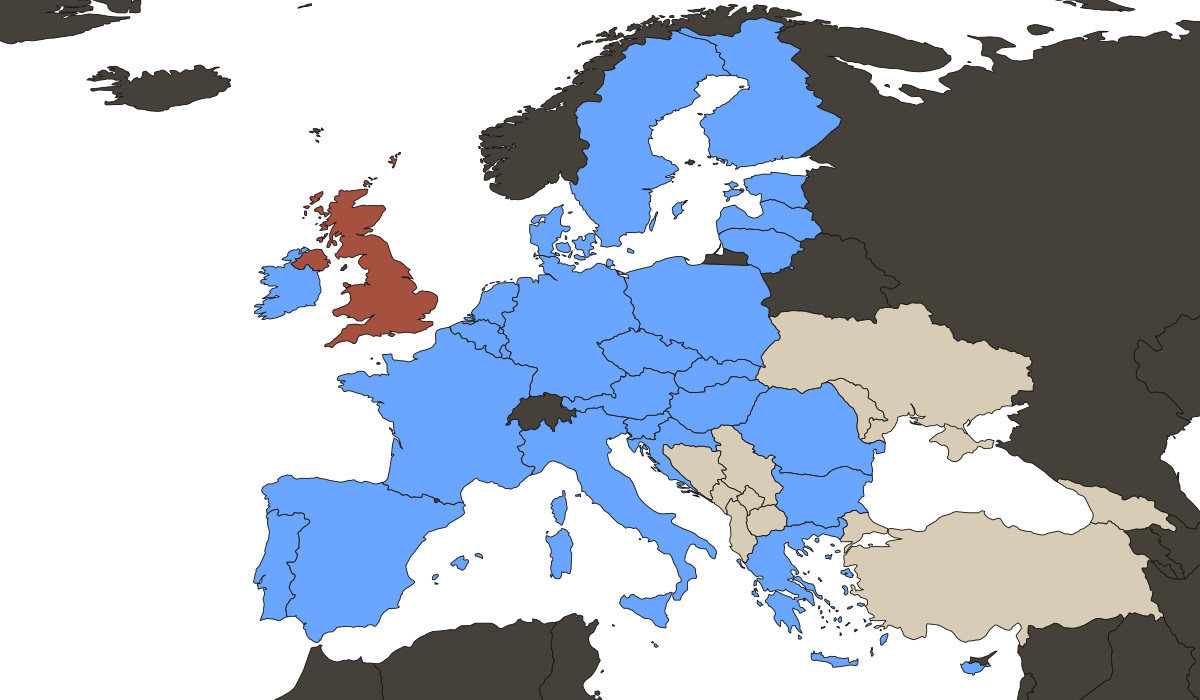
- Member
- Wants to join
- Left
- Not a member
How the EU grew
Countries that joined in each year, and the total after


 19586 founders

 19739
19739 198110
 198612

 199515


 200425
 200727
 201328
- 202027, United Kingdom left
All 27 members and the year each joined
- Austria1995
- Belgium1958
- Bulgaria2007
- Croatia2013
- Cyprus2004
- Czechia2004
- Denmark1973
- Estonia2004
- Finland1995
- France1958
- Germany1958
- Greece1981
- Hungary2004
- Ireland1973
- Italy1958
- Latvia2004
- Lithuania2004
- Luxembourg1958
- Malta2004
- Netherlands1958
- Poland2004
- Portugal1986
- Romania2007
- Slovakia2004
- Slovenia2004
- Spain1986
- Sweden1995
Is Turkey in the EU?
No. Turkey applied for association with the European Economic Community in 1959 and signed the Ankara Agreement in 1963. It applied for full membership on April 14, 1987, became a candidate in December 1999 and opened talks on October 3, 2005. Of 35 chapters of EU law, 16 are open and 1 is closed (science and research, in 2006). In December 2006 the EU froze 8 chapters because Turkey keeps its ports and airports closed to Cypriot ships and aircraft.
In June 2018 EU governments said the talks had "effectively come to a standstill." Turkey is still formally a candidate. Its customs union with the EU, in force since December 31, 1995, covers industrial goods and processed farm products but not services. Turkish citizens still need visas.

Turkey's road to the EU
- 1963Association agreement signed in Ankara
- 1987Applies to join
- 1995Customs union with the EU starts
- 1999Becomes an official candidate
- 2005Membership talks open
- 2006The EU freezes eight chapters in a dispute over Cyprus
- 2018Talks come to a standstill
- Closed
- Opened
- Not opened
Who else wants to join the EU?
Nine countries are official candidates, and Kosovo is a potential candidate. A country applies, becomes a candidate, then negotiates more than 30 chapters of EU law. Every existing member must agree at each step. Montenegro is furthest along, with 18 of 33 chapters closed. Montenegro's government aims to finish talks by the end of 2026 and join in 2028. Ukraine and Moldova opened their first clusters of chapters in June 2026. Hungary's government, led by Prime Minister Péter Magyar since May 2026, is blocking Ukraine's next clusters over the rights of the Hungarian minority. On August 29, 2026, Iceland's voters rejected resuming EU membership talks in a referendum.
| Country | Applied | Candidate | Talks opened | Where it stands |
|---|---|---|---|---|
 Montenegro Montenegro |
2008 | 2010 | 2012 | Furthest along, 18 of 33 chapters closed. Aims to join in 2028. |
 Albania Albania |
2009 | 2014 | 2022 | Every chapter open since 2025. Aims to finish talks in 2027. |
 Ukraine Ukraine |
2022 | 2022 | 2024 | Opened its first clusters in 2026. Hungary blocks the next ones. |
 Moldova Moldova |
2022 | 2022 | 2024 | Moving in step with Ukraine. Aims to be ready by 2028. |
 Serbia Serbia |
2009 | 2012 | 2014 | Stalled over the rule of law and its refusal to sanction Russia. |
 North Macedonia North Macedonia |
2004 | 2005 | 2022 | Stalled by a dispute with Bulgaria over its constitution. |
 Bosnia and Herzegovina Bosnia and Herzegovina |
2016 | 2022 | Not yet | Talks approved in 2024 but not yet started. |
 Georgia Georgia |
2022 | 2023 | Not yet | FrozenThe EU halted its bid in 2024. |
| Turkey |
1987 | 1999 | 2005 | FrozenTalks at a standstill since 2018. |
 Kosovo Kosovo |
2022 | Not yet | Not yet | Not yet a candidate. Five EU members do not recognize it. |
What is the difference between the EU, the eurozone and Schengen?
The EU, the eurozone and the Schengen area are three different groups. The EU is the political and economic union of 27 countries. The eurozone is the 21 that use the euro. Bulgaria became the 21st on January 1, 2026. Of the 6 that do not, only Denmark has a legal opt-out. The others are expected to adopt it once they meet the conditions. The Schengen area is 29 countries with no passport checks at their shared borders: 25 EU members plus Iceland, Liechtenstein, Norway and Switzerland. Ireland has an opt-out. Cyprus is not yet in.
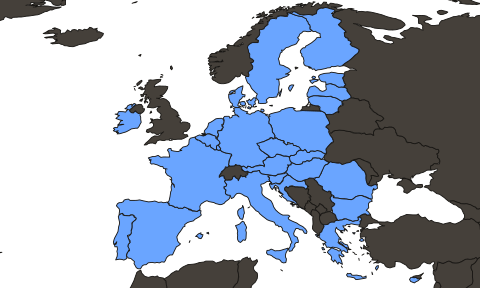
Eurozone
21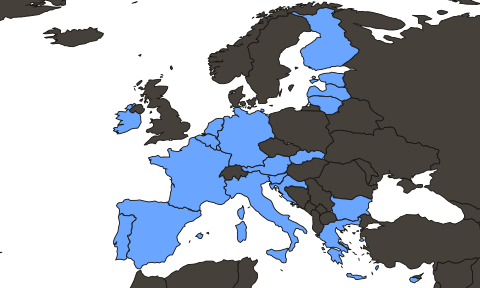
Schengen area
29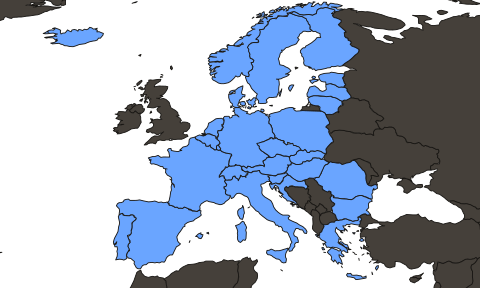
Is it in the EU?
Short answers for the countries people ask about most.
Is the UK in the EU?
NoThe United Kingdom left on January 31, 2020, after 47 years. In the June 23, 2016 referendum, 51.9% voted Leave.

Is Switzerland in the EU?
NoSwiss voters rejected the European Economic Area in 1992. Switzerland has more than 100 bilateral agreements with the EU and is in Schengen.

Is Norway in the EU?
NoNorwegian voters said no in 1972 and 1994. Norway is in the single market through the European Economic Area, and in Schengen.
Is Ukraine in the EU?
NoUkraine applied on February 28, 2022, four days after Russia's full-scale invasion. It has been a candidate since June 2022 and opened its first talks in June 2026.

Is Iceland in the EU?
NoIceland applied in 2009 and dropped its bid in 2015. On August 29, 2026, its voters rejected resuming talks, 52.84% to 47.16%.

Is Greenland in the EU?
NoGreenland is a self-governing part of the Kingdom of Denmark. Its voters chose to leave the European Communities in 1982, and it left in 1985.
Is Croatia in the EU?
YesCroatia joined on July 1, 2013, the most recent country to join. It adopted the euro and joined Schengen on January 1, 2023.
Is Cyprus in the EU?
YesCyprus joined on May 1, 2004. EU law is suspended in the north, which Turkish troops have held since 1974.
Other alliances
All alliances →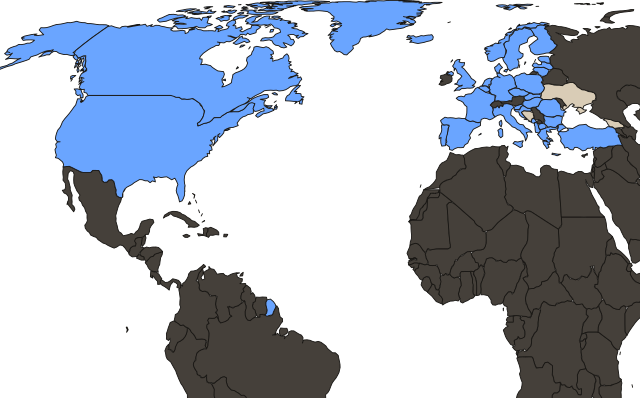 NATO
32 countries in Europe and North America. An attack on one counts as an attack on all.
NATO
32 countries in Europe and North America. An attack on one counts as an attack on all.
 G7
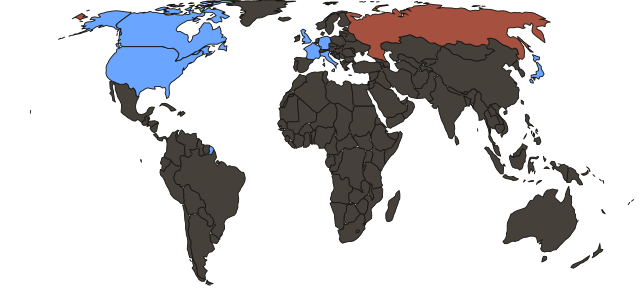
Seven rich democracies with 45% of the world's economy. Russia was in it from 1998 to 2014.
All alliances
Who belongs to what
Which alliances each country is in, and how big each one is.
See every country →
G7
Seven rich democracies with 45% of the world's economy. Russia was in it from 1998 to 2014.
All alliances
Who belongs to what
Which alliances each country is in, and how big each one is.
See every country →