
Is China winning the robotics race?
China installed 59 percent of the world's industrial robots in 2025. Its cheapest humanoid sells for $5,900.
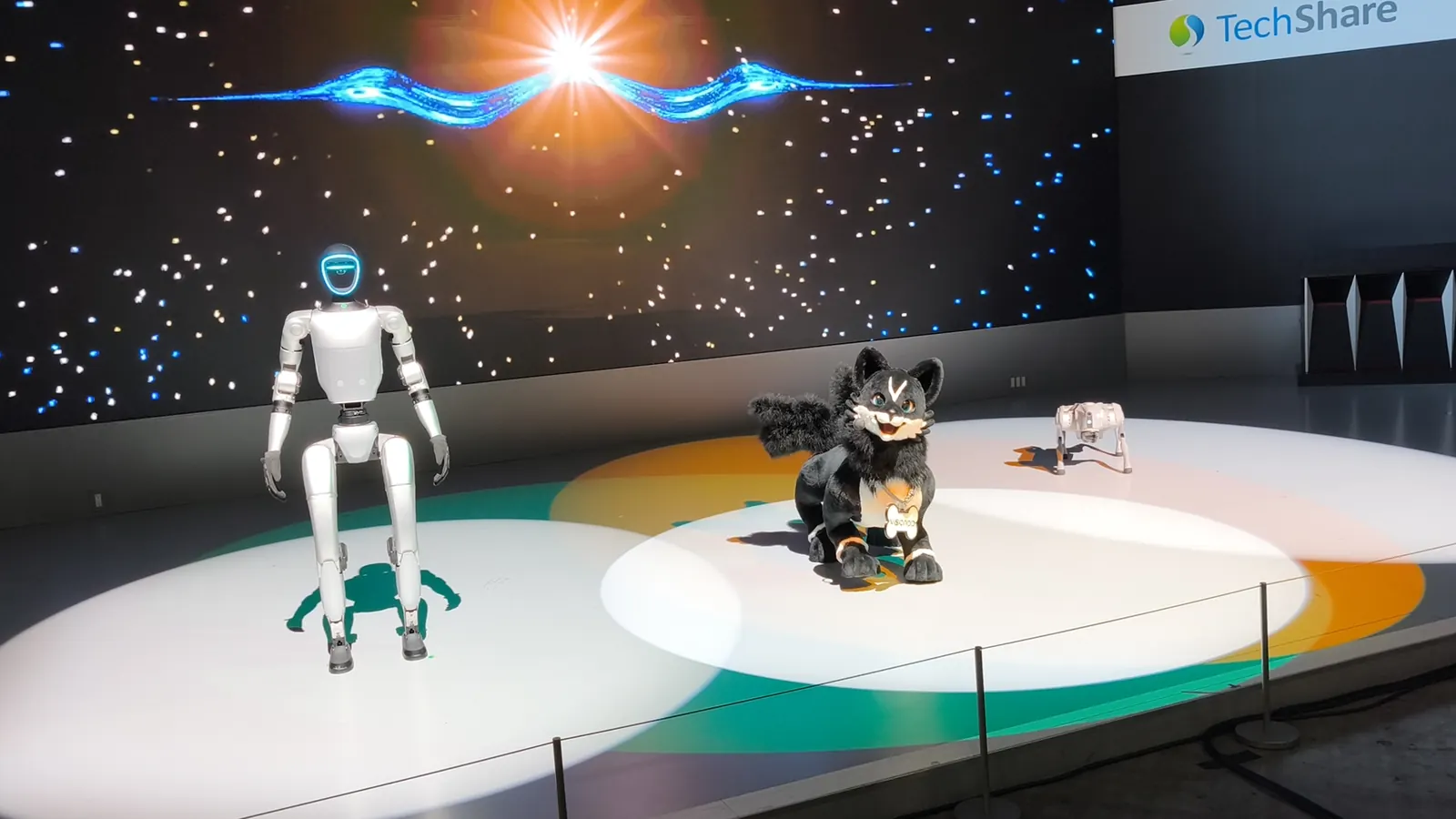
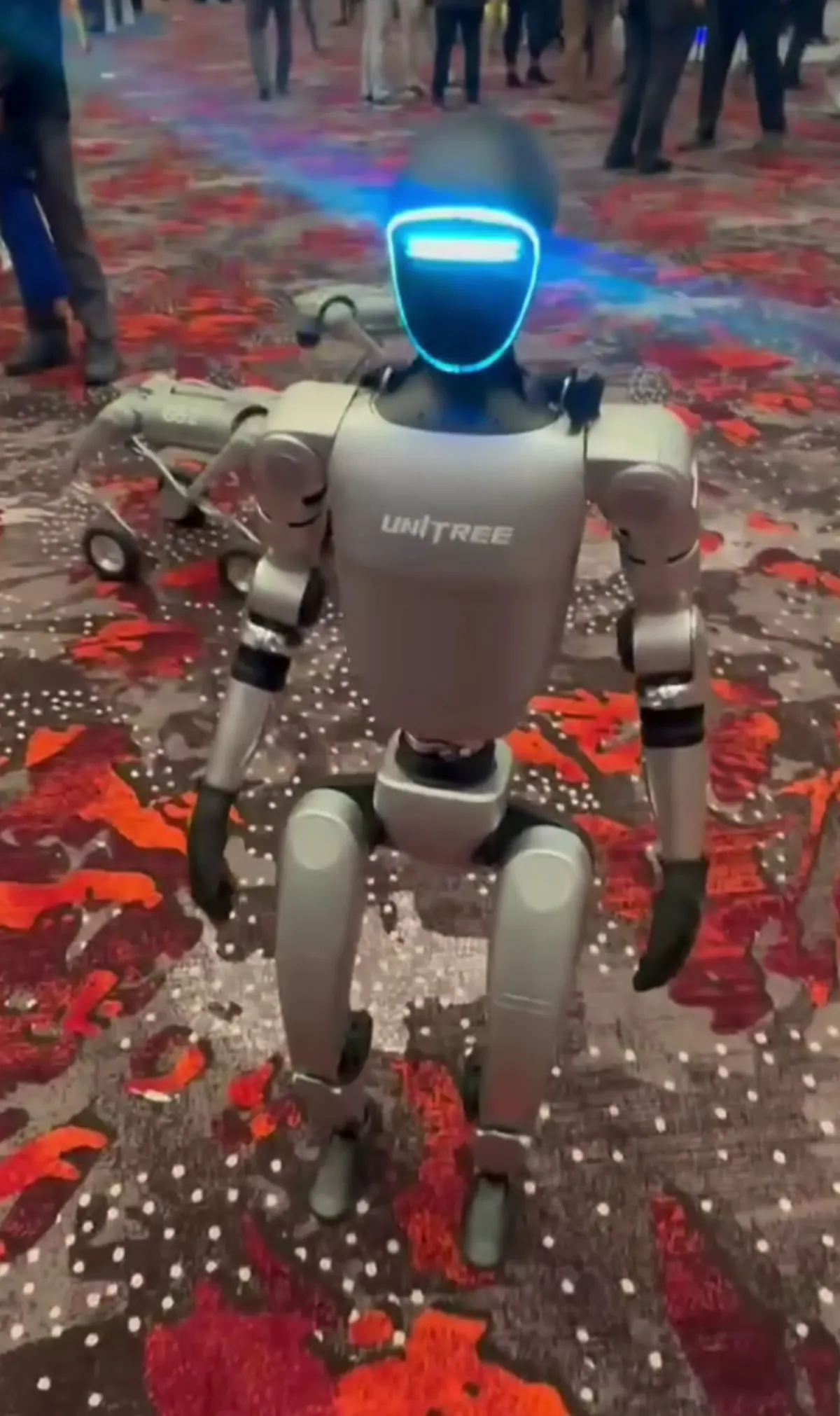
Wang Xingxing built his first walking robot in a graduate school lab at Shanghai University, a four-legged machine he called XDog. After graduating he worked at DJI, the drone maker, for two months before quitting. In 2016 he used XDog as the starting point for a company called Unitree Robotics. He was 26. Ten years later, in August 2026, Unitree went public on the Shanghai Stock Exchange. On its first day of trading the stock rose 629 percent, valuing the company at roughly $53 billion. Unitree's cheapest full-size humanoid robot, the R1, sells for $5,900.
Unitree is not an outlier. The five largest humanoid robot companies in the world by units shipped are all Chinese. Goldman Sachs estimates the humanoid robot market will reach $138 billion by 2035 and support 6.5 million units a year, roughly the size of today's global electric vehicle market. Robotics is going to be a major industry. The question is how much of it any country other than China will take.
More robots than the rest of the world combined
China's lead in traditional factory robots is no longer a competition. In 2025, Chinese factories bought 59 percent of every industrial robot installed on earth, a total of 354,000 machines. The country has roughly 2 million industrial robots in operation, about 4.5 times more than second-place Japan. Five years ago those robots were mostly built by Japanese and German companies. Chinese manufacturers now supply 57 percent of the robots installed in their own factories, up from 30 percent in 2020.
Humanoid robots are following the same curve. AgiBot, a Shanghai startup, shipped over 5,000 humanoid robots in 2025 and rolled its 10,000th unit off the line by March 2026. UBTECH has its Walker S2 humanoid working on assembly lines at BYD, Geely, Foxconn, and Airbus. Galbot runs over 100 fully autonomous convenience stores across 20 Chinese cities, staffed entirely by robots, open 24 hours.
A Unitree G1 humanoid starts at $13,500. A Boston Dynamics Atlas, the most physically capable American humanoid, leases for upward of $140,000. Chinese companies control 63 percent of the key firms in the global humanoid robot supply chain, including motors, actuators, and the rare earth magnets that drive them. A prototype that takes twelve weeks in the United States or Germany can be turned around in Shenzhen in under two weeks.
A country running out of workers
China's population has declined for three consecutive years. The working-age population peaked at roughly 1 billion and will fall to about 300 million by the end of the century. The government has decided that robots will fill the gap.
In 2023, the Ministry of Industry and Information Technology designated humanoid robots a "disruptive product" on par with computers, smartphones, and electric vehicles. China's current Five-Year Plan, covering 2026 to 2030, elevated robotics to a top-tier strategic priority alongside quantum computing and 6G. In June 2026 a directive from seven ministries ordered 10,000 humanoid robots into deployment across factories, hospitals, and state-owned enterprises by December, with a broader target of 100,000 by 2027. Since late 2024, Chinese cities have assembled at least $26 billion in dedicated robotics investment funds.
The deeper advantage is structural. At least 15 Chinese automakers entered humanoid robotics in 2025. They are not building from nothing. Electric vehicle factories already produce the motors, batteries, sensors, and control systems that humanoid robots need. BYD, which sold more electric cars than any company on earth last year, now calls humanoid robots its "next core business" and targets 20,000 factory deployments by the end of 2026. The pipeline from electric vehicles to robots is the same supply chain, the same factories, and in many cases the same engineers.
What the United States still has
If China's advantage is hardware, cost, and scale, America's is the software that tells a robot what to do.
Google DeepMind released Gemini Robotics 2 in July 2026, a set of models that let a humanoid robot walk, crouch, and manipulate objects while reasoning about its environment. Physical Intelligence, a San Francisco startup, built a foundation model called π0 that can fold laundry, clean tables, and approach tasks it was never explicitly trained for. Nvidia's Isaac platform lets engineers train robots in simulated environments before building physical prototypes.
American hardware companies produce fewer units but aim for higher-value work. Tesla has over 1,000 Optimus robots working inside its Fremont factory and is converting a production line to build tens of thousands more at a target price under $20,000. Figure AI ran an 11-month pilot at BMW's South Carolina plant in which its humanoid loaded 90,000 parts and helped build 30,000 vehicles. Boston Dynamics has committed its entire 2026 Atlas production to Hyundai, with plans for tens of thousands of units by 2030.
But the United States has no national robotics strategy. There is no CHIPS Act for robots. Congress has moved to ban Chinese robots with cameras and network connectivity from import and to bar federal agencies from buying them. China is spending billions to build a robotics industry. So far, the United States is spending mainly to keep China's out.
What the race comes down to
The argument for the West is that intelligence is harder than manufacturing. A robot that costs $5,900 but cannot adapt to unfamiliar tasks is useful in a controlled environment. A robot that learns by watching a human worker and reasons about objects it has never seen is useful almost anywhere. If the gap between American and Chinese AI stays wide, Western robots could be worth many times their cheaper rivals in the work that pays the most.
The problem with that argument is that China has closed technology gaps before. In January 2025, the Chinese lab DeepSeek released AI models that matched leading American systems at a fraction of the training cost. The chips that robots run on are not the training processors targeted by American export controls but simpler inference chips, and China's domestic alternatives are reaching what engineers describe as "good enough."
Germany's experience is worth watching. In 2016 the Chinese appliance maker Midea bought KUKA, one of the world's leading industrial robot companies, for €4.5 billion. KUKA had been based in Augsburg for decades. Midea delisted it in 2022. KUKA's Chinese factory now sources 65 percent of its components domestically, up from about 20 percent before the acquisition. When Airbus needed humanoid robots for its production lines in January 2026, it signed with UBTECH, a Chinese company.
China did to solar panels what it is now doing to electric vehicles: built the cheapest products, scaled faster than competitors could react, and took the majority of the global market. Robotics is more complex and more dependent on software. But the pattern is familiar, and no country has found a reliable way to break it once it starts. The West's best case is that this time the product needs a brain, not just a body. Whether that is enough depends on how long America's lead in AI actually lasts.
Test what you learned
5 questions on this article. About two minutes, no signup.