Why does China control the world's rare earth metals?
China refines about 90 percent of the world's rare earth metals, the magnets inside every phone, EV, and fighter jet. In 2025 it made them a weapon.
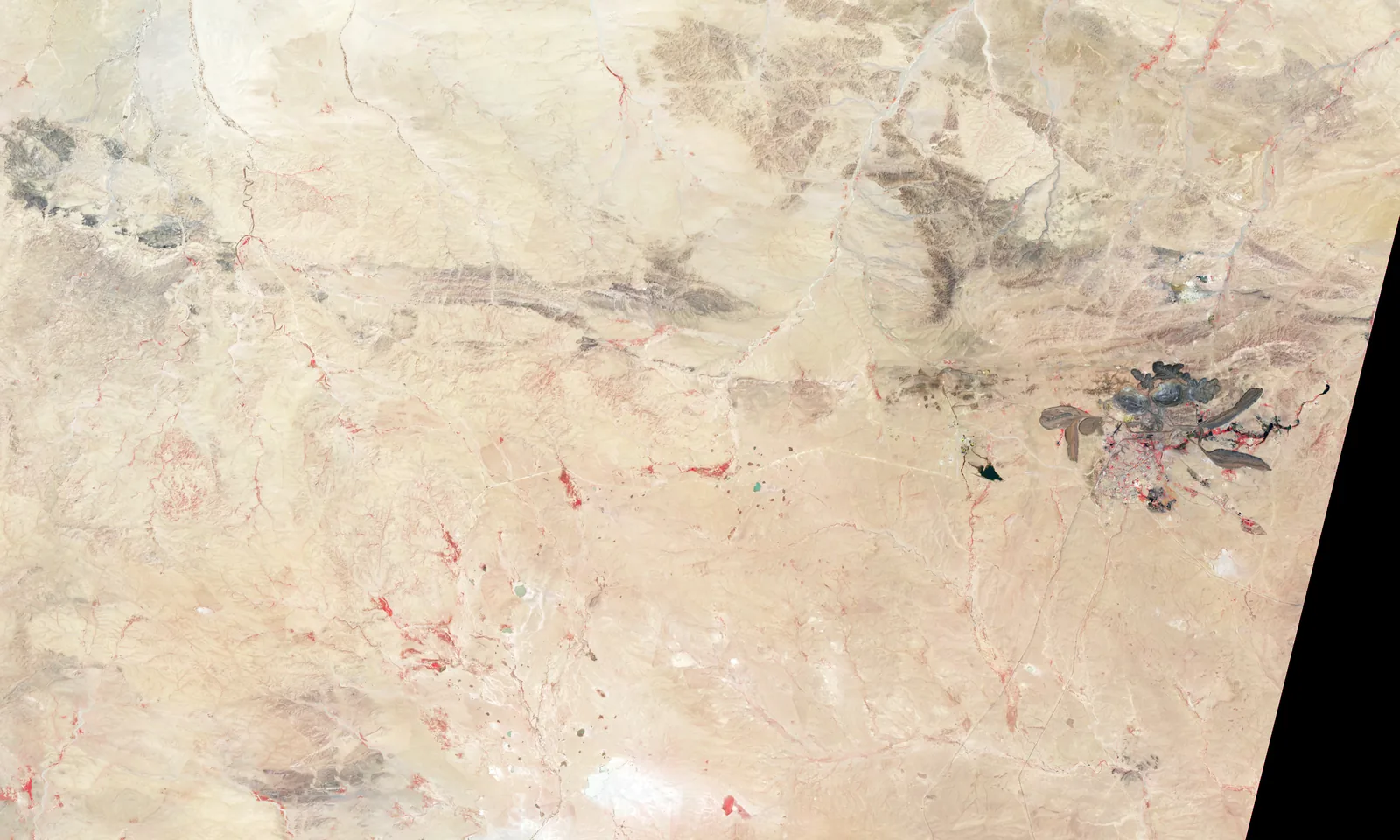
Take the earbud out of your ear. Somewhere inside it is a magnet smaller than a grain of rice, and that magnet almost certainly began as ore dug in Inner Mongolia and refined in a Chinese chemical plant. The same is true of the motor in an electric car, the guidance fin of a cruise missile, and the turbofan of an F-35. All of them run on a handful of metals called the rare earths, and one country refines roughly 90 percent of the world's supply. That country is China, and the surprising part is that it does not control the mines. It controls something harder to replace.
Why "rare" is the wrong word
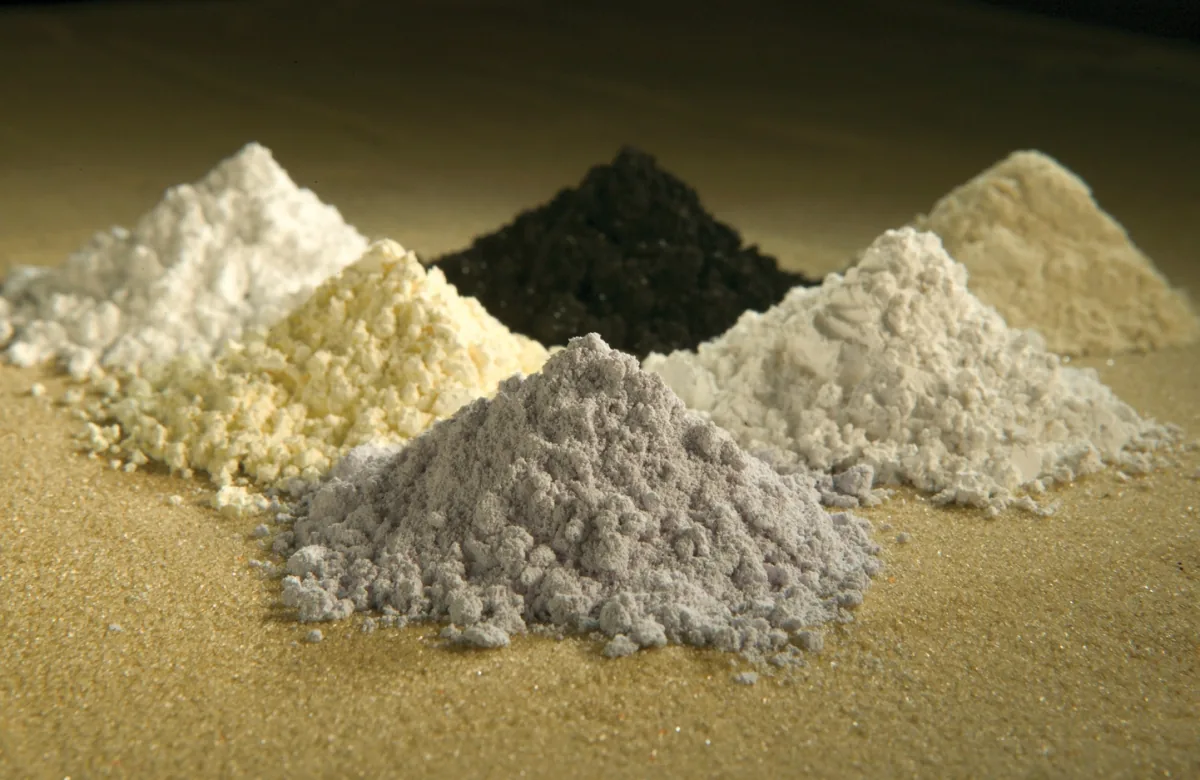
Rare earths are a group of 17 elements with names most people never learn: neodymium, dysprosium, terbium, samarium, and their cousins. You will never see them on a shelf, but you are probably holding some right now. Their killer application is the permanent magnet. A pinch of neodymium and dysprosium makes a magnet small enough to fit in a phone speaker yet strong enough to spin the motor of an electric car or a wind turbine. The same magnets steer precision missiles, focus MRI scanners, and turn the control surfaces of a fighter jet.
Here is the trick buried in the name. Rare earths are not rare. Most of them are more common in the Earth's crust than gold or silver. The problem is that they almost never gather into rich, mineable veins, and pulling them apart from one another and from the surrounding rock takes a brutal chemical process that leaves behind mountains of toxic, mildly radioactive waste. The scarcity was never in the ground. It is in the willingness to do the filthy work of refining, and that is the part China owns.
China cornered the refinery, not the mine
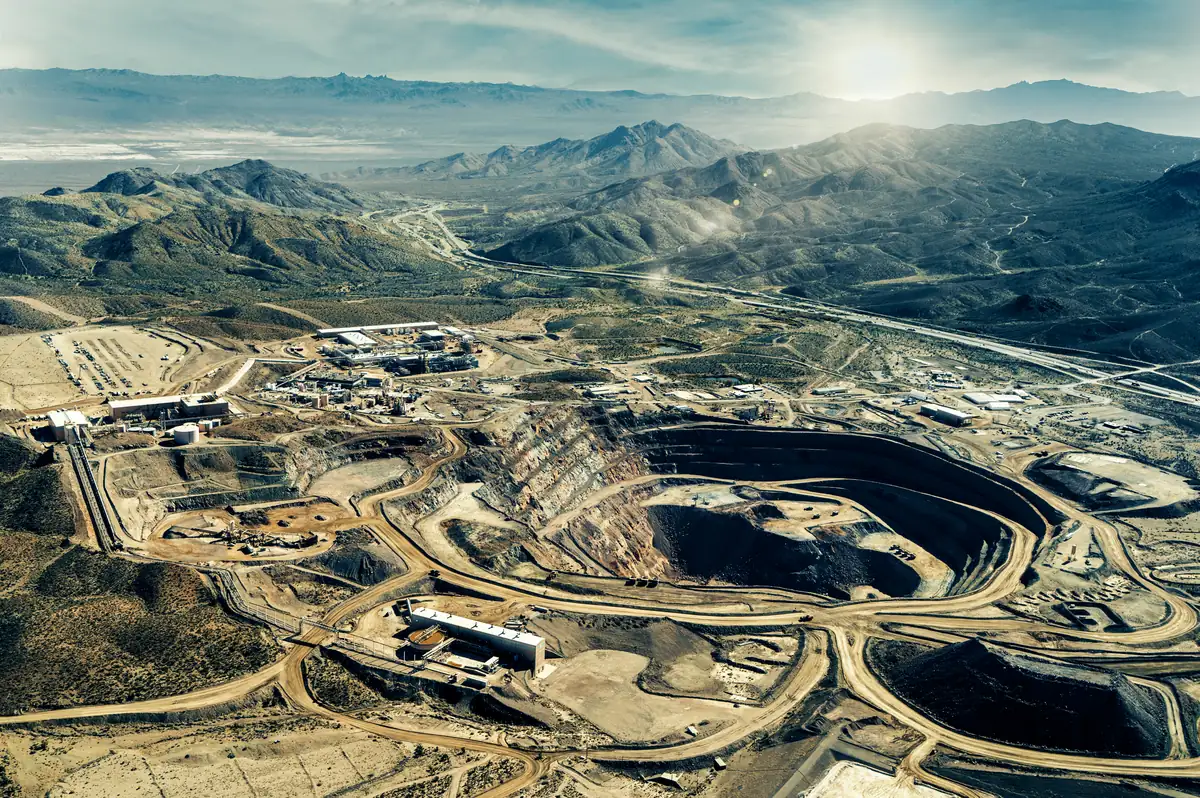
It was not always this way. Through the 1980s the largest rare earth mine on the planet was Mountain Pass in California, and the United States led an industry it had largely invented. Then China changed the game. Backed by cheap labor, loose environmental rules, and deliberate state support, Chinese producers, many drawing on the vast Bayan Obo deposit in Inner Mongolia, flooded the market and drove prices so low that Western rivals could not survive. Mountain Pass shut down in 2002. One by one, refining and magnet-making moved to China, the one country willing to absorb the pollution that everyone else refused.
The result is a chokepoint far tighter than the mining numbers suggest. China digs somewhere around 70 percent of the world's rare earth ore, a large share but not a monopoly. Refining is where the grip becomes a stranglehold: China processes close to 90 percent of all rare earths, and for the heavy rare earths that go into the strongest magnets, its share of refining runs to nearly 100 percent. For years, ore mined in America or Australia still had to be shipped to China to be turned into anything useful. As Deng Xiaoping reportedly boasted in 1992, "The Middle East has oil; China has rare earths." Controlling the mine was never the point. Controlling the refinery was.
The weapon, first drawn in 2010
For a long time this was a quiet commercial fact, not a geopolitical one. That changed in September 2010, when a Chinese fishing trawler collided with two Japanese coast guard vessels near the disputed Senkaku Islands. Japan arrested the captain. Beijing demanded his release, and when Tokyo refused, China reached for a weapon nobody expected: it quietly halted rare earth exports to Japan.
The timing was devastating because Japan's high-tech economy, its carmakers and its electronics giants, was almost 90 percent dependent on Chinese rare earths. Prices of some metals spiked severalfold in weeks. Within about two months, Japan released the captain. China officially denied that any ban had ever existed, which only sharpened the lesson: the disruption was deniable, precise, and required no soldiers at all. The world's manufacturers suddenly understood that the machines of the modern economy ran on a supply chain a single country could switch off.
2025: the grip becomes a doctrine
For over a decade the 2010 episode looked like a one-off. Then the US-China technology war turned it into strategy. When Washington began choking off China's access to advanced semiconductors, Beijing reached for the leverage it had been holding all along. In December 2024 it banned exports to the United States of gallium, germanium, and antimony, three lesser minerals it also dominates. Then in April 2025 it went to the heart of the matter, placing seven of the heavy rare earths and the magnets made from them under export-license control. Licenses could be granted, slow-walked, or denied, entirely at Beijing's discretion.
The most striking move came in October 2025, and it was a near-perfect copy of America's own playbook. Washington's most powerful export weapon is the Foreign Direct Product Rule, which claims US jurisdiction over any chip made anywhere on Earth if it was built using a sliver of American technology. On October 9, 2025, China announced a mirror image: any product made in any country would need a Chinese export license if it contained Chinese rare earths worth as little as 0.1 percent of its value. Because nearly every advanced magnet traces back to Chinese refining, the rule reached into factories on every continent. Trump threatened a 100 percent tariff on Chinese goods in response. The two superpowers were now pointing the same weapon at each other: the United States controls the chokepoints of the chips that are the brains of modern machines, and China controls the chokepoints of the materials that are their muscles.
The truce, and the clock ticking toward November
The escalation was severe enough that both sides stepped back. On October 30, 2025, Trump and Xi met in Busan, South Korea, and struck a one-year truce. China agreed to suspend the sweeping October controls and issue general export licenses for rare earths, gallium, germanium, antimony, and graphite. Trump called it a deal that would be "very routinely extended." But suspended is not repealed. The April 2025 licensing regime stayed in place, and the paperwork Beijing built in 2025 is still sitting on the shelf, ready to come back. By the official terms, the suspension expires on November 10, 2026.
And even inside the truce, China kept squeezing where it mattered most. In June 2026 it added a list of American firms to its export control list, targeting the exact companies trying to break its monopoly, including MP Materials, the operator of Mountain Pass and the only rare earth mine in the United States. The message was hard to miss: Beijing will keep the metals flowing to keep the peace, but it will still reach for the throat of any rival building an alternative.
Why the West can't just dig its way out
The uncomfortable truth is that the West cannot fix this quickly, and everyone involved knows it. A new mine can be opened in a few years, but the hard step is refining, and building that capacity outside China means constructing filthy chemical plants that local communities fight, at costs Chinese producers can undercut whenever they choose to drop prices. That is not a hypothetical. It is exactly the tactic that killed Mountain Pass in 2002.
Which is why the American answer, when it finally came, was not a mine but a floor under the price. In July 2025 the Pentagon took a roughly 15 percent stake in MP Materials and guaranteed to pay at least $110 per kilogram for its neodymium output, well above the level at which Chinese producers had historically crashed the market. It was an admission that the free market alone will never rebuild this industry, because China can always sell cheaper. Mountain Pass is running again and the US and its allies are pouring money into new processors, but closing a gap this deep is the work of a decade, not a budget cycle.
So the rare earths have become the mirror image of the chip war. The United States can deny China the brains of advanced technology; China can deny the West the muscles. Neither can fully strangle the other without choking itself, because the supply chains are still tangled together. It is a fragile, mutual grip, and it explains why a set of metals almost nobody can name now sits near the center of great-power politics, with a clock counting down to a November 2026 deadline that could set the whole standoff spinning again.
Test what you learned
6 questions on this article. About two minutes, no signup.
Orbis teaches the history behind the news
Orbis teaches geopolitics in five-minute lessons, from China's rare earth monopoly to the chip war and the Belt and Road.