
Who is Xi Jinping? The personal story behind China's most powerful ruler since Mao
From a father purged in the Cultural Revolution to seven years in a cave village, the life behind the man who now rules China without a rival.
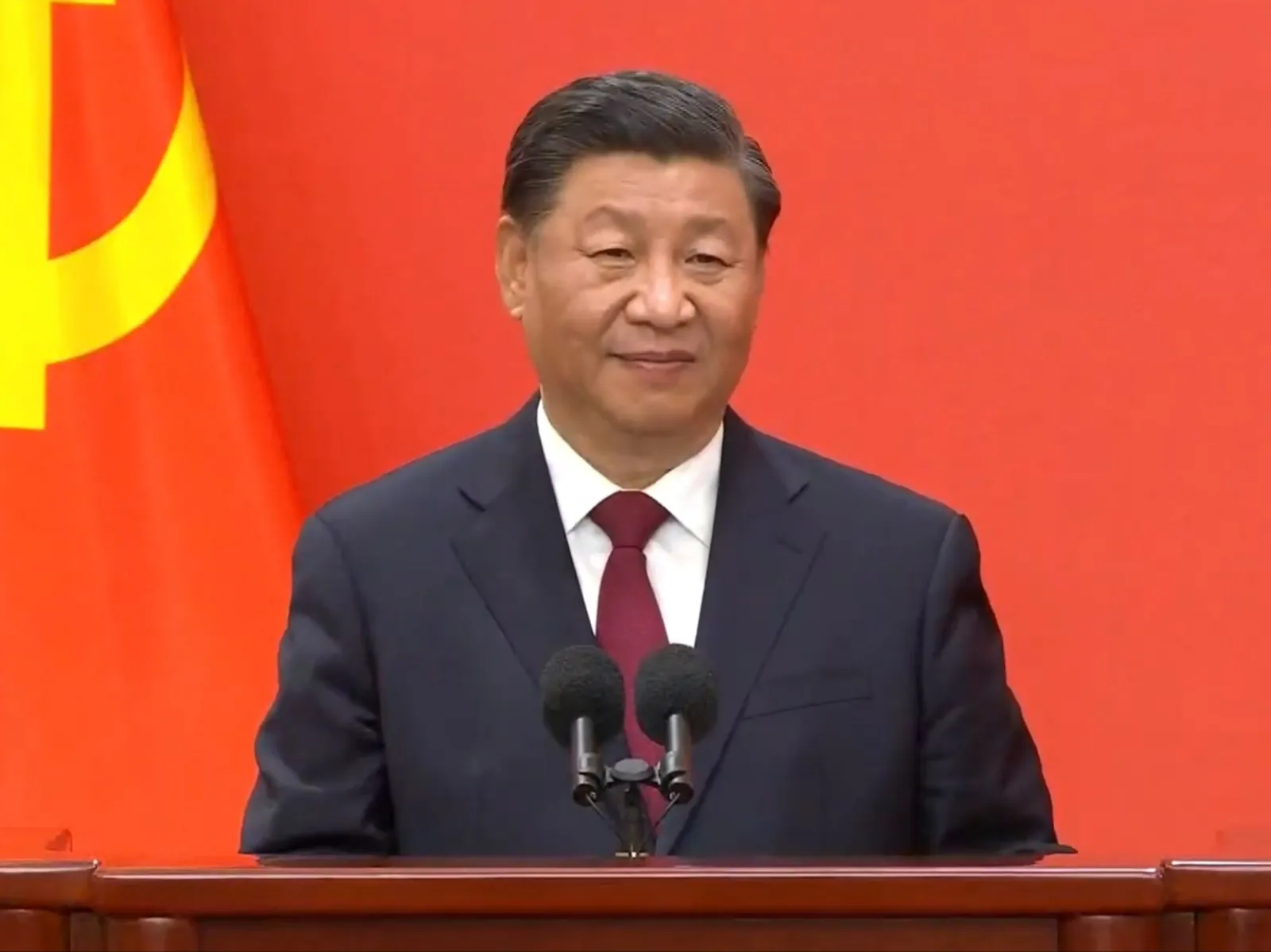
In September 1967, a man named Xi Zhongxun stood in front of a jeering crowd in Beijing with a placard hung around his neck. He had been a revolutionary hero, one of the men who fought alongside Mao Zedong to found Communist China, and a deputy prime minister. Now he was denounced as an enemy of the state. His teenage son had already been through a version of the same ordeal, dragged in front of his own crowd the year before, with nowhere safe to go afterward. That son, Xi Jinping, has ruled China since 2012, and in 2026 he is more powerful than any Chinese leader since Mao. Almost everything about how he governs today traces back to what happened to his family in those years.
The fall of a princeling
Xi Jinping was born in Beijing on June 15, 1953, into the closest thing Communist China had to nobility. His father had fought in the civil war that brought the Party to power, and the family lived in a guarded compound reserved for the revolutionary elite. Xi went to an elite school for the children of top officials and grew up expecting a future near the top of the Party.
That future collapsed in 1962. Xi Zhongxun had approved a novel about a dead revolutionary hero, and Mao decided the book was secretly a defense of an old rival he had purged years earlier. That was enough: Xi Zhongxun was accused of anti-Party conspiracy and stripped of his post. Things got far worse during the Cultural Revolution, the decade of violence Mao unleashed in 1966 to destroy the rivals inside his own Party. Xi Zhongxun was jailed, beaten, and paraded through the streets, and was not rehabilitated for sixteen years.
His son suffered too. At thirteen, Xi Jinping was held for weeks at a Beijing party school and put through his own denunciation session, forced to wear a heavy metal cap while a crowd shouted for his downfall. His biographers say his mother, Qi Xin, was among them. When he escaped and went looking for her, hungry, she turned him away and reported him, and he was sent to a juvenile detention center. One of his half sisters died amid the family's persecution. He applied to join the Communist Youth League and then the Party itself, and was rejected again and again, at least eight times, because of his father's disgrace.
Seven years in a cave
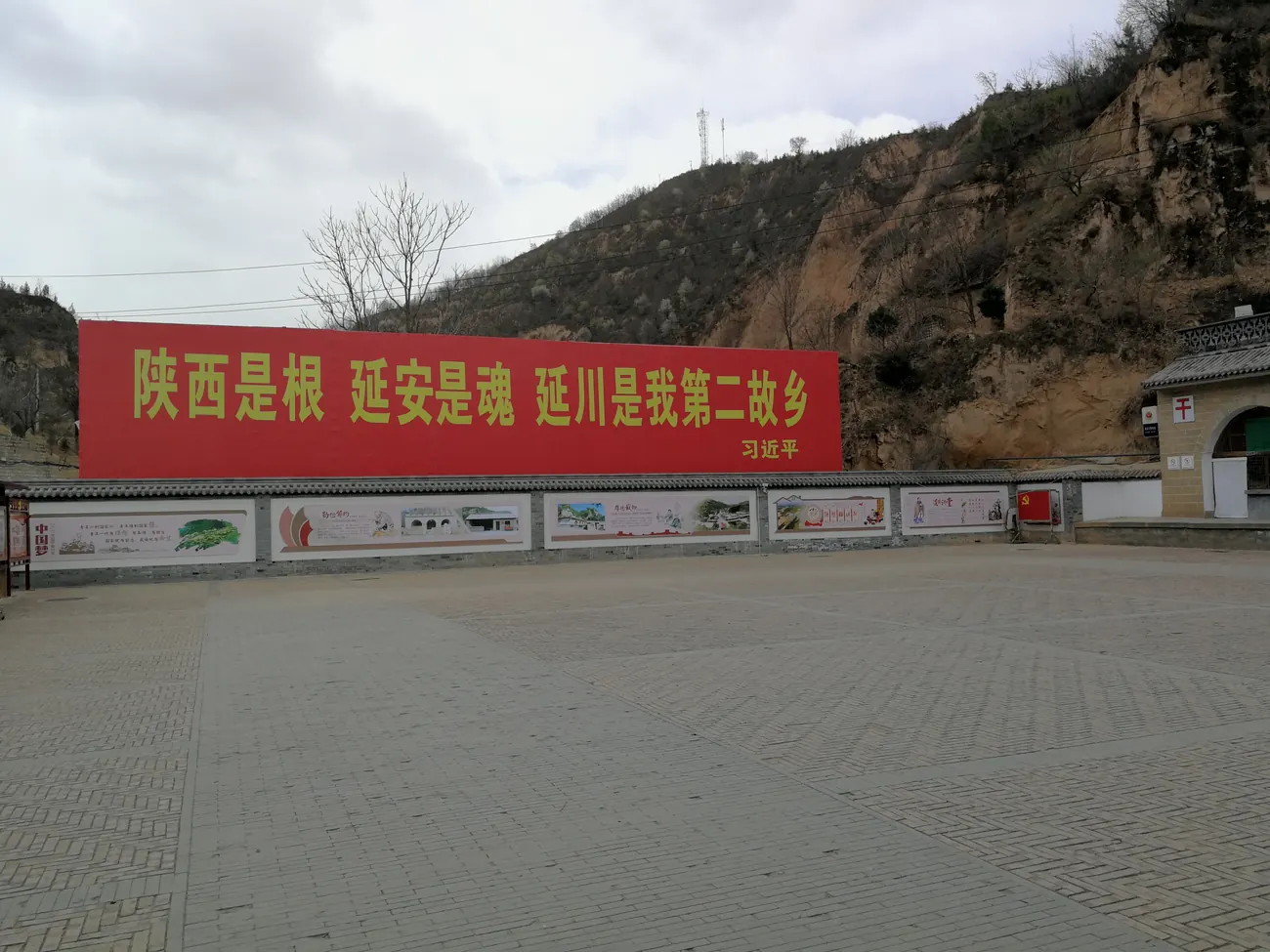
In 1969, at fifteen, Xi was sent to Liangjiahe, a poor village in the hills of Shaanxi province, as part of Mao's campaign to ship educated city youth into the countryside. He lived in a cave dwelling, slept on a brick platform bed, and spent his days hauling manure and building roads on meager rations. He stayed seven years, far longer than most sent-down youths, and later described the experience as the making of him, not the breaking of him.
He kept applying to join the Party, and in 1974 an application finally succeeded. He was made the village's Party branch secretary and used the post to lead a study trip to Sichuan on biogas, then built Shaanxi's first methane digester pit and lit the first biogas lamp on the plateau, a small, practical achievement that became one of the defining stories the Party later told about him. In 1975 he left Liangjiahe to study chemical engineering at Beijing's Tsinghua University, admitted under a program for workers, peasants, and soldiers rather than through the entrance exams the Cultural Revolution had suspended.
Two marriages and a wife more famous than him
Xi's personal life did not go smoothly at first. In 1979 he married Ke Lingling, the daughter of a Chinese diplomat serving as ambassador to Britain. The marriage lasted three years. Ke wanted to live in London, where her father was posted, and Xi refused to leave China; they divorced in 1982 with no children.
His second marriage was a much better match, and by far the more famous one. In 1987 Xi married Peng Liyuan, a soprano who was already a national celebrity for her performances on state television's annual New Year's Gala, the country's most-watched broadcast of the year. For most of their marriage, Peng was more recognizable to ordinary Chinese people than her husband. Their only child, a daughter named Xi Mingze, was born in 1992. She studied a year at Zhejiang University, then enrolled at Harvard under a pseudonym in 2010 and graduated with a degree in psychology in 2014, and has kept almost entirely out of public view since.
What Xi Jinping does when he isn't ruling China
Xi is a genuine sports fan. He played soccer on a dirt pitch as a schoolboy and still names it his favorite sport, and he swims roughly a kilometer most days. He has also spoken about following ice hockey, speed skating, and tennis, and state media has built an entire minor genre of coverage around his enthusiasm for exercise.
He is also, by most accounts, a genuine film buff with a soft spot for American war movies. He has named Saving Private Ryan, The Deer Hunter, The Godfather, and The Departed among his favorites, and he reaches for American films in his own speeches: he once called the struggle to balance work and family "Mission Impossible," and when asked if his anti-corruption campaign was really a purge of rivals, he cited Netflix's House of Cards to insist he was nothing like its scheming lead character.
For a few years after he took power, state media pushed a folksy nickname, "Xi Dada," roughly "Uncle Xi," complete with cartoons and a propaganda video of foreign students praising him. The nickname then vanished from official media, too familiar for a leader the Party was building into a far more remote, authoritative figure.
From provincial governor to paramount leader
Xi's rise back up the system was patient and unremarkable, which was the point. He worked through posts in Hebei, then Fujian, where he spent seventeen years and rose to governor, then Zhejiang, where he became party secretary in 2002. In 2007 a corruption scandal forced out Shanghai's party boss, and Xi was sent in to clean up the city. He held the post only seven months before Beijing promoted him onto the Politburo Standing Committee, China's top ruling body, marking him as the country's next leader. In November 2012 he became General Secretary, and in March 2013 he added the presidency.
Has Xi made China more authoritarian?
Xi has a genuine delivery record to point to first. In February 2021 he declared that China had eliminated extreme poverty, and by the Party's own count, nearly 99 million rural Chinese people had been lifted above the poverty line during his first eight years in power, through new roads, subsidized housing, and relocated villages. Economists dispute exactly where that line should sit, but even skeptics of the "eliminated" claim agree the underlying progress in rural incomes was real and large.
The same period turned China into an industrial power to match. It built the world's largest high-speed rail network, over 45,000 kilometers, nearly all laid since Xi took office, and its factories now make roughly 80 percent of the world's solar panels. In 2025 the carmaker BYD passed Tesla to become the world's largest EV seller. That record is a major reason ordinary Chinese people are far more likely to experience Xi's rule as one that delivers than one that represses.
The record on power tells a different story. Xi opened his rule with an anti-corruption campaign that punished real graft, and along the way cleared out the men most capable of challenging him. Bo Xilai, a charismatic party boss with his own national following, was jailed for life in 2013. Zhou Yongkang, who had run China's internal security apparatus, was jailed for life in 2015, the highest-ranking official ever prosecuted in Communist China's history. The Party built a disciplinary machine that Xi has kept running ever since.
Xi also broke a rule Deng Xiaoping had built specifically to prevent another Mao: that top leaders serve two terms and then hand power to a successor. In 2018, China's parliament voted 2,958 to 2 to remove the two-term limit on the presidency, clearing Xi to rule for as long as he wants. His own political philosophy, "Xi Jinping Thought," was written into the Party's constitution the year before, the first time a sitting leader's name had been added to it since Mao. Under Xi, Hong Kong's promised autonomy has been dismantled, internet censorship has tightened, and Xinjiang's Uyghur population has been subjected to mandatory biometric data collection and dense surveillance-camera networks, a program confirmed by China's own leaked police files.
Yes-men and the illusion of strength
The historian Sarah Paine, who studies why authoritarian regimes collapse, has spent years describing a pattern that fits Xi closely. Dictators, she argues, prize control above almost everything else, and get it by removing anyone capable of telling them they are wrong. The system that results looks powerful because one man's word is final. It is also brittle, because bad decisions never meet resistance before they become disasters.
Xi's own record shows the pattern taking hold. He has surrounded himself with loyalists rather than rivals, and unlike the leaders before him, has not groomed or named anyone as his eventual successor. The purges have not stopped at Bo Xilai and Zhou Yongkang: China's foreign minister and defense minister both vanished from public life within months of taking office in 2023, and by mid-2026 two of the twenty-four men Xi had placed on the Politburo just three years earlier had been thrown out of the Party or handed to prosecutors. A system built this way can commit to a decades-long industrial bet, like the rail and solar buildouts, without worrying about the next election. What it cannot guarantee is that anyone tells the leader when a decision is wrong before it becomes one.
The question with no answer
Xi is 73 years old in 2026, and China's constitution no longer says when he must leave or who takes over. The boy who watched his father dragged before a jeering crowd built his political identity around the promise that China would never fall into that kind of chaos again. He answered it by making sure no one around him has the power to disagree with him. Whether that turns out to be the cure for instability or a slower route back to it is the biggest open question hanging over China today.
Test what you learned
6 questions on this article. About two minutes, no signup.