
How the Chinese Communist Party is organized: from 101 million members to one man
China is run by the Communist Party, not the state. How 101 million members narrow to seven men in one room, and why nobody knows who comes after Xi Jinping.
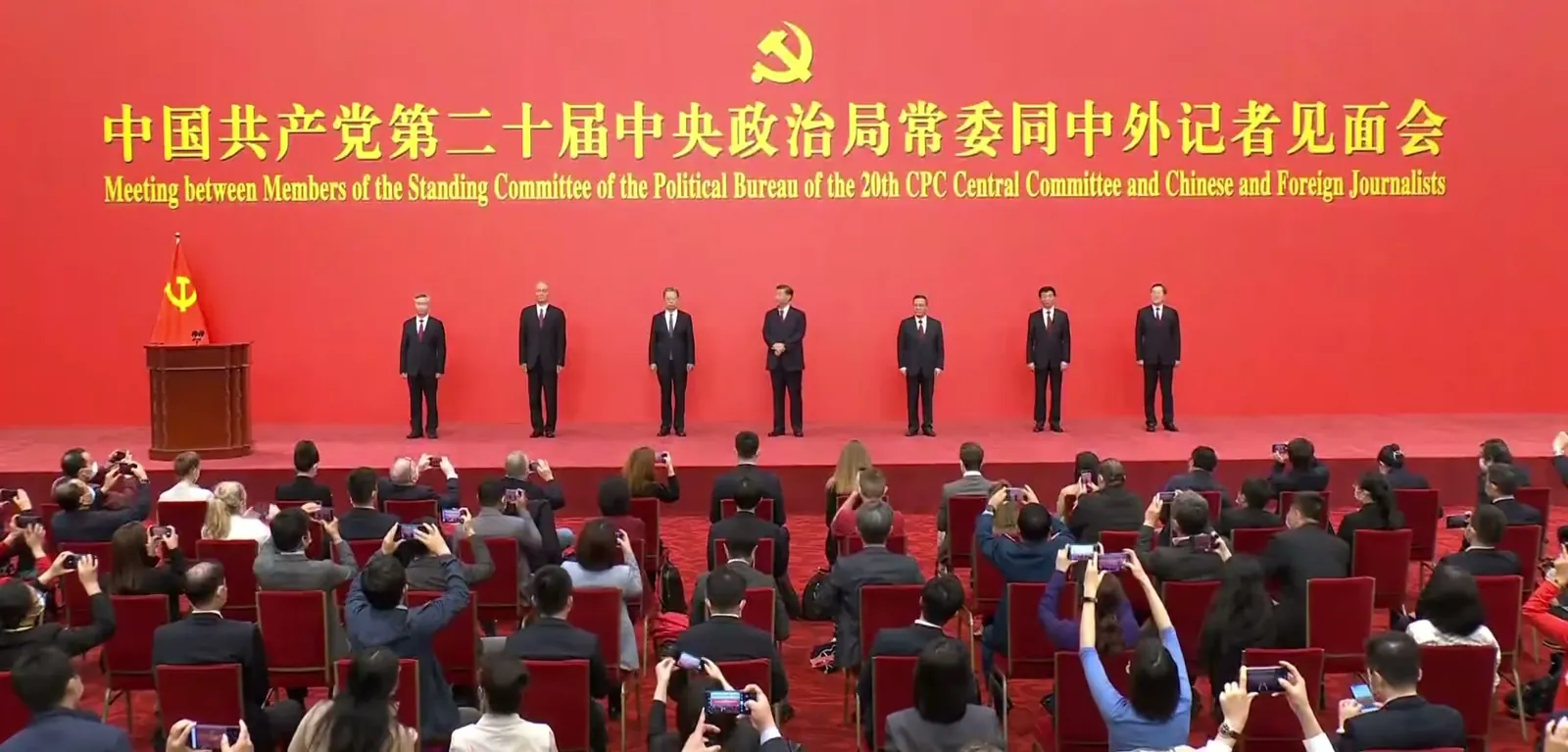
On the morning of October 23, 2022, seven men in dark suits walked single file onto a red stage in Beijing's Great Hall of the People. Hundreds of journalists photographed them. The order of the line was the news: Xi Jinping walked first, and the six men behind him walked in order of rank. Until that moment, nobody outside a small circle knew who would be in the line. Those seven men, the Standing Committee of the Politburo of the Chinese Communist Party, are the top of the system that actually runs China. Understanding how power reaches that stage explains most of what China does in the world.
Why China's president is not its most powerful job
From the outside, China's government looks familiar. There is a president, a premier, ministries, courts, and a parliament called the National People's Congress. But all of it sits below a second structure: the Chinese Communist Party, which had more than 101 million members at the end of 2025, more people than live in Germany. The state carries out decisions. The Party makes them.
This is why "president of China" is a misleading title. Xi Jinping holds three jobs. As president he signs treaties and greets foreign leaders. As General Secretary of the Party he runs the political system. As Chairman of the Central Military Commission he commands the army. The presidency is the least important of the three, and it is the only one Western news reports use.
The Party is not a party in the Western sense, one team competing against others for office. No other party is allowed to compete, so it is simply the permanent ruling institution of the country. Joining is not casual either. An applicant needs two existing members as sponsors, then studies, waits, and serves a full year on probation. At the end, each new member stands in front of the Party flag and swears to "be ready at all times to sacrifice everything for the Party and the people, and never betray the Party."
How 101 million members narrow to seven
The Party is built as a pyramid, and it narrows fast.
Every five years, the members are represented at a National Party Congress in Beijing. In 2022, that meant 2,296 delegates meeting for a week in the Great Hall of the People. On paper, the Congress is the highest authority in the Party and elects the leadership from the bottom up. In practice, authority flows the other way. The Party calls this rule democratic centralism: debate is allowed before a decision, but once the top has decided, everyone below carries it out. The delegates in 2022 approved a leadership that had been settled before they arrived.
The Congress elects the Central Committee, 205 full members plus 171 alternates. These are China's real political elite: the ministers, the generals, the provincial party bosses, and the heads of the largest state companies. The full body meets only about once a year. The Central Committee in turn elects the Politburo, which had 24 members in 2022, and its inner circle, the Politburo Standing Committee of seven. That is the room where the biggest decisions about China are made. All seven are men past sixty, and in the Party's entire history, no woman has ever sat on it.
So the pyramid runs: 101 million members, about two hundred in the Central Committee, twenty-four in the Politburo, seven in the Standing Committee, and one General Secretary at the top. Since 2012, that one man has been Xi Jinping.
A Party committee sits beside every government office
The pyramid explains who is on top. A second piece of design explains how the Party holds everything underneath it: the Party shadows the state at every level.
China is governed in tiers, from Beijing down through provinces, cities, and counties to villages and city neighborhoods. At every tier, next to the government office, there is a Party committee that outranks it. The mayor of a city answers to the city's party secretary. Decisions are made on the Party track and carried out on the state track, an arrangement China wrote into law in March 2024. The network reaches all the way down: at the end of 2025 the Party counted 5.43 million grassroots organizations, meaning a branch in the village, the school, the hospital, the army unit, and the apartment block.
Two levers make this hold. The first is jobs. Through its Organization Department, the Party appoints senior officials everywhere, from ministers and provincial governors on down. In China, a career either runs through the Party or it does not run.
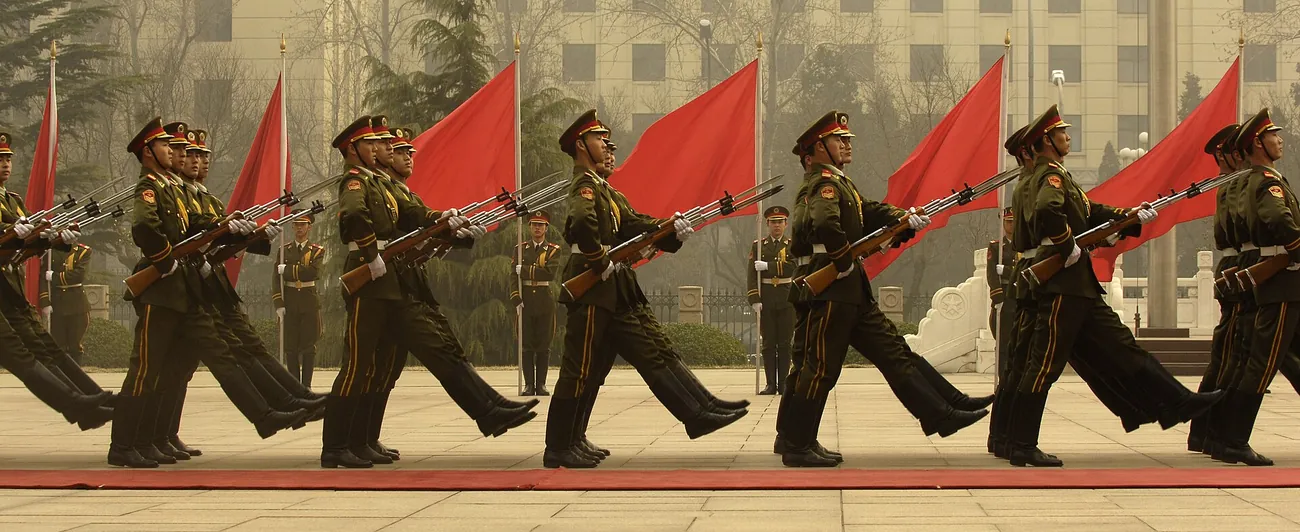
The second lever is the gun. The People's Liberation Army is not a national army that answers to the government. It is the Party's army. Its soldiers swear loyalty to the Party, and its supreme commander is the Chairman of the Central Military Commission, the job Xi took on the same day he became General Secretary. The Party does not just lead China's government. It owns the soldiers.
The Party is inside the companies too
The Party's reach does not stop at the edge of the state. Its rules require a branch wherever three or more members work, and Chinese law requires companies to let one operate. By 2021, about 92 percent of China's 500 largest private companies had a Party committee inside them. Foreign joint ventures have them as well.
What that means in practice was on display in the fall of 2020. Jack Ma, the founder of Alibaba and at the time the richest man in China, gave a speech in Shanghai calling China's financial regulators backward and afraid of risk. His payments company, Ant Group, was two days from the largest stock market listing in history, worth about 34 billion dollars. Regulators canceled it. Ma disappeared from public view for more than a year, and Alibaba was fined 2.8 billion dollars the following spring. The whole sequence took weeks, and none of it went near a courtroom.
The commission that makes ministers disappear
Every organization needs a way to discipline its own people. The Party's is the Central Commission for Discipline Inspection, and it is one of the most powerful bodies in China. It is a Party organ, not a court. It can take any Party member into custody, including a serving minister or a general, hold them for months, and question them without a lawyer. Only afterward does it hand the case to prosecutors. Since almost every senior official in China is a Party member, almost every senior official is within its reach.
Xi Jinping made this commission the central instrument of his rule. Between 2013 and 2024, more than six million Party members were disciplined and about 466,000 people were convicted of corruption. The corruption it attacks is real and enormous. But the campaign is also the most efficient method ever devised for removing a rival, because nobody has to say a rival is being removed.
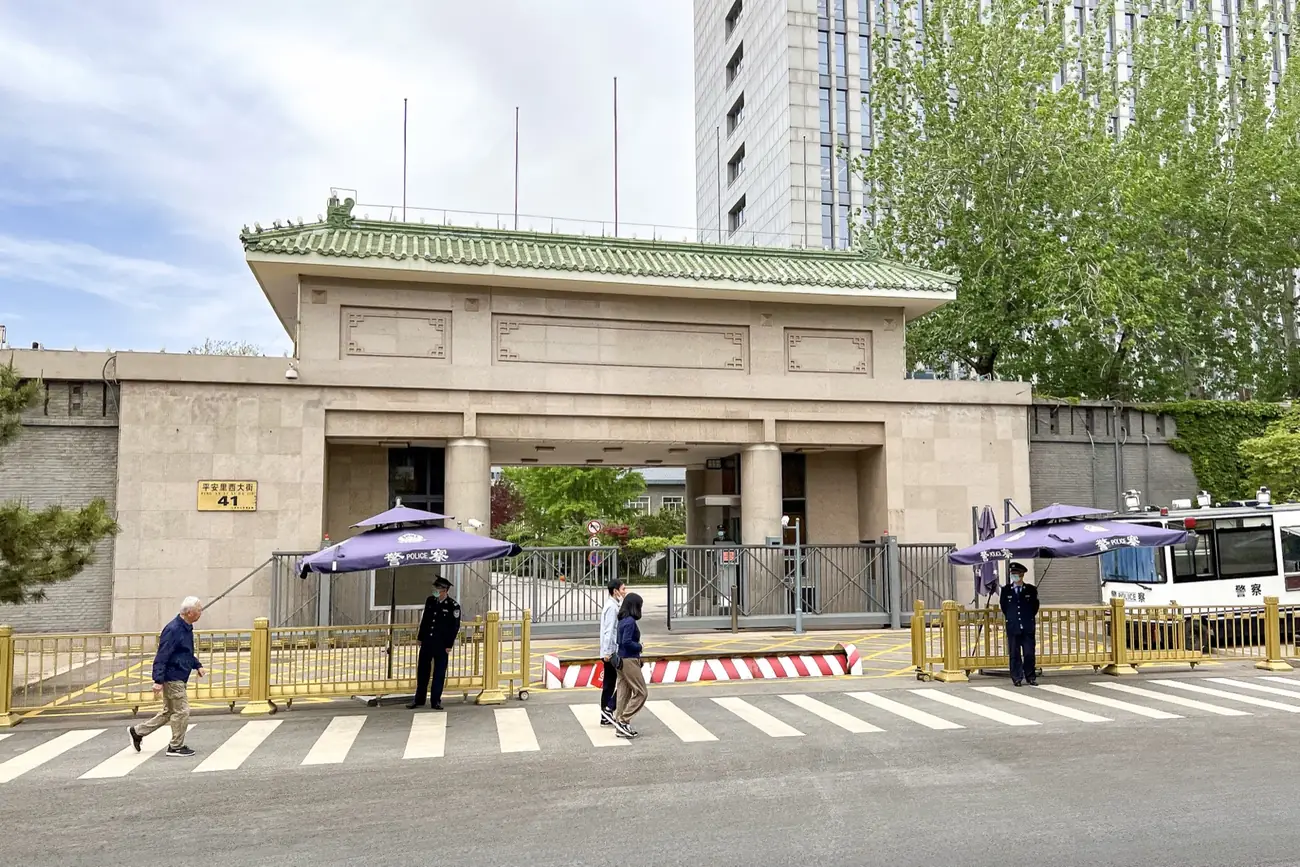
The very top is not exempt. In 2023, China's foreign minister Qin Gang and its defense minister Li Shangfu both vanished from public view within months of taking office and were removed without explanation. In October 2025, He Weidong, a vice-chairman of the Central Military Commission and a sitting Politburo member, was expelled from the Party and the army along with eight other senior officers. In mid-2026, a second sitting Politburo member, Ma Xingrui, was handed to prosecutors. Twenty-four people joined the Politburo in 2022. Two have already been thrown out of the Party.
What Xi Jinping changed
The shape of the pyramid has stayed the same for decades. What has changed is how much power collects at the very top of it.
After Mao Zedong died in 1976, Deng Xiaoping built a set of arrangements meant to stop China from ever producing another Mao. The top leaders would rule as a group, the top job would change hands every ten years, and senior officials would retire at a fixed age. None of this was ever written into the Party's rules. It was a habit, and the habit held for about thirty years.
Xi has taken it apart. Since 2012, he has been declared the "core" of the leadership, filled the Standing Committee with men he chose, and used the discipline commission to clear out the rest. In 2018, the National People's Congress deleted the two-term limit on the presidency by a vote of 2,958 to 2. The detail that matters: the Party jobs never had term limits to delete. The presidency was the only one of Xi's three positions that carried a limit, and it is the one with the least power attached. In 2022, he took a third term as General Secretary.
The clearest measure of the change is a missing person. Under the old pattern, the next leader was identified years in advance by being placed on the Standing Committee while still relatively young: Hu Jintao joined it in 1992, at age 49, and took over in 2002. The six men who stand beside Xi today do not fit that description. They are loyalists he picked, most of them only a few years younger than he is, and none of them has been singled out as the man being prepared to take over. Xi is 73 years old and has named no one.
How to read China from the outside
The practical lesson is simple: to follow power in China, watch the Party, not the state. The title that matters is General Secretary, and the announcements that matter are who enters the Standing Committee and who chairs which Party commission.
The deeper lesson is about strengths and weaknesses. A party with no elections and no term clock can commit to a plan in 2026 and still be executing it in 2046, which is how projects like the Belt and Road Initiative stay funded across decades. Democracies find that very hard to match. But a system rebuilt around one man has no tested way of replacing him. Deng's arrangements existed to solve exactly that problem, and they are gone. What happens in Beijing on the day Xi Jinping is no longer there is one of the biggest open questions in world politics, and the Party's own rulebook has no answer written down.
Test what you learned
6 questions on this article. About two minutes, no signup.