
Will India be the next China?
India has 1.4 billion people, the youngest workforce of any major country, and the fastest-growing large economy. Its income per person is still a fifth of China's.

Narendra Modi's father sold tea from a stall at the railway station in Vadnagar, a small town in Gujarat. Modi helped at the stall as a boy before leaving home as a teenager to work for the RSS, a Hindu nationalist organization. He spent years as a traveling political organizer, sleeping in party offices, before entering electoral politics. When he became prime minister in 2014, he understood poverty the way Park Chung-hee understood it in South Korea or Lee Kuan Yew in Singapore: from personal experience. His pitch to voters was simple. Jobs, roads, factories, less bureaucracy. He had run Gujarat for thirteen years and turned the state into India's most business-friendly, with faster approvals, better infrastructure, and aggressive courting of foreign investment. The "Gujarat model" was what he promised to take national.
In September 2014, Modi launched a campaign called "Make in India." The target was specific: raise manufacturing from about 16 percent of GDP to 25 percent by 2025. That deadline has passed. Manufacturing's share has barely moved. It still sits at roughly 16 percent. India's income per person is about $2,800. China's is about $14,900, more than five times higher. China went from roughly that same starting point to where it is now in less than twenty years. The question everyone asks, whether India will be "the next China," has a short answer: almost certainly not. The more interesting question is what India might become instead.
What China could do
China's government had three advantages that India's does not: it could take land, move people, and enforce a national plan without anyone voting on it.
When Deng Xiaoping designated Shenzhen as a special economic zone in 1980, the Communist Party cleared farming villages and broke ground. No lawsuits over land acquisition, no state governments with competing priorities, no elections to worry about. Within a decade Shenzhen went from a fishing town of about 30,000 to a city of over a million. This pattern repeated across China for forty years. The Party built factory districts, trained workers through state vocational schools, kept the currency cheap, and told foreign companies they could have access to Chinese labor only if they handed over their technology.
All of this happened during a stretch when global trade was expanding rapidly and the United States was willing to buy. By 2025, China's annual goods exports had reached $3.8 trillion. No country had ever industrialized this fast or at this scale. The question is whether anyone can do it again.
Why India cannot copy it
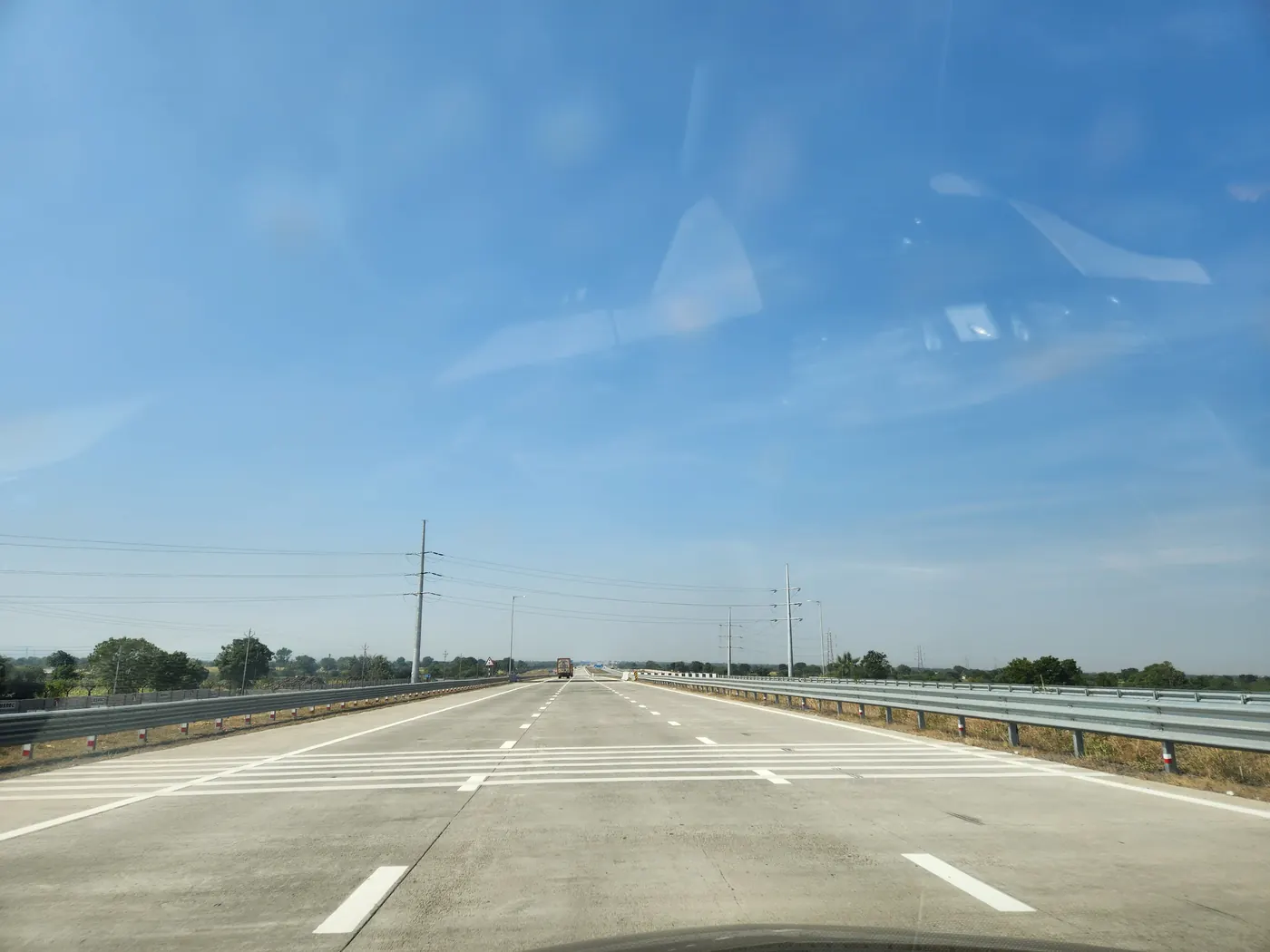
India is a federal democracy. Power is divided between the central government and 28 states, each with its own labor codes, land laws, and election cycle. Modi has spent twelve years trying to push reforms through this system. Some have worked. In November 2025, India enacted its biggest labor overhaul since independence, consolidating 29 federal labor laws into four codes. A national goods and services tax in 2017 unified a patchwork of state taxes for the first time. Highway construction has accelerated sharply.
But the reforms that matter most for manufacturing are the ones Modi could not pass. Land acquisition is the breaking point. In 2015, Modi tried to make it easier for companies to buy farmland for factories. Mass protests forced him to withdraw the bill. In 2021, he tried to reform agricultural markets with three new farm laws. Farmers from Punjab and Haryana blockaded the highways into Delhi with tractors and camped at the capital's borders for over a year. On Republic Day 2021, protesters broke through police barriers and drove tractors onto the grounds of the Red Fort. Modi repealed all three laws that November, months before state elections in Punjab, where the protests were strongest. India has roughly 800 million people in rural areas, and they vote. No elected leader can take farmland by decree the way the Communist Party took it in Shenzhen.
What India is building instead
India's economy is growing faster than any other major economy, but the shape of that growth looks nothing like China's.
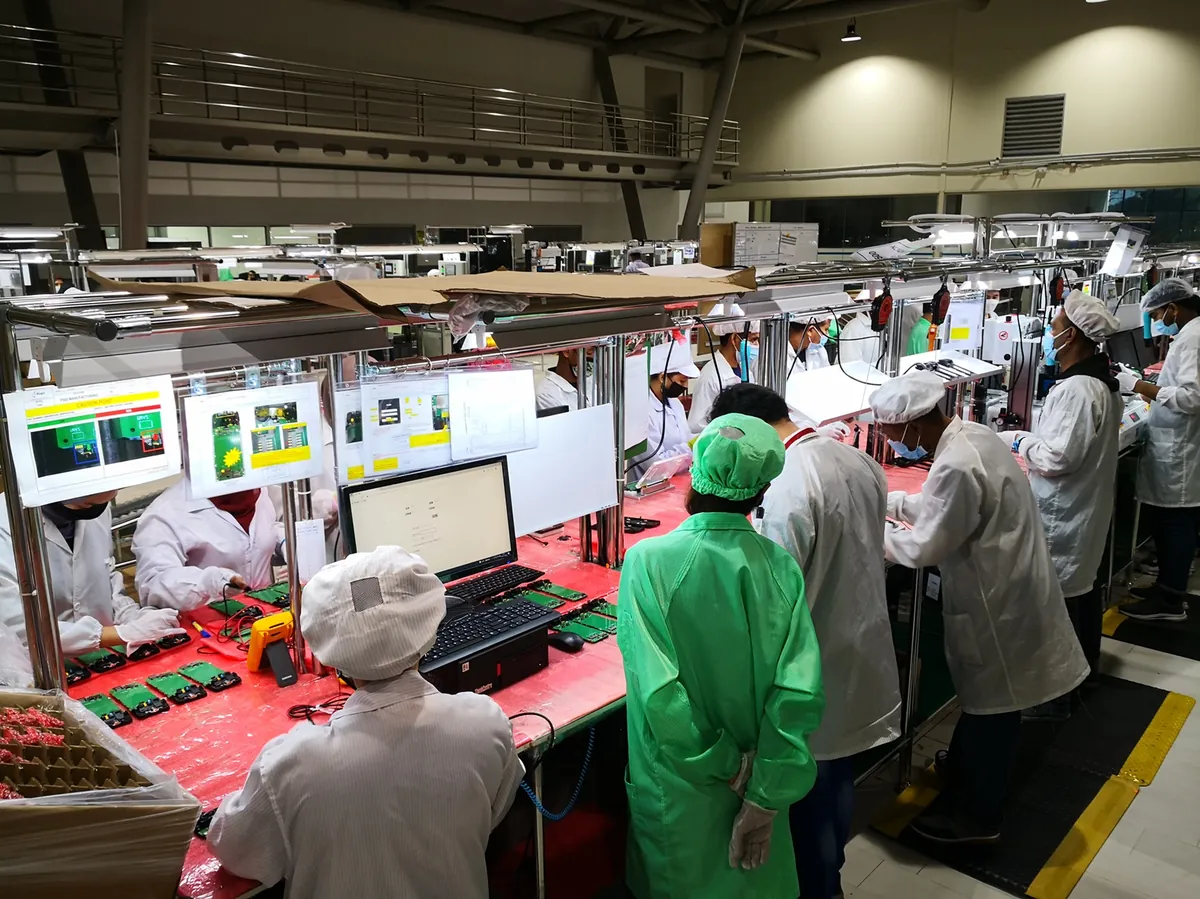
Apple now assembles about a quarter of its iPhones in India, at factories run by Foxconn and Tata Electronics. Samsung operates one of its largest phone plants outside Chennai. These are real wins. But India still imports most of the components that go inside the phones it assembles. Companies call the strategy "China Plus One": they add Indian production as a backup, not a replacement. The name says it.
The bigger story is services. India's IT and outsourcing industry, built over three decades by companies like Infosys, Wipro, and Tata Consultancy Services, earned about $239 billion in the year ending March 2026. India exports more in services than in manufactured goods. This is the opposite of the Chinese model, and it confuses people who assume that industrialization has to look like factories.
The domestic economy is changing too. India's digital payments system, the Unified Payments Interface, processed 24.5 billion transactions in August 2026, in a single month. A decade ago, most Indians used cash for almost everything. Now a vegetable seller in a small town can accept a phone payment as easily as a shop in Mumbai. India has more than 800 million smartphone users, more than the United States and Europe combined. The combination of cheap data, cheap phones, and UPI has created a domestic digital market that did not exist ten years ago.
India also has demographics that China no longer does. The median age is 29; China's is about 40. India's workforce will keep growing for roughly fifteen more years before the population starts aging. But young people drive growth only when they have education and employment. About half of Indian graduates are considered unemployable in the industries that need them. Women's participation in the workforce has improved but remains far below China's, especially in cities. India has the people. Whether it can equip them is a different question.
A different kind of rise
India will not follow China's path. The political system does not allow it, and the world has changed. The United States has imposed tariffs on hundreds of Chinese products and passed laws requiring domestic production of semiconductors and electric vehicles. The European Union has its own trade barriers. Any country trying to export its way to prosperity in 2026 faces obstacles that Deng Xiaoping never dealt with.
China's growth also came with costs that a democracy cannot impose: displaced farmers, polluted cities, workers with no independent unions, and a social safety net that millions of rural migrants never had access to. India cannot hide those costs, because the people who bear them have a vote.
What India is building, if it works, will be something without a clear precedent: a democracy of 1.4 billion people running a services-heavy, digitally connected economy powered more by domestic consumption than by exports. It will be slower than China's sprint and harder to steer.
Whether it reaches that scale depends on problems that are not mainly economic: schools that produce employable graduates, cities where women can safely get to work, and 28 state governments that pull in roughly the same direction. Modi has been in power for twelve years and has not solved most of them. No prime minister after him is likely to find it easier. The answer to "Will India be the next China?" is no. The question India actually faces is whether a democracy this large can deliver mass prosperity without the shortcut of authoritarian control.
Test what you learned
5 questions on this article. About two minutes, no signup.