
How Singapore became richer per person than the United States
In 1965 Malaysia voted to expel Singapore. It had no army, no resources, and not enough water. Sixty years later its income per person tops America's.
On August 9, 1965, the Malaysian parliament voted 126 to 0 to expel Singapore from the federation. The prime minister of Singapore, Lee Kuan Yew, held a televised press conference and broke down crying. "For me it is a moment of anguish," he said. The country he now led had roughly two million people, no army, no natural resources, and not enough fresh water. It imported almost everything, including the water that came through a pipeline from the Malaysian state of Johor. Singapore had not fought for independence. It was the only country in modern history to have independence forced on it.
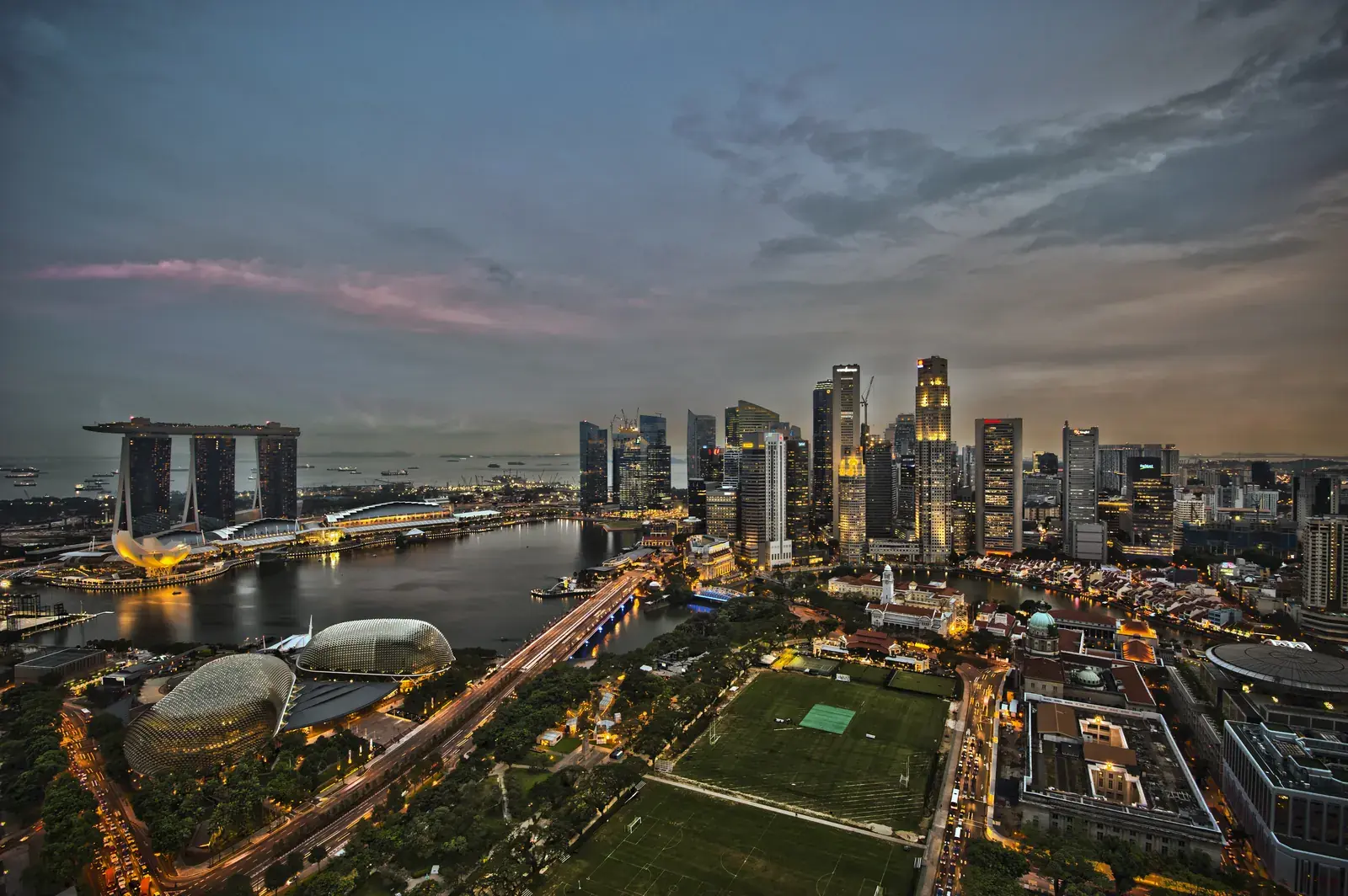
Today Singapore's GDP per person is roughly $100,000, higher than in the United States or Japan. Two sovereign wealth funds manage over $1.3 trillion for a population of six million. The country has had only four prime ministers since 1959. How a tropical port with nothing built one of the richest economies on Earth is largely the story of one man and the system he designed.
The Cambridge lawyer who ran a country for 31 years
Lee Kuan Yew was born in 1923 into a Peranakan Chinese family in Singapore. He was nineteen when Japan invaded in 1942. During the occupation he survived by trading black-market goods, including a tapioca-based glue he mixed himself. After the war he went to Britain and studied law at Fitzwilliam College, Cambridge, where he graduated at the top of his class with a double first. His wife, Kwa Geok Choo, was also studying law at Cambridge. They married secretly as students in 1947.
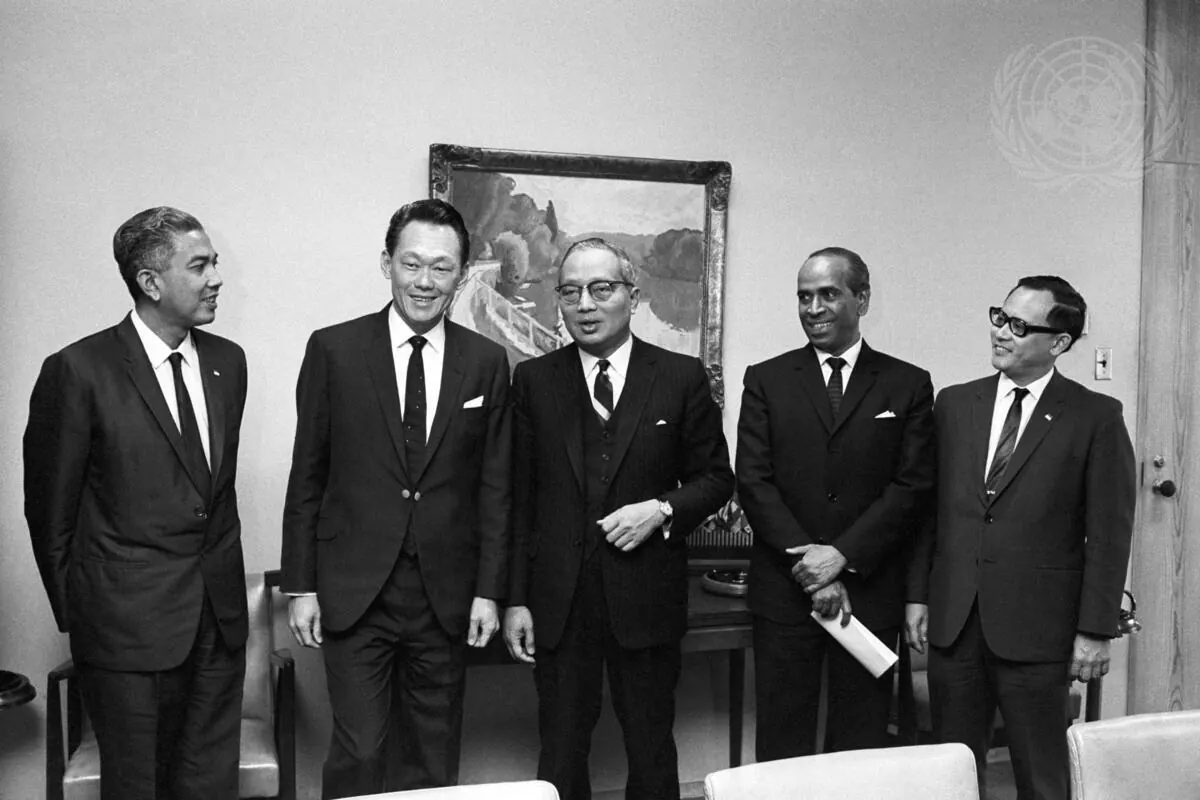
Lee returned to Singapore, practiced law, and co-founded the People's Action Party in 1954. He became prime minister in 1959, when Singapore gained self-governance from Britain. He was thirty-five.
Despite the Cambridge education, Lee lived with almost no luxury for decades. He stayed in the same house at 38 Oxley Road his entire career. Visitors described a spartan bedroom: a single bed, a thin towel for a blanket, and an ancient exercise bike he used into his seventies.
Lee believed that Singapore's survival depended on being useful to the world. No oil, no minerals, no farmland. Even the drinking water came from the neighbor that had just voted to get rid of it.
Building an economy from a swamp
Lee's finance minister, Goh Keng Swee, was the man who actually designed Singapore's early economy. In 1961 he created the Economic Development Board with $100 million in capital and a single mandate: bring in foreign companies.
Goh's first big project was the Jurong Industrial Estate, nine thousand acres of swampland on the western coast. Critics called it "Goh's Folly." Nobody believed a tropical port of two million could become a manufacturing base. But EDB officers traveled to the United States, Europe, and Japan to court companies directly, offering cheap land, tax holidays, and trained workers. Shell built Singapore's first oil refinery in 1961. Texas Instruments, Hewlett-Packard, and General Electric followed. By 1976, Jurong held 650 factories.
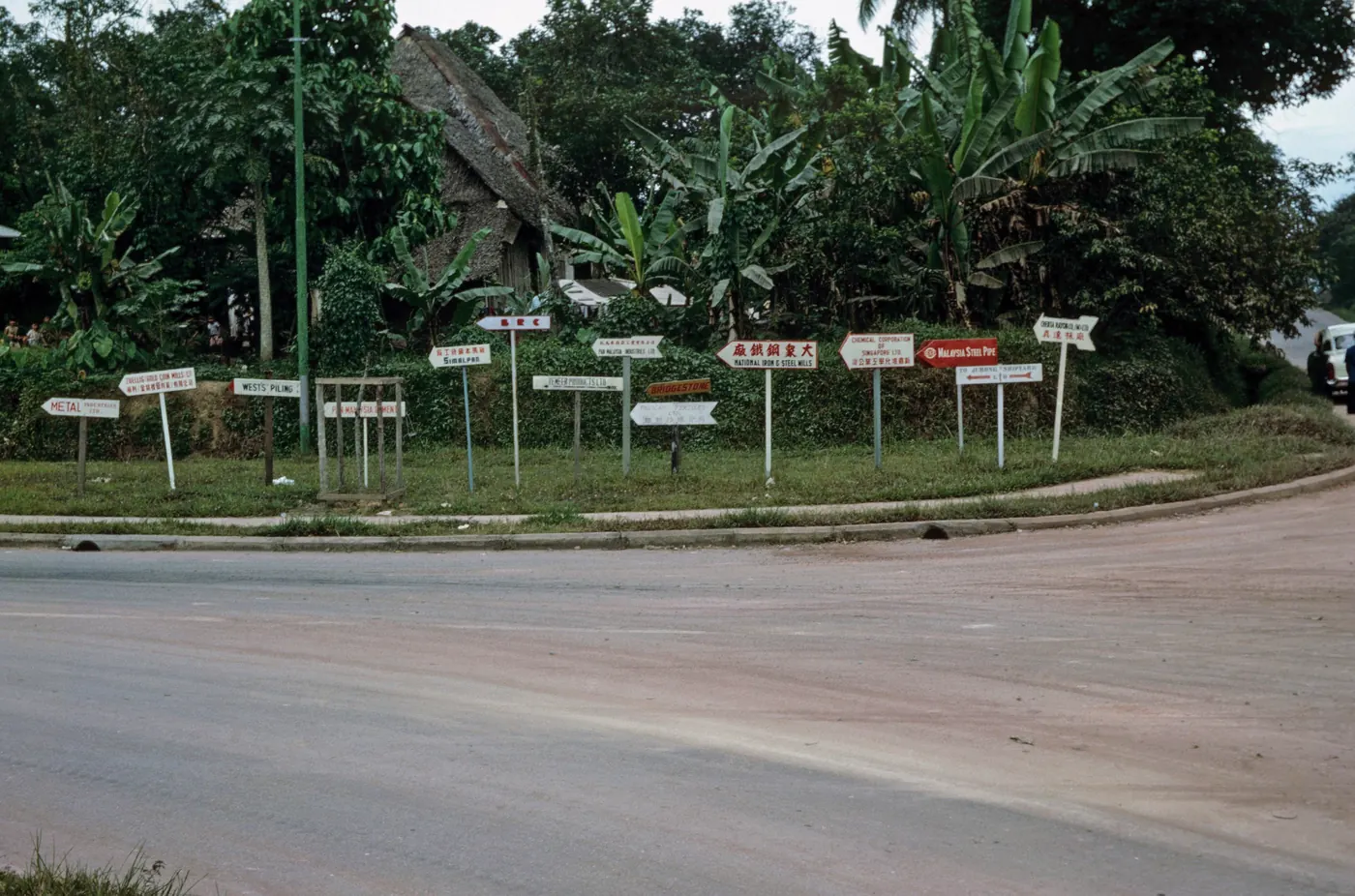
The government demanded something most developing countries at the time did not: technology transfer and high-skill jobs. Singapore would not just assemble foreign products. It would learn how they were made.
Lee also attacked corruption. The Corrupt Practices Investigation Bureau, a British colonial body, was overhauled in 1960 under a new Prevention of Corruption Act and made to report directly to the prime minister. Officials caught taking bribes went to prison. Lee set government salaries high enough to reduce the incentive, then prosecuted anyone who took money anyway. Within a generation Singapore became one of the least corrupt countries in the world.
Lee also made English the working language of government, education, and business. This was politically difficult in a country with Chinese, Malay, and Tamil speakers. But it meant that every foreign company could operate in Singapore without a language barrier, and every Singaporean graduate could work for one.
The port that became a financial capital
Singapore sits at the southern tip of the Malay Peninsula, where the Strait of Malacca funnels roughly a quarter of global seaborne trade through a channel barely two miles wide. The British had founded Singapore in 1819 precisely because of this position, and Lee's government built on it. By 1982, the Port of Singapore overtook Rotterdam as the busiest in the world.
But shipping alone would not make a country rich. In 1968, the government created the Asian Dollar Market by letting foreign banks open offshore banking units, the first country in Asia to do so. Money from the oil-producing Middle East and from regional trade began pooling in Singapore. In 1974 the government created Temasek Holdings to manage the state's commercial investments. In 1981 it created GIC to manage Singapore's foreign reserves. By 2026, the two sovereign wealth funds hold a combined portfolio of roughly $1.3 trillion for a country of six million people.
What it cost
Lee Kuan Yew ran Singapore as a soft authoritarian state for three decades, and his successors kept the system. The press is not free. Opposition politicians have been bankrupted by defamation lawsuits filed by PAP leaders. Elections are held regularly, and the PAP has won every one since 1959, partly because the electoral system is designed in its favor. About 77 percent of Singapore's residents live in flats built by the state Housing Development Board, which gives the government an influence over daily life that most democracies would not tolerate.
Singapore also uses heavy fines and strict policing to enforce public order. Littering, jaywalking, and selling chewing gum can all result in fines. The country carries out the death penalty for drug trafficking.
The argument Lee made, and that every Singapore prime minister since has repeated, is that a country this small and this exposed cannot afford the disorder of an unmanaged democracy. Critics point out that Taiwan and South Korea achieved similar growth while eventually becoming full democracies. Both sides have evidence.
What Lee Kuan Yew left behind
Lee stepped down as prime minister in 1990 after thirty-one years. He died in 2015 at ninety-one. His eldest son, Lee Hsien Loong, served as prime minister from 2004 to 2024.
In May 2024, Lawrence Wong became Singapore's fourth prime minister, the first born after independence. The country he inherited is 28 percent larger in land area than the one Lee started with, because Singapore has been reclaiming land from the sea for decades. Its population has more than tripled, from under two million to nearly six million. Its GDP per person, about $500 at independence, is now roughly seven times higher than in Malaysia, the country that expelled it.
The question every developing country asks about Singapore is whether the model can be exported. Rwanda, the UAE, and several Gulf states have tried versions of it. The formula sounds simple: clean government, rule of law, open trade, invest heavily in education, and accept unpopular decisions. What the formula leaves out is that Singapore had a leader who combined a Cambridge legal mind, authoritarian discipline, and a genuine terror of national failure, and who stayed in power long enough for the system to outlast him. No other country has found that combination.
Test what you learned
5 questions on this article. About two minutes, no signup.