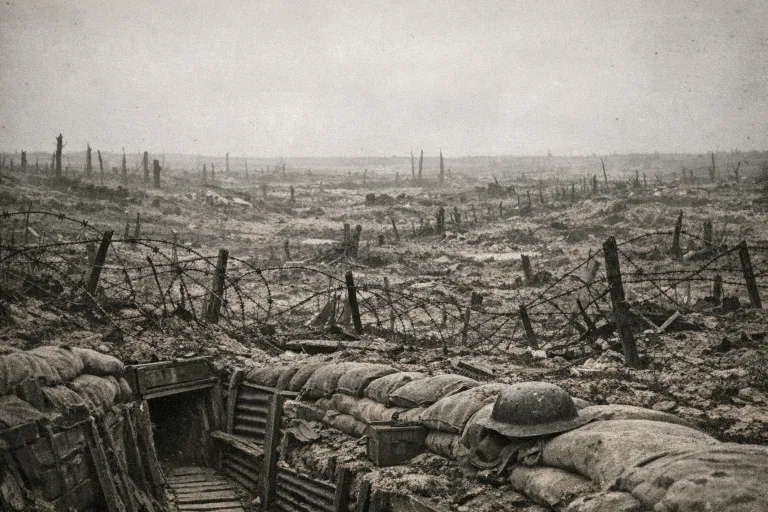
Russia: Empire to Superpower
Norse traders on the river roads to Byzantium built the state that became the world's largest country. Russia's last tsars reformed too slowly to stop revolution, and the Soviet collapse of 1991 was followed by a decade of chaos that made Putin's rise possible.
862 AD to 1991 · 7 parts · 38 lessons · about 3.5 hours
Free for 7 days, cancel anytime. iPhone and Android.
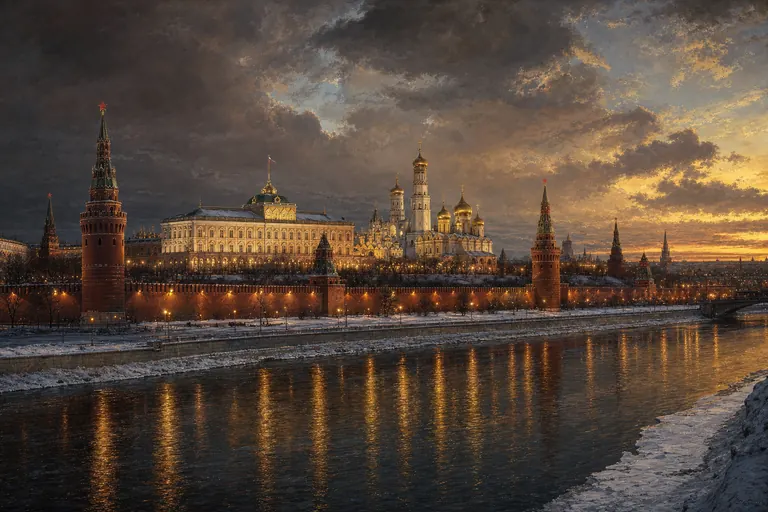
Questions this course answers
- How did Moscow, a small and marshy principality, rise to lead Russia?
- How did Peter the Great try to turn Russia into a European power?
- How did Napoleon's army of 600,000 shrink to fewer than 10,000 fit soldiers in six months?
- Why did the February Revolution of 1917 end the Romanov dynasty in five days?
- How did Stalin rise from gray bureaucrat to absolute dictator?
- Why did the Soviet Union collapse without a war?
Seven parts, 38 lessons
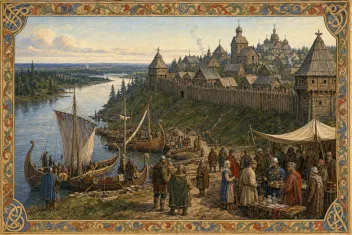 Part 1 · 862 AD to 1584
The First Russia
How Norse merchants chasing Byzantine silver built the first Rus state, how Moscow rose by serving the Mongols, and how one-man rule took root.
-
1
5 min
Novgorod and the Rus
Norse traders from what is now Sweden followed the rivers south toward Byzantium and founded the first Rus state. The name Rus is probably Old Norse.
-
2
5 min
The Christianization of Rus
In 988 Prince Vladimir chose Orthodox Christianity over Rome, giving Russia its alphabet, its art, and an instinct to define itself against the West.
-
3
4 min
The Mongol Conquest of Rus
In the winter of 1237 the Mongols invaded Rus. In less than four years they destroyed Kievan Rus and cut Russia off from Europe for 240 years.
-
4
4 min
Moscow Rises
Moscow's princes rose under Mongol rule by serving the Horde, collecting its tribute and crushing rivals. Their methods became the model for Russian autocracy.
-
5
4 min
Ivan III and the Third Rome
Ivan III ended Mongol tribute, married Byzantium's last princess, and fostered the idea of Moscow as the Third Rome, the last guardian of true Christianity.
-
6
6 min
Ivan the Terrible
Ivan IV started as a genuine reformer and ended as a tyrant who killed his own heir. No institution existed to check Ivan's power.
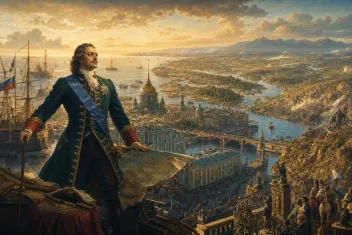 Part 2 · 1598 to 1796
Building the Empire
Russia recovered from the Time of Troubles and became a European great power under Peter the Great and Catherine the Great, reaching the Baltic and the Black Sea.
-
7
5 min
The Time of Troubles and the Romanov Founding
Between 1598 and 1613 Russia nearly ceased to exist, and Polish troops occupied the Kremlin. The Romanov family that ended the crisis ruled for 304 years.
-
8
4 min
Peter the Great
Peter I tried to rebuild Russia in Europe's image and won great-power status by force, leaving a split between European ambitions and Eurasian identity.
-
9
6 min
Catherine the Great
Catherine II corresponded with Voltaire while expanding serfdom. Catherine annexed Crimea with a manifesto Putin would echo almost word for word in 2014.
-
10
5 min
Russia and the Ottomans: The Black Sea Obsession
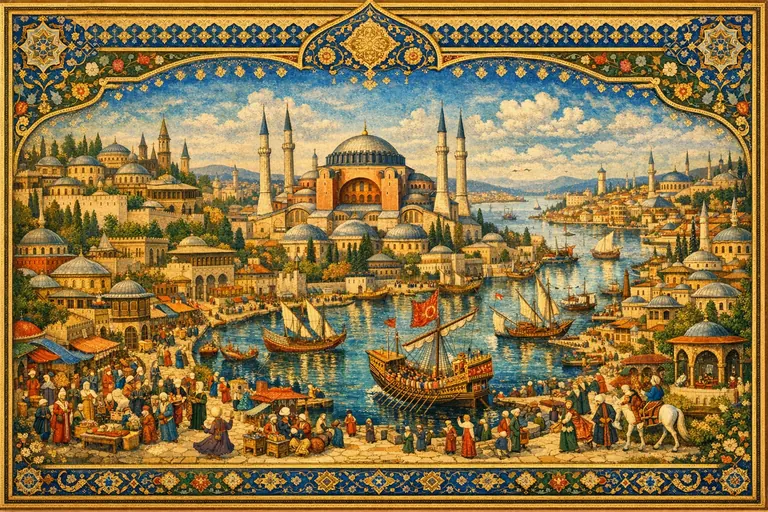
Russia fought the Ottomans in at least a dozen wars over three centuries, always for the same prize: the Black Sea and a warm-water port.
-
11
7 min
The Conquest of Siberia: Russia's Wild East
A few thousand Cossacks and fur hunters crossed a continent the size of North America in sixty years. When the sea otters ran out, Russia sold Alaska.
 Part 3 · 1812 to 1856
Napoleon, Power, and Humiliation
Russia defeats Napoleon, becomes Europe's policeman, then loses the Crimean War and discovers a serf economy cannot fight a modern war.
-
12
5 min
Napoleon Invades Russia: The Empire's Overreach
Napoleon crossed into Russia with 600,000 soldiers. Six months later, fewer than 10,000 returned fit for duty.
-
13
4 min
Russia Defeats Napoleon: From Moscow to Paris
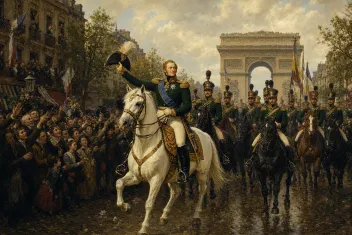
In March 1814 Tsar Alexander I rode into Paris at the head of a Russian army. The war also turned Alexander from a reformer into a conservative.
-
14
5 min
Russia at Vienna: The Empire That Won the Peace
After Napoleon, Russia became Europe's conservative guardian, crushing revolutions abroad while freezing reform at home.
-
15
5 min
The Great Game: Russia's March Through Central Asia
Russia and Britain fought a cold war across Central Asia for most of the 19th century. Afghanistan was crushed between them.
-
16
5 min
The Crimean War: Russia's Rude Awakening
Nicholas I called the Ottoman Empire a sick man and expected easy gains. Britain and France intervened, and after a year-long siege Russia lost Sevastopol.
 Part 4 · 1855 to 1917
The Road to Revolution
Alexander II freed 23 million serfs and was assassinated, Russia lost a war to Japan, the First World War broke the army, and in 1917 the monarchy fell.
-
17
5 min
Alexander II and the Great Reforms
Alexander II freed 23 million serfs, the largest emancipation in history. A bomb killed Alexander on the very day a new constitution was approved.
-
18
6 min
Revolutionaries and the Last Reformer
Russia produced three revolutionary movements. Pyotr Stolypin bet that prosperous peasant landowners would stabilize Russia, but he was assassinated in 1911.
-
19
5 min
The Russo-Japanese War and the 1905 Revolution
In 1905 Japan defeated Russia, the first modern victory of an Asian power over a major European empire. Nicholas II promised a constitution, then gutted it.
-
20
6 min
Russia's War: The Eastern Front 1914-1917
The Eastern Front was bigger than the Western Front and killed more people. Russia had 2 million dead, and Nicholas II took personal command of the army.
-
21
6 min
February 1917: The Fall of the Tsar
In February 1917 unplanned bread riots became a garrison mutiny, and in five days 304 years of Romanov rule ended. Lenin read about it in a Swiss newspaper.
 Part 5 · 1917 to 1934
Revolution and Civil War
The Bolsheviks seize power with three promises, win a civil war to keep it, and Stalin outmaneuvers every rival to inherit a one-party state.
-
22
6 min
October 1917: The Bolshevik Seizure of Power
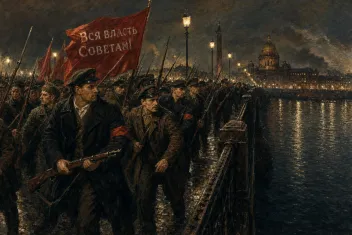
The Bolsheviks never won a free election, yet took power in 48 hours by promising peace, land, and bread, and acting on all three.
-
23
6 min
The Civil War: Why the Bolsheviks Won
The Russian Civil War lasted five years and drew in 14 foreign armies. The Bolsheviks won by controlling the railways, building the Red Army, and using terror.
-
24
6 min
Lenin's Soviet State: The Skeleton Stalin Would Fill
In his last years Lenin built a one-party state with dissent banned, a secret police without limits, and republic borders that decided who left in 1991.
-
25
6 min
Stalin's Rise: How a Man Nobody Feared Became Unstoppable
In 1922 Stalin was the party's gray bureaucrat, given the General Secretaryship because the job seemed like drudge work. Within six years every rival was gone.
-
26
7 min
Collectivization and the Gulag: The Cost of Building Socialism
Stalin stripped Ukraine's peasants of grain and sealed the borders. Collectivization and the Gulag together killed more people than World War I.
 Part 6 · 1936 to 1945
The Soviet Superpower at War
Stalin purges the Red Army's officers, nearly loses to Hitler, then pays 27 million dead for victory and a postwar empire that opens the Cold War.
-
27
6 min
The Great Purge: Stalin Destroys His Own Army
In 1937 and 1938 Stalin shot three of five marshals and tens of thousands of officers. German intelligence read the result as an invitation to invade.
-
28
7 min
Operation Barbarossa: The Largest Invasion in History
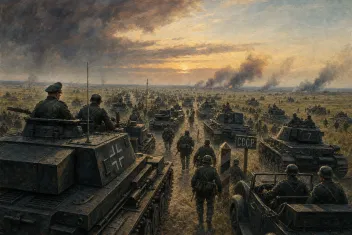
On June 22, 1941, 3.8 million German and Axis troops invaded the Soviet Union, which nearly collapsed. Stalin disappeared from public view for eleven days.
-
29
5 min
Stalingrad: The Battle That Broke the Wehrmacht
Stalingrad was the largest battle in human history. Five months of house-to-house fighting made Germany's defeat mathematically inevitable.
-
30
5 min
Victory and Division: From Kursk to Yalta
The Soviet Union paid 27 million dead for victory in World War II. Stalin used that price to claim the right to dictate the postwar order in Eastern Europe.
-
31
6 min
The Cold War Through Soviet Eyes
Soviet leaders had a coherent Cold War strategy rooted in 1941: never again let a hostile power reach the Soviet Union's western frontier.
-
32
6 min
Khrushchev and the Thaw: De-Stalinization and Its Limits
Khrushchev denounced Stalin, won a space race, survived the Cuban Missile Crisis, and was removed by the colleagues he had insulted.
 Part 7 · 1964 to 1999
Decline and Fall
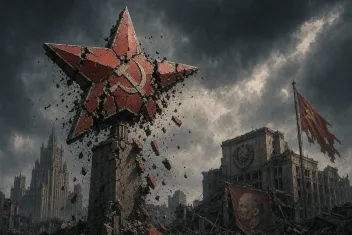
After Brezhnev's stagnation, the war in Afghanistan, and Gorbachev's failed reforms, Eastern Europe broke free in 1989 and the Soviet Union ended in 1991.
-
33
6 min
The Brezhnev Era: Détente, Doctrine, and Stagnation
The Brezhnev era looked stable, but oil money hid a frozen economy and an aging leadership that could not see its own decline.
-
34
5 min
The Afghan Wound: Soviet Vietnam, 1979-1989
The Soviet war in Afghanistan killed 15,000 Soviet soldiers, cost roughly 50 billion dollars, and helped create the jihadist networks that became Al-Qaeda.
-
35
5 min
Gorbachev: Reforming the Unreformable
Gorbachev meant to save the Soviet system. Gorbachev's reforms exposed a fatal contradiction: a state that needed secrecy could not survive honesty.
-
36
6 min
1989: The Year the Dominoes Fell
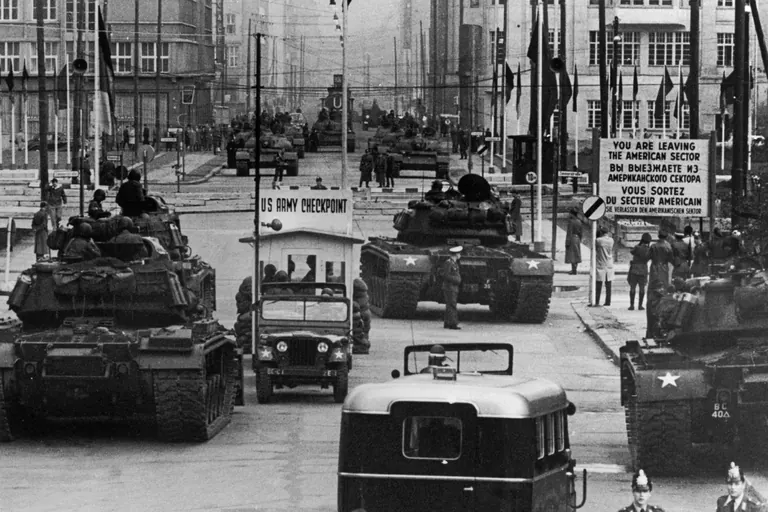
In ten weeks of 1989 every communist government in Eastern Europe fell. The Berlin Wall opened after an East German official's mistaken announcement.
-
37
5 min
The Soviet Collapse: Christmas Day, 1991
On Christmas Day 1991 the Soviet flag came down over the Kremlin. The largest country on Earth had broken up without a war.
-
38
7 min
Yeltsin's Russia: The Catastrophe That Made Putin Possible
Under Yeltsin, Russia's GDP fell 40 percent, inflation hit 2,500 percent, and male life expectancy fell sharply. The chaos made Putin welcome to many Russians.
Lessons you can finish in one sitting.
Each lesson tells one part of the story and explains why it happened, with maps, images and quotes from the sources. A few questions at the end check that it stuck, and the key facts go into the course's flashcards.
- 4 to 7 minutes a lesson
- Three to four questions after each lesson
- 300 flashcards for this course