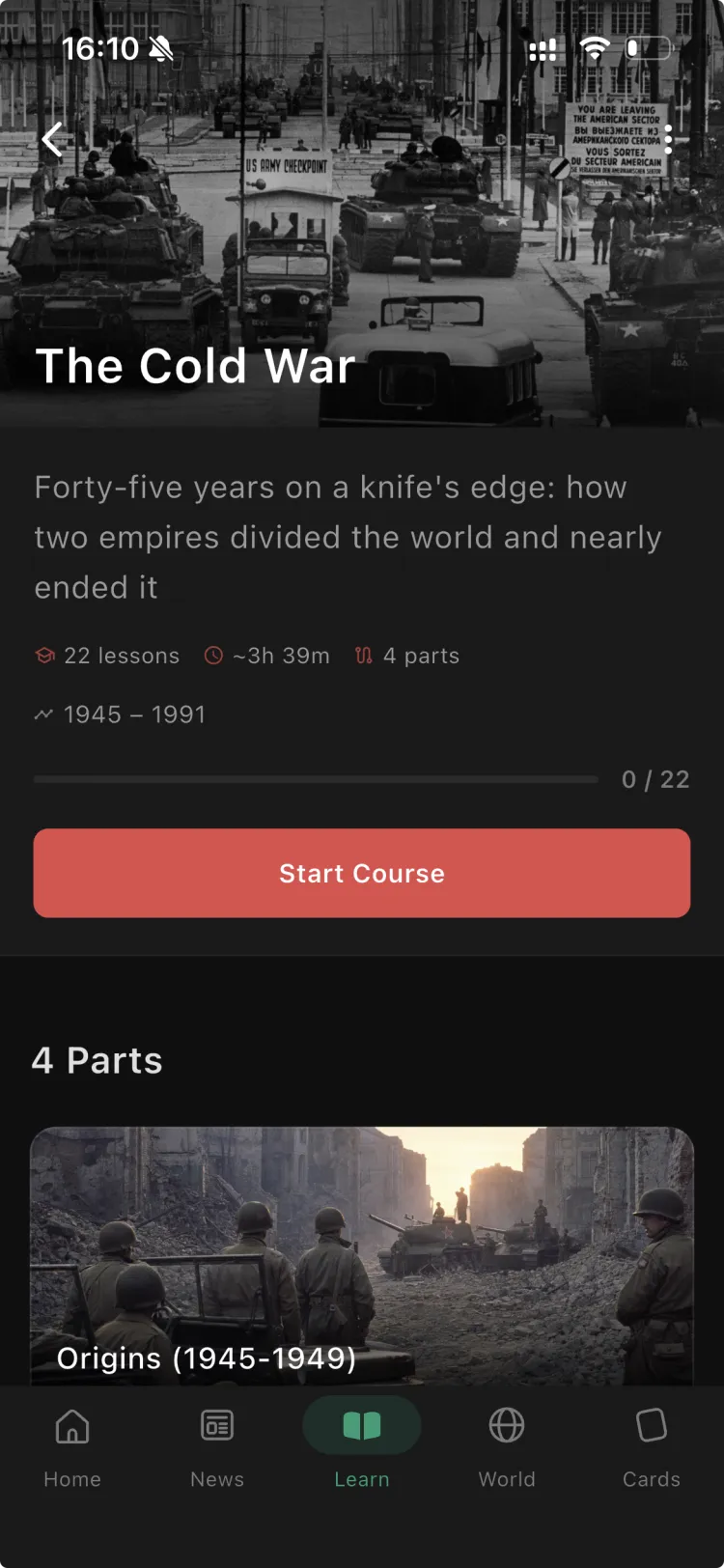
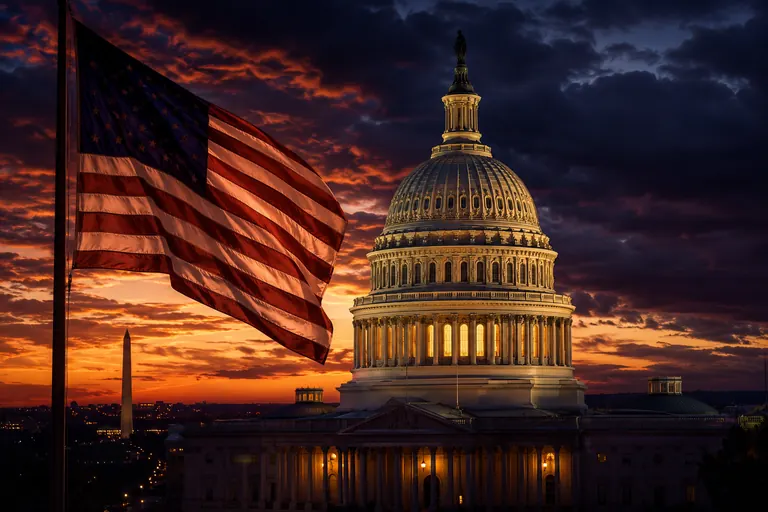
The Cold War
The wartime alliance between the United States and the Soviet Union broke apart into a forty-five-year standoff. Proxy wars killed millions in countries that did not start the Cold War, and the contest ended faster than anyone predicted.
1945 to 1991 · 4 parts · 22 lessons · about 3.5 hours
Free for 7 days, cancel anytime. iPhone and Android.
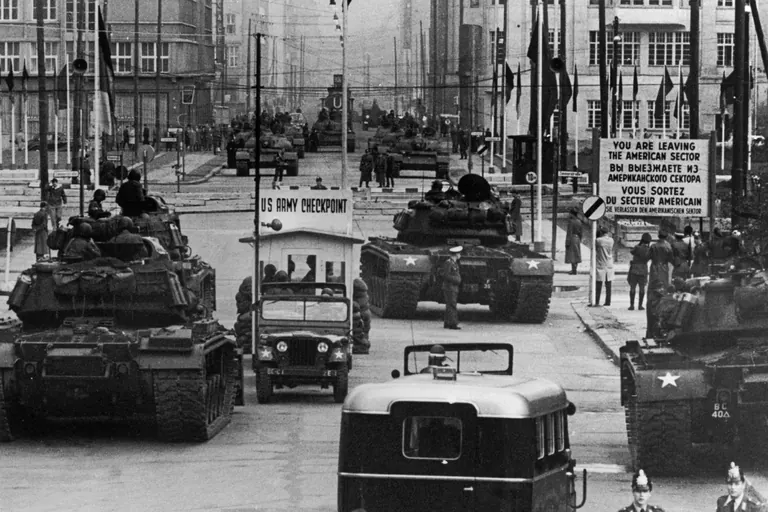
Questions this course answers
- Why did the wartime alliance between the United States and the Soviet Union collapse so quickly?
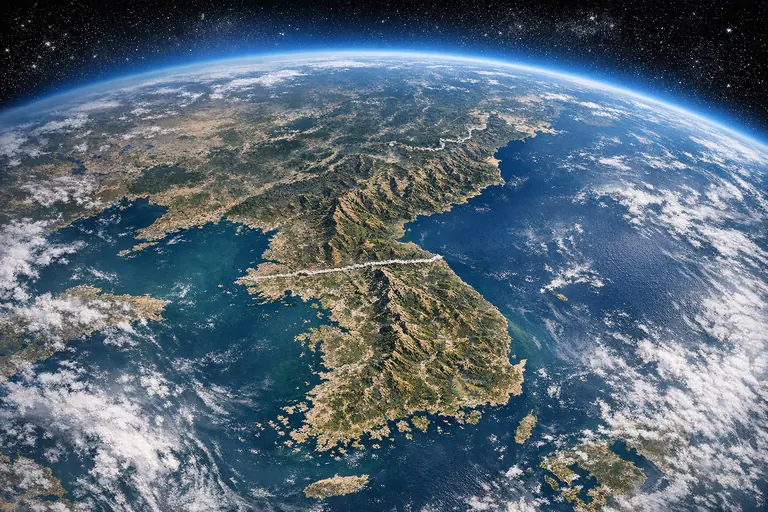
- How did the Korean War write the rules for every Cold War conflict that followed?
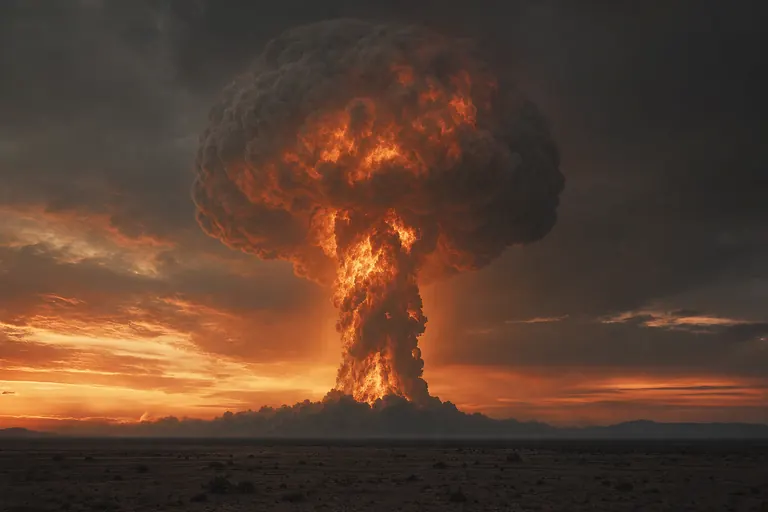
- How close did the Cuban Missile Crisis come to nuclear war?
- Why did the Soviet Union and China become enemies?
- Why did the United States lose the Vietnam War despite winning most battles?
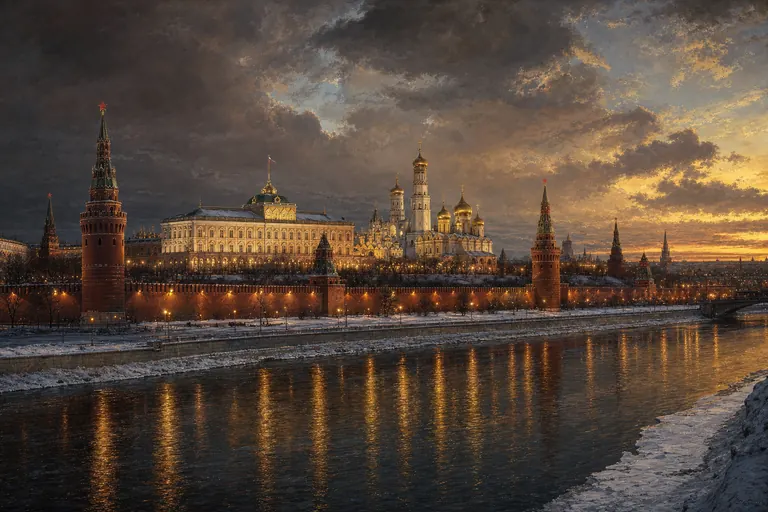
- Why did the Soviet Union collapse in 1991?
Four parts, 22 lessons
 Part 1 · 1945 to 1949
Origins
The wartime alliance collapsed in four years. Stalin took Eastern Europe ministry by ministry. The United States answered with containment, the Marshall Plan, and NATO.
-
1
7 min
Yalta and the Broken Alliance
Roosevelt, Churchill, and Stalin met at Yalta in 1945. The Red Army already held Eastern Europe, and the promises over Poland were left vague on purpose.
-
2
7 min
The Iron Curtain Descends
Stalin's communist allies took power in Eastern Europe from inside coalition governments, starting with the police. Czechoslovakia fell in one week in 1948.
-
3
7 min
Containment: Truman Doctrine, Marshall Plan, NATO
Kennan's telegram from Moscow gave the United States its first grand strategy since the Monroe Doctrine. The Truman Doctrine, Marshall Plan, and NATO followed.
-
4
8 min
1949: The Year Everything Changed
In 1949 NATO was signed, the Berlin Blockade ended, the Soviet Union tested an atomic bomb, and Mao took power in China. The world was split into two camps.
 Part 2 · 1950 to 1962
To the Brink
From 1950 to 1962 the Cold War came close to nuclear war. These years brought the Korean War, McCarthyism, the arms race, the Berlin Wall, and the Cuban Missile Crisis.
-
5
9 min
The Korean War: When the Cold War Burned
North Korea invaded South Korea in 1950 with Stalin's approval. Three million Koreans died, and the armistice line is still manned, with no peace treaty.
-
6
9 min
McCarthyism and the American Home Front
The mix of real Soviet spies and false accusations made almost any charge plausible. Joseph McCarthy himself never identified a single previously unknown spy.
-
7
10 min
After Stalin: The Secret Speech and Hungary 1956
In 1956 Khrushchev denounced Stalin. That autumn Hungary tried to leave the Warsaw Pact, and Soviet tanks crushed the revolt while Eisenhower stayed out.
-
8
10 min
The Space Race and the Arms Race
The Soviet Union led the early space race with Sputnik and Gagarin. Its arms race with the United States produced Mutually Assured Destruction.
-
9
10 min
The Spy Game: CIA, KGB, and the Defectors
The Cambridge Five spied for the Soviet Union inside British intelligence. Soviet colonel Oleg Penkovsky's documents told Kennedy what was in Cuba.
-
10
10 min
The Berlin Wall
By 1961, about 2.5 million East Germans had fled west through Berlin. On August 13, East German troops closed the border, and the wall stood for 28 years.
-
11
10 min
Thirteen Days: The Cuban Missile Crisis
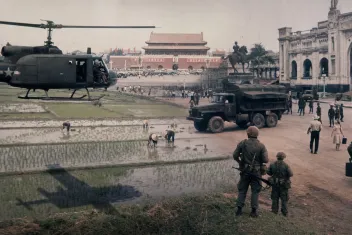
In October 1962 a Soviet submarine officer, Arkhipov, vetoed firing a nuclear torpedo. Kennedy and Khrushchev cut a deal neither could publicly admit.
 Part 3 · 1960 to 1975
The Global Cold War
From 1960 to 1975 China broke with the Soviet Union, the CIA helped topple elected governments, and wars killed millions in Vietnam, Africa, and Latin America.
-
12
11 min
The Sino-Soviet Split
The communist monolith was always a fiction. By 1969 the Soviet Union and China were shooting at each other, and by 1972 Mao was hosting Nixon in Beijing.
-
13
11 min
The CIA's Secret Wars
From Iran in 1953 to Chile in 1973, the CIA worked to overthrow elected governments. The costs, such as the Iranian Revolution, came decades later.
-
14
11 min
Vietnam: America's Longest Defeat
The United States won most battles and still lost the war. North Vietnam's strategy was to outlast American politics rather than defeat American firepower.
-
15
11 min
1968: The Year the World Cracked
In 1968 crises hit Vietnam, the United States, France, Czechoslovakia, and Mexico at once. Few uprisings won, and most led to a conservative backlash.
-
16
11 min
Proxy Battlefields: Africa and Latin America
Cuban tanks fought South African tanks in Angola. Operation Condor disappeared some 30,000 South Americans. The worst costs fell on populations with no say.
-
17
9 min
The Non-Aligned Movement
Twenty-nine Asian and African nations met at Bandung in 1955. The Non-Aligned Movement that followed never united, but its ideas still shape the Global South.
 Part 4 · 1969 to 1991
Détente, Reheat, Endgame
Détente eased American-Soviet rivalry until 1979. Reagan, Gorbachev, and the 1989 revolutions wound the Cold War down, and the Soviet Union dissolved in 1991.
-
18
11 min
The Cultural Cold War
Jazz tours, blue jeans, and Radio Free Europe reached people behind the Iron Curtain. Eastern European dissidents cite culture more often than missiles.
-
19
11 min
Détente: Nixon, Brezhnev, and the SALT Years
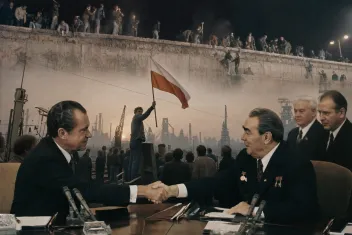
In SALT I, Nixon and Brezhnev capped missile launchers but not warheads. At Helsinki, Brezhnev signed human-rights pledges that later helped dissidents.
-
20
11 min
1979: The Year the Cold War Reheated
In 1979 the Iranian Revolution, the Soviet invasion of Afghanistan, and the American hostage crisis in Tehran ended a decade of détente.
-
21
13 min
Reagan's Cold War
Reagan spent more on the military than any president since FDR, then negotiated with Gorbachev. Soviet generals later rated 1983 more dangerous than 1962.
-
22
12 min
1989-1991: How It Ended, and Why It Still Defines Today
The Berlin Wall opened in 1989, and the Soviet Union dissolved in 1991. Gorbachev chose not to use force, and the end came faster than anyone predicted.
Lessons you can finish in one sitting.
Each lesson tells one part of the story and explains why it happened, with maps, images and quotes from the sources. A few questions at the end check that it stuck, and the key facts go into the course's flashcards.
- 7 to 13 minutes a lesson
- Three questions after each lesson
- 154 flashcards for this course