
Arab Spring
The Arab Spring was a wave of uprisings across the Arab world in 2010–2012 that toppled four rulers and set off years of war.
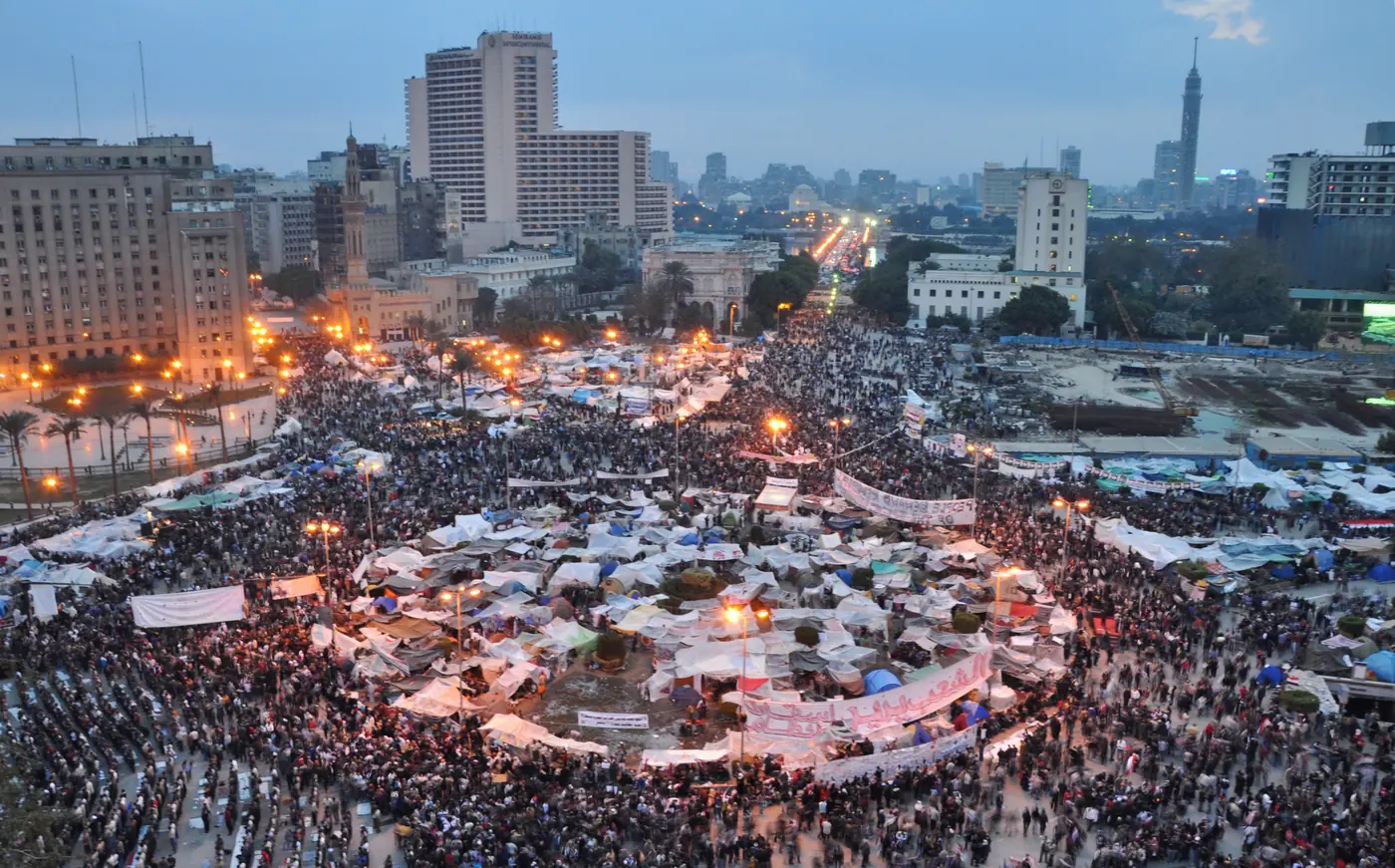
The Arab Spring was a wave of popular uprisings that swept the Arab world beginning in December 2010. It started in Tunisia, where a 26-year-old street vendor named Mohamed Bouazizi set himself on fire after a confrontation with a local official, and spread within weeks to Egypt, Libya, Yemen, Bahrain, and Syria. Four long-ruling leaders were forced from power within a year. Of the countries that rose up, only Tunisia built a working democracy, and it lasted a decade before its own president took it apart. Most of the rest either returned to military rule or collapsed into civil wars that killed hundreds of thousands and drove millions from their homes.
How the Arab Spring started and spread
On December 17, 2010, Mohamed Bouazizi, a street vendor in Sidi Bouzid, a town in central Tunisia, had his cart and produce confiscated by a municipal inspector who said he lacked a permit. No permit was actually required. When Bouazizi protested, the inspector slapped him. That morning, he burned himself in front of the local governor's office. He died on January 4, 2011. By then, Tunisia was already in revolt.
The conditions behind the revolt went well beyond Bouazizi. Arab countries had unusually young populations and high rates of unemployment among educated graduates. Global food prices climbed to record levels in late 2010. Arab states, which import more wheat per person than any other region, felt the increase immediately in the cost of bread. Bouazizi's death gave people a story to rally around. Al Jazeera and other satellite channels carried the Tunisian protests into living rooms across the region. On social media, people in one country could see uprisings unfolding in another and know that others were already in the streets.
On January 14, after 28 days of protests, Tunisia's president, Zine El Abidine Ben Ali, in power for 23 years, left the country on a flight to Saudi Arabia. The speed of his fall broke an assumption that had held for decades across the region: that these governments could not be overthrown. Within weeks, crowds in Cairo, Sanaa, Benghazi, Manama, and Damascus were chanting the same Arabic slogan: "the people demand the downfall of the regime." In Egypt, hundreds of thousands of people occupied Tahrir Square. The army refused to fire on the crowds, and after 18 days President Hosni Mubarak stepped down on February 11, 2011. In Libya, rebel forces captured and killed Muammar Gaddafi in October 2011, after a NATO air campaign turned the war against him. In Yemen, President Ali Abdullah Saleh agreed to hand power to his deputy that November, under a deal arranged by Gulf states.
Why did the Arab Spring fail?
Most of the uprisings failed because the protesters who toppled rulers had no organized political movements ready to govern. Power went to whoever already had organization: the military or Islamist groups. Only Tunisia built a democracy, and that lasted just a decade.
The monarchies never fell at all. Morocco and Jordan offered constitutional reforms. Saudi Arabia spent billions on welfare packages. In March 2011, Saudi Arabia and the United Arab Emirates sent forces to Bahrain to crush protests there. Oil revenue gave the Gulf states a financial cushion that poorer republics did not have.
Among the republics, everything depended on the military. Tunisia's army was small, professional, and separate from the ruling party. It refused to shoot, and a democratic transition followed. Egypt's army was the country's most powerful institution and owned a large share of the economy. The generals pushed Mubarak out to protect their own position. They allowed the Muslim Brotherhood to win an election and govern for a year, then seized power in a coup in July 2013. The general who led it, Abdel Fattah el-Sisi, has ruled Egypt since. In Syria, Libya, and Yemen, the armed forces fractured along sectarian and tribal lines. All three collapsed into civil wars. Iran, Saudi Arabia, Turkey, Russia, and the United Arab Emirates backed different factions, turning each conflict into a proxy war.
The Arab Spring fifteen years later
The wars that followed the uprisings killed far more people than the uprisings themselves. Syria's civil war lasted thirteen years and killed over 500,000 people before the Assad regime fell in December 2024, when a rebel offensive led by Hayat Tahrir al-Sham took Damascus and forced Bashar al-Assad to flee. Yemen's war had killed an estimated 377,000 by the end of 2021, many from famine and disease. Libya remains divided between rival governments.
Syrian refugees reshaped European politics, fueling the nationalist parties that surged across the continent after 2015.
Tunisia, the one country that built a democracy after the Arab Spring, did not keep it. In July 2021, President Kais Saied suspended parliament and began ruling by decree. As of 2026, he still does.
The Arab Spring changed how rulers in the region deal with dissent. Many concluded that Mubarak lost power because he wavered, while Assad held on through the initial uprising because he used force without restraint. Governments across the Arab world now restrict dissent more heavily than they did before 2010. The central lesson for anyone who would try again is that overthrowing a ruler is the easier part of a revolution. Without an organized political movement ready to take power, power passes to whoever already has it.