
Proxy War
A proxy war is a conflict in which major powers fight each other through local forces instead of directly.
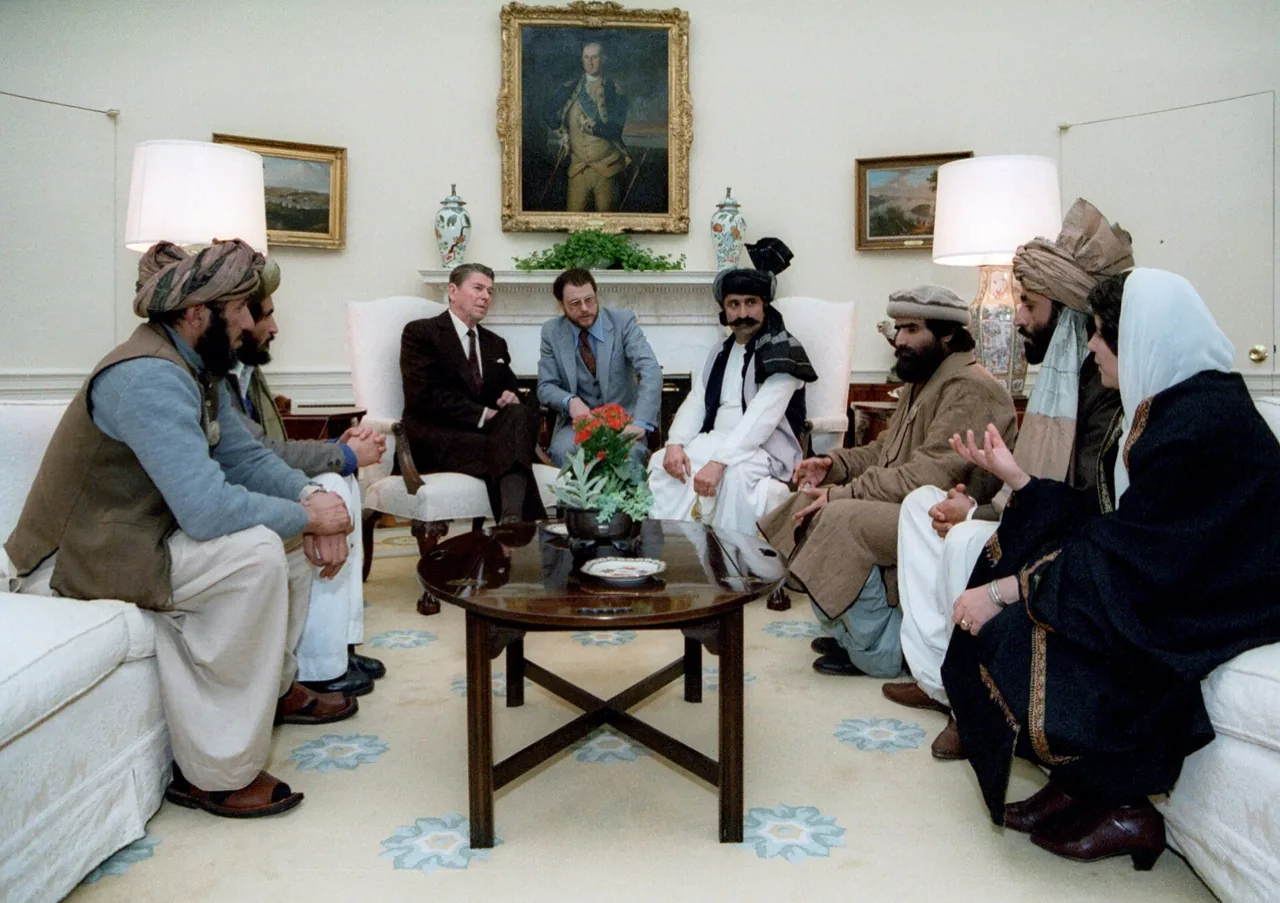
A proxy war is a conflict in which two major powers fight each other through a third party's army instead of directly. The sponsors provide arms, funding, training, and intelligence. The people who do the fighting and dying are local. After 1945, nuclear weapons made direct war between the United States and the Soviet Union too dangerous, so proxy war became the main way the two superpowers competed. A sponsor could keep an embassy open in its rival's capital while sending ammunition to people fighting the rival's soldiers. The arrangement was cheap and deniable for the sponsors. It was not cheap for the countries where the fighting happened.
Proxy wars during the Cold War
The first Cold War proxy war was the Greek Civil War (1946-1949). The Greek government fought communist partisans with British support and, after 1947, American support under the Truman Doctrine. The partisans received weapons and safe passage through Yugoslavia, Albania, and Bulgaria.
Korea blurred the line between proxy war and direct conflict. From 1950 to 1953, American troops fought alongside South Korean forces, while China sent more than a million soldiers and the Soviet Union secretly flew combat missions. Soviet pilots wore Chinese uniforms and were ordered to speak only Korean on the radio. Both sides worked to keep the direct fighting quiet, because admitting it could have turned a regional war into a global one.
In Vietnam, the arrangement reversed. American troops fought on the ground, and North Vietnam used Soviet and Chinese weapons. The war killed an estimated two to three million Vietnamese.
Angola was closer to the textbook case. After Portugal withdrew in 1975, Cuba sent tens of thousands of soldiers to fight alongside the MPLA government, and the Soviet Union provided its weapons. The MPLA fought the UNITA rebels, who were supported by South Africa's military and the CIA. The war lasted 27 years and ended only in 2002, when UNITA's leader, Jonas Savimbi, was killed in battle.
The Soviet-Afghan War was the largest Cold War proxy war. After the Soviet Union invaded Afghanistan in 1979, the CIA, working with Saudi Arabia, funneled money to Afghan fighters resisting the occupation. The funds went through Pakistan's Inter-Services Intelligence agency, which controlled distribution and directed the money toward groups it preferred for its own strategic reasons. By 1987 the CIA was spending $630 million a year, and Saudi Arabia matched every dollar. The introduction of Stinger missiles in 1986 forced Soviet helicopters to fly high enough that they lost their effectiveness. The Soviets withdrew in 1989, but the arms and the organizations that Pakistan had built outlived the war by decades.
Iran's proxy network
Iran built the most extensive network of armed allies in the modern world. After the 1979 revolution, Iran's new government could not match its rivals in conventional military strength, so it invested in local partners across the Middle East instead. The network grew to include Hezbollah in Lebanon, armed factions in Iraq, Palestinian groups including Hamas, and the Houthis in Yemen. Iran used Syria as the corridor through which it moved weapons and fighters to Hezbollah.
When Syria's civil war began in 2011, Iran sent fighters and money to keep the Assad government in power, because Syria was the link between Iran and Hezbollah. The war became one of the most tangled proxy conflicts in history. At one point, forces with American, Turkish, Gulf Arab, Russian, and Iranian sponsors were all fighting in the same country. Several of them fought each other rather than the Syrian government.
But 2024 showed the limits of Iran's model. Israel killed Hezbollah's leader, Hassan Nasrallah, in an airstrike in Beirut in September 2024. In December 2024, the Assad government fell, cutting off the corridor Iran had used for years to supply Hezbollah. Proxies could be weakened or destroyed, and the sponsor could choose not to rescue them.
Is the war in Ukraine a proxy war?
Russia describes the war in Ukraine as a NATO proxy war. Western states supply Ukraine with weapons, intelligence, and funding, and this support has shaped the course of the fighting since Russia's full-scale invasion in February 2022.
But proxy wars have traditionally meant something more specific: a conflict that the sponsor starts, steers, and could walk away from. Ukraine is defending its own land against an invading army. Ukraine's government has repeatedly made its own strategic decisions, sometimes against the advice of its Western supporters. Calling the war a proxy war treats Ukraine as a tool of Western policy rather than a country defending itself. The label serves Russia's argument that the real adversary is NATO, not Ukrainian resistance.
Why proxy wars are hard to end
Proxy wars tend to last a long time. Both sponsors can deny that they are fighting, which takes away the political pressure that normally pushes governments toward negotiation. The local forces doing the fighting have their own goals, and when the sponsors lose interest, the local fighters keep going. The fighting in Afghanistan, Angola, Somalia, and Yemen continued long after the outside powers that funded them moved on. Proxy wars keep major powers from fighting each other directly. The cost falls on the countries where the fighting happens, in conflicts that can run for decades.