
The Geopolitics of Saudi Arabia
Oil, Mecca, and one ruling family. How Saudi Arabia became the swing power of the Middle East, and why 2026 is testing everything it built.
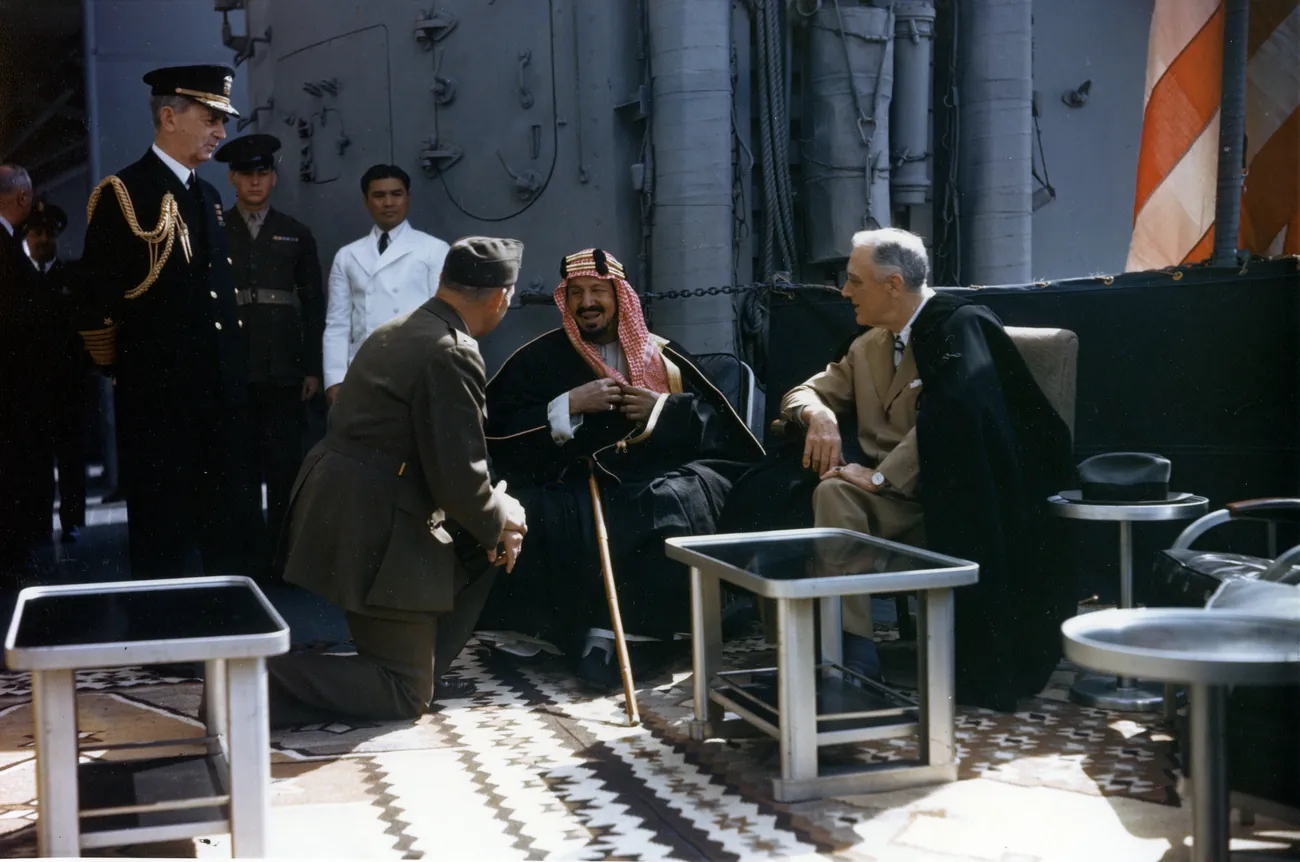
On February 14, 1945, the American cruiser USS Quincy anchored in the Great Bitter Lake, halfway along the Suez Canal. Aboard was Franklin Roosevelt, sailing home from Yalta, two months before his death. His guest arrived on a US destroyer refitted into a floating piece of Arabia: a tent pitched over the deck, carpets on the steel, live sheep penned at the stern. King Abdulaziz Ibn Saud, the founder of Saudi Arabia, spent hours in conversation with the dying president, and out of that meeting grew one of the most durable unwritten bargains in modern history: America protects the kingdom, and the kingdom keeps the world supplied with oil.
Eighty-one years later, that bargain still organizes the Middle East. But 2026 is stress-testing every clause of it, and to understand why, you need to understand what Saudi Arabia actually is: a family, a desert, an oil field, and two holy cities, all fused into one state.
One family, three kingdoms
Saudi Arabia is one of the very few countries on Earth named after its ruling family. The Al Saud have built a state on the Arabian Peninsula three times. The first began in 1744, when a small-town emir named Muhammad ibn Saud made a pact with a puritan preacher, Muhammad ibn Abd al-Wahhab: the family would wield the sword, the preacher's movement would supply the faith. That first state conquered Mecca in 1803 and alarmed the Ottoman Empire enough that an Egyptian army razed the Saudi capital in 1818 and had the ruler beheaded in Istanbul. A second state rose and collapsed in the 1800s. The third began in 1902, when a young Abdulaziz retook Riyadh in a night raid with a few dozen men, and was proclaimed a kingdom in 1932. Oil was struck six years later.
The family does not just lead the state; to a large degree it is the state. Thousands of princes staff its ministries, governorships, and military commands, and every king since Abdulaziz died in 1953 has been one of his sons. That era is ending. King Salman is 90 and largely withdrawn from public life. His son Mohammed bin Salman, the 40-year-old crown prince and prime minister, already runs the country day to day, and when he takes the throne he will be the first grandson ever to rule. Since 1744, the family's core claim to legitimacy has never changed: it keeps order in the birthplace of Islam.
Oil, sand, and the two holy cities
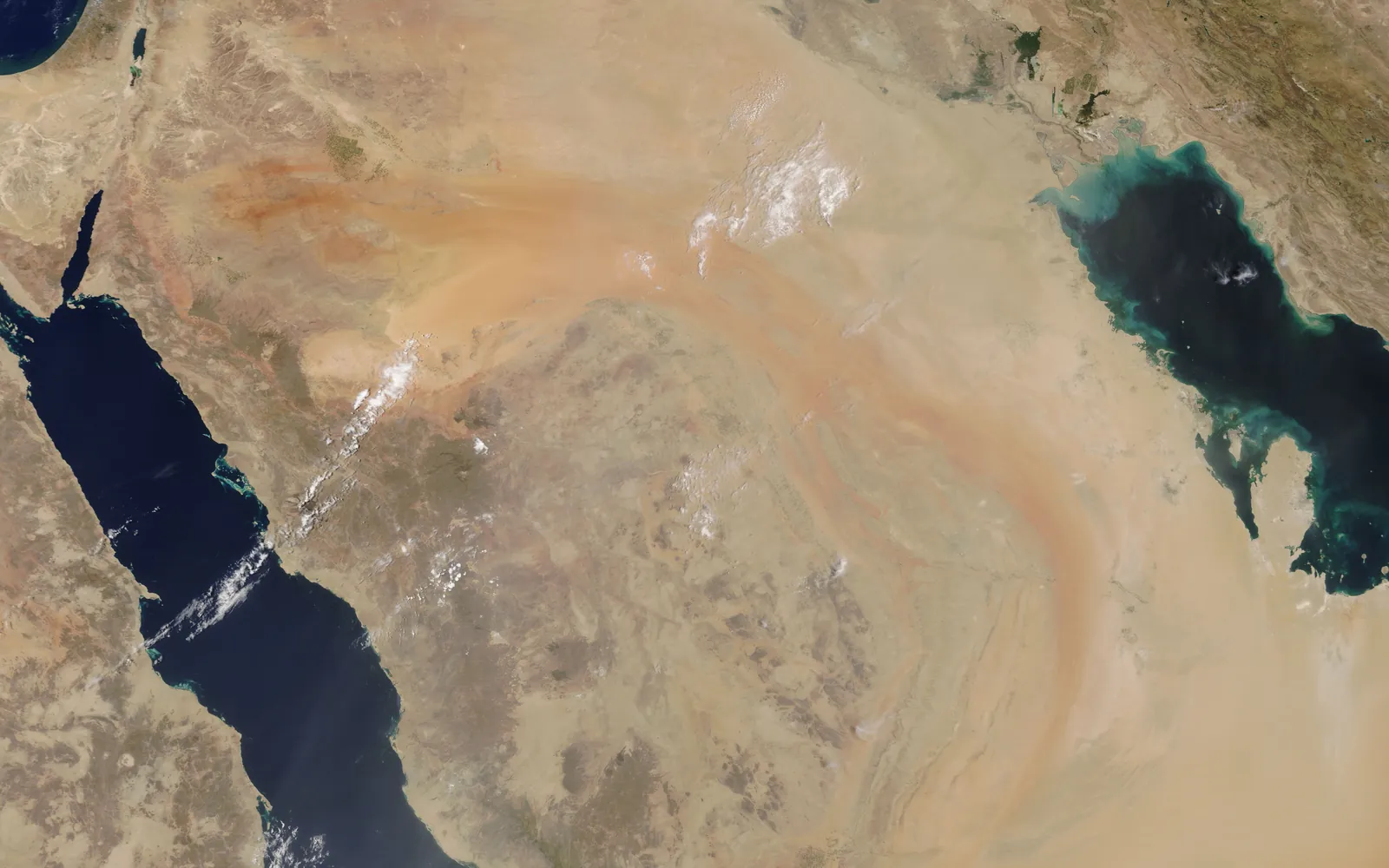
Geography dealt Saudi Arabia one of the strangest hands of any country. It is the largest nation on Earth with no permanent rivers. A single sand desert in its south, the Empty Quarter, is bigger than France. And under its Eastern Province sits roughly 260 billion barrels of oil, about 17 percent of the world's proven reserves, including Ghawar, the largest conventional oil field ever found. Saudi crude is also among the cheapest on the planet to pump, which is why Aramco, the state oil company, earned $93 billion in profit in 2025 and is valued around $1.7 trillion.
The oil does more than fund the state. Saudi Arabia normally produces around 10 million barrels a day but can push toward 12, and that spare capacity makes it the closest thing the oil market has to a central bank: when supply fails somewhere, Riyadh decides whether the world gets relief. The wealth comes with one built-in weakness, though. Nearly every exported barrel must leave through the Strait of Hormuz or the Red Sea, two chokepoints the kingdom does not control, and in 2026 both have been on fire.
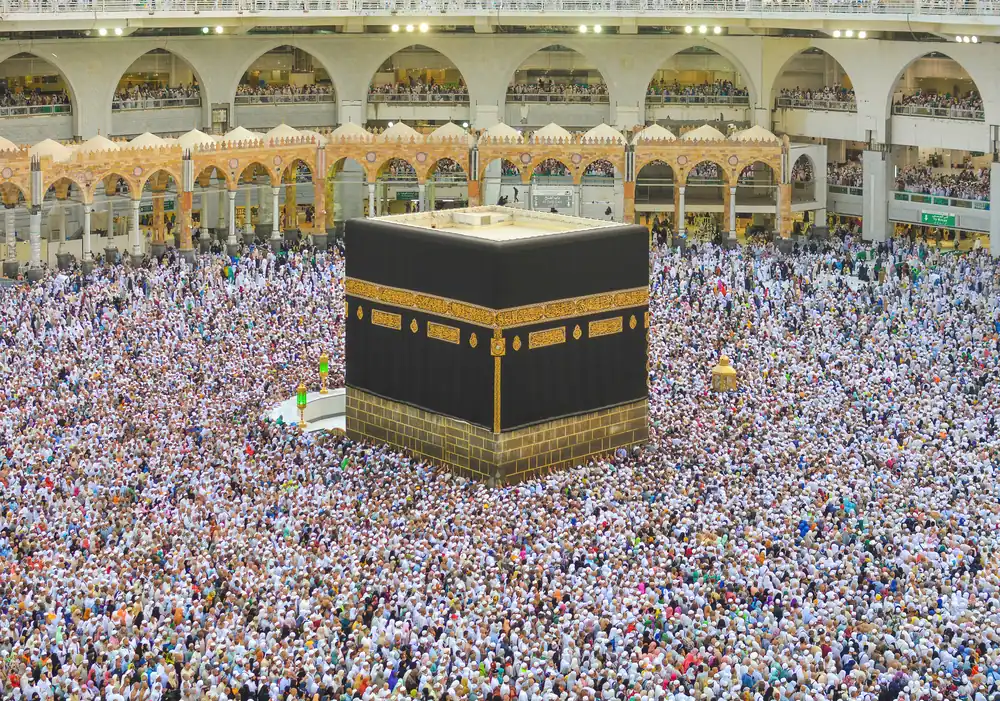
Saudi Arabia's other great resource has nothing to do with geology. Mecca and Medina, Islam's two holiest cities, sit in the kingdom's west, and this year about 1.7 million pilgrims performed the hajj. For two billion Muslims, the Saudi king is the Custodian of the Two Holy Mosques, a title worth more legitimacy than any army and one the Al Saud took from the Hashemite sharifs by conquest in 1925.
The bargain with America
The bargain Roosevelt and Ibn Saud struck on the Quincy, American protection for Saudi oil, has been renegotiated by crisis after crisis. In 1973, King Faisal embargoed oil shipments to the United States over its support for Israel, and prices quadrupled in months. Yet the quarrel ended up binding the two countries tighter. In 1974, President Nixon's treasury secretary, William Simon, traveled to Riyadh and quietly struck a deal: Saudi Arabia would price its oil in dollars and park the profits in US Treasuries, and America would provide weapons and protection in return. That arrangement, the petrodollar, became a pillar of the dollar's global power, and it stayed classified for decades.
In 1990, after Iraq's army overran Kuwait in a single day, King Fahd invited half a million American troops onto Saudi soil to defend the kingdom and take Kuwait back. Militarily it worked; Kuwait was free within months. But the sight of foreign armies camped in the land of Mecca and Medina enraged the kingdom's religious hardliners. A Saudi veteran of the Afghan jihad named Osama bin Laden had offered King Fahd his own fighters instead, and the rejection became his founding grievance. Fifteen of the 19 hijackers on September 11, 2001 were Saudi citizens.
The relationship survived that trauma, but trust cracked in a different place. In September 2019, drones and cruise missiles hit Abqaiq, the plant that processes most of the kingdom's crude, and knocked out half of Saudi oil production in a single strike. Yemen's Houthis claimed the attack; Washington and Riyadh blamed Iran. Either way, the American response amounted to little more than a press release, and Riyadh drew a lasting conclusion: the world's most expensive protection had limits, and the kingdom needed more options.
The cold war with Iran
Saudi Arabia's defining rivalry is with Iran, and in fifty years of hostility the two countries have never once fought each other directly. The rivalry sits on top of Islam's oldest divide: Saudi Arabia sees itself as the leader of the Sunni majority, Iran as the champion of the Shia. But faith is only half the story. Until 1979 both were American-backed monarchies, and then Iran's revolution swept in Khomeini, who declared monarchy itself un-Islamic, an argument aimed straight at the House of Saud. Ever since, the two have competed for dominance of the region through other people's wars: Lebanon, Iraq, Syria, and above all Yemen, where a Saudi bombing campaign against the Iran-backed Houthis ran for seven years and failed.
Both sides, though, have always stopped short of open war with each other. In 2016, Saudi Arabia executed a prominent Shia cleric, protesters burned the Saudi embassy in Tehran, and relations ruptured; seven years later, in a deal brokered by China, the embassies reopened. Even this year's Iran war followed the rule. When American and Israeli strikes escalated into open war with Iran, and Iranian missiles hit Saudi territory, including the Ras Tanura refinery, the kingdom absorbed the blows, stayed formally out of the fighting, and kept its embassy in Tehran open the whole time. The logic is understood in both capitals: each side could wreck the other's oil economy within a week, which is exactly why neither has ever tried.
Vision 2030 and the race against the barrel
Mohammed bin Salman's answer to all this risk is a project called Vision 2030: use the oil money to build an economy that no longer needs oil. The sovereign wealth fund behind it now manages about $1.2 trillion. But the showcase projects have collided with reality: NEOM's "The Line," a mirrored city planned to run 170 kilometers through the desert, has been paused with only a couple of kilometers of foundations laid. The real progress is less spectacular. Non-oil activity now makes up more than half of GDP, unemployment among Saudi citizens has fallen to 6.4 percent, roughly half what it was a decade ago, and the kingdom has bought itself the world's biggest stages: Expo 2030 in Riyadh, then the 2034 World Cup.
The project carries a built-in irony that Riyadh understands perfectly well: the escape from oil is funded by oil. The state budget still balances only when crude sells for around $90 a barrel, which is why Saudi Arabia fights so hard inside OPEC+ over production levels, and why every fire at a refinery is also a hole in the blueprint for the future.
Where Saudi Arabia stands in 2026
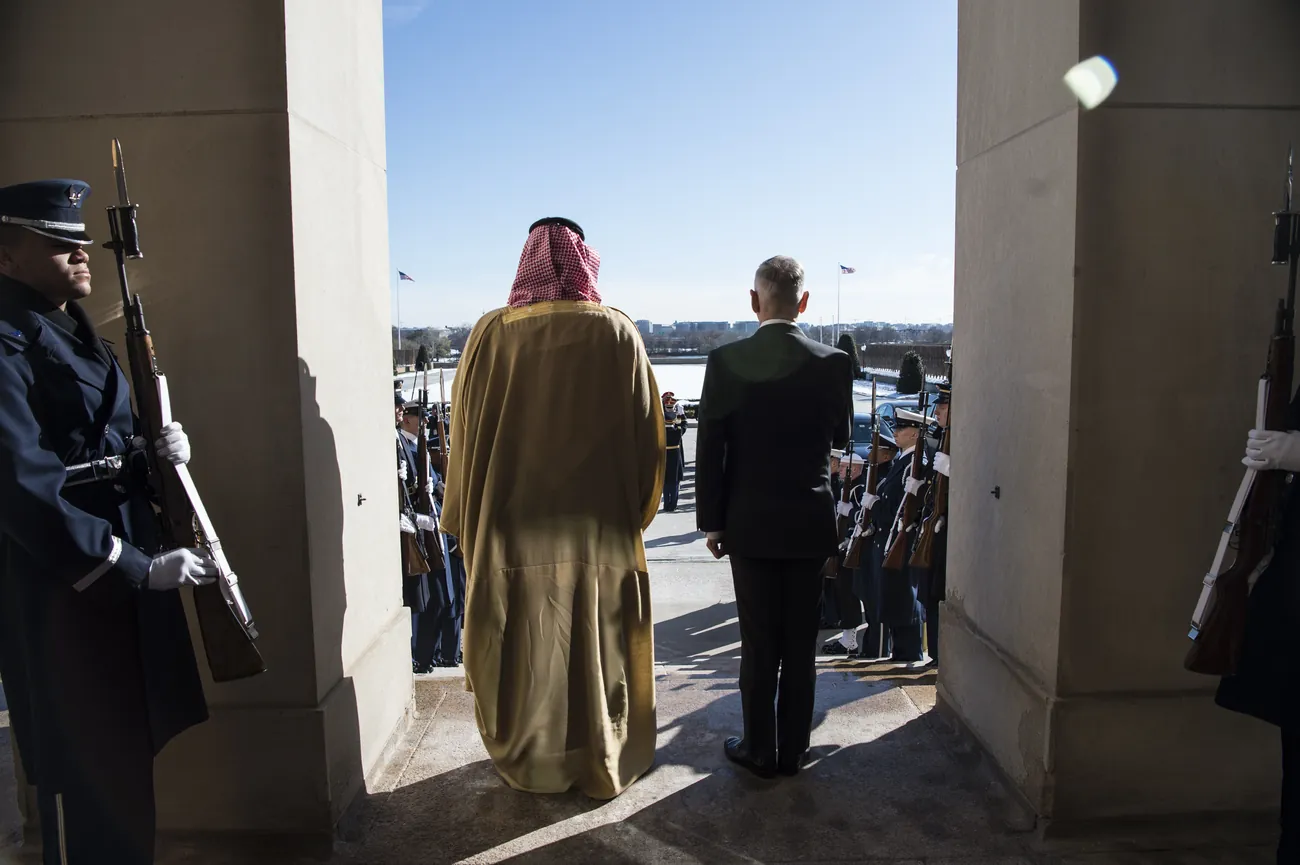
This year shows the strategy in motion. In November 2025, the crown prince signed a formal defense agreement in Washington, and the United States approved selling Saudi Arabia F-35 jets, a privilege previously reserved in the region for Israel. In July, the two countries signed a civil nuclear deal, which President Trump promptly tied to a demand that Riyadh normalize relations with Israel; the Saudis still insist on a path to a Palestinian state first. And on August 7, Mohammed bin Salman signed a mutual defense pact in Mecca with Pakistan and Turkey, with some 13,000 Pakistani troops already in the kingdom. Meanwhile China buys more Saudi oil than anyone else, and Houthi missiles are once again falling on Saudi soil.
Read those moves together and the doctrine is clear. The strike that erased half the kingdom's oil output in 2019 taught Riyadh never to lean on a single protector again. In 1945, Ibn Saud sailed to the Quincy with one commodity to sell and one protector to win. Eighty years later, his grandson ties the kingdom to every power that matters: American jets, Turkish pacts, Pakistani soldiers, Chinese customers. The goal has not changed, only the scale: make Saudi Arabia so necessary, to so many powers, that its survival is everyone's problem.
Test what you learned
6 questions on this article. About two minutes, no signup.