
Vasili Arkhipov
Soviet naval officer who refused to authorize a nuclear torpedo launch during the Cuban Missile Crisis, likely preventing nuclear war.
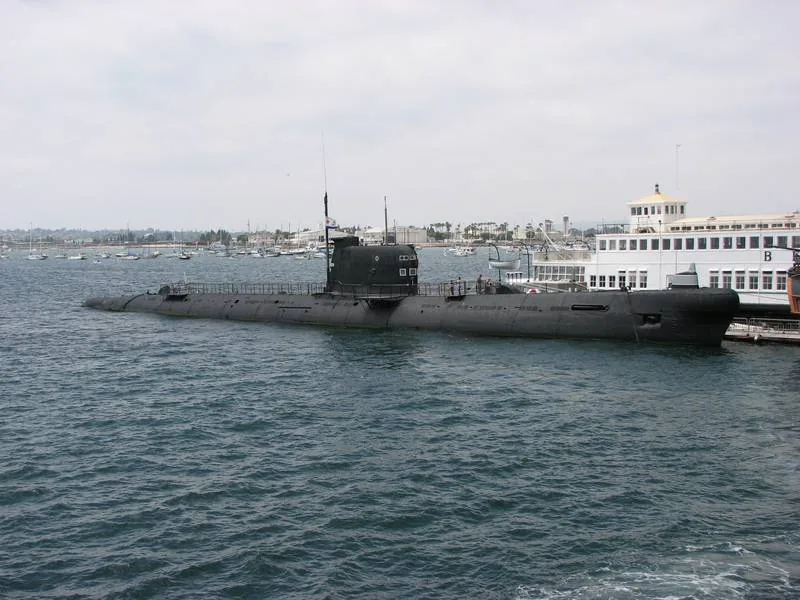
Vasili Arkhipov was a Soviet naval officer born in 1926 to a peasant family in a village outside Moscow. On October 27, 1962, he refused to authorize the launch of a nuclear torpedo from the submarine B-59 during the Cuban Missile Crisis. His refusal was the only thing that stopped the weapon from being fired. The submarine's captain and its political officer both wanted to launch. Arkhipov, the senior officer aboard as chief of staff of the submarine flotilla, said no. A nuclear explosion against an American carrier group at the tensest moment of the Cold War would have been extremely difficult to contain. Arkhipov was 36 years old. Almost no one outside the Soviet navy knew what he had done for four decades.
How Arkhipov survived the K-19 disaster
On July 4, 1961, Arkhipov was serving as deputy commander aboard K-19, one of the Soviet Union's first nuclear-powered ballistic missile submarines. During exercises in the North Atlantic near Greenland, the reactor's cooling system failed. Without coolant, the reactor was heading toward a meltdown.
The captain, Nikolai Zateyev, ordered crew members to improvise a backup cooling line. Eight sailors entered the reactor compartment, working in lethal radiation, and welded a makeshift pipe to restore coolant flow. They prevented the meltdown. All eight died within weeks from radiation exposure. Many of the rest of the crew, Arkhipov included, received serious doses that would affect their health for the rest of their lives. The navy classified the disaster. Sailors called K-19 "Hiroshima."
How Arkhipov refused to fire on Black Saturday
In October 1962, the Soviet Union sent four diesel-electric Foxtrot-class submarines to screen its military deployment to Cuba. Arkhipov was chief of staff of the flotilla, riding aboard B-59. Each boat carried a T-5 torpedo fitted with a nuclear warhead.
October 27 was the worst day of the crisis, later known as Black Saturday. B-59 was near the American quarantine line, roughly 60 meters down. A US naval force of eleven destroyers and the carrier USS Randolph had been tracking it for hours. The submarine had stayed below the surface in tropical waters for far too long. Its air conditioning had failed, and the temperature inside had climbed past 45°C. Carbon dioxide was building up, and the batteries were nearly flat. The crew had been out of radio contact with Moscow for days.
To force the submarine to surface and identify itself, the Americans dropped practice depth charges, small explosives meant as a signal, not as weapons. Inside B-59, the crew heard only blasts hitting the water around them. Captain Valentin Savitsky, exhausted and cut off from any outside information, concluded that the war had started. He ordered the nuclear torpedo readied and said he intended to fire it at the American ships.
On most Soviet submarines, launching a nuclear weapon required two people to agree: the commanding officer and the zampolit, the political commissar assigned to the boat. B-59's zampolit, Ivan Maslennikov, sided with Savitsky. But because Arkhipov was the flotilla's chief of staff and the senior officer aboard, his consent was also required. Three officers had to agree. Arkhipov refused.
He pointed out that the explosions were falling next to the boat, not striking it, so they had to be signals. He said no one aboard had the authority to use a nuclear weapon without orders from command. He urged Savitsky to bring B-59 up and restore radio contact.
Savitsky relented. B-59 rose into the center of the American formation, identified itself, and was allowed to leave. The torpedo was never armed.
What happened to Vasili Arkhipov?
Arkhipov continued his career in the Soviet navy after the crisis. He was promoted to rear admiral in 1975 and became head of the Kirov Naval Academy. In 1981, he was promoted to vice admiral. He retired in the mid-1980s.
Arkhipov died on August 19, 1998, at the age of 72. The cause was kidney cancer, which has been linked to the radiation he received aboard K-19 in 1961.
His role aboard B-59 was not publicly known for decades. The story emerged in the 1990s and 2000s through Russian oral testimony gathered by researchers and published by the National Security Archive. In 2017, the Future of Life Institute gave its inaugural Future of Life Award to Arkhipov's family in his honor. His daughter Elena and grandson Sergei accepted the award at a ceremony in London.
The detailed account of what happened inside B-59 rests largely on one person's recollection, and historians have urged caution. When Russia declassified Cuban Missile Crisis records in 2022, the documents did not mention the incident. The central fact is not in question: B-59 had a nuclear weapon aboard and chose not to use it. The moment-by-moment account of the argument between Arkhipov and Savitsky is less certain.
What is not in dispute is the outcome. A nuclear explosion against an American carrier group at the most dangerous point of the Cold War would have been very difficult to keep from escalating. Arkhipov's refusal kept that from happening.