
Cecil Rhodes
Cecil Rhodes was a British mining magnate who built the De Beers diamond monopoly and served as prime minister of the Cape Colony.
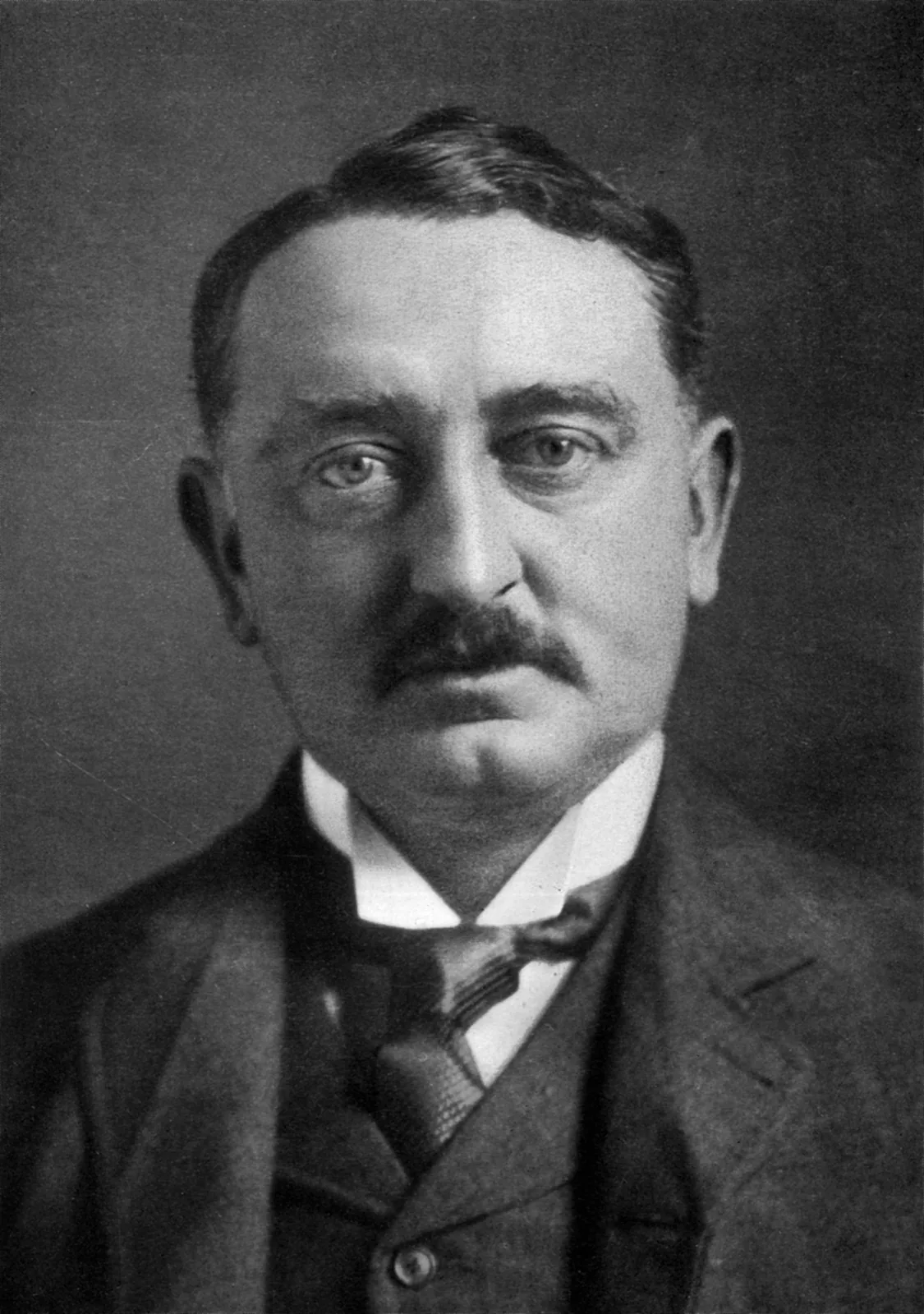
Cecil Rhodes was a British mining magnate and politician who, before he turned 50, controlled most of the world's diamond supply, ran a British colony, and had a country named after him. Born in 1853 in Hertfordshire, England, he was the son of a clergyman and grew up sickly with weak lungs. His family sent him to South Africa at sixteen, hoping the dry climate would help. He never came back to stay. Within two decades he founded De Beers Consolidated Mines, which by 1890 accounted for roughly 90 percent of global diamond output. From 1890 to 1896 he was the Cape Colony's prime minister and used his mining fortune to push British rule deep into Africa. He never married, had no children, and died in 1902 at 48.
How Cecil Rhodes built the diamond monopoly
Rhodes arrived in South Africa in 1870 and reached the Kimberley diamond fields a year later, at eighteen. From 1873 he split his time between Kimberley and Oriel College, Oxford, shuttling back and forth between diamond mines and Latin classes until he took his degree in 1881. Most prospectors at Kimberley were digging for individual stones. Rhodes understood early that the real money was in owning the mines, not in finding diamonds one at a time. Over the next seventeen years he bought out rival mining companies one by one, financed by the Rothschild banking family. He established De Beers Consolidated Mines in 1888. Within two years the company controlled nearly all of the world's diamond output.
Rhodes wanted wealth as a way to gain power, not for its own sake. He applied the same consolidation method to gold when prospectors struck it on the Witwatersrand. By his mid-thirties he was one of the richest and most powerful men in southern Africa. The diamond monopoly he built proved durable. De Beers dominated the global diamond trade for more than a century after his death.
How Rhodes tried to build a British Africa
At 23, Rhodes had written what he called his "Confession of Faith," arguing that the Anglo-Saxon race was the greatest on earth and that Britain should bring as much of the world as possible under its rule. He supported laws that stripped Black South Africans of land and voting rights. In 1890 he became the Cape Colony's prime minister and used the office to pursue his vision of a continuous belt of British territory from Cape Town to Cairo.
To build that belt, Rhodes chartered the British South Africa Company, which pushed northward with Maxim guns and treaties that African leaders could not read. The company seized the land north of the Limpopo River and named it Rhodesia. That territory is today Zimbabwe and Zambia.
In late December 1895, Rhodes's close associate Leander Starr Jameson led about 500 armed men into the Transvaal, a Boer republic, expecting British settlers there to rise up against the Boer government. The settlers did not rise. Rhodes tried to call off the raid, but Jameson had already crossed the border. Boer forces surrounded the column and forced it to surrender on January 2, 1896. Rhodes was forced to resign as prime minister. The failed raid poisoned relations between Britain and the Boer republics and helped bring on the Second Boer War three years later.
Rhodes spent his last years in poor health. He died on March 26, 1902, at his seaside cottage in Muizenberg, near Cape Town. His heart had been failing for years.
What is the Rhodes Scholarship?
In his will, Rhodes directed a large share of his fortune toward creating the Rhodes Scholarship, which sends students to the University of Oxford. It is the world's oldest graduate scholarship open to students from multiple countries. The first scholars arrived at Oxford in 1903, a year after Rhodes's death. Today the program awards more than 100 scholarships each year to students from dozens of countries.
The Rhodes Must Fall movement
Rhodes's legacy is more contested now than at any point since his death. In March 2015, students at the University of Cape Town launched the Rhodes Must Fall campaign, demanding the removal of a bronze statue of Rhodes on campus. The university took the statue down a month later. The movement spread to Oxford, where students called for Oriel College to remove its own statue of Rhodes, the same college where he had studied more than a century earlier. In 2021, Oriel's governing body decided to keep the statue, citing the cost and complexity of removal.
The debate goes beyond statues. Rhodes built his fortune and his political career on the belief that white British rule was good for the world, and he backed laws that dispossessed Black Africans of land and political rights. The Scramble for Africa that Rhodes helped drive reshaped the continent in ways that last today. De Beers, the company Rhodes founded, still operates, though its majority owner, Anglo American, has been trying to sell it since 2024. The Rhodes Scholarship still sends students to Oxford. Rhodes remains one of the most debated figures of the British Empire.