
Carl von Clausewitz
Carl von Clausewitz was a Prussian general whose book On War defined war as the continuation of politics by other means.
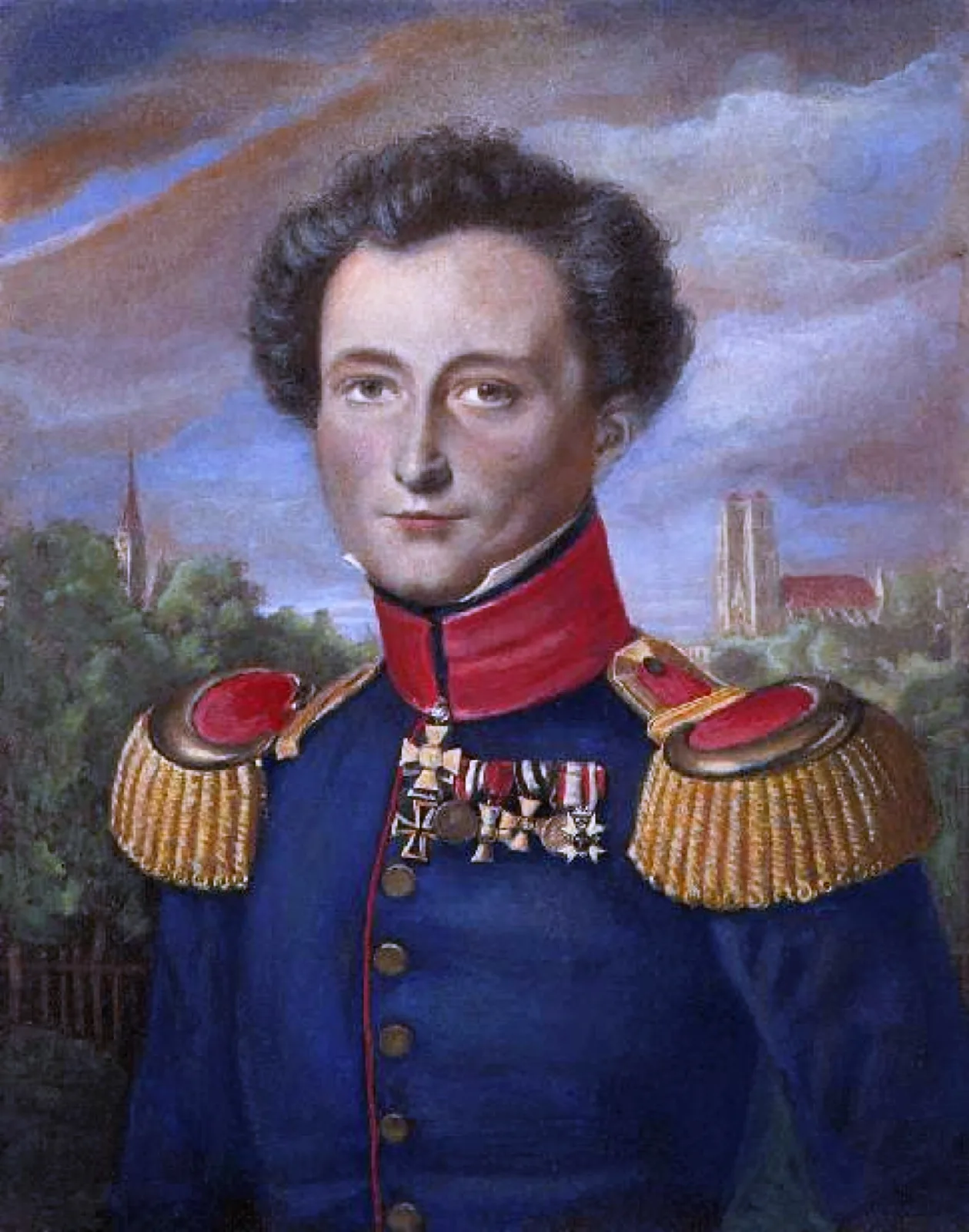
Carl von Clausewitz was a Prussian general and military theorist who lived from 1780 to 1831. He wrote On War (Vom Kriege), widely considered the most important work on military theory ever published. Its central argument is that war is not an end in itself but a political instrument, a way for one state to force another to do what it wants. He summed it up in the most quoted sentence in military writing: war is merely a continuation of policy, carried on by other means. Clausewitz never finished the book. He died of cholera in 1831, and his wife Marie edited his drafts and published them the following year.
How Clausewitz became a military theorist
Clausewitz was born in 1780 in Burg, near Magdeburg, in Prussia. His father was a retired army officer who had become a tax official. Clausewitz joined the Prussian army at age twelve. By thirteen he was fighting in the campaigns against Revolutionary France.
In 1801 he enrolled at the War College in Berlin. The college's director, Gerhard von Scharnhorst, noticed his ability and became his mentor. Clausewitz graduated first in his class in 1803.
The event that shaped his thinking came in 1806. Napoleon invaded Prussia and destroyed its army at the twin battles of Jena and Auerstedt, both fought on the same October day. Clausewitz fought in the campaign and was taken prisoner. After his release, he worked alongside Scharnhorst on the effort to rebuild the Prussian military from the ground up.
In 1812, Napoleon compelled Prussia to join his invasion of Russia. Clausewitz refused to serve under French command. He resigned his Prussian commission and joined the Russian army instead. During the retreat from Moscow, he helped negotiate the Convention of Tauroggen, which convinced the commander of a Prussian corps in Napoleon's army to declare his force neutral and stop fighting alongside France. That agreement helped spark the wider coalition that defeated Napoleon.
Clausewitz returned to Prussian service and became director of the War College in Berlin in 1818. He spent the next twelve years writing On War but never finished it. In 1831, after serving as chief of staff to a Prussian army monitoring the Polish uprising, he caught cholera and died on November 16 at the age of 51. At his death, On War existed only as a stack of drafts. His wife Marie, who had helped research the book and copied parts of the manuscript in her own hand, edited the drafts and published them in 1832.
What did Clausewitz mean by "war is a continuation of policy"?
The sentence is the most quoted in military writing, but it is usually shortened in a way that changes its meaning. The full passage says that war is not just a political act but a political instrument, a continuation of political dealings carried on by other means.
The word "continuation" matters. Clausewitz did not mean that politics stops when fighting starts and picks up again when it ends. He meant the opposite: the political relationship between two sides runs through the war and should govern it at every stage. The fighting is one tool among several that a government uses to get what it wants. A war fought without a clear political aim is not just wasteful but dangerous, because the violence has no direction.
The practical consequence is that the military must serve the government's political goals, not the other way around. Generals who ignore the political objective, or politicians who start wars without one, make the same mistake. They treat the fighting as the purpose instead of the means.
The main ideas in On War
On War is a theory of war's nature rather than a manual for winning battles. Besides the primacy of politics, it introduces several ideas that military thinkers still use.
Clausewitz argued that the gap between planning a war and fighting one is enormous. He called this gap "friction." Fog, fatigue, fear, bad information, and broken equipment all pile up in combat. Even simple operations become difficult, and plans that looked perfect on paper fall apart on the ground.
He drew a line between what he called "absolute war," a theoretical extreme where each side escalates without limit, and "real war." No actual war reaches that extreme. Real wars are held back by politics, limited resources, exhaustion, and the will of the people.
Clausewitz argued that every opponent has what he called a "center of gravity," the single source of power whose collapse brings down the rest. It might be an army, a capital city, a leader, or an alliance. Strategy should aim at the center of gravity rather than scattering effort across lesser targets.
He also identified the "culminating point" of an offensive: the moment when an advancing army has stretched so far from its supplies and so deep into hostile territory that it begins to weaken. A commander who pushes past that point invites a counterattack. Napoleon's 1812 march on Moscow is the classic example.
Finally, Clausewitz described war as shaped by three forces: the passion and hatred of the people, the role of chance and creativity among the military and its generals, and the deliberate policy of the government. He called this the "trinity" and argued that any theory of war that ignored one of the three was incomplete.
Critics have asked whether a thinker focused on wars between European states can say anything useful about nuclear conflict or guerrilla warfare. But Clausewitz's core idea, that war without a political purpose is war without direction, keeps proving applicable. Cold War nuclear strategists cited him. Counterinsurgency planners in Iraq and Afghanistan invoked him. Nearly two centuries after his death, On War is still assigned at military academies around the world.