
Columbian Exchange
The Columbian Exchange was the transfer of crops, animals, and diseases between the Americas and Afro-Eurasia after Columbus's 1492 voyage.
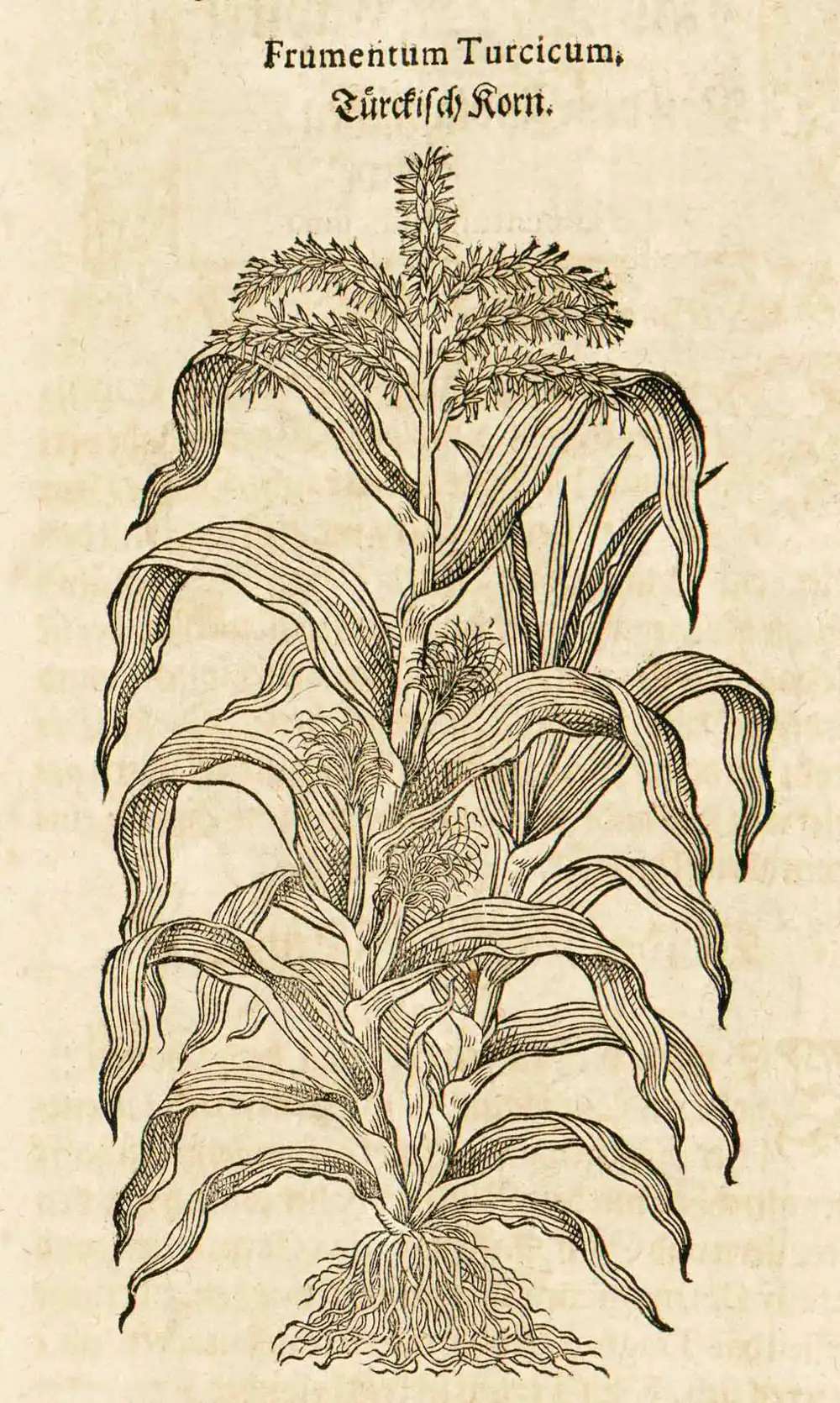
The Columbian Exchange was the transfer of crops, animals, and diseases between the Americas and Afro-Eurasia that began after Christopher Columbus crossed the Atlantic in 1492. It changed life on every continent. Potatoes and maize from the Americas helped feed hundreds of millions of people in Europe, Africa, and Asia over the following centuries. Horses and cattle from the Old World transformed the Americas. Old World diseases, above all smallpox, killed the great majority of indigenous Americans within a few generations of first contact. Alfred Crosby, a historian then at Washington State University, coined the term in 1972.
How Columbus's voyages started the Columbian Exchange
The two hemispheres had been almost entirely cut off from each other for more than ten thousand years, ever since rising seas at the end of the last Ice Age submerged the land bridge between Siberia and Alaska. The Americas had maize, potatoes, tomatoes, and chili peppers but no horses, cattle, or wheat. Afro-Eurasia had wheat, rice, sugarcane, and domesticated livestock but no potatoes or tomatoes.
That changed when Columbus's three ships reached the Caribbean in October 1492. On his second voyage in 1493, Columbus brought seventeen ships carrying more than a thousand settlers to the island of Hispaniola, along with horses, cattle, pigs, sheep, and goats. Within decades, Spanish conquistadors and settlers had spread these animals across the Caribbean and into Mexico and South America.
Spanish and Portuguese ships carried American crops in the other direction: potatoes, maize, tomatoes, tobacco, peanuts, cacao, and chili peppers all crossed the Atlantic for the first time. The exchange also brought sugarcane from the Old World to the Caribbean, where the tropical climate and forced labor on plantations produced large profits. Demand for plantation workers became a central driver of the Atlantic slave trade. Between the 1500s and the 1800s, slave traders shipped an estimated twelve million Africans to plantations in the Americas.
How Old World diseases destroyed the Americas
Disease was the most destructive part of the Columbian Exchange. Eurasians and Africans had lived for thousands of years alongside domesticated animals in crowded settlements, and over generations they developed partial resistance to epidemic diseases, including smallpox, measles, and influenza. The people of the Americas, isolated from those diseases for millennia, had none.
When the pathogens arrived, they spread faster than the conquistadors who carried them. Smallpox swept through the Aztec Empire beginning in 1520, killing between a quarter and half of the population. Epidemics reached the Inca Empire before the Spanish conquistador Francisco Pizarro did. Scholars' estimates vary widely and remain debated, but many put the death toll at roughly nine in ten people across the Americas in the first one to two centuries after contact.
The population collapse, not Spanish weapons, is what made the rapid conquest of the Aztec and Inca empires possible. A few hundred soldiers could not have conquered millions of people. They won after epidemics had already killed much of the population and weakened the states that defended them. It was one of the largest demographic catastrophes in recorded history, and no one had set out to cause it.
How New World crops changed the Old World
The crops that traveled in the other direction took longer to have their effect, but the effect was large. Potatoes grew well in cold northern European soils where grain struggled, and they yielded several times more food per acre than wheat or rye. Maize became a staple across southern Europe, Africa, and China. Economists estimate that the potato contributed to somewhere between twelve and twenty-five percent of the population growth in Afro-Eurasia between 1700 and 1900.
Dependence on a single crop carried risk. By the 1840s, much of Ireland's poor relied on the potato as their main source of food. When a blight began destroying the harvest in 1845, the resulting famine killed about a million people and drove at least another million to emigrate.
Other crops from the Columbian Exchange became so closely associated with foreign cuisines that their American origins are easy to forget. Tomatoes are now central to Italian cooking. Chili peppers, unknown outside the Americas before 1492, spread through Portuguese and Spanish trading networks and now appear in dishes from Sichuan to Kerala to Thailand.
Why is it called the Columbian Exchange?
The historian Alfred Crosby coined the term in his 1972 book, The Columbian Exchange: Biological and Cultural Consequences of 1492. The name refers to Christopher Columbus, whose voyages set the process in motion. Before Crosby's book, most histories of the period focused on politics and military conquest. Crosby argued that the movement of plants, animals, and diseases across the Atlantic changed the world more deeply than any military conquest. His book helped found the field of environmental history.
After 1492, no part of the world developed in isolation again. The crops, animals, and diseases that crossed the Atlantic shaped the population, diet, and economy of every continent.