
Constantine the Great
Constantine the Great was the Roman emperor who ended the persecution of Christians and moved the capital east to Constantinople.
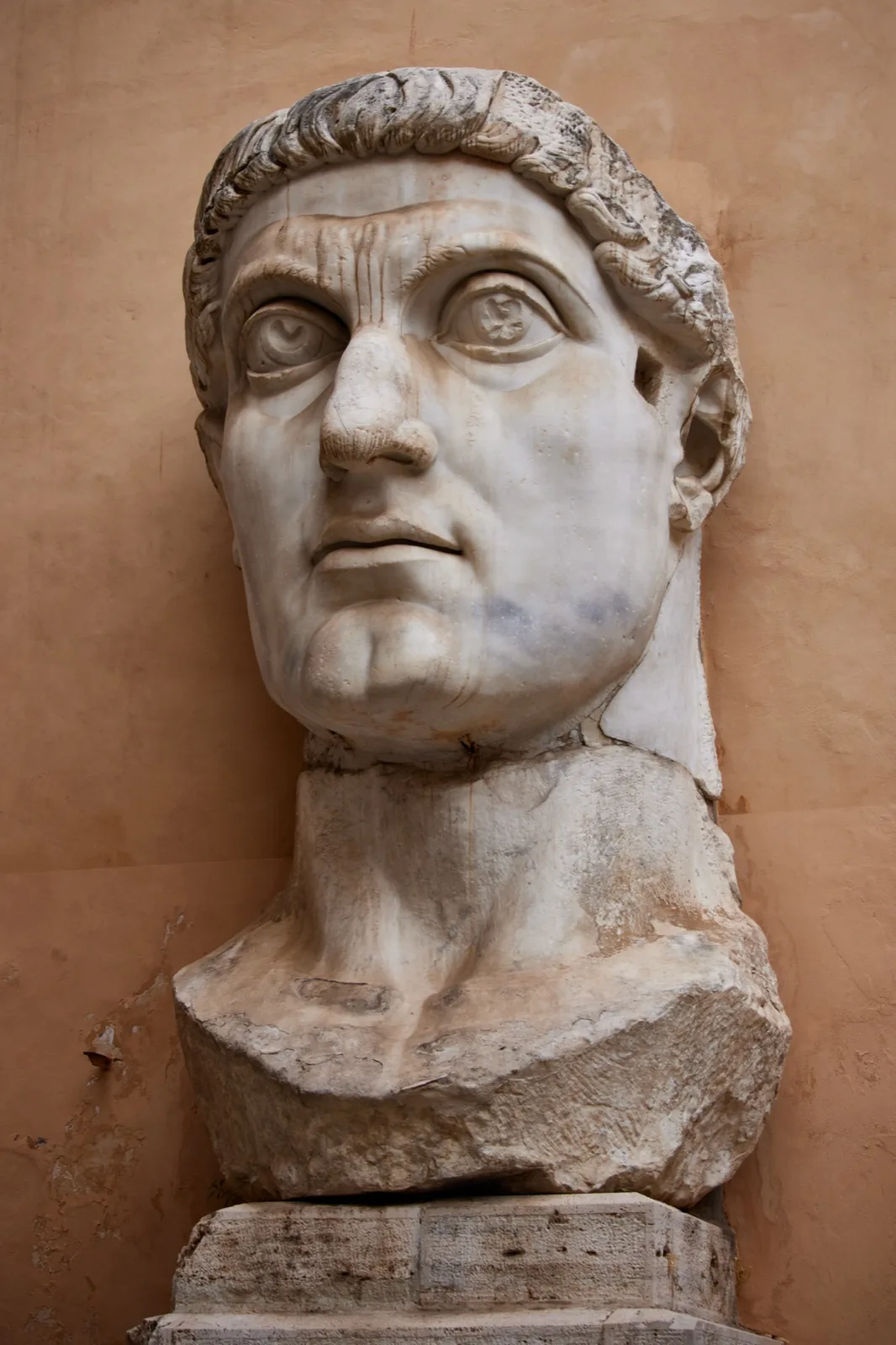
Constantine the Great was a Roman emperor who ruled from 306 to 337 CE. Born around 272 in Naissus (modern Niš, Serbia), his father, Constantius, was a military officer who climbed to co-emperor, and his mother, Helena, came from humble origins. Constantine ended the persecution of Christians in the Roman Empire, called the first empire-wide church council, and founded Constantinople as a new capital on the strait between Europe and Asia. When he took power, Christians were a persecuted minority. By the time he died, Christianity was the favored religion of the Roman state, and it would go on to become the dominant religion across Europe.
How Constantine became emperor
Constantine grew up in the imperial court during a period of shared rule called the Tetrarchy, in which four co-emperors governed the Roman Empire. His father, Constantius, was one of the four. When Constantius died at York, in Roman Britain, on July 25, 306, his troops proclaimed Constantine emperor on the spot. He was about 34.
The other co-emperors refused to accept this, and Constantine spent the next eighteen years fighting civil wars to become sole ruler. The turning point came in 312, when he marched south into Italy to challenge Maxentius, who held Rome. Christian sources say Constantine saw a vision of a cross in the sky before the fighting. With it were words usually quoted in Latin as "in hoc signo vinces," meaning "by this sign, conquer." He told his troops to paint the Christian chi-rho symbol on their shields. On October 28, the armies clashed at the Milvian Bridge, which spans the Tiber just north of Rome. Constantine's cavalry broke Maxentius's line and drove his soldiers into the river. Maxentius drowned. Constantine took Rome and publicly thanked the Christian God for the outcome.
It took another twelve years before Constantine defeated his last rival, the co-emperor Licinius, in 324. Only then did he rule the entire empire alone.
How Constantine made the Roman Empire Christian
In 313, Constantine and Licinius issued what is called the Edict of Milan. It ended the official persecution of Christians, allowed them to worship openly, and ordered the return of property the state had taken from them.
Once Constantine was sole ruler, he went further. In 325, he called about 300 bishops to the city of Nicaea, in modern Turkey, to resolve a theological question that was splitting the church: what was Christ's relationship to God the Father? A priest named Arius taught that Christ was created by God the Father and was lesser than him. Others held that Christ was fully divine and equal to the Father. Constantine opened the council himself, the first time a Roman emperor had done so. The council condemned Arius's position and issued the first version of the Nicene Creed, the statement of faith that most Christian churches still recite today.
Constantine also funded the construction of major churches, gave the clergy legal privileges, and in 321 declared Sunday a day of rest. He did not outlaw the old Roman religions, but he made clear which faith he favored.
Why did Constantine build Constantinople?
In 330, Constantine refounded the ancient Greek city of Byzantium as Constantinople. The site was well chosen. It sat on the Bosporus, the narrow strait between Europe and Asia, and controlled the sea route from the Mediterranean to the Black Sea. It was closer than Rome to the empire's eastern frontiers, where most military threats came from, and easier to defend, since water surrounded it on three sides. Constantine designed it as a Christian capital, filling it with churches. He offered free bread to attract settlers, and the city grew quickly.
Rome's importance faded as power shifted east. The western provinces fell apart during the fifth century, but Constantinople endured. It became the capital of what historians call the Byzantine Empire. The city lasted another thousand years, until the Ottoman sultan Mehmed II took it in 1453. Today it is Istanbul.
Constantine's baptism and private life
Constantine was not baptized until he lay dying at Nicomedia in May 337. The bishop Eusebius of Nicomedia performed the ceremony. This was not unusual for the time. Many fourth-century Christians delayed baptism because they believed it washed away all sins, and they wanted the cleansing to come as late as possible. Constantine spent three decades as a patron of Christianity without formally joining the church.
In 326, Constantine ordered the execution of his eldest son, Crispus, a successful military commander. Shortly afterward, his wife Fausta also died, reportedly suffocated in an overheated bath on Constantine's orders. No official reason was ever given. Later writers claimed Fausta had falsely accused Crispus of trying to seduce her. In their account, when Constantine discovered the lie, he had her killed too. He had both their names erased from public records.
Historians still debate whether Constantine's faith was genuine or a political calculation. His public decisions, though, reshaped the world. He made Christianity the favored religion of the Roman state, and it is the largest religion in the world today. The city he built stood as a major capital for more than a thousand years after his death.