
Haitian Revolution
The Haitian Revolution (1791–1804) was the only slave revolt in history to found a country, and it forced Napoleon to sell Louisiana to the United States.
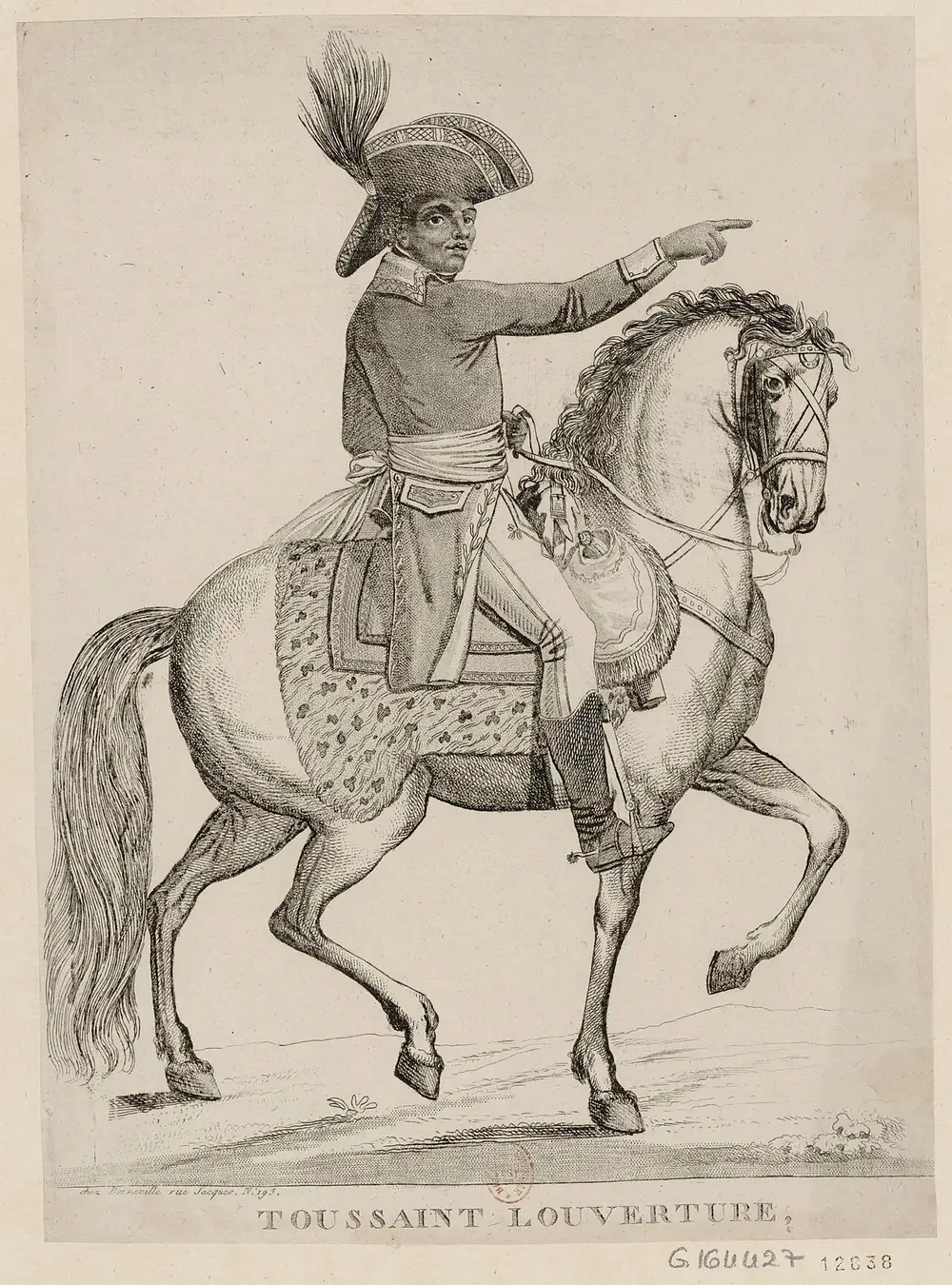
The Haitian Revolution was a thirteen-year war (1791–1804) in which Saint-Domingue's enslaved population overthrew their owners, defeated three European armies, abolished slavery, and founded the Republic of Haiti. No other slave revolt in history has produced an independent country. The revolution's central figure, Toussaint Louverture, was a formerly enslaved man who outmaneuvered French, Spanish, and British forces before Napoleon had him captured and left to die in a French prison. The war destroyed Napoleon's plans for a Western empire and forced the sale of Louisiana to the United States, doubling American territory.
How the uprising began
Saint-Domingue occupied the western third of the island of Hispaniola. By the late 1780s it produced more sugar and coffee than any other colony in the Americas, and it earned more for France than all of Canada ever had. That wealth came from the labor of roughly 500,000 enslaved Africans, who outnumbered the colony's 40,000 white colonists by more than ten to one. The mortality rate on the plantations was so high that the colony needed a constant flow of new captives from Africa just to maintain its workforce.
Saint-Domingue also had about 28,000 free people of color. Some were wealthy landowners, but a rigid color line denied them political rights regardless of their property or education.
The French Revolution destabilized everything. When France's National Assembly declared in 1789 that every person is born free with equal rights, the question of who that included reached the colony within months. Free people of color demanded what the declaration promised. White colonists refused. The enslaved majority, many of whom had lived as free people in Africa and some of whom had served as soldiers, watched both sides fight and saw an opening.
On the night of August 22, 1791, enslaved workers in the northern plains rose together. In the weeks that followed, the rebels burned more than a thousand plantations.
How Toussaint Louverture shaped the revolution
The uprising became something larger once it found a leader who could think beyond the next battle. Toussaint Louverture was born enslaved in 1743 on a plantation near Cap-Francais. He was freed in 1776, at the age of 33, and had spent years managing livestock and overseeing property for his former owner. He was literate, well-read, and a skilled horseman.
Toussaint understood that the European powers fighting over Saint-Domingue could be played against each other, and he built his strategy around that insight. When Spain and Britain invaded the colony to exploit the chaos, Toussaint joined Spain's side against France. Then, when the French revolutionary government abolished slavery across its colonies in 1794, he switched sides. He brought his troops over to France and helped drive out the Spanish and British forces. By 1801 he governed the entire island. He wrote a constitution that named him governor for life and kept Saint-Domingue formally under French sovereignty.
Napoleon would not accept it. In 1802 he sent more than 20,000 soldiers under his brother-in-law, General Charles Leclerc, with orders to retake the colony and, eventually, to bring back slavery. Toussaint was lured to a meeting, arrested, and shipped to Fort de Joux in the Jura Mountains. He died there on April 7, 1803, of cold and neglect. No doctor ever visited him during his imprisonment.
Toussaint's capture did not end the war. It removed any chance of a negotiated peace. Jean-Jacques Dessalines took command, and the fighting became a struggle to the finish on both sides. Yellow fever destroyed the French expedition. It killed Leclerc himself and most of the European soldiers France deployed to the island. Dessalines proclaimed independence on January 1, 1804, and named the new republic Haiti, after the island's original Taino word.
How did the Haitian Revolution lead to the Louisiana Purchase?
Napoleon had planned for Louisiana, the vast French territory in North America, to serve as the agricultural base for a restored Caribbean empire centered on Saint-Domingue. Louisiana's grain would feed the colony's workforce, and the colony's sugar would be sold in Europe. Without Saint-Domingue, Louisiana had no purpose in that plan.
In 1803, with his Caribbean army destroyed and a new war with Britain approaching, Napoleon sold Louisiana to the United States for about $15 million, roughly $400 million in today's money. The purchase doubled American territory, adding land that would eventually become all or part of fifteen states. Haiti received nothing from the deal. The United States did not recognize Haiti as an independent nation until 1862, largely because American slaveholders feared the example of a nation built by people who had freed themselves from slavery.
Why did Haiti have to pay France after winning its independence?
In 1825, France sent warships to Haiti and demanded 150 million francs in exchange for recognizing the country's independence. The payment was meant to compensate former slaveholders for the loss of their "property," meaning the people who had freed themselves. Haiti, blockaded and without allies, agreed.
The country took loans from French banks to cover its first payment, beginning a cycle of debt. In 1838, France reduced the remaining amount to 60 million francs, but Haiti still needed more loans to pay even that. In total, Haiti paid roughly 112 million francs, the equivalent of more than $500 million in today's money. The last of those loans was not retired until 1947, more than 140 years after independence.