
Morris Chang
Morris Chang is the founder of TSMC, the company that manufactures most of the world's advanced computer chips.
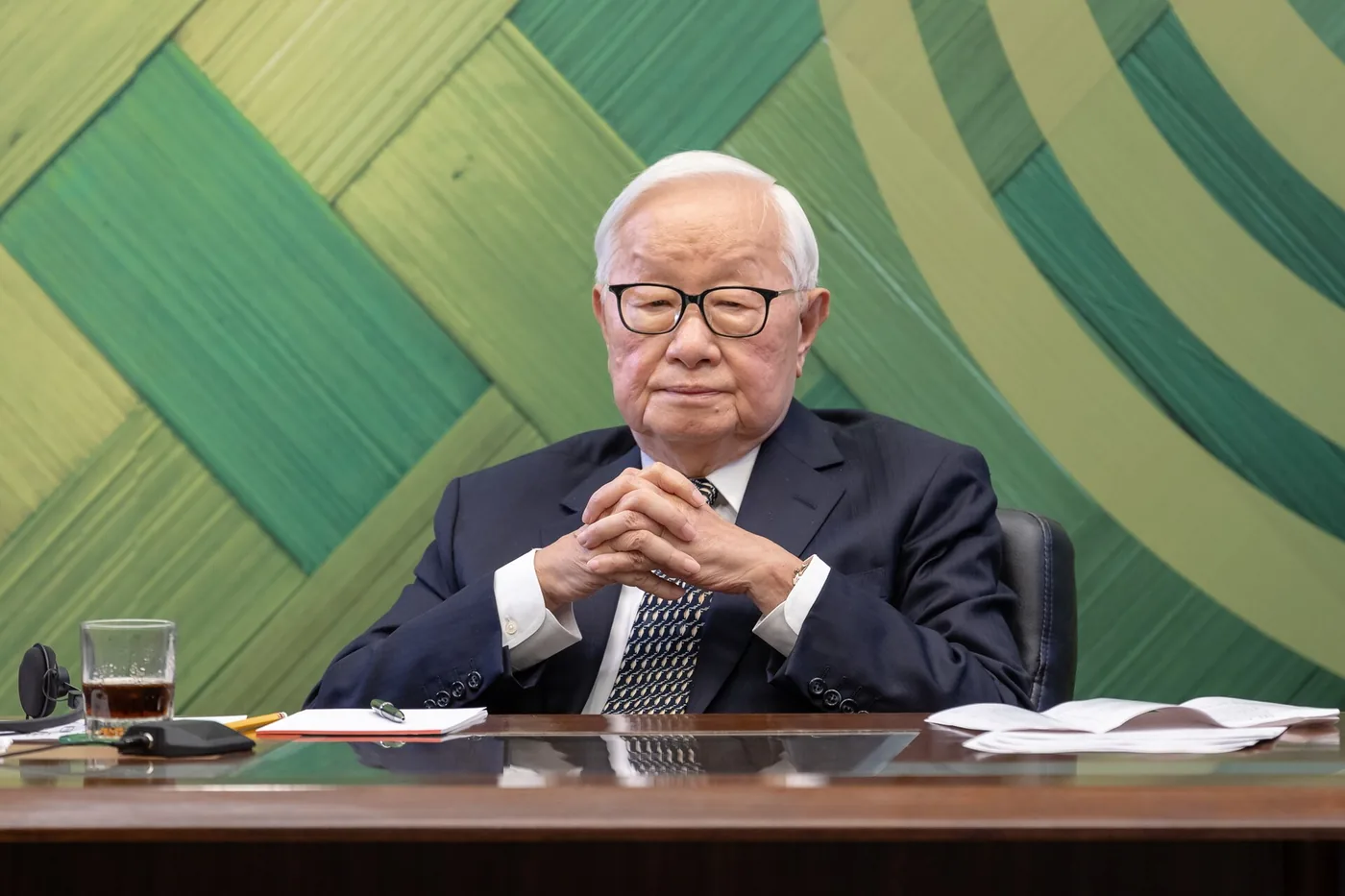
Morris Chang is the founder of Taiwan Semiconductor Manufacturing Company (TSMC), the world's largest chipmaker. He was born in 1931 in Ningbo, China, grew up during years of war, and moved to the United States at eighteen. He worked at Texas Instruments for twenty-five years, rising to run the company's worldwide semiconductor business. In 1985, Chang moved to Taiwan, and in 1987 he founded a company built on an idea his former employer had rejected: a factory that made chips for other companies but designed none of its own. That idea, the foundry model, reshaped the semiconductor industry. By 2025, TSMC manufactured most of the world's advanced logic chips.
How Morris Chang went from Texas Instruments to Taiwan
Chang was born into a middle-class family. His father was a banker, and the household had a large collection of books. The wars that swept across China between 1931 and 1949, the Japanese invasion, World War II, and the Chinese Civil War, kept the family moving: from Ningbo to Nanjing, Shanghai, Chongqing, and eventually Hong Kong. As a boy, Chang wanted to become a novelist. His father told him he would go hungry.
In 1949, at eighteen, Chang left for the United States. He entered Harvard and transferred to MIT, where he earned bachelor's and master's degrees in mechanical engineering. He later earned a doctorate in electrical engineering from Stanford. In 1958, Chang joined Texas Instruments as an engineering supervisor. His first assignment was a failing production line of germanium transistors for IBM, with yields near zero. Within three months he raised yields to 25-30%. Over the next twenty-five years, Chang rose to group vice president, running TI's worldwide semiconductor business. He also pioneered an aggressive pricing strategy: cut chip prices early to squeeze out competitors, then profit as rising volume drove costs down. The approach was controversial at the time but later became standard across the industry.
Chang expected to become chief executive. The company chose someone else. Chang left TI in 1983, spent about a year as president of General Instrument Corporation, and found himself unhappy there too. In 1985, the Taiwanese government recruited him to run its Industrial Technology Research Institute, the agency responsible for building a technology industry on the island.
How Chang founded TSMC
Taiwan in 1985 had almost no chip industry. The major chipmakers, Intel, Motorola and Texas Instruments all designed and built their own chips in their own factories. Taiwan had no world-class chip designers and no realistic way to catch up.
Chang saw what Taiwan did have: disciplined manufacturing, a large engineering workforce, and a government willing to invest. He proposed a company that would only manufacture chips, never design its own. Because it would not compete with its customers, any chip designer in the world could use it. And because the cost of building a fabrication plant would be shared across many customers, companies that could never have built their own factories could now design chips.
Chang had proposed something similar during his time at Texas Instruments, but the idea went nowhere. When he looked for partners in 1986, Intel and Texas Instruments both turned him down. The Dutch company Philips took a 28% stake and provided technology licenses in return. The Taiwanese government, through its National Development Fund, contributed roughly 48%. TSMC was founded on February 21, 1987, with Chang as chairman. He was fifty-five and received no equity in the company.
TSMC spent its first ten years as a small operation, manufacturing other companies' older chip designs. Then the companies that TSMC's model made possible started to grow. Nvidia, Qualcomm, Broadcom, Apple's chip design group, and later AMD all sent their designs to TSMC for manufacturing. None of them owned a factory. Each new generation of chipmaking equipment cost more than the last, and that favored the manufacturer with the most customers to share the cost. More customers paid for better equipment, which attracted still more customers. Intel continued to build chips only for its own products and over time fell behind.
Morris Chang after TSMC
Chang stepped down as CEO in 2005 and handed the role to Rick Tsai, a longtime executive. Four years later, during the global financial crisis, Chang returned as CEO. He ordered a large counter-cyclical capital investment, betting that demand would recover and that TSMC should be ready for it. The bet paid off. Chang retired for good in June 2018, at eighty-six.
In retirement, Chang has remained outspoken. He represented Taiwan at the APEC summits in 2021 and 2023 and has described Taiwan's semiconductor position as a matter of national security, not just commerce. He has been skeptical of efforts to build advanced chip factories in the United States, calling them expensive and unlikely to match Taiwanese efficiency, even as TSMC opened its own factory in Arizona. That factory posted a $514 million profit in its first full year of production in 2025.
Chang's decision in 1987 to split chip design from chip manufacturing made Taiwan central to the global chip supply. The debates over chip export controls, supply-chain security, and where the next fabrication plant should be built all trace back to that split. As of 2025, TSMC held about 70% of the global chip foundry market.