
Natanz
Natanz is Iran's largest uranium enrichment facility, built underground in secret and targeted by cyberattacks and airstrikes for two decades.
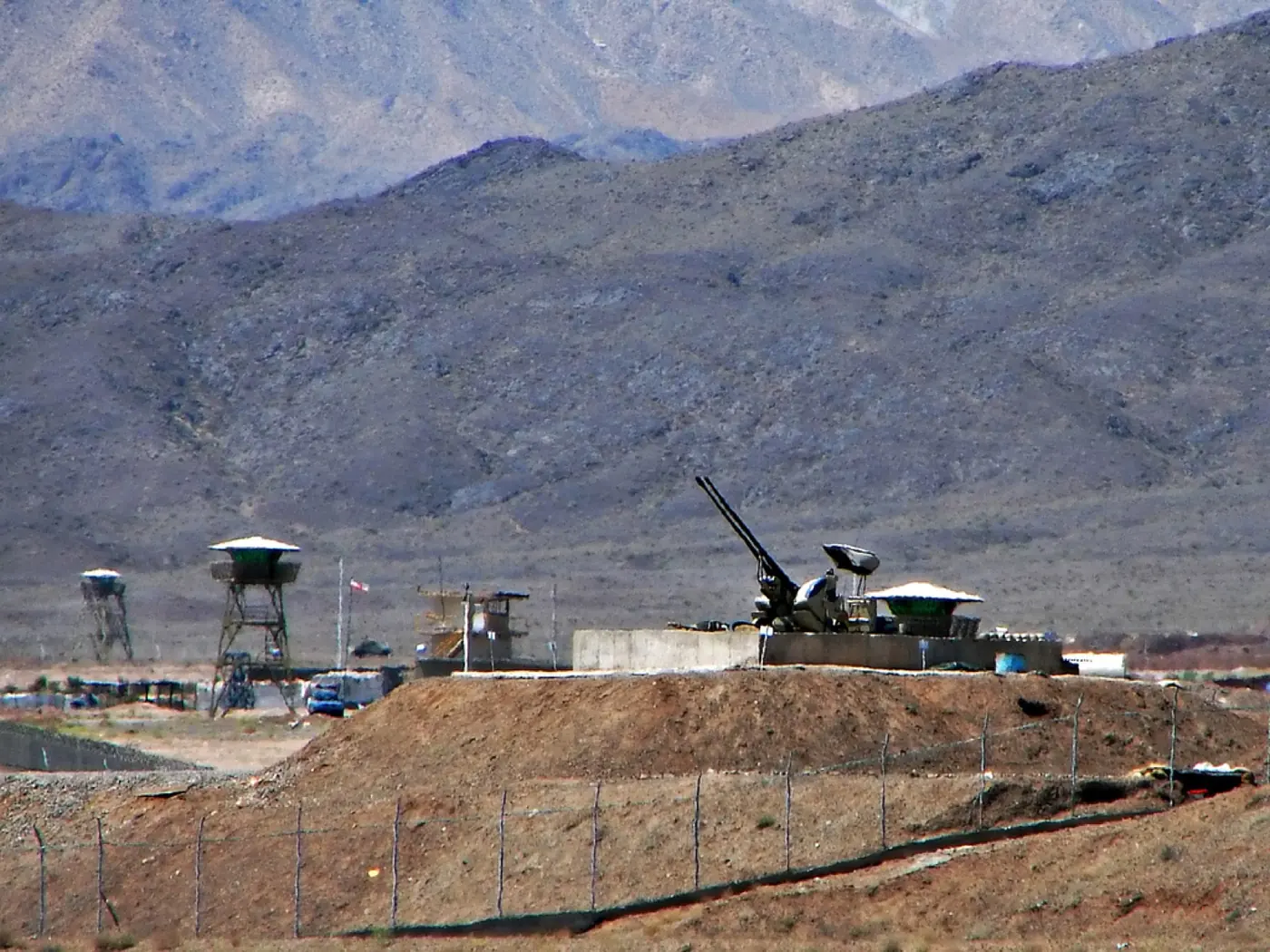
Natanz is Iran's largest uranium enrichment facility, about two hours south of Tehran near salt flats in central Iran. The site was built in secret starting around 2000 and remained publicly unknown until Iranian exiles disclosed it in August 2002. Its main building, the Fuel Enrichment Plant, is buried underground and hardened with reinforced concrete and earth to survive an airstrike. A smaller pilot plant sits above ground, used to test new centrifuge designs. Inside the main halls below, cascades of centrifuges process uranium hexafluoride gas, spinning it fast enough to separate the lighter, fissile uranium-235 from the heavier uranium-238. The enrichment level separates reactor fuel from bomb material: reactor fuel needs less than 5 percent, weapons-grade uranium requires about 90 percent. Since its discovery, Natanz has been at the center of the international standoff over Iran's nuclear program.
How Iran built Natanz in secret
Iran began building Natanz around 2000 without telling the International Atomic Energy Agency. The site was designed to be hard to destroy: the main enrichment halls sit underground, protected by reinforced concrete and meters of earth, with anti-aircraft guns around the perimeter.
The secret ended on August 14, 2002, when Alireza Jafarzadeh, a representative of the National Council of Resistance of Iran, held a press conference in Washington and announced that Iran was building a hidden nuclear facility. When IAEA inspectors arrived in February 2003, they found a uranium enrichment program more advanced than Western intelligence agencies had expected. Iran had obtained centrifuge designs through the nuclear smuggling network of A.Q. Khan, a Pakistani scientist who had also sold nuclear technology to Libya and North Korea.
The discovery set off a diplomatic crisis that lasted more than a decade. Iran insisted its program was peaceful. The United States, Israel, and much of Europe suspected it was aimed at building a weapon. In 2015, Iran agreed to the JCPOA, a deal that limited it to 5,060 older centrifuges at Natanz and capped enrichment at 3.67 percent. When the United States withdrew from the deal in 2018, Iran gradually abandoned those limits, installed more advanced centrifuges, and began enriching to higher levels.
Two decades of attacks on Natanz
Natanz has been targeted by cyberweapons, sabotage, and airstrikes over the past twenty years.
The first major attack was Stuxnet, a cyberweapon reportedly built by the United States and Israel and deployed around 2009-2010. Stuxnet infiltrated the computers controlling Natanz's centrifuges, commanded them to spin at destructive speeds, and displayed normal readings to operators while the machines tore themselves apart. It destroyed roughly 1,000 centrifuges before it was discovered.
After Stuxnet, the attacks turned physical. In July 2020, a fire destroyed a newly built centrifuge assembly building at the site. In April 2021, an explosion cut power to the underground enrichment halls. Iran blamed Israel. Each attack set Iran's program back by months, but Iran rebuilt each time, frequently replacing what was destroyed with newer, faster centrifuges. After the April 2021 explosion, Iran began enriching uranium to 60 percent, a level it had never reached before and close to the 90 percent threshold for a weapon.
On June 13, 2025, Israel launched a twelve-day air campaign against Iran's nuclear program. The strikes destroyed the surface-level pilot plant at Natanz where Iran had been producing 60 percent enriched uranium, along with the site's power supply. The United States entered the campaign on June 22, dropping 30,000-pound GBU-57 bunker-buster bombs on Natanz and the deeper enrichment facility at Fordow. A later IAEA assessment found that the buried centrifuge cascades had sustained severe damage and may not have survived.
In February 2026, a larger American and Israeli campaign struck Iran again. Ali Khamenei, Iran's supreme leader, was killed in a strike on his Tehran compound at the start of the operation. On March 3, the IAEA reported that entrance buildings at Natanz's buried enrichment plant had been hit again. Radiation levels outside the site's perimeter fence stayed normal throughout the strikes.
How much enriched uranium does Iran have?
As of September 2026, nobody outside Iran's government knows for certain.
Before the June 2025 strikes, the IAEA estimated that Iran held about 441 kilograms of uranium enriched to up to 60 percent. IAEA Director General Rafael Grossi said that if this material were enriched further to weapons-grade, it would be enough for more than ten nuclear warheads. Going from 60 to 90 percent enrichment requires far less work than reaching 60 percent from natural uranium, so Iran had already done most of the hard part. Analysis by the Bulletin of the Atomic Scientists suggested that Iran likely moved much of this uranium to Isfahan before the strikes began.
The IAEA has found no evidence that Iran is assembling a weapon. Nor can it rule that possibility out. IAEA inspectors have been unable to verify Iran's uranium stockpiles since mid-2025, and after February 28, 2026, the agency stopped conducting verification activities in Iran altogether for three months. The roughly 441 kilograms of highly enriched uranium remains formally unaccounted for.
For two decades, the negotiations over Iran's nuclear activities turned on what was happening inside Natanz: how many centrifuges were running, how capable they were, and to what level they enriched. The 2015 agreement and the conflict that erupted after it collapsed both came down to those questions. As of 2026, less is known about the answers than at any point since the site was discovered.