
JCPOA (Iran Nuclear Deal)
The JCPOA was a 2015 deal in which Iran capped its nuclear program for sanctions relief, undone by the US withdrawal in 2018 and dead by 2025.
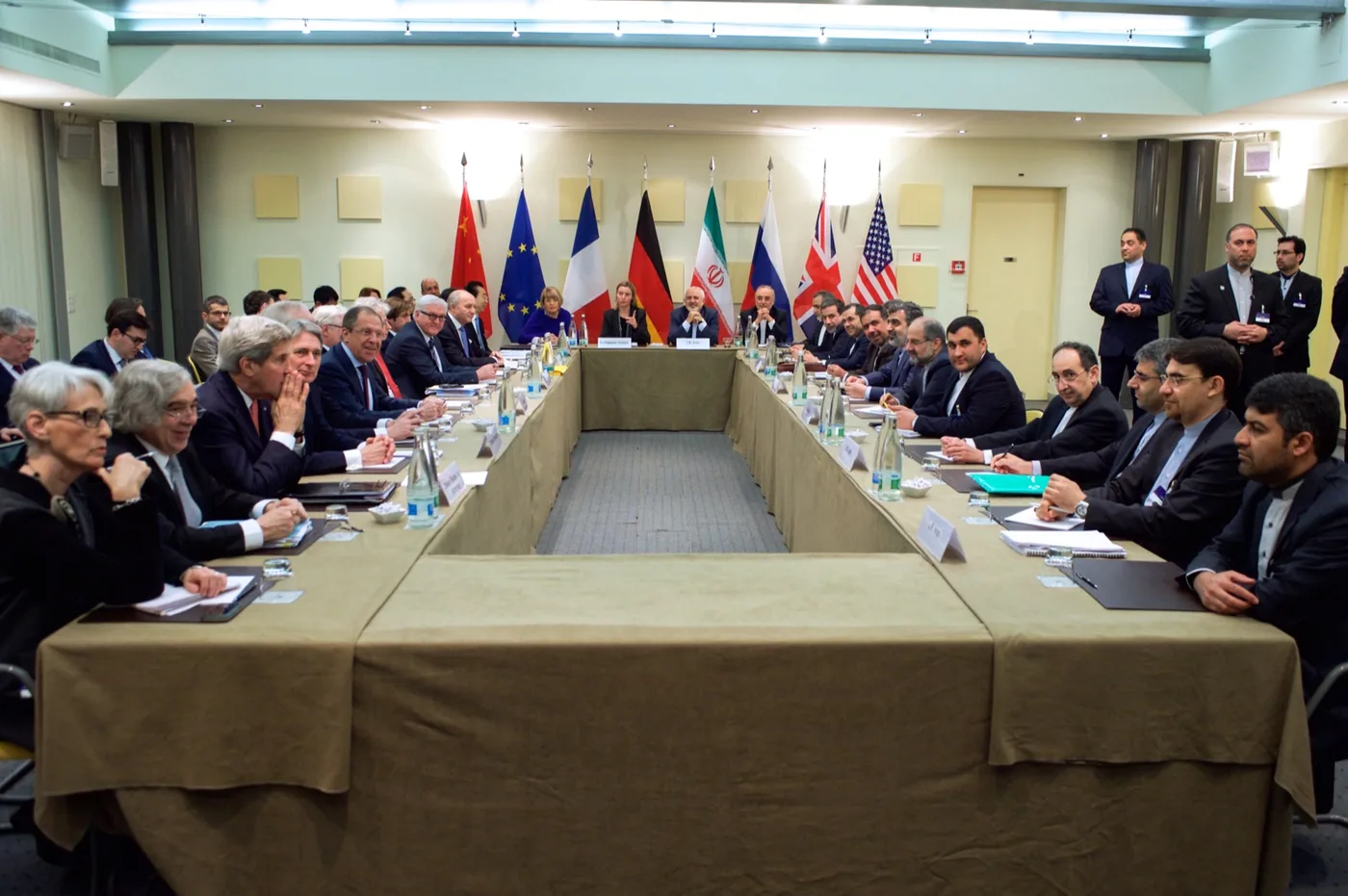
The Joint Comprehensive Plan of Action, known as the JCPOA or the Iran nuclear deal, was an agreement reached on July 14, 2015, between Iran and six world powers: the United States, Britain, France, Russia, China, and Germany. Iran agreed to curb its nuclear program in exchange for the removal of economic sanctions that had badly damaged its economy. The deal was designed so that Iran would need at least a year to produce enough weapons-grade uranium for a nuclear weapon. For about three years it worked, with the International Atomic Energy Agency confirming that Iran was meeting every commitment. The United States withdrew in 2018, and Iran began exceeding the deal's limits a year later. By 2025 the agreement was dead, its inspectors were gone, and the United States and Israel had attacked the nuclear sites the deal was designed to monitor.
How the JCPOA was negotiated
Iran's nuclear program had been a crisis for over a decade before talks began. By 2013, Iran had installed nearly 20,000 centrifuges to enrich uranium, and by Western estimates its stockpile was large enough to produce weapons-grade material for a bomb in two to three months. International sanctions had damaged Iran's economy but had not stopped the program from growing.
Serious negotiations started after Hassan Rouhani was elected Iran's president in 2013 on a promise to end the country's isolation. The talks were led by US Secretary of State John Kerry and Iran's Foreign Minister, Mohammad Javad Zarif. Zarif had spent many years in the United States, earning a PhD in international law from the University of Denver. Kerry broke his femur in a bicycle crash in France during the final stretch and came back to the table on crutches. The European Union brokered the sessions, held mostly in Vienna and Geneva.
Under the deal, Iran agreed to cut its installed centrifuges from nearly 20,000 to 6,104 and permitted only first-generation IR-1 machines. It limited enrichment to 3.67 percent. Weapons-grade uranium requires about 90 percent. Iran also surrendered 98 percent of its enriched-uranium stockpile, cutting it to 300 kilograms and sending the surplus abroad. It dismantled the core of the Arak heavy water reactor and poured concrete into it. And it gave the IAEA inspection access that went beyond anything the agency had conducted before. Together, these limits pushed the time Iran would need to produce weapons-grade material for a bomb from a few months to roughly a year.
The deal had critics from the start. Israel's prime minister, Benjamin Netanyahu, called it a historic mistake. Saudi Arabia and the Gulf states said it ignored Iran's missiles and its support for armed groups across the Middle East. The deal set several key restrictions to expire after eight to fifteen years, which opponents called sunset clauses that merely delayed Iran's path to a weapon.
Why did the United States withdraw from the JCPOA?
On May 8, 2018, President Donald Trump pulled the United States out of the deal and brought back broad sanctions as part of what his administration called the maximum pressure campaign. Trump argued that the sunset clauses made the agreement too weak and that it failed to address Iran's ballistic missiles. He expected the economic pain to force a stronger deal. At the time of the withdrawal, the IAEA confirmed that Iran was meeting every one of its commitments.
For about a year, Iran continued to comply while European governments tried to shield it from American penalties. To keep their access to the American financial system, European companies left Iran, and the economic relief Iran expected never materialized. Starting in 2019, Iran began exceeding the deal's limits in stages, raising enrichment first to 20 and then to 60 percent, putting advanced centrifuges back into operation, and scaling back inspector access. The stronger deal that maximum pressure was meant to produce never came.
Is the Iran nuclear deal still in effect?
No. The JCPOA ended in 2025.
In June 2025, the United States and Israel struck Iran's nuclear sites at Fordow, Natanz, and Isfahan. Iran barred IAEA inspectors afterward, and the agency has not been able to verify Iran's uranium stockpile since.
On August 28, 2025, France, Germany, and the United Kingdom notified the UN Security Council that Iran had significantly violated the agreement, activating the snapback clause built into the deal. On September 27, 2025, the UN sanctions that had been lifted under the JCPOA were reinstated. Russia, China, and Iran contested the Europeans' authority to invoke the clause. On October 18, 2025, UN Security Council Resolution 2231, the resolution that endorsed the JCPOA, reached its scheduled expiration date. Iran declared the agreement terminated.
In February 2026, a larger round of American and Israeli strikes killed Supreme Leader Ali Khamenei and hit nuclear and military targets across the country.
As of September 2026, roughly 440 kilograms of uranium enriched to 60 percent remains unaccounted for. No agreement or inspection regime has replaced the JCPOA, and no outside authority can verify the state of Iran's nuclear program.